


International Brands We Collaborate With


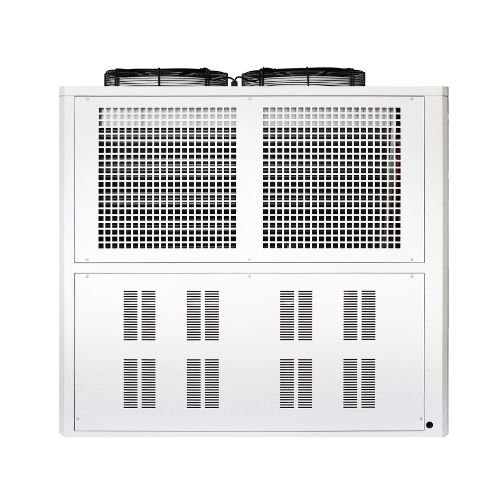
Features of Plating/Anodizing Chiller
- Control bath temperature precisely to maintain uniform coating thickness and adhesion.
- Non-ferrous water circuits prevent rust and corrosion.
- Effectively remove the heat generated during electrochemical anodizing or electroplating processes.
- Scroll compressors and optimized design reduce energy consumption.
- Programmable logic controllers (PLCs) and touch screens provide intuitive monitoring and control.
- Optional hot gas bypass valves provide stable temperature regulation.
Why Do the Anodizing and Plating Processes Need Chillers?
The plating and anodizing processes generate a large amount of heat, and the anodizing chiller is crucial for removing this heat to maintain a stable and ideal electrolyte temperature, which helps achieve consistent, high-quality, and uniform coatings, avoiding defects.
Temperature can affect the structure of the oxide layer, the size of its pores, and its absorption capacity for dyes. Without a chiller, the coating may become irregular, dull in color or have poor adhesion and production failures. For processes such as zinc plating or chromium plating, if the temperature is too high, the coating may develop pores, become brittle or have poor adhesion, while if the temperature is too low, the electroplating rate may be too slow, resulting in uneven deposition or inconsistent performance. To solve these problems, chillers ensure an even, uniform coat by maintaining steady temperatures.


Plating/Anodizing Chillers Operating Principles
The core working principle of plating and anodizing chillers is to precisely remove the excess heat generated during the process to maintain the electrolyte/bath solution within a constant and optimal process temperature range.
During the electrolysis process, electrical energy is converted into chemical energy and a large amount of thermal energy, causing the temperature of the electrolyte to rise sharply. When current passes through the electroplating solution, Joule heat is also generated. Some electroplating reactions are also exothermic. The high-temperature bath solution is drawn out of the treatment tank by the circulating pump and sent to the heat exchanger inside the chiller, and it is cooled by the refrigerant. Finally, the cooled bath solution is conveyed back to the treatment tank, and the heat carried by the refrigerant is discharged into the atmosphere.
Chillerone—Custom High-Quality Plating/Anodizing Chillers For You
Each Chillerone plating/anodizing chiller begins with a deep understanding of your unique process. From the chemical properties of the bath solution to the heat generated by the load to the demanding temperature control accuracy requirements. The core titanium heat exchanger is resistant to acid corrosion and is combined with an intelligent temperature control system to provide a stable, efficient and long-lasting heart for your production line. Choose Chillerone, and let us tailor the best chillers for you.
By Configuration / System

A compact and portable refrigeration device, equipped with casters, is designed to be easily moved between different workstations or storage tanks.
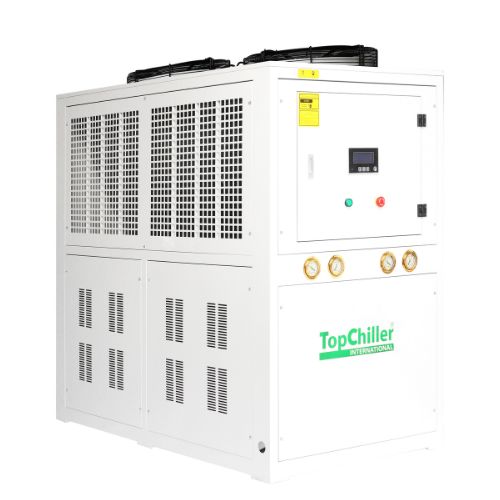
An independent industrial cooling device combines the compressor, condenser, evaporator, pump, and liquid tank into a single unit, usually equipped with a controller.

A flexible and scalable cooling system, consisting of individual chillers, can be added or removed to meet cooling requirements. It is usually installed in a modular form and expanded with separate pumps and water tanks.

The components of the chiller are divided into outdoor and indoor parts. The noisy compressor and condenser are installed outdoors. The evaporator, water pump, and insulation container are placed inside the facility, close to the anodizing tank.

A large refrigeration system typically serves multiple processes from a central unit, effectively serving multiple processes and reducing the need for individual small chillers.
By Cooling Method / Design

The outdoor condenser cools down by having the surrounding air blown over its heat dissipation coils through a fan, thereby discharging the absorbed heat into the atmosphere.
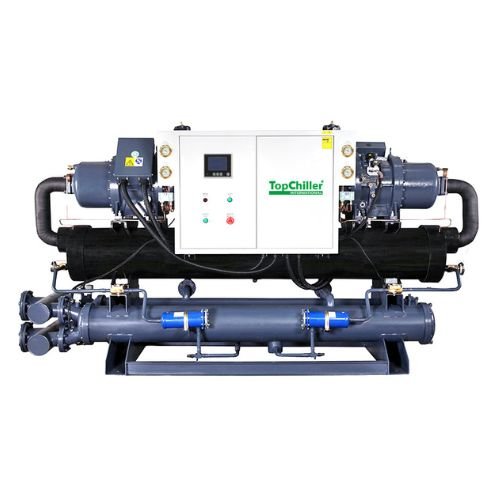
An industrial refrigeration system that uses chilled water (usually a mixture of ethylene glycol) to circulate through heat exchangers to remove the excess heat generated during the metal anode oxidation process.
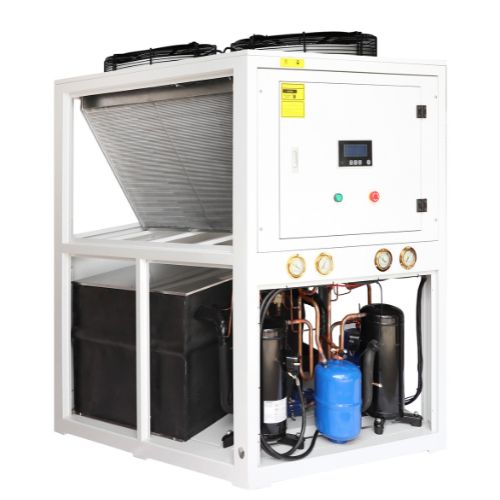
It uses a refrigerant to directly cool the electrolyte solution in the metal polishing tank, without the need for an intermediate heat exchanger. The evaporator of the chiller is directly placed in the water tank, or the refrigerant circulates through a heat exchanger immersed in the bath solution to cool the electrolyte.

It uses two independent fluid circuits and a heat exchanger to cool through the anodizing and plating tank coil. The cooling water does not come into contact with the processing liquid directly, thus avoiding contamination and maintaining a precise temperature to form a uniform oxide layer.
Reliable Certification
This professional guide is fully certified, conforming to international norms for plating and anodizing cooling equipment.


See the Plating/Anodizing Chiller in Action
Watch how the Plating/Anodizing Chiller delivers stable temperature control, fast cooling response, and reliable performance in real industrial working conditions.
Plating/Anodizing Chillers Advantages
Stable coating
Plating/anodizing chillers can maintain a stable temperature (such as 18 – 22 degrees Celsius), ensuring uniform coating thickness, strong adhesion and consistent color, and avoiding irregular structures.
Precise temperature control
Chillerone plating/anodizing chillers use PID controllers and automatic adjustments, which ensure strict process tolerances.
Improve production efficiency
Plating/anodizing chillers provide stable low temperatures, which allow for the use of higher current densities, thereby shortening the oxidation cycle and increasing production capacity.
Reduce downtime
Plating/anodizing chillers can ensure continuous operation by removing process heat, avoiding downtime caused by overheated baths.
Operative intelligence
Chillerone plating/anodizing chillers are equipped with automatic control and early fault warning functions, which reduce the need for manual monitoring and enable intelligent production management.
Corrosion resistance
Chillerone plating/anodizing chillers use non-ferrous metals or coated components (such as epoxy resins) in the waterway to resist rust and chemical damage.
Energy saving
Efficient cooling systems and intelligent control of plating/anodizing chillers optimize energy consumption and reduce long-term operating electricity costs.
Cost savings
By enhancing efficiency, ensuring quality and reducing losses, the initial investment of plating/anodizing chillers will be transformed into continuous cost savings for production.
Maintain equipment and chemicals
The stable temperature maintained by plating/anodizing chillers helps reduce equipment wear and maintain the chemical balance in the bath, meaning reduced frequency of chemical replacements.
Improve the solution
Constant temperature brought by the plating/anodizing chillers slows down the evaporation and deterioration of the chemical components in the solution, reducing the frequency of replacement and the cost of raw materials.
Environmentally friendly
Chillerone plating/anodizing chillers use ozone-friendly refrigerants and can reduce water usage compared to old methods.
- early warning, which lets you keep track of the equipment’s operating status anytime and anywhere and achieve preventive maintenance.
- Energy efficiency ratio: We can achieve a higher energy efficiency ratio by means of efficient compressors, variable-frequency drives, and optimized heat exchange designs.
- Customization: We can also conduct engineering calculations and customize designs based on your specific bath liquid composition, volume, target temperature, and workshop environment, ensuring that the equipment is perfectly matched with your process.
- After-sales service: We offer 24/7, year-round support service. If you have any problems, we will respond within 2 hours and arrive at the scene within 6 hours!
- Full Support: We offer a localized technical service network ranging from installation and commissioning to operation training to rapid response to ensure your production is continuous and worry-free.
- Compliance: All of our chillers have professional certifications, reliability certifications, and test reports, ensuring the safety and quality of your equipment.
Plating/Anodizing Chillers Uses
Specific Applications of Plating Chillers
Plating chillers are used in various electroplating processes to prevent defects such as uneven coating, poor adhesion, and premature deterioration of the electrolyte.
Zinc Plating
Plating chillers are often used for making screws, fasteners, and braking components, as this process is highly sensitive to temperature fluctuations.
Chromium Plating
Temperature control ensures consistent surface flatness, so plating chillers are good for application in brake discs, piston rings, and aircraft components to enhance wear resistance.
Nickel Plating
Plating chillers are widely used in firearms, food processing machinery, and generators for their excellent corrosion resistance and wear resistance.
Copper Plating
Plating chillers are usually used in the electronics industry to improve conductivity, especially in the manufacturing of printed circuit boards (PCBs).
Gold/Silver Plating
Plating chillers can also be used for jewelry, tableware, and electronic components.
Engineering and Manufacturing
Plating chillers help provide components with higher hardness and lubricity, etc., for industries such as medical equipment manufacturing and aerospace.
Specific Applications of Anodizing Chillers
Aluminum Anodizing
Anodizing chillers can be used for Type II (commercial type) and Type III (hard coating) anodizing, suitable for the construction, aerospace, and consumer goods industries, such as building exteriors, space shuttle components, and cookware.
Titanium Anodizing
Anodizing chillers are usually applied in the formation of colored or functional coatings on titanium.
Type II & III Anodizing
In type II anodizing, chillers help form a thick and extremely wear-resistant coating, which is used for engine cylinders and industrial components. In type III anodizing, they can be used for building facades and car bodies to enhance corrosion resistance and appearance.
Metal Finishing
Surface treatment process for components such as brake calipers, screws, nuts, bolts, light switch panels and automotive interiors.
Architectural Finishes
Due to superior aesthetic appeal and stronger resistance to environmental erosion, components treated with anodizing are used in the exterior facades of buildings.
Specific Parts
Cooling bath for completing components such as brake calipers, screws, nuts, bolts, light switch panels and automotive interiors.
No. Anodizing/plating chillers are especially designed for harsh chemical environments, which have strong corrosion resistance and high temperature control that ordinary chillers cannot achieve.
The cooling capacity needs to be calculated comprehensively based on the tank volume, the temperature drop required by the process, the total heat generated during the production process, the ambient temperature, and the cooling conditions of the workshop. You can provide these parameters to us for precise calculation.
Direct cooling refers to the bath solution being directly pumped into the interior of the cooling machine for heat exchange. Indirect cooling means that the secondary heat exchange is carried out through plate heat exchangers, and the solution tank liquid does not enter the unit. If the bath solution is clean, you can choose a direct cooling method for high efficiency. if you prioritize equipment protection and maintenance convenience, or if the bath solution has the risk of corrosive crystallization, indirect cooling is more reliable.
Yes, a plating/anodizing chiller can provide cooling for multiple tanks or compartments simultaneously. Compared to using separate cooling systems for each tank, it can better optimize space, enhance efficiency and reduce costs, but it needs a customized multi-loop system with independent control of the temperature of each tank.
The initial cost of the chiller is only one component. There are many other operating costs, including energy costs (electricity, water, gas, heating, etc.), chemicals and consumables, labor and maintenance, waste treatment and disposal, and packaging and shipping.
Chillerone plating/anodizing chillers adopt low-noise fans and compressors in the design, and the operating noise is controllable. The specific decibel value varies by model. You can contact us and get more details.
Common problems with water chillers include insufficient refrigerant, clogged filters, or malfunctions in components such as compressors and heat exchangers. There are various methods for troubleshooting, including visual inspection, measuring temperature and pressure, as well as using diagnostic tools such as vibration analysis.
It is recommended to clean the filter and condenser every quarter and have professional maintenance annually. The daily maintenance is simple and we can provide guidance.


 English
 Spanish
 Arabic
 Vietnamese

