

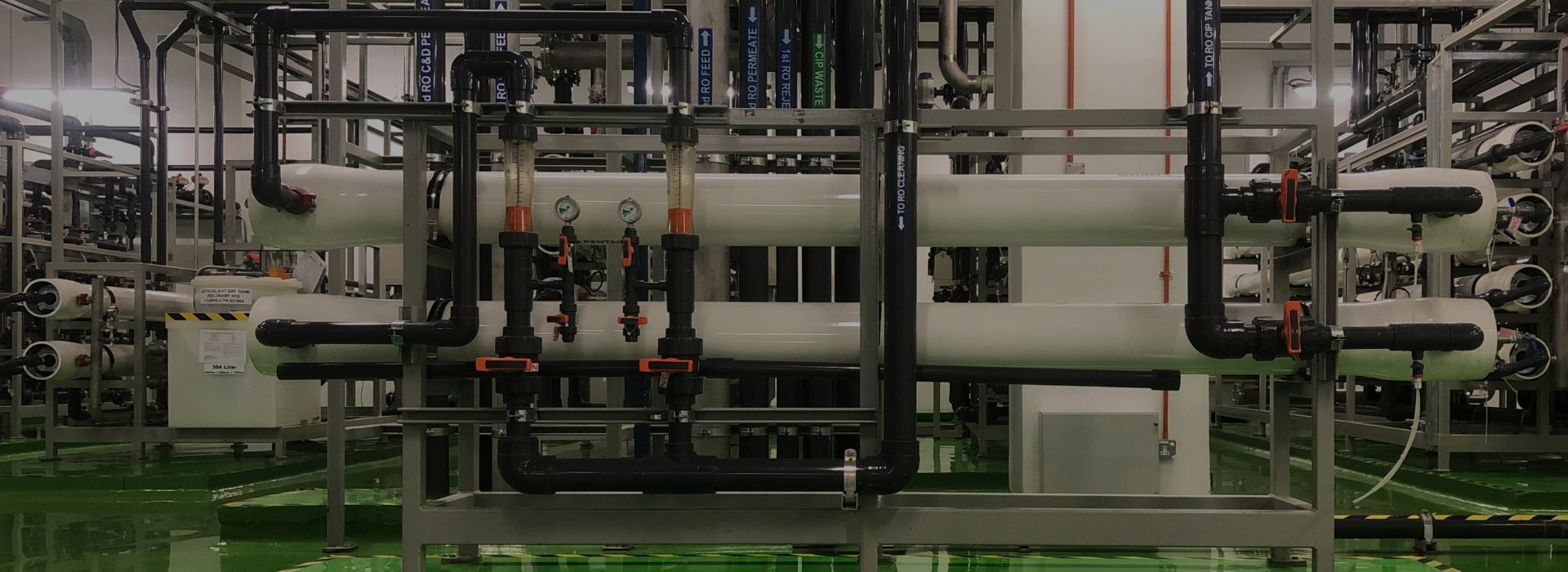
Chiller Solution to Match RO Plant Brand










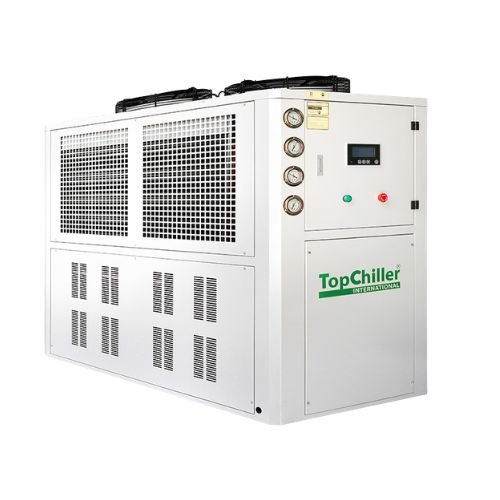
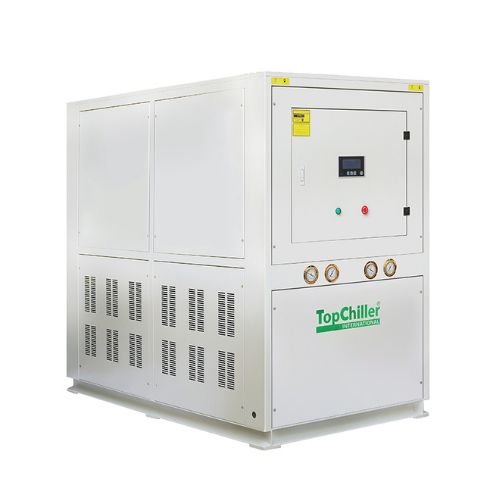
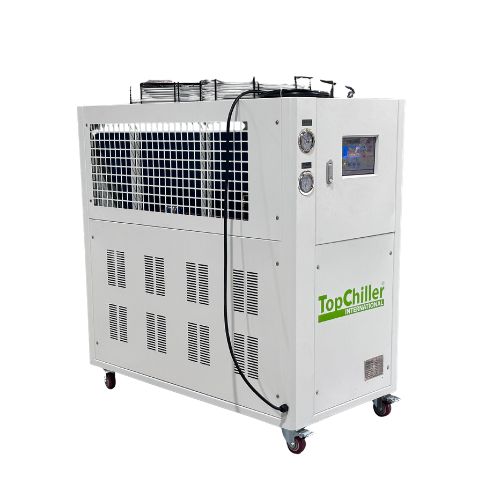
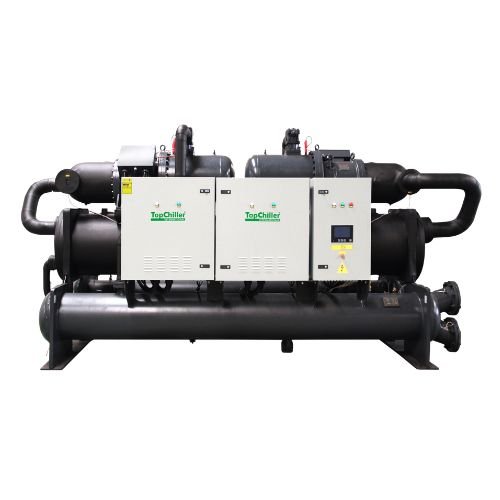
Our Chiller for RO Plant—A Reliable Cooling Solution
- Anti-corrosion evaporator
- Heavy-duty, hermetically sealed scroll and hermetic compressors
- High-density polyurethane foam (PUF) insulation
- Intelligent remote control and PLC integration
- Variable flow support
What is a Chiller for RO Plant?
A chiller for an RO (Reverse Osmosis) plant is a specially designed cooling system designed to regulate and maintain the inlet water temperature within the optimal range to ensure the best filtration effect. Chillerone industrial water chillers are tailored to prevent the membrane performance from deteriorating, the salt content from increasing, or the formation of biofilm from accelerating. By providing stable cooling water, these chillers play a crucial stabilizing role to maximize the lifespan of the membranes, improve the purity of the water, and ensure a stable water output regardless of seasonal or environmental temperature changes.
Types of the Chiller for RO Plants
RO systems vary in capacity, feed water source, and operating conditions, so we offer a range of industrial chillers for RO plants designed to match your various needs.
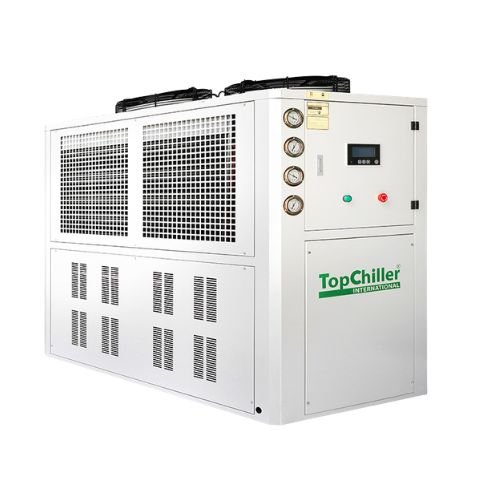
An air-cooled chiller for RO plant has no cooling tower or water consumption, and has low maintenance requirements, ideal for areas with water scarcity.
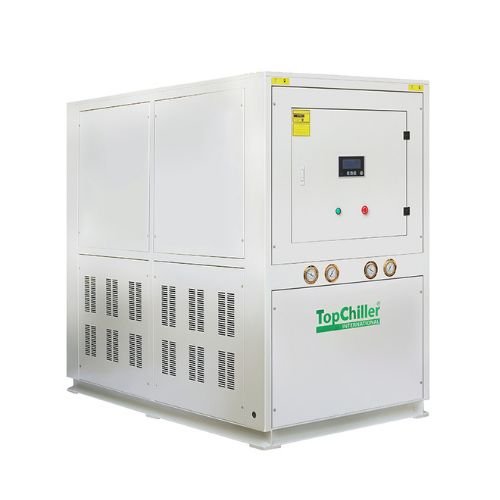
A water-cooled chiller for RO plant has high energy efficiency, longer lifespan (20-30 years), and quieter indoor operation, but the initial investment is larger.
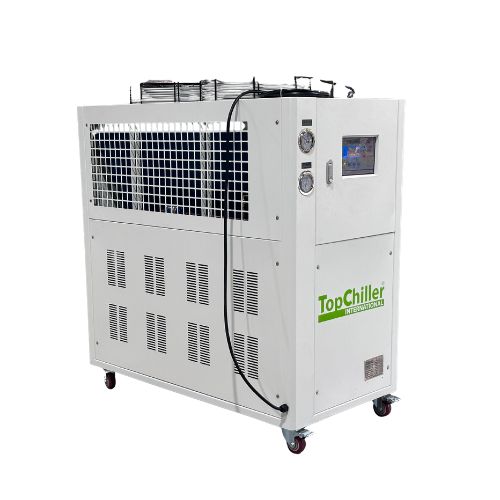
Self-contained units on wheels or steel frames, designed for easy relocation or “plug-and-play” integration with mobile RO units.
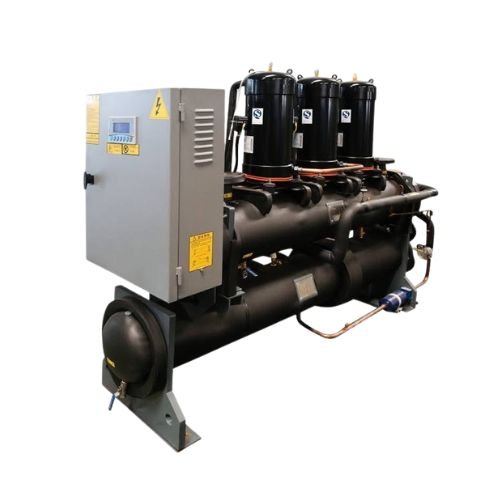
A scroll chiller for RO plant uses two interlocking spiral “scrolls” to compress refrigerant. They are quiet and simple to maintain, typically used for smaller capacities.
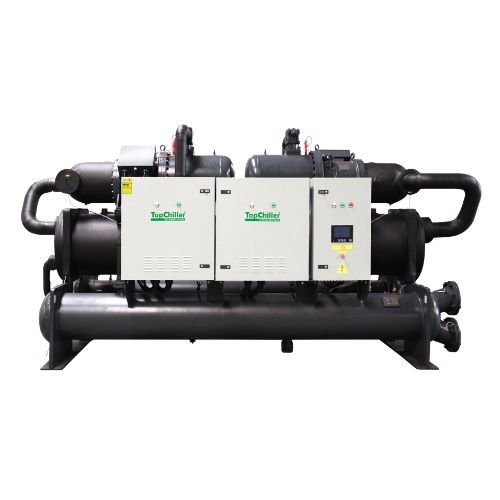
Screw chiller for RO plant uses rotating helical screws, ensuring 24/7 operation and precise capacity modulation, ideal for mid-to-large RO systems.
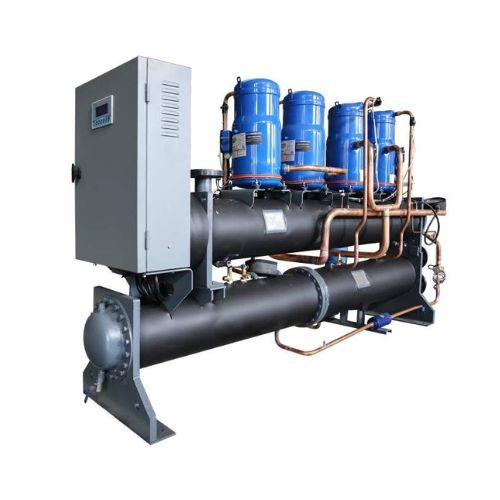
Provide redundancy by linking multiple small chiller units together, allowing the system to scale as the RO plant’s capacity grows.
Features of Chiller for RO Plants
Unstable feed water temperature can lead to membrane damage, fluctuating permeate flow, and increased energy consumption. All the features of our chiller for RO plants are designed to protect your RO system from temperature risk.

Equipped with digital microprocessors or PID controllers, allowing you to set and monitor specific temperatures with high accuracy.

Designed specifically for the long-term, uninterrupted operation of reverse osmosis equipment. Equipped with heavy-duty compressors and efficient heat exchangers.

Prevents thermal shock to RO membranes and stabilizes permeate flow under dynamic operating conditions.

The body, water tank, and other key components are often made from SS 304 stainless steel or powder-coated materials.

Optimized heat exchanger flow velocity and smooth internal piping reduce stagnation zones where scaling typically initiates.

Use high-density polyurethane foam (PUF) insulation to minimize heat gain and reduce energy consumption.

All wetted components are constructed from stainless steel or titanium to eliminate ion leaching and prevent electrochemical corrosion.

Eliminates copper from all water-contact components. Prevents copper ion contamination, galvanic corrosion, and premature membrane degradation.

Integrated safeguards such as overload protection, phase failure alarms, and high/low-pressure cut-offs.

Compact structure for easy connection with plate heat exchanger, storage tank, buffer tank, RO feed pipeline, etc.

Extending membrane longevity by keeping water within the ideal range prevents thermal degradation of the semi-permeable membrane.

Use eco-friendly refrigerants and energy-saving compressors to reduce operational costs.
High-Precision Feed Water Temperature Control
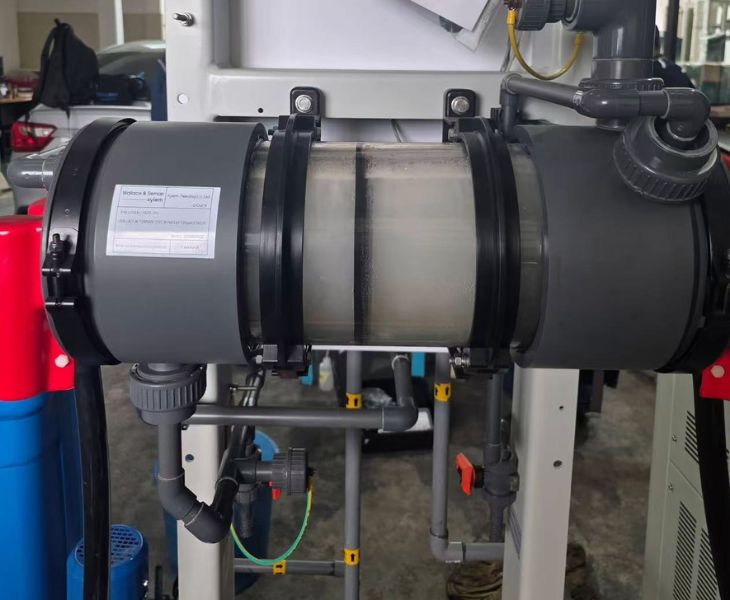
Our chiller for the RO plant achieves high-precision feed water temp management with a closed-loop feedback system, which is managed by a digital PID (Proportional-Integral-Derivative) controller. This PID controller can fine-tune the refrigeration cycle. By adjusting the flow rate of the refrigerant or the speed of the compressor rather than simply switching operations, our chillers can cope with fluctuations and heat loads, maintaining a stable thermal environment and avoiding structural stress in the reverse osmosis membrane.
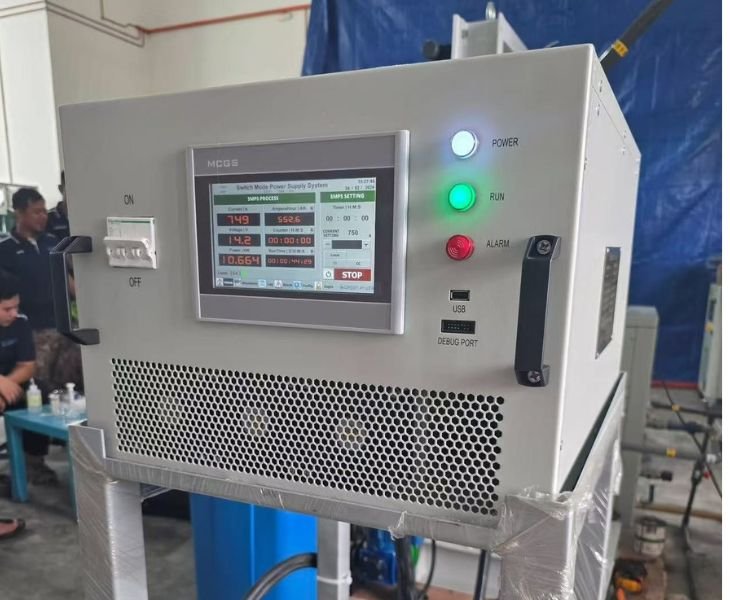
Wide Cooling Capacity Range for RO Systems
To achieve a wide cooling capacity range, Chillerone chiller for RO plant has a modular design and employs intelligent load-matching technologies, such as VFD and scroll compressors. For large industrial facilities, we apply multi-loop or multi-compressor to improve the reliability. By integrating variable-speed components with precise microprocessor control, our chiller units seamlessly expand from low-flow residential or laboratory demands to high-flow commercial processes, guaranteeing good energy efficiency and stable water temperature.
Anti-Corrosion Water Circuit Design
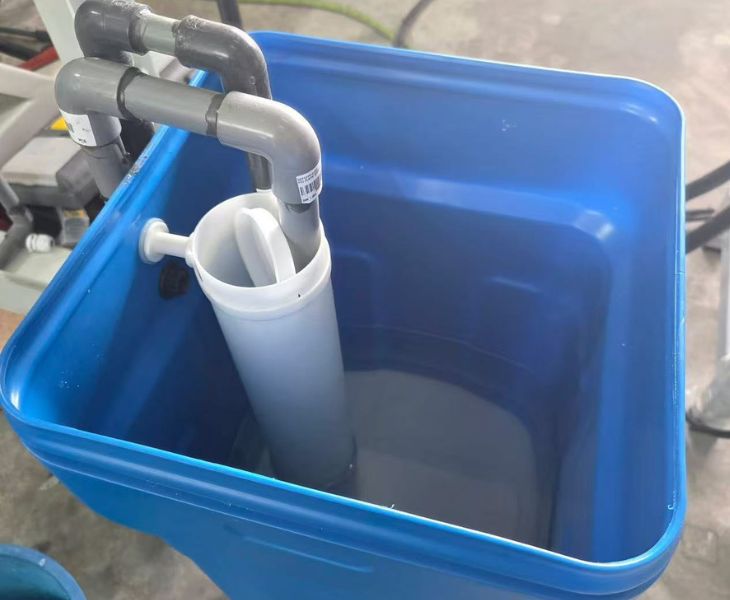
We guarantee that the entire fluid path is composed of inert and anti-corrosive materials. All components of our chiller for RO plant in direct contact with water are made of advanced, non-reactive materials, which help resist the strong corrosiveness of pure water or deionized water. This industrial RO cooling system mainly uses SS 304 or 316L stainless steel to manufacture the evaporator tubes, insulated water tanks, and pump impellers, which can resist oxidation and chemical corrosion. Besides, we also employ medical-grade PVC or reinforced polyethylene piping and high-performance mechanical seals to prevent heavy metal leaching and galvanic corrosion.
Chillerone—Reliable Chiller for RO Plant Supplier in China
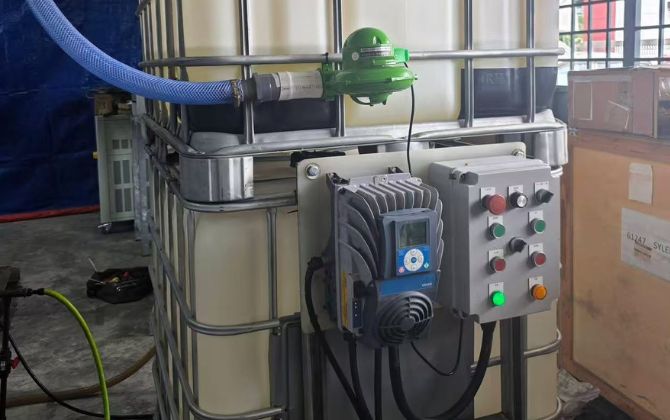
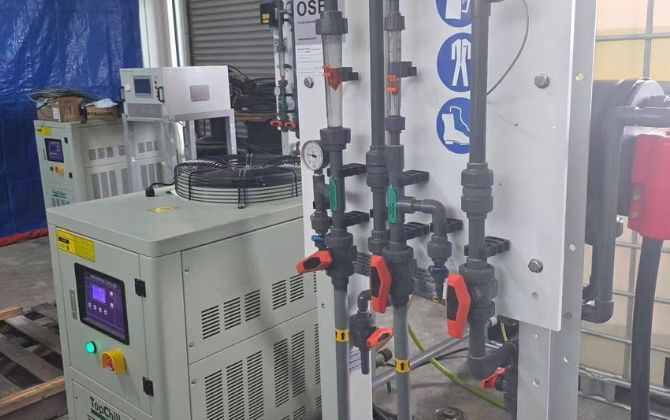
Chillerone has designed specialized cooling systems for the global industrial sector for 20 years, with our systems operating in more than 75 countries. We design and manufacture robust chiller for RO plants that are engineered to maintain the optimal temperature, which extends the lifespan of the membranes. We customize RO equipment coolers for your working conditions to ensure stable process cooling.
Reliable Certification
Our chillers for RO plant are ISO and CE certified, complying with global standards to deliver stable cooling for reverse osmosis water treatment systems.


Cooling Applications of Chiller for RO Plants
Temperature control is very important for reverse osmosis systems. Our cooling solutions have been applied in multiple reverse osmosis-driven industries worldwide.
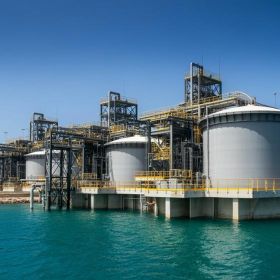
The chiller for seawater RO plant is an ideal cooling system for desalination plants. It prevents the high-temperature seawater from reducing the desalination rate of the membrane, particularly suitable for high-temperature coastal areas.
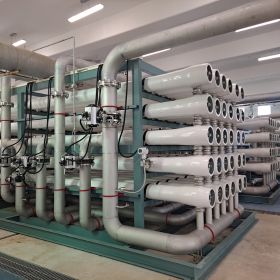
The chiller for RO plant can be used for treating underground brackish water or for centralized water supply systems in industrial parks. It ensures that the membrane operates under the best temperature and enhances the recovery rate.
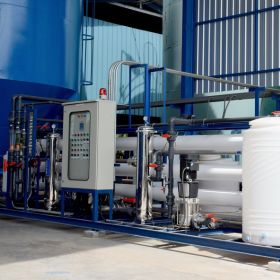
The chiller for RO plant is always used to provide stable and pure water for industrial production, such as chemical plants, power plants, electronic manufacturing, etc. It helps them stabilize the inlet water tempe, guarantee the quality of the produced water, and avoid shutdowns.
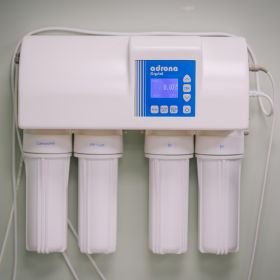
The RO purification water system in the pharmaceutical industry has extremely high requirements for water quality stability. A chiller for RO plant can control membrane flux and maintain stable conductivity.
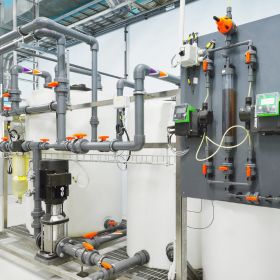
In the ultra-pure water system of the electronics industry, RO is an important pre-treatment step. So the chiller for RO plant is also important to ensure stable membrane performance, and avoid the influence of unexpected temperature changes on the subsequent EDI or UPW systems.
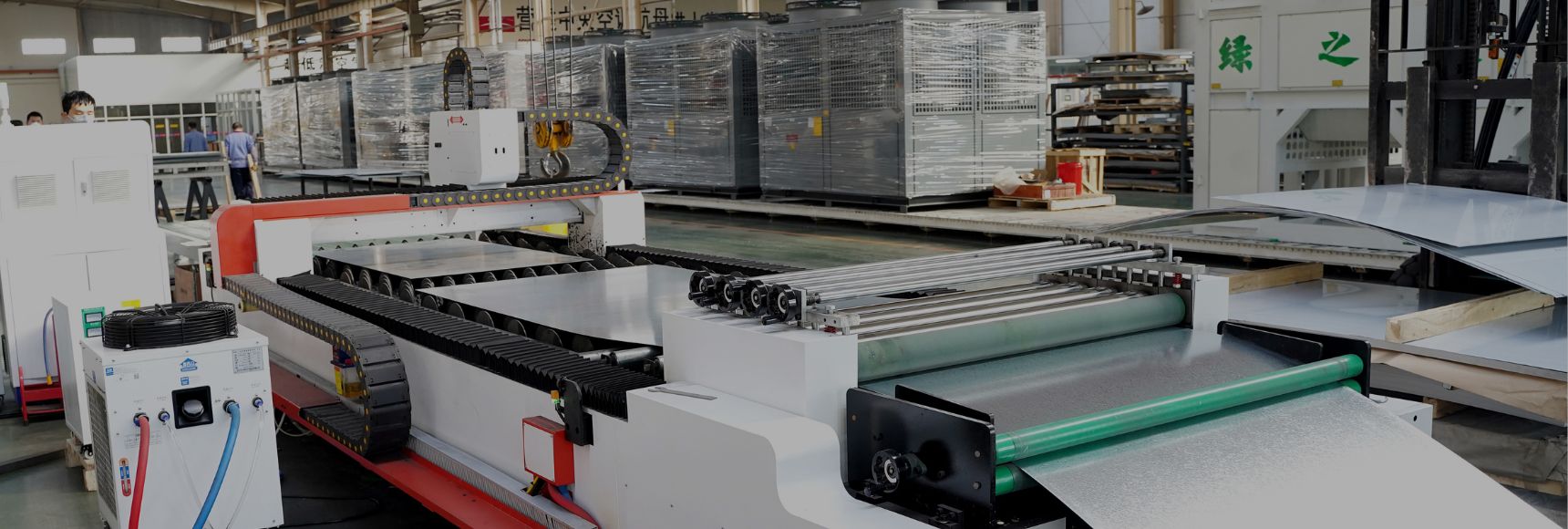
RO membranes are very sensitive to temperature. If the water temperature is too high, the membrane material may suffer physical damage, resulting in poor salt retention and causing permanent damage. If the water temperature is too low, its viscosity will increase, which requires the high-pressure pump to exert greater effort to push the water through, reducing the total permeate output. So a specialized chiller for RO plants can be vital.
Generally speaking, for every 1°C decrease in water temperature, the permeation flow rate will drop by approximately 3%. In winter or in cold climate conditions, the cooler can prevent this production loss by maintaining the water temperature at the standard 25°C level, thus ensuring that you can obtain the full daily gallon (GPD) capacity corresponding to the amount you have paid for.
It’s not recommended to employ a standard chiller for an RO plant, because standard chillers usually use copper heat exchangers, but this material is prone to corrosion when in contact with pure reverse osmosis water. In contrast, our dedicated reverse osmosis chillers use stainless steel or titanium components to ensure that no metal ions enter your pure water flow.
For most industrial setups, the chiller will be installed before the water pump to ensure that the viscosity of the incoming water meets the filtration requirements. However, for drinking water or beverage applications, the cooler is usually installed after the RO storage tank to directly provide “iced” water to the usage point.
Yes. We can employ a specific seawater-grade configuration instead of standard stainless steel, like titanium heat exchangers or cupro-nickel coils. For desalination or brackish water RO plants, these are necessary to prevent catastrophic corrosion. If you have such needs, never hesitate to tell us.
For a RO chiller, we recommend that you have regular maintenance every quarter, including cleaning the air filter/condenser coil to ensure effective heat dissipation and checking the refrigerant level. If you are using a water-cooled chiller, you must also regularly descale the heat exchanger to prevent mineral deposits from forming in the water source.
See the Chiller for RO plant in Action
Watch how the Chiller for RO plant delivers stable temperature control, fast cooling response, and reliable performance in real industrial working conditions.
Why Do You Need a Chiller for RO Plant?
Without temperature control, the entire RO system may be exposed to risks.
Dropped Membrane Performance
Higher inlet water temperature will increase the permeate flow of the membrane but also increase the amount of salt permeation. The TDS of the produced water will increase, and there will be a fluctuation in conductivity, leading to the water not meeting the standards.
Short Membrane Lifespan
Most reverse osmosis membranes have a specified upper operating temperature limit. usually the temp should not exceed 45°C, optimal below 25–30°C. If the equipment operates under high temperatures for an extended period, the membrane structures will age fast, the adhesive layer will deform, and the frequency of membrane replacement will increase.
Unstable Permeate Flow
Unstable temperature change will directly affect membrane flux, recovery rate and system pressure balance. All of these can lead to fluctuating production water volume and frequent system adjustments, disrupting your original production plans.
Higher Energy Consumption
High temperatures will alter the system’s pressure requirements, increasing load on high-pressure pumps and electricity consumption. Thus, your long-term operating costs will significantly rise.
How Does a Chiller for RO Plant Work?
The operation principle of a chiller for RO plant is a vapor-compression refrigeration cycle.
As the water flows through the evaporator, its thermal energy is transferred to a low-temperature refrigerant, which then enters the compressor for pressurization and heating, and subsequently releases heat through the condenser. Then an expansion valve rapidly cools the refrigerant to a low-pressure state, allowing it to return to the evaporator and repeat this cycle. This continuous process ensures that the water flowing into the reverse osmosis membrane remains at a stable, pre-set temperature, optimizing the water’s viscosity and protecting the fragile membrane structure from thermal degradation.
How to Choose the Right Chiller for RO Plant?
When choosing the right chiller for an RO plant, it’s important to match the system’s cooling capacity to your specific flow rate and the required temperature drop, and ensure that all materials in the water circuit are corrosion-resistant. Then, you can assess the working conditions in order to decide whether to choose an air-cooled type that is easy to maintain, or a water-cooled one that has higher energy efficiency in large-scale operations. Finally, according to your specific needs, you can prioritize the selection of devices with PID controllers to achieve high precision stability and variable capacity adjustment (such as frequency converters), which can help you handle issues when water demand fluctuates without causing excessive energy waste.
If you cannot make a decision, our professional teams are always here to help you.
How to Calculate the Cooling Capacity of a Chiller for RO Plant?
To determine the cooling capacity, you need to conduct a detailed calculation. The calculation formula is:
The mass flow rate of the water * Specific heat capacity of water * Temperature difference between the incoming raw water and the desired set point.
The final result should be increased by 10% to 20% to account for ambient heat gain and pump motor heat. At last, this result is usually converted into Tons of Refrigeration (TR) by dividing the BTU/hr result by 12,000, ensuring the selected chiller can consistently maintain the target temperature even during peak thermal loads.
The process can be complex, so the best way is to ask professional engineers to do a detailed calculation for you. Chillerone has over 20 years of experience in customizing chillers. If you have such a requirement, contact us, and we can have an on-the-spot investigation. Combined with professional software, we will give you the most precise recommendation
Customizing Options of Our Chiller for RO Plant
| Feature | Standard Option | Customized Upgrade |
| Heat Exchanger | Copper/SS 304 | Titanium / SS 316L |
| Compressor | Fixed Speed | VFD (Variable Frequency Drive) |
| Refrigerant | R-22 (standard) | Eco-friendly R-134a or R-410A |
| Mobility | Fixed Base | Heavy-duty Casters / Lifting Lugs |
| Protection | Basic IP Rating | NEMA 4X / Explosion-proof (Ex-proof) |


 English
 Spanish
 Arabic
 Vietnamese

