

A chiller allows you to eliminate heat from a fluid using a refrigeration cycle based on absorption or vapor-compression. You can then utilize the fluid, usually water, in cooling efforts by circulating it via a heat exchanger. Chillers can be air cooled or water cooled.
Recommended Chiller Maintenance Schedule

A maintenance schedule will help in ensuring your chiller units operate at maximum efficiency. Here’s a breakdown of maintenance protocols according to frequency:
| Maintenance Schedule | Remarks on Chiller Maintenance |
| Daily/Weekly Maintenance (Proactive Chiller Maintenance) |
|
| Monthly/Quarterly Maintenance (Chiller Preventive Maintenance) |
|
| Annual Maintenance (Predictive Chiller Maintenance) |
|
Key Steps in Chiller Inspection and Maintenance

Safety Disclaimer: Chiller maintenance must be performed by trained personnel. Remember, high voltage systems may be very dangerous, especially if you take the necessary safety precautions.
Therefore, you must refer to the chiller manufacturer manual and have all the safety equipment.
Get the Right Tools & Equipment
Having the right equipment and tools is essential prior to embarking on chiller inspection or maintenance. The right tools are ideal for increased efficiency, accuracy and safety. Some of the common tools you find useful include:
- Coil and Tube Cleaning Kit: Includes coil combs, shaft brushes and cleaning solutions. Helps in the removal of mineral deposits that cause scaling, rust and other dirt ensuring optimal performance of heat exchange.
- Multimeter: Useful in testing the chiller’s run capacitors, compressor start, temperature sensor continuity, relay contacts, control circuit voltage and motor windings.
- Refrigerant Leak Detector: Identifies points of refrigerant leakage around valves, coils, compressors, fittings and joints.
- Thermometers: Allows you to measure water temperature at the inlet/outlet of evaporator while also monitoring refrigerant and water in the condenser.
- Flow Meters: Determine flow rate of coolant or water passing through the condenser circuit and evaporator.
- Glycol Refractometer: Evaluates the amount of glycol in the coolant ensuring optimal heat transfer and freeze protection.
Record and Monitor Performance Data
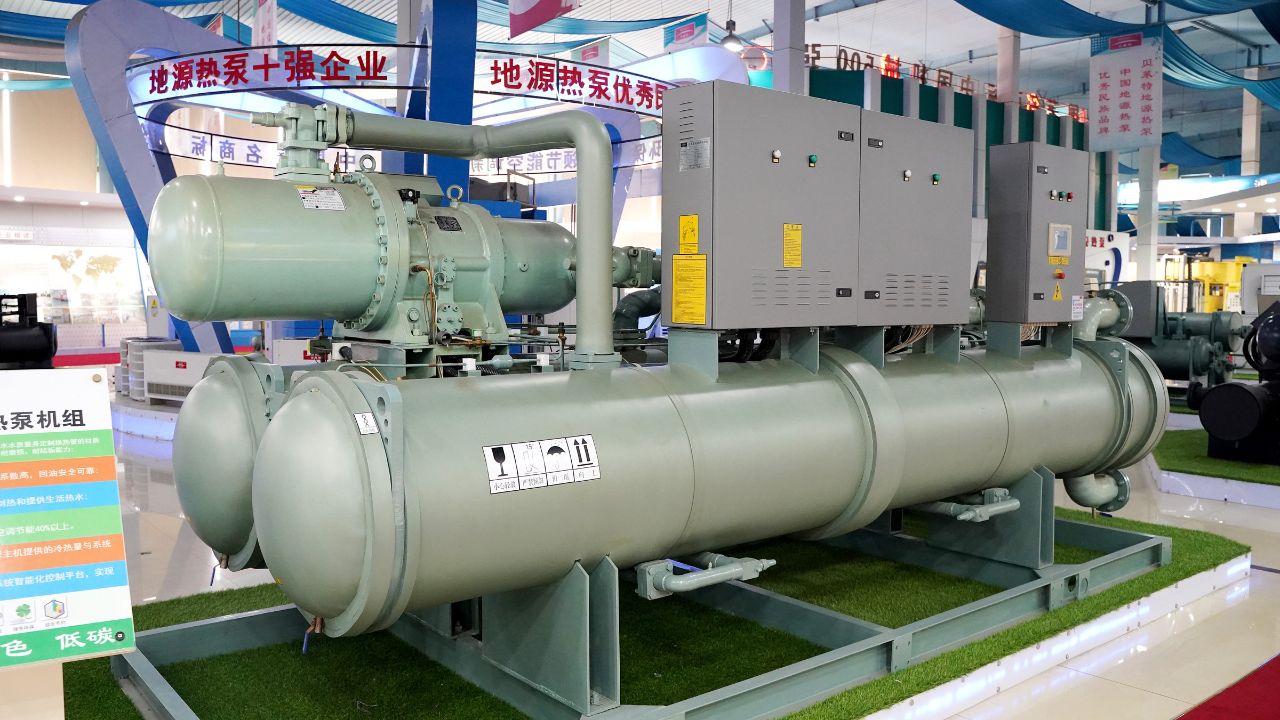
While undertaking chiller maintenance, it is important you keep records of the data you collect. This data will help you monitor performance by comparing with the recommended values and thus identify inefficiencies or even failure.
Some of the critical parameters you can record and monitor include:
- Evaporator Data: Water temperature at inlet and outlet as well as evaporator temperature and suction pressure.
- Compressor Data: Includes oil temperature and pressure, voltage, current and power factor.
- Condenser Readings: For the temperature of water at the inlet and outlet, condensing temperature and discharge pressure.
- Flow Rates: For condenser water and also chilled water.
- Refrigerant and Oil Conditions: The results of leak test and charge level for the refrigerant. The acidity levels, color and clarity of oil.
- Ambient Conditions: Record quality of water for the cooling tower when using water-cooled chiller. For air-cooled chillers determine the outdoor humidity levels and temperature.
Important Processes in Chiller Maintenance
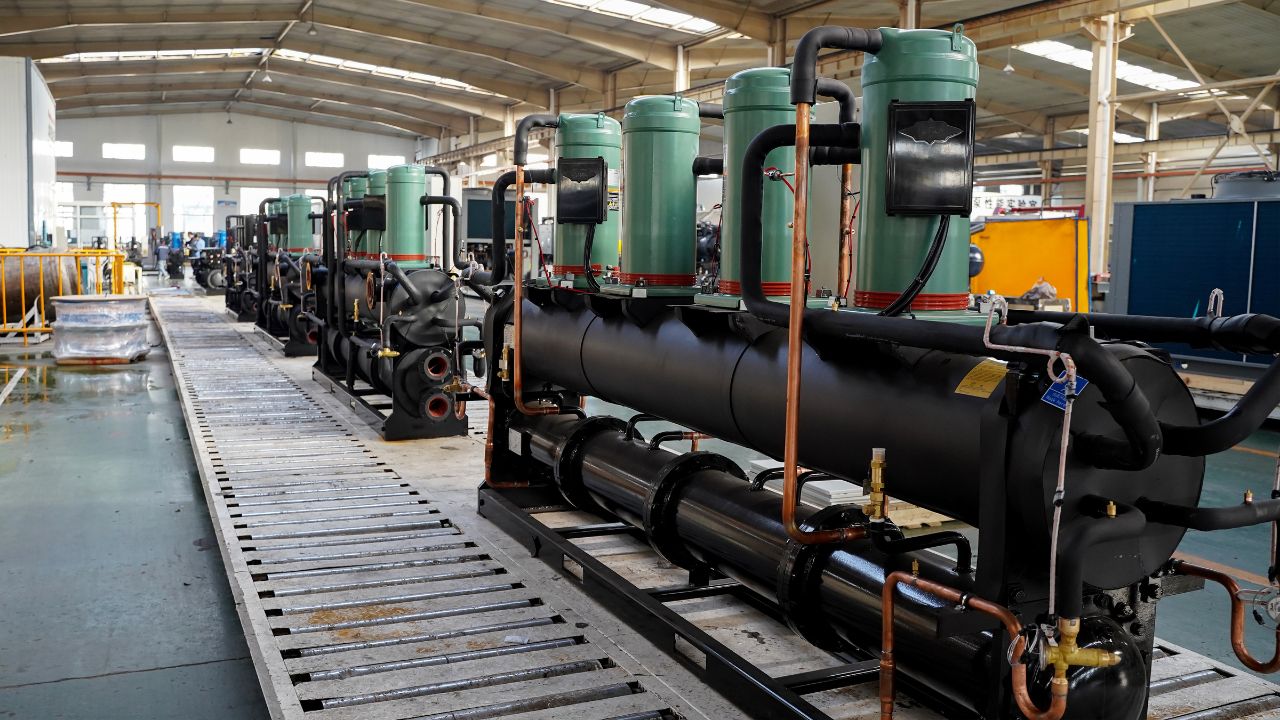
When undertaking chiller maintenance, here are some important processes you might consider:
Cleaning Chiller Parts and Systems
Cleaning allows you to remove contaminants like scale, sludge or dust that may have gathered within pats of the chiller. If left unaddressed, such contaminants can lower efficiency in heat transfer, increase energy use and restrict the flow of fluid.
The list below captures chiller parts and components you can clean:
- Coils and Tubes: Remove scaling or fouling using soft brush, compressed air, cleaning form or chemical descalers. Ensures heat transfer is efficient.
- Filter Systems: Eliminate accumulated dirt using water and detergent to maintain pressure and flow rate. It also minimizes compressor and pump strain while improving quality of water/air.
- Valves: Use a solvent and soft brush to eliminate scaling or deposits and replace worn out seals or gaskets. This way, your system remains reliable with precise pressure and flow control and no leakage.
- Strainers: Use compressed air or wire brush to clean the mesh screen or strainer basket after removing. Remember to rinse with water after before reinstalling.
- Compressor System: Clean the crankcase heaters, oil filters and suction screens as well as the seals, compressor casing and joints. Remove dust or oil residue to prevent overheating and arcing.
Electrical Inspection and Checks
Since chillers utilize multiple components powered electrically it is necessary you undertake electrical inspection. Faults in the control circuits and motors can result in the failure of components, an inefficient system or even pose a safety hazard.
Below are some key aspects you consider during electrical inspection:
- Heat Exchanger System Inspection: Determine functionality of pressure and temperature sensors and evaluate control panel wiring, solenoid valves and flow switches. Also calibrate transducers and sensors.
- Electrical Connections Testing: Check whether the connections for bonding and grounding are continuous or corroded. Also determine the current and voltage levels and inspect contactors, terminal blocks, fuses and relays for arcing or tightness.
- Testing Electrical Component: Test for capacitance with capacitors, determine continuity of contacts and coil resistance in relays and c Check whether fuses and circuit breakers have burnt or tripped.
- Inspecting Chiller Wiring System: Ensure you have no fraying, wear, insulation breakdown or cuts. Wiring should be routed correctly and secured. Check for overheating shown by melted insulation or discoloration. Confirm wiring has continuity with no shorted or open circuits.
- Motor Inspection: Confirm the current drawn, voltage and phase balance of the motor. Also check the windings and terminals of the motor for insulation resistance and noises. Confirm the functionality of starters and overload relays.
Inspecting and Maintaining Mechanical Systems and Fluids
Mechanical systems are responsible for the movement of fluids which in turn conduct heat transfer. Their combined efforts ensures the cooling process is stable and efficient. The primary elements pertaining to maintenance of mechanical systems and fluids are captured below.
- Chiller Refrigerant: Confirm the temperature and pressure of the refrigerant and check for leakages especially around seals, valves and joints. This prevents corrosion and overheating of the compressor that results in energy waste.
- Chiller Oil: Ensure you monitor the color of oil for contamination and its level too. Ana analysis also helps you determine metal content, moisture or acidity. Check for leaks around fittings and seals and where needed, replace the oil alongside its filter.
- Water in Chiller System: It is important you determine water quality by testing its pH levels, conductivity, microbial growth and having an astute program for water treatment also helps as much as cleaning piping and cooling towers. Also verify the flow rates and make sure there are no leakages.
- Vibration: Determine the frequency and amplitude of vibrations comparing with expected limits. Confirm there are no worn bearings, mountings that are loose or shafts not in alignment remembering to lubricate necessary parts.
- Valves: Corrosion and leakages are primary issues that you look for. Expansion and solenoid valves should be sealed and exhibit appropriate electrical response. Check seals for damage, lubricate moving parts and ensure the valves move freely when operated.
- Fans: Verify the blades have no cracks and there’s no buildup of dirt. Otherwise, this restricts the flow of air and induces vibrations. Examine the bearings of the fan motor lubricating them if needed. Ensure the fan belts have the required tension and are not worn.
- Pumps: Check for alignment issues and leakages in couplings and seals. Also keep an eye on the wear of bearings as well as vibration noise. Confirm slow rates and operation of pressure gauges. Suction the filters, clean the strainers and lubricate the bearings.
Test and Inspect Control Systems
The control system forms the central part of a chiller system. It is where you regulate crucial parameters in the operation of a chiller like flow rate, temperature and pressure. There are two primary aspects to consider in this case:
- Sensor Systems: Examine calibration of the sensor comparing with recommended values. Check connections and wiring identifying those damaged, loose or corroded. Determine whether they respond within time to parameter changes. Remember to clean the surfaces of the sensors and replace faulty ones.
- Safety Control: Evaluate the response of pressure switches and overload relays to test conditions. The pressure valves should be sealed, operating optimally and not corroded. Verify limit controls and flow switches respond as expected to abnormalities. The display should also have accurate presentations.
Test Overall Operation of Chillers
Evaluating overall chiller operation seeks to confirm all systems are a go and working efficiently. It ensures the chiller performs as specified while unearthing any inefficiencies or issues. Here are the key aspects to consider in testing overall chiller performance:
- Check power supply and make sure to prime the refrigerant water circuits. The control settings should be within recommended ranges.
- Test the chiller performance by subjecting it to load testing ensuring it is efficient and corresponds to rated capacity.
- Perform stability checks for pressure and temperature for smooth operation.
- Undertake an audit of the control function and system integration to ensure seamless communication and reliable control.
- Conducting an analysis of noises and vibration is essential in determining mechanical issues early which staves wear increasing reliability.
Visual Inspection
This simple process is very crucial when it comes to chiller maintenance. With visual inspection, you can capture wear, leakage and damage allowing you to address issues early before they become costly breakdowns.
Some of the key areas you need to inspect include:
- Chiller base, inlets and outlets, drain pans and water basins.
- Pipes, valves, pumps, connections and joints.
- Electrical and mechanical components
- Compressor, condenser coils and heat exchangers.
Troubleshooting Chiller & Solution to Enhance Efficiency
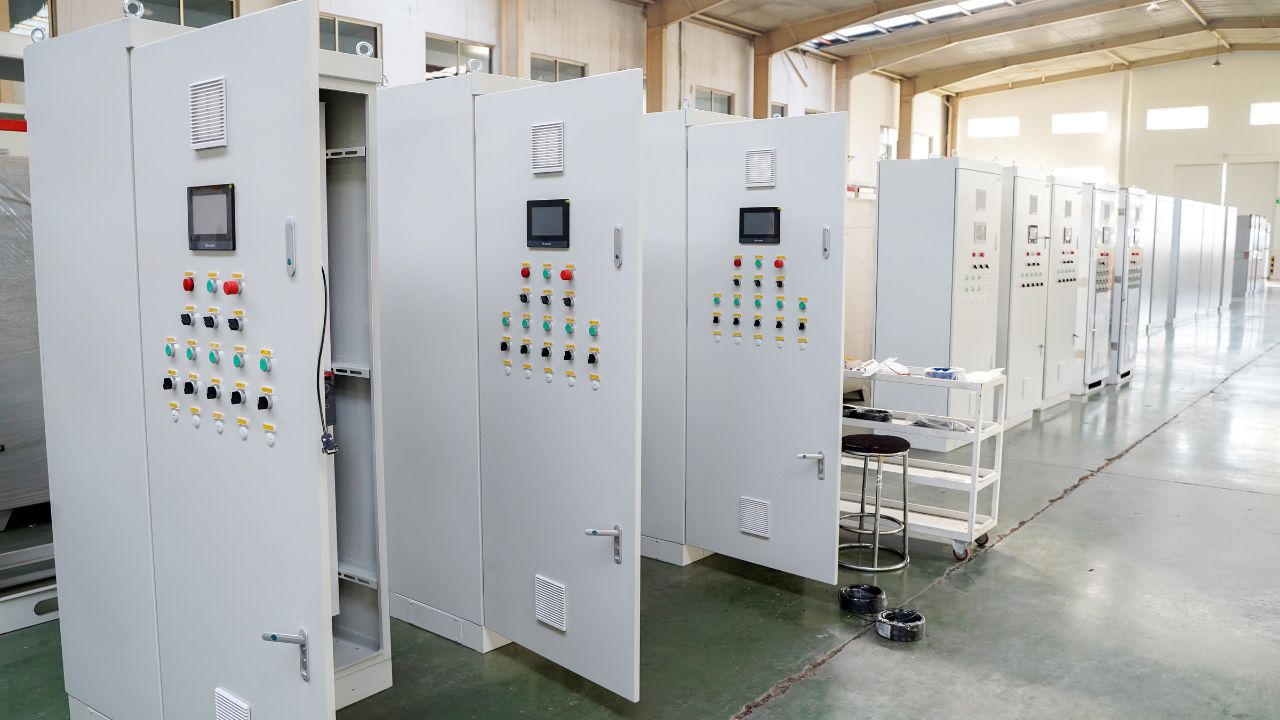
Here are some common chiller issues, their causes and possible solutions:
| Problem in Chiller | Common Cause | Possible Solution |
| Insufficient Cooling | Low refrigerant charge, Dirty coils, Faulty valve | Check for refrigerant leak, Clean coils, Inspect valve |
| High Condenser Pressure | Poor airflow, Scaling | Clean condenser, Check cooling tower efficiency |
| Low Suction Pressure | Leaks, Blockages, Faulty valves | Recharge, Clean tubes and filters, Replace valves |
| Compressor Short Cycling | Faulty sensors, Low flow | Recalibrate sensors, Check flow |
| Noise/Vibration | Misalignment, Loose components, Worn bearings | Tighten components, Align couplings, Replace bearings |
| Water Leaks | Damaged seals, Corrosion, Clogged filters | Repair/Replace parts, Unblock filters |
| Refrigerant Leak | Defective joints and valves, Worn seals | Identify leaks, Replace parts |
| Frozen Coils | Low flow, Blocked filters, Faulty sensor | Recharge, Calibrate/Replace sensors, |
Conclusion
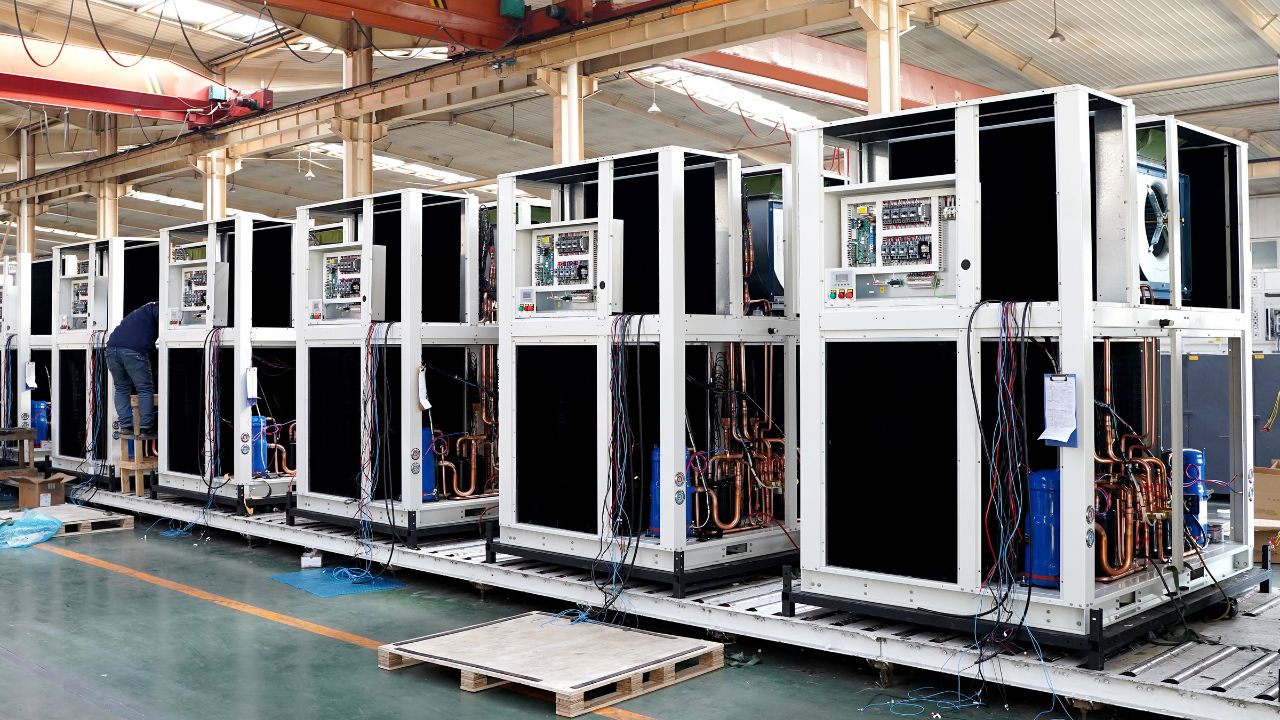
Chiller maintenance involves evaluating its behavior when operating and response to loading. It ensures your chiller remains efficient, reliable and safe. Remember you can use visual inspection to systematic diagnosis when undertaking maintenance protocols.
FAQs
How often should chillers be serviced?
Depending on the use, type and environment, service chillers at least once every six months. For heavy duty chillers, service after every three months ideal.
What is the most common problem in chillers?
Reduced efficiency in cooling often resulting to high energy consumption.
What are the main chiller maintenance checklist?
You should check the refrigerant level, pressure, coil, oil level, strainers, electrical components, compressor, fans, control systems, connections and the overall performance. More importantly, also pay attention to abnormal noise from the system.
What is the lifespan of a chiller?
Chillers can operate for as long as 25 years and even more with good maintenance.


 English
 Spanish
 Arabic
 Vietnamese

