

It is important to choose the best coolant to ensure energy efficiency and enjoy the best performance possible from your system. They are of several types, and they all offer amazing benefits. This is why you must understand the features of each to make the best decisions for you. This article explains the types available and will guide you on features of each to help you make the right choice.
What is a Chiller Refrigerant?

Chiller refrigerants are working fluids which circulate in chiller systems to absorb as well as release heat, which enables efficient cooling. Its features have a direct impact on system safety, efficiency, as well as environmental footprint. Choosing the right refrigerant means that the system only consumes low amounts of energy and has better control of temperature.
Main Types of Chiller Refrigerants

R-407C
The R-407C is a blend of hydrofluorocarbons that is composed of R-134a, R-125, and R-32 offering a balanced blend of environmental responsibility and performance. Furthermore, the R-407C offers a similar cooling capacity to the R-22, but functions at a slightly higher pressure.
Water
Water is widely known as one of the cost-effective and environmentally friendly refrigerants for chiller systems, most especially in evaporative and absorption chillers. Also, it is a suitable green option with its zero ODP (ozone depletion potential) and GWP (global warming potential). However, water can only be used in applications operating above freezing temperatures.
R-410A
This is a high-pressure HFC refrigerant, which combines the properties of both R-125 and R-32. This is why it is useful in air conditioning systems. Because it has a higher energy efficiency compared to R-22, as well as a zero ODP, it has been able to substitute R-22 in different applications
R-404A
The R-404A is a well-known HFC blend, which is mainly utilized in commercial refrigeration systems like transport cooling and supermarkets. Even at low temperatures, it is well-known for its high cooling performance, making it a very reliable standard in the industry. However, its GWP is extremely high, which makes it less required in today’s environmental regulations.
R-22
The R-22 was once referred to as HCFC-22 and was once one of the best refrigerants for chillers and air conditioners. It offers reliability and good efficiency but contributes largely to ozone depletion. Because of environmental regulations globally, the production and use of R-22 has been phased out gradually. Systems that once relied on R-22 now use eco-friendlier options such as R-422D or R-407C.
R-134A
This single component HFC type of refrigerant is known for its safety and stability. It is useful in industrial cooling, automotive air conditioning, etc. Its moderate GWP and zero ODP, has made this refrigerant a great option for decades.
R-717 (Ammonia)
R-717 is also called ammonia, and is a well-known natural refrigerant celebrated for its zero GWP and great thermodynamic features. It provides low costs of operation and great energy efficiency, which makes it suitable for large-scale and industrial cooling systems. However, careful handling is necessary due to its mild inflammability and toxicity.
R-744 (Carbondioxide)
This is widely known as natural in nature and its low environmental impact. It is a sustainable option because it has extremely low GWP, as well as a zero ODP. Also, it can function at high pressure and this is why there is a need for robust designs for equipment.
HCFC (Hydrochlorofluorocarbon)
HCFCs are refrigerants made to replace CFCs because of their lower potential for ozone depletion. While they are viewed as an upgrade to older chemicals, HCFCs such as R-22 still affect the ozone layer, and are becoming phased out.
R-448A
R-448A is another generation HFO-HFC combination designed to take the place of high GWP refrigerants like R-507A and R-404A. It delivers great energy efficiency, lower GWP, and a good cooling performance.
R-449A
This chiller refrigerant is an advanced type of the HFO-HFC combination, which is made for balancing performance, efficiency, and sustainability. It is also eco-friendly and this is why it is great for commercial refrigeration. Also, it has good cooling capacity, reliable temperature glide properties, and more.
Table: Comparison Between the Different Chiller Refrigerants

| Refrigerant | Type | ODP | GWP | Operating Pressure | Efficiency | Environmental Impact | Common Applications |
| R-407C | HFC Blend | 0 | ~1770 | Medium | Moderate | Moderate | Air conditioning |
| Water | Natural | 0 | 0 | Low | High | Excellent | |
| R-410A | HFC Blend | 0 | ~2088 | High | High | Moderate | HVAC systems |
| R-404A | HFC Blend | 0 | ~3920 | Medium | Good | Poor (high GWP) | Commercial refrigeration |
| R-134A | HFC | 0 | ~1430 | Low | Moderate | Moderate | Automotive, chillers |
| R-22 | HCFC | 0.05 | ~1810 | Medium | Good | Poor (ozone depleting) | Legacy chillers |
| R-744 (CO2) | Natural | 0 | 1 | Very High | High | Excellent | Heat pumps, refrigeration |
| R-448A | HFO-HFC Blend | 0 | ~1386 | Medium | High | Better | Supermarket systems |
| HCFCs | Synthetic | >0 | High | Medium | Moderate | Poor | Transitional systems |
| R-717 (Ammonia) | Natural | 0 | 0 | Medium | Excellent | Excellent | Industrial cooling |
| R-449A | HFO-HFC Blend | 0 | ~1397 | Medium | High | Better | Retrofit applications |
Factors to Consider When Choosing a Refrigerant

System Type
Several chillers function under different capacity and pressure needs. Choosing refrigerants that are appropriate for your system ensures reliable performance and efficiency.
Safety
Refrigerants are different in toxicity and flammability. Evaluating these aspects ensures better handling measures and prevents operational hazards.
Environmental Regulations
It is important to comply with regional and global standards. Choose refrigerants with an Ozone Depletion Potential of zero and a low value for the Global Warming Potential to meet sustainability requirements.
Long-Term Support and Availability
Choose refrigerants that have manufacturer support and are usually available. This ensures improved cost efficiency, reduced downtime, and better maintenance as technologies and regulations evolve.
Conclusion
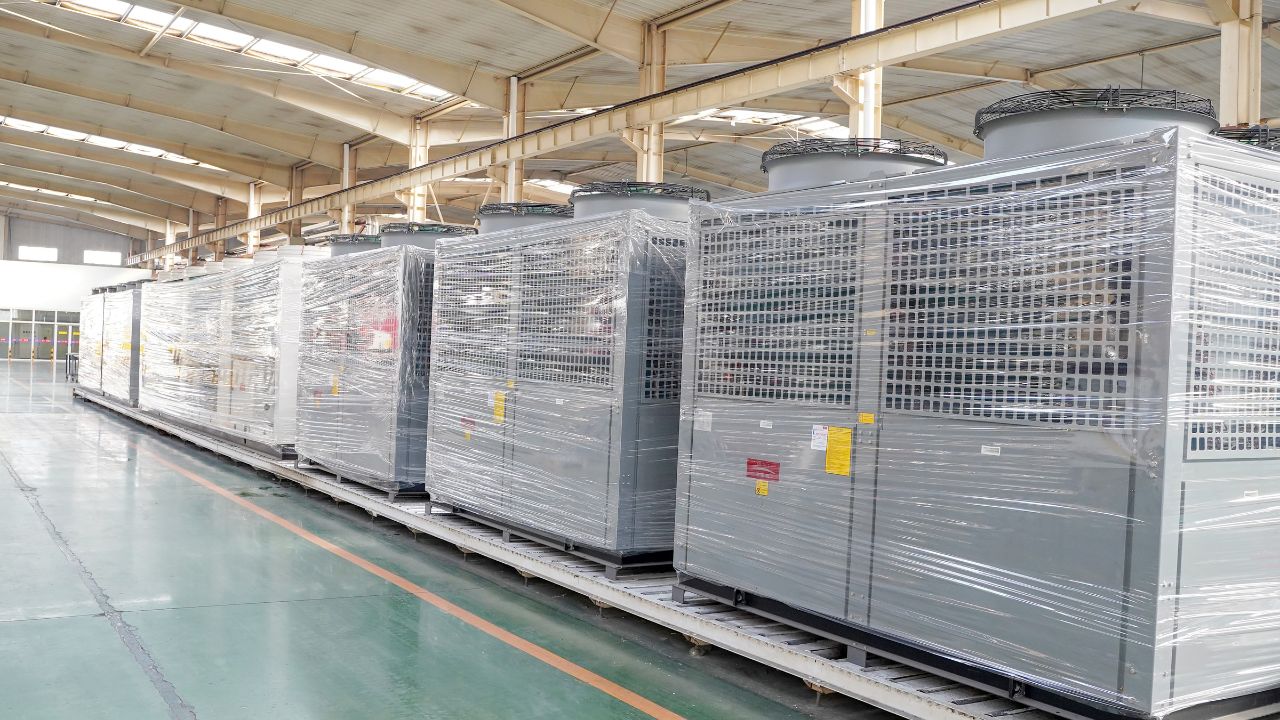
Choosing the best chiller refrigerant deals with balancing safety, efficiency, long-term viability, and environmental impact. As regulations and technology evolve, selecting compliant and sustainable refrigerants delivers future readiness and great system performance. Making the best decision will not just optimize the cooling efficiency, it also ensures a more sustainable and greener HVAC industry.
FAQs
How do ambient conditions affect the performance of a refrigerant in chiller systems?
Humidity and ambient temperature affect the cooling capacity, efficiency, and pressure of a refrigerant. Greater ambient temperatures increase the workload, reduce the efficiency, as well as alter the optimal performance of the refrigerant.
Can you retrofit existing chillers to use eco-friendly and newer refrigerants?
Yes, you can retrofit chillers, but you must verify the operational pressures, oil types, and components. Professional evaluation provides safety, performance, and complying with environmental regulations.
What are the necessary safety precautions when storing or handling refrigerants?
Prevent open flames, ensure proper ventilation, make use of protecting gear and ensure that cylinders are stored uprightly. Only work with trained personnel when dealing with contamination, injuries, and leaks.
How does the refrigerant type affect operational costs and maintenance in the long-run?
Efficient refrigerants and those with low GWP reduce energy consumption, extend the equipment’s lifespan, and reduce the frequent needs for maintenance. Choosing the wrong refrigerant could increase costs, including energy costs, water costs, etc.
What standards or certifications govern the use of refrigerants in industrial chillers?
Refrigerants make use of standards such as ISO 817, EPA Section 608, etc. Adhering strictly with these standards ensure safety, environmental responsibility, etc.


 English
 Spanish
 Arabic
 Vietnamese

