


Chiller Solution to Match Bead Mills Brand










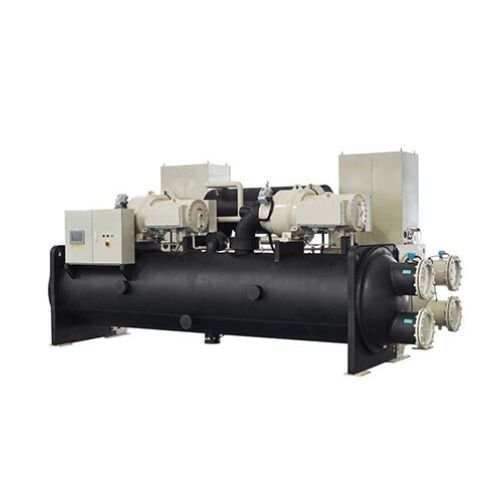
Features of ChillerOne Chillers For Bead Mills
- ChillerOne Chillers for Bead Mills offer cooling capacities up to 200 tons.
- Our chillers for bead mills provide temperature control ranging from 20°F to 70°F, suitable for your various machines.
- The chillers have finned evaporators immersed in the chilled water tank, preventing refrigerant ice formation and enhancing load capacity for process applications.
- Equipped with integrated components and additional protective devices, the chillers can control temperature, pressure, and refrigerant level fluctuations during emergencies, preventing deviations from setpoints.
ChillerOne ---- Professional Process Chillers Supplier for Bead Mills
ChillerOne is a professional chiller supplier from China. Our compact, easy-to-install chillers for bead mills can serve multiple industries including food & beverage, fermentation, medical, and chemical. Our equipment supports remote control and start/stop functions for convenient operation. With reliable performance, any operational faults or performance delays are immediately sent to your mobile device, allowing you to monitor equipment performance and status anytime.
You can enjoy a 24 months warranty after purchase. Contact us immediately for a quote.
Types of Chillers Available for Bead Mills
For bead mills, the most commonly used chillers also include both water cooled and air cooled types. If you require a broader sub-zero temperature range, you can choose chillers that circulate a glycol water mixture.

Air cooled water chillers utilize air as the heat transfer medium, they typically have a simple structure and flexible installation. As well as an affordable price. These chillers are suitable for grinding machine production lines with limited space or small-to-medium scale operations, or bead mill equipment used in laboratories.

Compared to air cooled water chillers, water cooled bead mill chillers deliver more stable cooling capacity. From a long term energy efficiency perspective, water cooled chillers also exhibit lower energy consumption costs than air cooled alternatives. They are suitable for applications with sufficient water supply and space (requiring cooling tower placement), as well as larger scale bead mill production lines.

Unlike conventional chillers that use water as the circulating fluid, ethylene glycol bead mill chillers circulate a mixture of ethylene glycol and water. This characteristic enables them to provide lower cooling temperatures for your bead mills. It also effectively prevents material adhesion between grinding media and grinding beads, thereby extending the service life of both the grinding beads and the grinding machine.
Reliable Certification
Certified to ISO and CE requirements, these chillers ensure stable heat dissipation and meet global safety norms for industrial bead mill equipment.


Chillers for Bead Mills in Different Applications
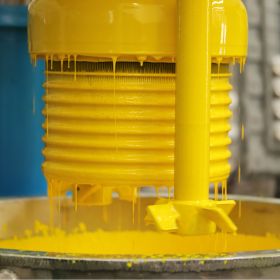
In paint production, bead mill chillers can stabilize the paint temperature through continuous cooling, ensuring color and texture remain unaffected by heat.
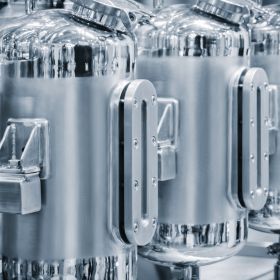
For chemical production, the chiller for bead mills plays a crucial role for heat sensitive chemical substances and slurries. It maintains the stability of these materials and controls the normal temperature of chemical reactions, ensuring orderly chemical production.

Pharmaceutical industry often demands higher production stability and that is why bead mill chillers are required for temperature control. During drug homogenization, the cooling function of chillers prevents active ingredients from deactivating under high temperatures, thereby safeguarding drug efficacy and quality.
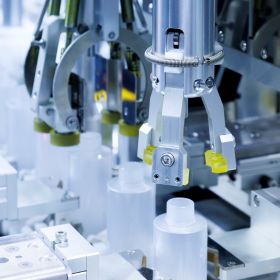
During cosmetics manufacturing, bead mills and chillers play an important role in grinding substances like emulsions, preventing temperature fluctuations from affecting the texture and structure of cosmetics and ensuring the quality of the finished product.
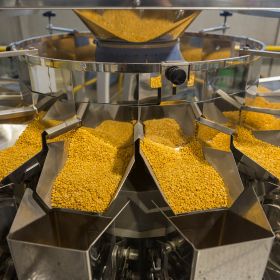
In food processing, the temperature control function of chillers is significant for preserving food flavor during pearling. It prevents temperature changes during grinding from altering the properties of sauces and other foods.
See the bead mills chillers in Action
Watch how the bead mills chillers delivers stable temperature control, fast cooling response, and reliable performance in real industrial working conditions.
Why Do Bead Mills Need Chillers?
During the processing of bead mills, the grinding beads within the grinding chamber continuously rotate and rub against the slurry. This process typically generates significant heat due to the intensity of the friction. But a chiller can prevent the overheating and deterioration of the material, this is one reason why a chiller is needed to cool your bead mill.
Bead Mills Chillers Working Principle
- When chilled water flows through the jacket surrounding the grinding chamber of the bead mill, the low temperature circulating water exchanges heat with the internally heated grinding chamber, which generates high temperatures due to friction and carries away the heat produced within the chamber.
- Then, the circulating water that is heated by absorbing this thermal energy, will enter the chiller. Within the evaporator, it comes into contact with the refrigerant inside the chiller, undergoing another heat exchange to cool itself.
- The heat absorbed refrigerant vaporizes and is transported by the compressor to the condenser. There, it will condense and liquefy through contact with a medium such as air (in air cooled chillers) or cooling water (in water cooled chillers). Finally, it passes through the expansion valve back to the evaporator, where it starts another phase change, completing the cooling cycle.
- The circulating water cooled by the chiller then returns to the bead mill at a low temperature, continuing to absorb the substantial heat generated by friction within the grinding chamber and other components.
Functions of Chillers for Bead Mills
Control the Temperature
During the operation, chillers will cool the bead mills by continuously supplying cold water to the bead mills, which can effectively control the temperature of the machine in a previously set range.
Thus, when the bead mills are working, they will not appear over heating or or large fluctuations of the temperature, ensuring a stable process for your application.
Protecting Bead Mills
Another important function of the chillers used for bead mills is that they protect the devices. By providing a continuous supply of cold water, they stabilize the machine’s temperature, preventing thermal expansion of components or abnormal wear within the grinding chamber caused by high temperatures. This extends the equipment’s service life.
Preventing High Temperatures from Affecting Products Quality
Excessively high grinding temperatures may also affect the properties of your products. Thus,another important function of the chiller is to protect your materials from degradation caused by high temperatures, preventing the changes in appearance, structure, and other aspects. More importantly, it maintains the product quality and ensures your production efficiency.
Tips To Choose Proper Chiller For Bead Mills
Select Based on the Power and Size of the Bead Mill
When selecting a chiller for your bead mill, you need to first consider whether it is compatible with your facility and the bead mill itself. You can begin by confirming the chiller’s dimensions and choose a unit that fits the available space.
Next, based your selection on the bead mill’s cooling requirements, you should take into account its size and power rating. Finally, you will find a chiller with appropriate dimensions and capacity to meet the specific cooling needs of your bead mill.
Consider the Chiller’s Cooling Efficiency
A high efficiency chiller refers to one that consumes less energy while maintaining the same temperature control range. Considering refrigeration efficiency is crucial for saving long term operating costs. If your bead mill operates at a large scale and requires continuous operation, a high efficiency chiller is the optimal choice.
Considering The Thermal Sensitivity Of Bead Grinding Materials
When selecting chillers for your bead mill, you should choose one with various degrees of temperature control precision based on the material’s thermal sensitivity. So that you can ensure the smooth progression of the bead milling process.
Consider Your Budget
Of course, your budget remains the most important factor to consider. You should evaluate the refrigeration efficiency, cooling medium, and compatibility with your bead mill production line before selecting the product offering the best value for money.
For multiple bead mills, you can cool them through centralized cooling. The specific operation involves connecting fixed water lines to each bead mill and providing refrigeration by a single chiller unit.
For larger scale facilities, water cooled chillers can be employed to handle multiple cooling requirements. While smaller installations with only a few bead mills can be cooled by using either one-to-one air cooled chillers or centralized cooling provided by a single air cooled chiller.
If your bead mill lacks a chiller for cooling during grinding, your material is likely to suffer adverse effects such as degradation, discoloration, and deactivation of components due to overheating. This increases scrap rates in production. Or even worse, your equipment may sustain irreversible damage from inadequate heat dissipation.
In fact, it’s not just the grinding chamber of your bead mill that requires cooling. Components of the machine body that are equally susceptible to high temperatures such as the spindle and bearings also need to be cooled by a chiller to prevent their service life from being compromised by excessive heat.


 English
 Spanish
 Arabic
 Vietnamese

