

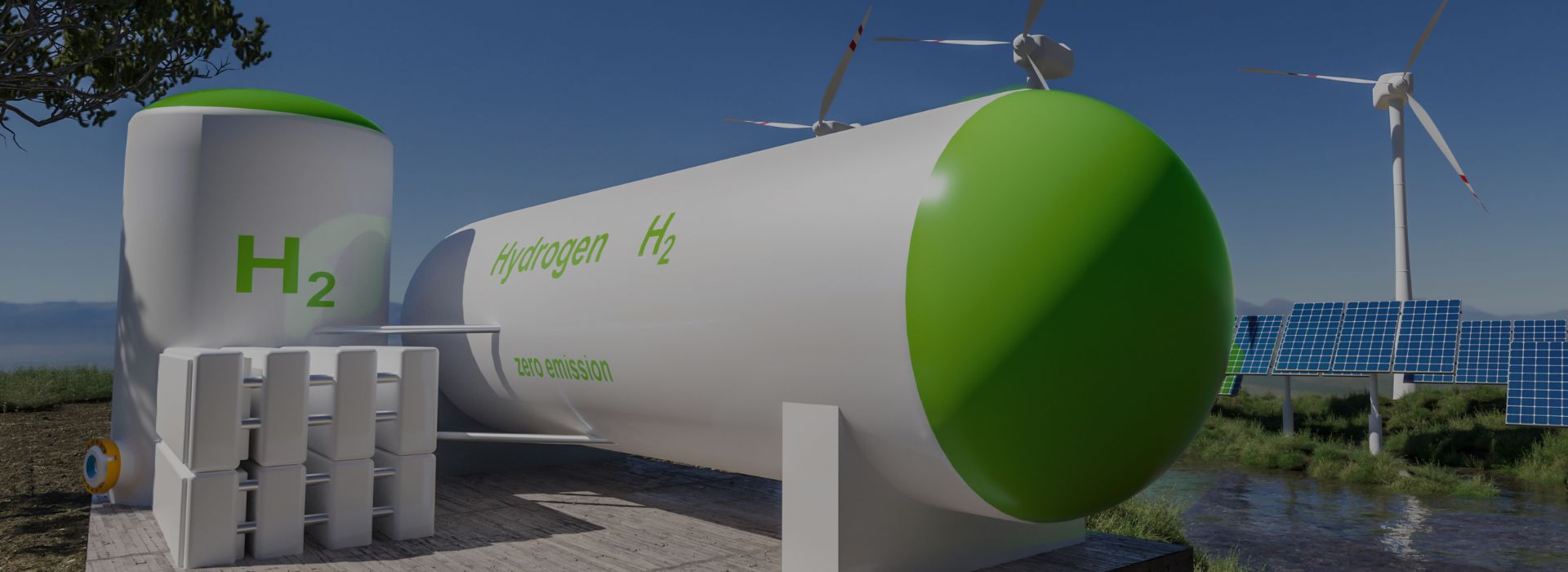
Chiller Solution to Match Hydrogen Production Brand










Features of Chillers for Hydrogen Production
- Precisely control electrolyzer operating temperature to ensure high efficiency and stability of hydrogen production;
- Reduce thermal stress to extend the service life of electrolyzers and other key components;
- Support continuous operation and prevent unexpected downtime caused by overheating;
- Chillers for hydrogen production meet high safety demand on explosion protection and electrical safety;
- High-efficiency design significantly reduces energy consumption and the entire costs.
ChillerOne – Your Reliable Hydrogen Production Chillers Supplier
As an important device within hydrogen production, the chiller offers high control precision and reliable cooling capacity to enhance the production efficiency. It is necessary to prevent overheating issues thereby extending equipment service life. If you have more questions about the hydrogen production chiller, please feel free to contact ChillerOne for professional solutions.
Types of Chillers for Hydrogen Production
For hydrogen production projects with different scale, installation conditions, and other demands, you can choose different types of chillers. Choosing a suitable chiller is helpful to achieve a balance between efficiency, reliability, and costs. The following are commonly used chiller types for your reference.

- Features: The air-cooled chiller is equipped with a fan to directly dissipate the heat from the condenser into the external air. This type of chiller does not require a cooling tower or complex water treatment system, and is easy to install due to its tight structure. While for environments with high temperature or high humidity, its efficiency may be decreased. In addition, the independent air-cooling design reduces water consumption and simplifies daily operation and maintenance.
- Applications: This type of chiller is widely used for hydrogen production systems at all scales, or some projects that are limited by space. Based on its flexible installation and low maintenance cost, the air-cooled chiller is also used in distributed hydrogen generation units, demonstration hydrogen projects, and other similar applications.

- Features: Unlike the air-cooled chiller, the water-cooled chiller employs a cooling tower to achieve high cooling efficiency. It uses circulating water as the primary heat transfer medium, offering higher heat exchange efficiency and more stable cooling performance than air-cooled chillers. While the initial investment and footprint of a water-cooled chiller is relatively high due to its cooling water systems.
- Applications: The water-cooled chiller is very suitable for large-scale industrial hydrogen production projects and high-load operation conditions. A water-cooled chiller used for hydrogen production is also one of the most important components for cooling works of PEM, SOEC, and more. The chiller is useful to provide continuous and stable cooling capacity for hydrogen production processes.
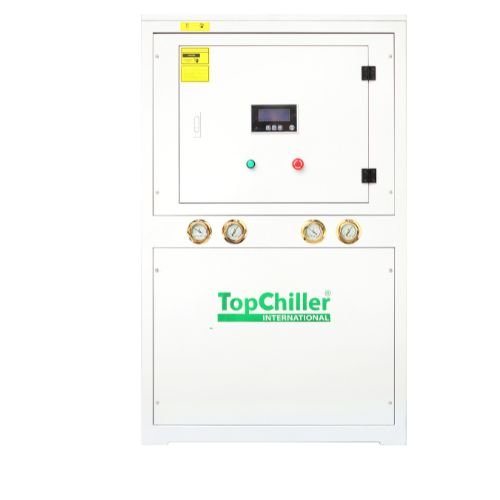
- Features: Scroll chillers for hydrogen production use multiple small-capacity compressors in parallel, making their structures more tight. This type of chiller also features less moving parts, reducing the friction loss and failure rate to achieve high reliability. In addition, if your project is sensitive to noise, the scroll chiller is a good choice. It also offers excellent coefficient of performance in the small-to-medium cooling capacity range.
- Applications: This chiller is suitable for small-scale PEM electrolyzer cooling solution, laboratory hydrogen generation systems, and other similar applications due to its small capacity. For large-scale projects, this chiller is mainly used as the auxiliary cooling unit or standby unit to adjust heat load and temperature.

- Features: The single unit capacity of the screw chiller is larger than scroll chillers, which is suitable to handle large-scale heat loads. The screw chiller also supports stepless regulation, adjusting its capacity based on actual cooling requirements. It can maintain high efficiency even in changing conditions, offering high stability and reliability. The main moving components of this chiller are also easy to maintain for a long service life.
- Applications: The screw chiller is especially suitable for large or medium scale projects, maintaining continuous operation to ensure high hydrogen production efficiency. It is also the primary cooling system within the megawatt-scale and larger PEM or alkaline water electrolysis hydrogen production process.

- Features: The split system chiller for hydrogen production separates the refrigeration unit from the heat dissipation unit, which can prevent heat concentration within the workshop. By installing units that are prone to generate heat in the outdoor environment, it not only prevents overheating issues, but also decreases noise level. The chiller also enhances the entire production safety to meet strict standards of industrial safety.
- Applications: The split system chiller is widely used in hydrogen production facilities that demand high safety levels, significantly reducing safety risks. For projects with complex space layout and require separation between electrical equipment and hydrogen environment, the split system chiller also offers higher flexibility to optimize layout.

- Features: Industrial process chillers support customization based on specific hydrogen production processes, you can choose proper configuration for your project. It typically features high precision for controlling temperature and rapid response speed. This type of chiller can be integrated with the automation control platform of the hydrogen production system, achieving highly flexible control and precise cooling.
- Applications: This type of chiller can directly serve electrolysers, gas treatment systems, or critical process nodes. It is also suitable for hydrogen production applications that have high demand for stability and process control. In addition, the process chiller is common in electrolyzer body cooling, ensuring it maintains optimal efficiency.
Reliable Certification
All chillers have passed global certification audits and maintain stable performance to satisfy the demands of modern hydrogen production lines.


See the Hydrogen Production Chiller in Action
Watch how the Hydrogen Production Chiller delivers stable temperature control, fast cooling response, and reliable performance in real industrial working conditions.
Why Hydrogen Production Need Chillers
In the hydrogen production process, the temperature is a key factor that is directly connected to the production efficiency, system stability, and equipment lifespan. While a proper chiller is useful to ensure continuous and safe operations. The following are core factors helping you better know why the hydrogen production requires a chiller.
Heat Load Generation
The hydrogen production process generates a large amount of heat, including electrolytic reaction, electrolyzer, hydrogen compression process, and more. If these heat cannot be removed in time, the system temperature may be increased. Within continuous operations, heat sources of the hydrogen production process can accumulate leading to thermal buildup. Due to its multiple heat sources and high heat loads, the hydrogen production requires a highly efficient and stable cooling solution.
Temperature Control Requirements
Different types of hydrogen production technologies feature different optimal operating temperature ranges. For example, the PEM electrolyser is extremely sensitive to the operation temperature. Too high temperature will accelerate key components aging thereby decreasing electrolytic efficiency. While excessively low temperature also affects the reaction rates and system output capacity. The hydrogen production system needs to maintain stable and precise temperature to achieve high efficiency and reliability, while also extending the service life.
Compression Process Requirements
Hydrogen features an extremely low density, which needs to be compressed to facilitate storage and transportation. During the compression process with high pressure, the temperature of the hydrogen will rise sharply. If you do not cool it timely, the high temperature may damage compressor seals, while also causing insufficient filling volumes due to thermal expansion and contraction. Heat generated by the compression process must be controlled within a safe range to maintain operation safety and efficiency.
Liquefaction and Purification
Hydrogen liquefaction can be completed by the extremely low temperature, achieving small volume, which is easy to store or transport. Chillers for hydrogen production are suitable for cooling hydrogen to its liquefaction temperature. It is also important for the purification process to prehandle water vapor content of the hydrogen freshly produced from electrolysers. Through the chiller, the temperature of hydrogen streams can be cooled below its dew point, thereby allowing moisture to condense and separate.
Advantages of Chillers for Hydrogen Production
Stable Efficiency
Hydrogen production systems typically require an optimal temperature range to ensure stable electrochemical reaction efficiency. The chiller is helpful to prevent energy efficiency losses caused by excessive heat or cold. Its stable cooling capacity significantly reduces efficiency fluctuations within the high-load or continuous operation condition. It provides high reliability for you to ensure predictable and controllable hydrogen output.
Extend Service Life
Through a suitable chiller, common failures within the hydrogen production process such as temperature instability or frequent fluctuations can be solved. It significantly decreases the impact of thermal stress on key components, such as electrolyzer membrane materials, electrode assemblies, and sealing components. The chiller offers stable thermal management to extend the entire service life of the hydrogen production.
Enhance System Reliability
The chiller for hydrogen production provides continuous and stable cooling supply, preventing failures or other system risks caused by overheating. This not only protects core components of the hydrogen production system, but also helps you reduce economical loss caused by sudden downtime. For large-scale projects, the reliable chiller is directly connected to the stability of the entire hydrogen production process.
High Safety
Due to the highly flammable feature of hydrogen, the hydrogen production system typically has high safety demands. Chillers for hydrogen production can be equipped with explosion-proof design, reducing potential safety risks. By removing excess heat from the hydrogen production system, the chiller is important to prevent fire and achieve electrical safety, meeting strict industrial safety regulations and industry standards.
Low Energy Consumption
Highly efficient chillers support adjusting capacity to meet different condition demands, achieving optimal coefficient of performance (COP). The chiller for hydrogen production also focuses on the part-load performance to enhance operation efficiency. This not only reduces electricity consumption, but is also helpful to control the entire costs. If you pursue sustainable development, a suitable chiller for hydrogen production is necessary.
Applications of Chillers for Hydrogen Production
Electrolytic Hydrogen Production System
The chiller is commonly used in electrolytic hydrogen production systems such as the PEM. In the electrolysis process, with a large amount of electrical energy being converted into chemical energy, heat will also be released continuously. The chiller is used to remove these heat to maintain normal operation temperature, ensuring stable reactions. It is also suitable for SOEC as a thermal management device, preventing system failures caused by overheating.
Hydrogen Compression System Cooling
After the hydrogen production, hydrogen needs to be multi-stage compressed to meet the demand of storage and transportation. Chillers for the hydrogen compression system support cooling the compressor unit and its lubrication system, helping this process operate within stable temperature. The chiller offers stable cooling capacity to improve the reliability of hydrogen compression systems, reducing maintenance rate to achieve high efficiency.
Hydrogen Post-Treatment Process
To meet the purity requirements for fuel cells or industrial hydrogen use, hydrogen requires purification and drying, which are sensitive to heat. A chiller is widely used to provide a cooling support for the drying process, while also removing heat generated during this process. Stable temperature conditions are important to improve the hydrogen purity uniformity, preventing product quality fluctuations caused by temperature variations.
Hydrogen Refueling Station
Chillers are also widely used in the hydrogen refueling station, and are responsible for ensuring stable and safe operation of equipment. For urban and transportation hubs that are sensitive to space, the chiller can offer optimal structure to reduce space layout, while also decreasing the noise level. It is also useful for hydrogen refueling stations to achieve stable hydrogen supply, meeting both safety and environmental requirements.
Based on the actual project scale and heat load, you should determine the required cooling capacity and temperature precision. It is also important to choose the chiller that meets safety standards such as explosion-proof design, ensuring electrical safety during the hydrogen production process. For large-scale projects and facilities, a high-efficiency chiller is helpful to reduce electric costs. If you have requirements, you can choose the chiller with high compatibility, making it better integrated with existing automated systems.
The PEM electrolyser features tight structure and high current density that are prone to generate heat. It has high demands on temperature control precision and response speed. This type of electrolyser typically employs closed-loop deionized water systems to directly cool the electrolyzer stack. While alkaline electrolysers generate alkaline solution after the hydrogen gas separation, which also requires cooling capacity. The alkaline electrolyser requires a chiller with high capacity and reliability.
The two types of chillers are both suitable for industrial hydrogen production, but water-cooled chillers are more common in large-scale projects. The water-cooled chiller offers higher COP than an air-cooled chiller, and features more stable operation processes with low noise levels. It is suitable for large and continuous-operation hydrogen production, and must be equipped with cooling towers and circulating water systems.
The chiller for hydrogen production needs to be installed in a well-ventilated area, away from flames and potential ignition sources to prevent explosion. It is better to install sensors around the chiller to monitor hydrogen leak, reducing unexpected safety risks. You should also maintain the chiller regularly, such as condenser cleaning and refrigerant pressure checks. Its sealing performance should be also focused to prevent cooling water leakage.
The chiller supports being equipped with variable frequency compressors and pumps to achieve stepless adjustment based on actual heat loads. This not only enables on-demand cooling, but also significantly reduces energy loss during partial load operation. The control system of chillers also features smart prediction to adjust key parameters during operation processes, ensuring temperature stability during power fluctuations. If your project features large scales, additional cold storage tanks are suitable for auxiliary cooling during peak hydrogen production periods.


 English
 Spanish
 Arabic
 Vietnamese

