


Chiller Solution to Match Injection Molding Machine Brand









Features of ChillerOne Injection Molding Chillers
- ChillerOne ‘s air cooled chillers have copper coated condensers with high heat load capacity, dissipating heat from processing machinery through ambient air circulation around the condenser.
- ChillerOne ‘s water cooled chillers with cooling capacity up to 500 tons use throttling systems to release pressure and compressibility in condensed refrigerant, ensuring stable circulation for heat dissipation throughout the process.
- Our water cooled chillers are engineered for exceptional durability, with a compact stainless steel housing and ergonomic installation design. This corrosion resistant construction prevents any maintenance related damage to the equipment.
- Main compressors from renowned brands including scroll compressors: Panasonic,Danfoss, Copeland, Sanyo, and Screw compressor: Hanbell and Bitzer.
ChillerOne - Professional Injection Molding Chillers Supplier
ChillerOne is a professional manufacturer of air cooled chillers, water cooled chillers, and glycol chillers based in China. Our chillers hold multiple certifications including ISO9001 and CE. Each chiller will undergo strict quality inspection before the shipment, you can trust the quality of your industrial chiller purchase.
Our water cooled chillers have simple installation and can be used both indoors and outdoors. Indoor applications use mechanical supports, while outdoor installations employ power supplies with comprehensive protection features. The corrosion resistant insulation coating on water wet surfaces and internal coils provides lubrication, ensuring quiet operation of the unit.
Types of Chillers Applicable to Injection Molding
The chillers that can be used in injection molding include both the water cooled one and the air cooled types. The main differences between them lie in the cooling medium, below I will give you an overall introduction.

Water-cooled chillers use water as the heat transfer medium. Thanks to water’s high specific heat capacity, they provide excellent heat transfer efficiency. During operation, the refrigerant absorbs heat from the circulating fluid and then releases this heat to the cooling water inside the condenser. The cooling water continuously circulates between the chiller and the cooling tower, where the absorbed heat is dissipated, ensuring stable and efficient system performance.

Air cooled chillers require no cooling tower installation. The refrigerant will absorb heat from the circulating liquid and dissipate it through the surrounding air, thereby promoting condensation and maintaining an orderly refrigeration cycle. Thus air cooled chillers have lower costs and simpler installation compared to water cooled ones. In most cases, their cooling abilities are not as effective as water cool chillers, but they are very suitable for environments with limited space or water resources.
Reliable Certification
Certified in Chillers for Injection Molding Machines – skilled in selection, operation, and troubleshooting. Ensures precise mold cooling, cycle stability, and energy efficiency for high-quality plastic parts.


Applications of Injection Molding Chillers In Different Areas
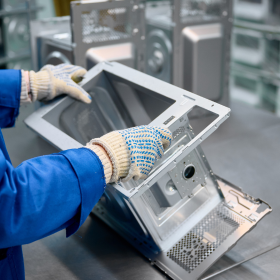
In the injection molding of electronic enclosures, effective cooling ensures precision in every detail, enabling seamless assembly during molding for aesthetic appeal. It guarantees consistency in mass production and excellent surface finish, resulting in high quality electronic products.

The production of office supplies places greater emphasis on scale. A stable cooling system enables rapid mass production of office supplies, achieving fast cooling and quick demolding for items such as folders and stationery accessories. This significantly improves the manufacturing efficiency while reducing dimensional errors caused by excessive temperature fluctuations.
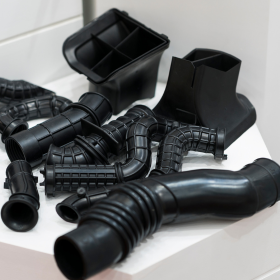
In mechanical and automotive manufacturing, you often need to work with parts of various sizes and complex shapes that must be assembled with different components. This field demands high precision and cooling requirements. You must ensure rapid cooling and demolding to preserve the integrity of complex parts, while also delivering uniform and consistent cooling effects to guarantee high quality components.

Products manufactured using injection molding in the toy industry are typically with various colors and have different shapes. The cooling function of chillers ensures continuous production, guarantees consistent dimensions and intricate details in mass production, as well as preventing issues like product deformation caused by high temperatures. This plays a significant role in fast paced, high volume manufacturing undoubtedly.
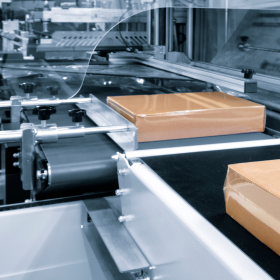
Common plastic packaging also features thin walled structures, thus requiring prompt and continuous cooling to rapidly form the product. This ensures integrity during demolding, maintains consistency across each item in mass production, and enables rapid manufacturing.

In the medical field, injection-molded parts typically include housings for medical devices, syringe casings, and similar components. Chillers can also provide stable temperature control during injection molding, ensuring the integrity and sealing of these parts. This guarantees production efficiency to meet the high demand for such components in the medical sector, particularly for disposable injection-molded parts.
Choose Chillers for Injection Molding Machine
- Chillers for Injection Molding Machine
- Water Cooled Chiller vs Air Cooled Chiller
| Brand | Models / Series We Can Match with Chillers |
| Haitian | Mars Series (MA5), Jupiter Series, Zhafir Venus Series, Zhafir Zeres Series, Jenius Series |
| KraussMaffei | CX Series, GX Series, MX Series, PX Series, New All-Electric PX Series, powerMolding |
| Sumitomo (SHI) Demag | IntElect, IntElect with Medical Package, El-Exis SP, Systec, IntElect Multi |
| ENGEL | e-mac, e-motion, victory, e-victory, duo, duo speed, t-win, e-cap, e-speed, insert |
| ARBURG | ALLROUNDER Alldrive, ALLROUNDER Hidrive, ALLROUNDER Golden Electric EVO, ALLROUNDER More, ALLROUNDER 470 H, ALLROUNDER 520 H, ALLROUNDER 570 H, ALLROUNDER 720 A |
| FANUC | ROBOSHOT, ROBOSHOT α-SiB series, ROBOSHOT α-S15iB, ROBOSHOT α-S100iB, ROBOSHOT α-S150iB |
| NISSEI | NEX-V Series, FNX-IV Series, FNX-III Series, PNX Series, FVX-III Series, NEX-III Series, NEX-IIIT Series |
| Milacron | Q-Series, eQ-Series, M-Series, L-Series, Cincinnati Series |
| WITTMANN BATTENFELD | EcoPower, EcoPower Xpress, MicroPower, MacroPower, SmartPower, VPower, VM |
| Shibaura Machine | EC-SXIII Series, EC140SXIII, EC390SXIII, EC610SXIII, EC950SXIII |
| Chen Hsong | MK6 Series, MK6 PRO, SPARK Series, SUPERMASTER TP, SM-TP Advanced, JM168-MK6, JM208-MK6 PRO, SM180-SPARK, SM700-TP |
| Features/Types | Water cooled chillers | Air cooled chillers |
| Cost | Higher | Lower |
| Installation environment | Need bigger space Can work under high temperature | Suitable for areas with limited spaces or water Need environment with good ventilation |
| Maintenance | More complicated | Simpler |
| Performance | Better cooling effect | Limited cooling effect |
| Applicable Applications in Injection Molding |
|
|
See the Injection Molding Machines Chiller in Action
Watch how the injection molding machines chiller delivers stable temperature control, fast cooling response, and reliable performance in real industrial working conditions.
Why Do Injection Molding Machines Require Chillers?
In fact, using a chiller can enhance the results of injection molding, and chillers do play a vital role in the current injection molding industry today. When employing a chiller, your products are able to avoid adverse molding defects like curling or warping caused by sustained high temperatures. Moreover, your machine will be protected from damage or reduced lifespan caused by excessive heat.
In one word, chillers are significant parts to ensure the factory safety and maintaining molding quality. This is why chillers are essential auxiliary equipment in injection molding.
What are the Advantages Of Using Chillers for Injection Molding Machines?
Shorten The Injection Molding Cycle
Now, setting aside the protective role of chillers and from the perspective of molding results, the cooling function of the chiller enables rapid product formation without requiring lengthy natural solidification times. This capability effectively shortens production cycles and supports fast delivery, allowing your rapid, high volume production to become highly automatic.
Another equally important feature you should note is that you don’t need to frequently start or stop the machine to allow it to cool down naturally. And your machine won’t be affected by the abnormal high temperatures and shutdown automatically, all of which improve the production efficiency.
Improve The Quality Of Injection Molding Products
When shortening the production cycles, chillers also can effectively enhance the product quality.
For example, if your injection molding machine isn’t paired with a chiller, your products are likely to develop issues like warping or shrinkage due to sustained high temperatures, which are particularly common with plastics. However, timely cooling can prevent these problems. Effective cooling ensures the surface finish quality in injection molded parts and maintains dimensional and shape consistency across big production scales, thereby safeguarding your product quality.
Prolong The Service Life of Injection Molding Machines And The Plastic Molds
Apart from the impact on your products, the functions of a chiller on your injection molding machines and molds are also significant. The circulating water within its cooling system efficiently absorbs heat generated by the machine and mold during operation. Then, the chiller will cool this water continuously and promptly, maintaining your injection molding machine at a stable operating temperature. This prevents high temperatures from damaging machine components or molds, thereby extending the equipment’s lifespan for prolonged operation.
How To Choose The Right Chillers For The Injection Molding Machines?
Calculate the needed Cooling Capacity of the Injection Molding Chillers
Before purchasing a chiller equipment, you must first calculate and confirm the specific cooling capacity required, then select a chiller with appropriate refrigeration capacity based on this value.
We typically use a fixed formula to calculate the required cooling capacity:
Required Cooling Capacity (tons) = Water Flow Rate in the Injection Molding Machine Cooling System × Temperature Difference ÷ 0.86 ÷ 3.517
Here, 0.86 and 3.517 are fixed parameters you can use directly. The temperature difference is measured in degrees Celsius, and the water flow rate is measured in cubic meters per hour.
After calculating the specific value, you can confirm the machine’s cooling capacity by consulting the product specifications or contacting customer service. Select a machine with a capacity greater than your calculated figure. An excessively large capacity may lead to waste, while an insufficient capacity could result in inadequate cooling performance and unsatisfactory outcomes.
Consider The Parameters Of Your Injection Molding Machines
When selecting an equipment, your decision should also be based on the specific parameters of your injection molding setup, such as the machine’s weight, power rating, and mold dimensions, as these values directly determine your machine’s cooling requirements.
Heavier and more powerful injection molding machines will have higher cooling demands, as they typically generate more heat during operation. Meanwhile, the size and complexity of the injection mold determine its required cooling water flow rate. Larger molds or multi cavity molds necessitate high flow cooling fluids. In summary, these parameters of the injection molding machine are equally critical factors in your selection process.
According To The Type Of Injection Molding
Similarly, your choice can also be based on the specific type of injection molding, as different molding processes have distinct cooling requirements. For example, Thin walled parts demand higher cooling performance, they require powerful and rapid cooling to achieve fast molding. This can prevent uneven cooling from causing flash or breakage, which would reduce production efficiency.
On the other hand, Multi cavity molds require a high flow cooling fluid to distribute evenly throughout the mold, ensuring comprehensive cooling and avoiding the reduced product quality or even molding failures caused by the uneven cooling effect.
Consider The Installation Environment
The installation environment is equally important. You must verify the actual installation area and ventilation conditions. Water cooled chillers typically require more space because you need to accommodate the separate cooling tower. On the other hand, water cooled chillers have a compact design and are suitable for smaller spaces. However, since their heat dissipation capability is generally inferior to water cooled units and they rely on ambient air to remove internal heat, air cooled chillers must be installed in environments with superior ventilation.
If you still have some questions, you can contact our sales engineers for more information.
Insufficient cooling during injection molding may lead to mold release failure, causing warping, short shots, deformation, and sticking during the ejection stage, thereby compromising the quality of your final product.
Furthermore, inadequate cooling significantly impacts processing cycles, slowing down production efficiency. Therefore, the installation of chillers is essential in the injection molding industry to prevent these issues from happening.
In injection molding, processes with higher cooling demands include thin wall molding, multi cavity injection molding, and high speed molding. These all require sufficient cooling capacity to ensure stable and timely cooling. For example, this capability prevents issues such as sticking and difficult demolding caused by insufficient cooling in thin wall production, while also avoiding numerous product defects.
Yes, you can connect one chiller with several injection machines, this not only can save your space, but also can improve the energy utilization. However, what you should notice is to design the connection tape properly in order to let it work fluently.
Actually, the answer is yes. While operating a chiller does require additional electricity, it still can shorten the production cycles by maintaining stable equipment temperatures. This prevents equipment malfunctions caused by overheating, finally helping you avoid many additional energy consumption issues stemming from high temperatures.
When maintaining injection molding chillers, your tasks include regularly inspecting the water quality of the circulating water or cooling water (for water cooled chillers) and checking for corrosion on components. Additionally, clean chiller parts such as the condenser. While these tasks may seem straightforward, they genuinely extend the lifespan of your chiller. If your equipment is placed outdoors, you must pay extra attention to whether it has the necessary protective measures.
Generally speaking, your injection molding chiller requires an operating temperature range between 5°C and 25°C. However, for injection molding machines with high cooling demands such as thin wall molding or high speed molding,this range may need to be lower.
Don’t worry, ChillerOne injection molding chillers offer a cooling range from -35°C to 25°C, meeting your diverse needs. Contact us immediately for a quota.
In fact, it’s difficult to directly conclude whether air cooled or water cooled chillers are better for injection molding. You need to determine which is more suitable based on actual application requirements. For example, air cooled chillers are better suited for applications with limited space or budget constraints and lower cooling demands, while water cooled chillers are more appropriate for high cooling demands applications and the cooling needs of large production lines.


 English
 Spanish
 Arabic
 Vietnamese

