


International Brands We Collaborate With


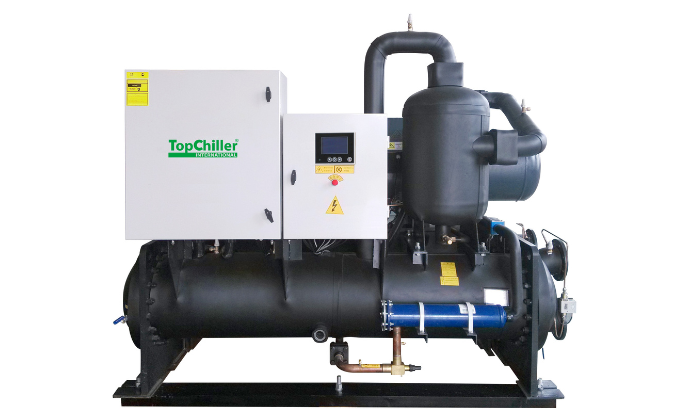
Features of ChillerOne Metal Finishing Chiller
- Made of stainless steel and titanium tube heat exchanger with anti-corrosion materials
- Equipped with a PLC system and high-sensitivity sensors, achieve up to -10℃ chilled temperature
- Saving your electricity bills while keeping a powerful cooling capacity
- Precisely controlling temperature can prolong bath life and accelerate process speed
- Both closed-loop and open loop circulation systems are available
Why Does the Metal Finishing Process Need Chillers
In many metal surface treatment processes, such as electroplating, anodizing, and electroless plating, the continuous operation of rectifiers and chemical reactions generates a significant amount of heat. It will trigger an increase in process temperature, thus impacting your product quality.
Overheating accelerates the deposition rate of metal ions, resulting in a rough coating and increasing the likelihood of defects such as burning and uneven thickness, leading to more customer complaints. Plus, a lot of the chemicals you add to the bath can break down or just stop working if the temperature gets too high. That ruins the bath faster, so you spend more on chemicals and throw out the solution more often. Also, prolonged high-temperature operation can damage your equipment, causing frequent downtime for maintenance and hindering on-time delivery.
Therefore, chillers are indispensable in the metal finishing process. They stabilize your process temperature, ensuring consistent product quality.

ChillerOne— Your Professional Metal Finishing Chiller Supplier in China
ChillerOne’s chillers are built to handle tough conditions. They resist corrosion, save energy, and keep temperatures steady—even when you’re running them hard, nonstop.
Choosing us, you will get better coating results and your chemicals last longer. That means less money wasted and more uptime for you.
Contact us now for a customized cooling solution.
Types of Chillers Used in Metal Finishing

Scroll chillers utilize scroll compressors. They’re compact, quiet, and work well for smaller or mid-size plating lines—basically, if you don’t need to cool huge volumes, these are a solid choice.
Moreover, they help save energy and have a low start-up load. And this type doesn’t take up much space, doesn’t make a racket, and is easy to look after. But if you’re running a big operation or need to cool things nonstop, scroll chillers just can’t keep up. Fortunately, they cost less to buy and maintain than the larger screw chillers.

Screw chillers with screw compressors and are suitable for metal surface treatment systems with high cooling capacity requirements, such as large-scale galvanizing, chrome plating, or large-scale chemical processing lines. These chillers offer higher reliability, keeping stable cooling under high-load, continuous industrial conditions, with cooling capacities usually ranging from tens to hundreds of tons.
However, they require a large footprint, have a higher purchase price and maintenance expenses. And, you should hire professional personnel to ensure regular maintenance.
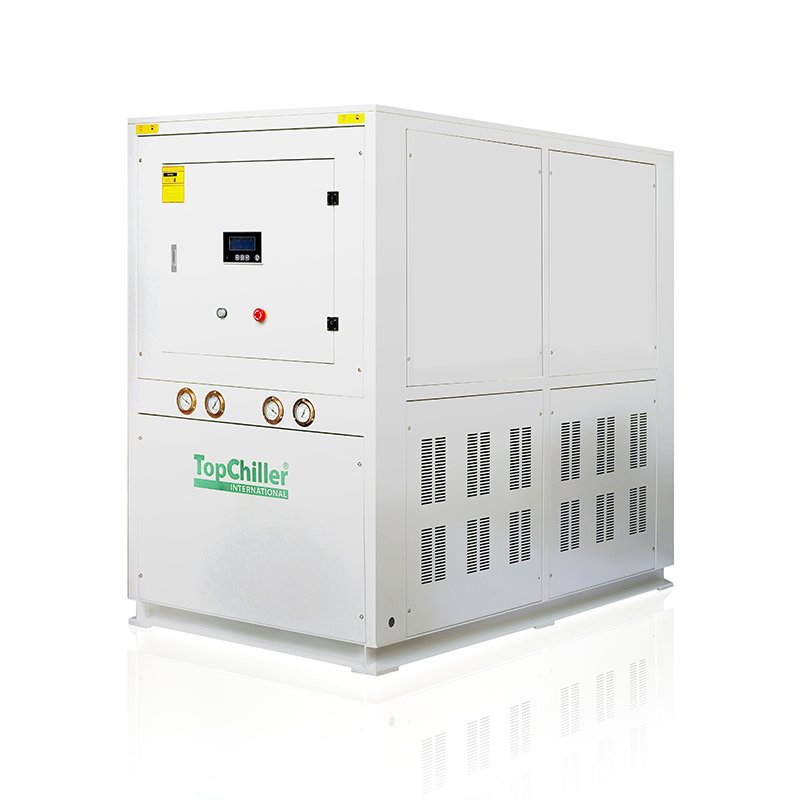
Water-cooled chillers use cooling towers to remove heat. They have high cooling efficiency and are ideal for large-scale, uninterrupted production processing lines. Such as large electroplating plants and multi-station plating tank systems. Meanwhile, it operates stably with low noise and also provides excellent cooling performance under high-temperature conditions.
However, it requires the additional configuration of cooling towers or water circulation systems, occupies a large space, and you need spend more money initially.

Air-cooled chillers dump heat into the air, so you don’t need extra plumbing or cooling towers. They’re easy to set up and fit well in smaller workshops or mid-sized plating lines. Moreover, you don’t need a lot of floor space, maintenance is straightforward, and they’re cheaper upfront.
However, its cooling efficiency is greatly affected by ambient temperature, and its performance will decrease in high-temperature environments. Meanwhile, its maximum cooling capacity is relatively smaller than that of water-cooled chillers, so it is not suited for ultra-large continuous production lines.
Advantages of Chillers for Metal Finishing

Our metal finishing chillers are made of stainless steel with an anti-corrosion coating, and components are also resistant to chemicals, delivering long-term stable operation without rusting or aging. Unlike ordinary industrial chillers, they significantly reduce your failure rate and repair costs, and are often seen in continuous production lines such as electroplating, oxidation, and pickling.

The chiller is equipped with a PLC intelligent controller and high-sensitivity sensors, which can monitor and automatically adjust water temperature and system pressure in real time, with a temperature control accuracy of ±1℃ or even higher. It helps you maintain stable process flow over the long term and reduces problems such as pitting and color inconsistencies.

The high-efficiency condenser and optimized heat exchange design guarantee stable cooling under high load conditions. You get reliable cooling without burning through electricity, so your power bills drop. For setups that use a lot of current or have multiple tanks going, a good chiller keeps heat under control all day, helping you keep costs down over time.

A chiller keeps your bath temperature steady. That means you get even plating, colors look consistent, and the coating sticks better. Problems like peeling or bubbling happen less often. Compared to just letting things cool naturally, using a chiller gives you more consistent results and better-looking parts. It’s a must if you’re aiming for high-end finishes.

With tight temperature control, your chemicals last longer. You replace solutions less often, save on chemical costs, and avoid as much downtime for bath changes, especially in continuous production lines, where the long-term savings in material and labor costs are substantial.

The chiller supports continuous and long-term operation, helping your production line achieve unstopped output and reducing rework and abnormal handling time. Thus, it can make your entire production line’s rhythm more controllable and increase the output per unit time.

The chiller can continuously cool down, preventing your process equipment from being in a high-temperature and high-pressure state for a long time, and avoiding problems such as aging of seals and deformation of pipelines. Therefore, the service life of your equipment can also be prolonged, and the safe operation of the entire line can be guaranteed.

We use environmentally friendly refrigerants and a closed-loop circulation system, generating almost no wastewater. And you will meet tough environmental rules, cut power use, use fewer chemicals, and spend less on maintenance. Over time, your investment pays off—lower costs, less hassle, and a smaller environmental footprint.
Reliable Certification
Certification validates our expertise in Chillers for Metal Finishing, ensuring optimal bath temperatures during plating and anodizing — achieving flawless surface results while reducing energy and water usage.


Areas of Use of Chillers in Metal Finishing

In the electroplating process, the temperature of the plating bath affects the final result of the metal coating, easily causing uneven thickness, peeling, and flaking. It will greatly increase your rework and scrap costs. Using our chiller can avoid this. It keeps the electrolyte in optimal condition, bringing a dense and robust coating. At the same time, the stable temperature also prevents side reactions and prolongs the life of your electroplating solution.

In anodizing, the temperature of the electrolyte also influences the density, hardness, and color uniformity of the oxide film. By configuring a chiller for metal finishing, you can achieve strict temperature control of the anodizing tank. It can quickly remove the heat generated by the reaction, making a more uniform and denser oxide film. Therefore, it not just improves your product performance, also makes your entire process easier to manage, achieving truly intelligent manufacturing.

Temperature fluctuations can impact the reaction rates of phosphating and passivation, resulting in uneven coating. By continuously controlling the temperature of the process tank, the chiller can stabilize the chemical reaction rate, making the phosphating film and passivation layer form more uniform and dense, thereby enhancing the rust prevention ability and adhesion of the workpiece. It can eliminate the trouble of frequently adjusting tanks for you, avoid errors, and guarantee consistent quality between batches.

The final coating effect is closely related to the operating temperature of the paint and equipment. Excessive temperature will bring orange peel texture and uneven coating, affecting the appearance of your product. A chiller can cool the spraying equipment and surrounding environment, keeping paint viscosity and bringing a uniform and smooth coating. So, it improves the consistency of the finished product’s appearance, helps you gain customer trust, but also reduces the risk of rework.

Excessively high temperatures will accelerate the reaction rate, causing the coating to become rough or even self-decompose. But too low temperature will affect the deposition efficiency. The chiller can help you make the reaction in the electroless plating tank proceed smoothly, so you can get a coating that is uniform in thickness, dense and has strong adhesion. This helps you enhance the competitiveness of your products and reduce operational risks.
See the Metal Finishing Chiller in Action
Watch how the Metal Finishing Chiller delivers stable temperature control, fast cooling response, and reliable performance in real industrial working conditions.
Water-cooled chillers have higher heat exchange efficiency and are suitable for centralized cooling of multiple tanks, but the initial investment is higher. Air-cooled chillers are easier to install and have lower maintenance expenses, but their cooling capacity will be reduced in high temperatures.
In short, near water sources and requiring efficient heat dissipation, choose water cooling. With good ventilation and limited budgets, air cooling is cost-effective.
It is generally recommended to be between 15 and 25℃, but the specific temperature needs to be adjusted according to the process. For galvanizing, the recommended temperature is 25°C, and for chromium plating, it is 20-25°C to ensure uniform coating and adhesion. Anodizing or cleaning lines may require a temperature of 15-20°C.
The heat load can be calculated using rectifier parameters:
First, obtain the rectifier output current (A) and voltage (V);
Total BTU = Current × Voltage × 3.414;
Cooling capacity (tons) = BTU ÷ 12,000.
The capacity of the chiller should be rounded up to the nearest standard model, with a 15% margin to accommodate future expansion needs.
Common problems include poor cooling performance, high-pressure alarms, water leaks, and abnormal noise. Troubleshooting involves checking the electrical and refrigeration system connections, cleaning the condenser and filter, and replenishing refrigerant as needed. Routine maintenance can prevent most malfunctions. For complex problems, seek professional service promptly.
The condenser should be cleaned monthly to prevent scale buildup. The filter element also needs to be replaced. Check refrigerant pressure and level periodically. The water pump, motor, and electrical connections should be inspected annually, and the sensors calibrated. Additionally, attention should be paid to the wear of seals, and any abnormalities should be addressed promptly to prevent downtime.


 English
 Spanish
 Arabic
 Vietnamese

