


International Brands We Collaborate With


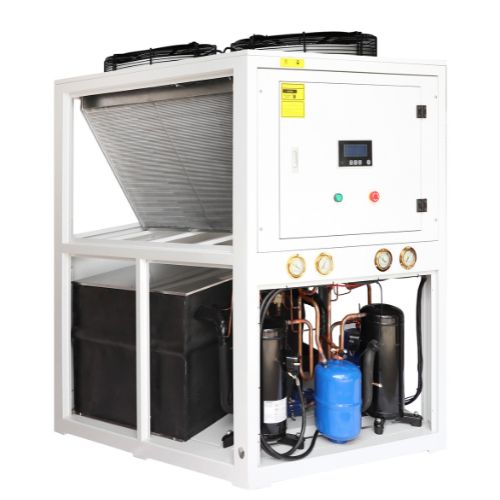
Features of ChillerOne Pasta Production Chiller
- Precisely control production temperature to ensure consistent pasta quality on texture, structure, and appearance;
- Maintain continuous operation within high-load conditions, ensuring stable equipment operation and preventing downtime risks;
- Cooling products before the drying process to reduce cracking and deformation defects, improving the production yield;
- Offer high energy efficiency to save the electrical costs while maintaining good cooling capacity;
- ChillerOne’s chillers for pasta production meet food-grade standards to ensure safety.
ChillerOne – Your Reliable Pasta Production Chiller Supplier
ChillerOne offers reliable chillers for pasta production to ensure stable equipment operation by removing excess heat in time. The chiller for pasta production also ensures high consistency and quality of finished products, helping you improve the brand competitiveness. If you have more questions about the chiller, please feel free to contact us.
Types of Chillers for Pasta Production

Air-cooled chillers for pasta production achieve heat dissipation through air, and do not require additional cooling water systems. This type of chiller is easy to install and maintain, which is especially suitable for small or medium pasta factories. It offers stable cooling capacity for common pasta production processes, such as dough mixing, extrusion equipment cooling, and more.

Unlike the air-cooled chiller, water-cooled chillers employ cooling towers to achieve highly efficient cooling. The water-cooled chiller for pasta production offers high cooling efficiency and good stability, especially suitable for large-scale projects. It ensures stable cooling capacity output even in high temperature environments, meeting the simultaneous cooling demands of multiple equipment.

Chillers used for pasta extrusion are typically a type of tight packaged chillers, which employ propylene glycol as a food-safe coolant. The extruder chiller offers stable cooling sources to offset the friction heat generated by extrusion or forming equipment. In addition, this type of chiller also prevents overheating issues to ensure excellent dough conditions and continuous system operation.
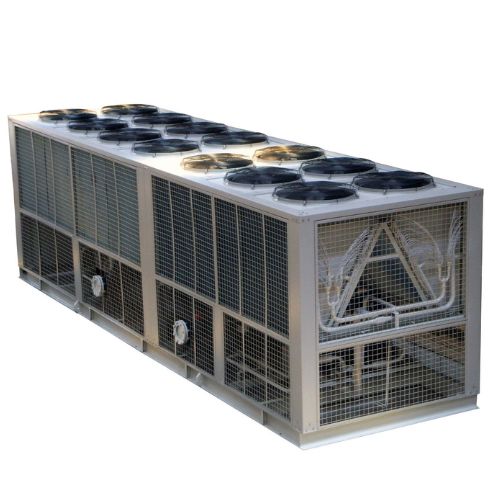
The vertical chilling tunnel, also known as air chiller, is widely used for cooling the temperature of pasta on conveyor belts. Through the controllable cooling air or other cooling media, the chiller can decrease pasta temperature after the forming process. It not only meets the cooling demands, but also helps you stabilize the structure and shape of pasta, preventing cracking and warping issues.

By forming uniform water films on the heat transfer surface, the falling-film water chiller achieves high-efficiency heat exchange. It is very suitable for large-scale pasta production with high demand on cooling efficiency and stability. This type of chiller supports handling high heat load and offers higher cooling efficiency within a relatively low energy consumption, while also reducing scaling and temperature fluctuations.
Reliable Certification
Fully certified by ISO and CE, these professional chillers comply with international food safety regulations, supporting reliable temperature control for commercial pasta production lines.


Applications of Chillers for Pasta Production

Pasta production chillers are widely used in the dough mixing and kneading process for cooling dough temperature. The chiller efficiently removes heat generated by mechanical shearing, ensuring dough temperature within an ideal range. It not only improves stability of gluten structure, but also offers consistent raw materials for subsequent processes. Chillers are important for both fresh pasta and premium dry pasta production.

Key equipment of the pasta production such as extruders and rolling equipment typically generate a large amount of heat when operating. A chiller is helpful to ensure stability of these equipment temperatures, improving production efficiency. It prevents unstable extrusion and other failures caused by overheating, enhancing the finished pasta consistency. While the chiller also extends the service life of equipment, reducing your maintenance costs.

After extrusion and forming, the pasta needs to be cooled before the drying process to stabilize the interior structure of pasta while also enhancing your product quality. The vertical chilling tunnel is generally used for this process, offering stable cooling sources to achieve uniform cooling. It rapidly decreases the product temperature, which can significantly reduce the incidence of drying defects, such as cracks, warping, and other failures.

For large pasta factories that feature high load and require continuous operation, a proper chiller is necessary to offer cooling capacity for centralized cooling systems. The chiller for large-scale projects such as falling-film water chillers offers high heat transfer efficiency, which is suitable for high-flow requirements. It ensures uniform and stable production temperature to reduce issues caused by frequent fluctuations, achieving high energy efficiency.
See the Pasta Production Chiller in Action
Watch how the pasta production chiller delivers stable temperature control, fast cooling response, and reliable performance in real industrial working conditions.
Why Pasta Production Needs Chiller
Compensate for Machining Heat
In the pasta production process, multiple stages will generate heat from raw material mixing to forming and pretreatment before drying. During the dough kneading process, both the high-power mixer and mechanical shearing between ingredients generate a large amount of heat. The friction heat generated by continuous equipment operation further accumulates during extrusion, rolling, and forming processes. A chiller is necessary for the entire pasta production process to offset the processing heat.
Improve Dough Texture
If the dough temperature is too high or uncontrolled, the structure of gluten may be changed or even broken. It not only causes unstable extensibility of dough, but also affects the elasticity and texture of the finished pasta. In addition, excessive dough temperature also accelerates bacterial proliferation, which is harmful to the shelf life of dough. So the pasta production requires a continuous and stable cooling source to support its normal process, ensuring stable production temperature.
Product Consistency Requirement
Too high production temperature or frequent fluctuation directly affect the physical structure within the dough, thereby making a significant difference of batch products. The difference is reflected in elasticity, chewiness, and appearance of the final pasta product. Unstable temperature may also cause a series of surface or structure issues in the drying process, such as cracking, warping, or internal structural inconsistencies. If your project pursues high consistency and large-scale production, a chiller for pasta production is helpful to prevent these issues and achieve high brand competitiveness.
Ensure Continuous Production
For large-scale projects or industrial pasta production, higher capacity, continuous operation, and automation have become the norm. Within the high-load operation condition, the pasta production equipment releases heat continuously. And the heat will further build up in summer, which can increase system heat load. The chiller for pasta production offers a reliable cooling solution to prevent overheating issues, reducing production loss caused by downtime while also ensuring continuous operation.
Advantages of Chillers for Pasta Production
Ensuring Food Safety
Chillers used for pasta production typically feature a specialized design and are made of food-grade materials such as 304/316 stainless steel to ensure hygiene. There are special features during the pasta production such as flour dust, humid environment, and sticky dough. The chiller offers precise temperature control and strong corrosion resistance to prevent these issues, while also avoiding microbial growth. It is important to ensure the hygiene level of the pasta production chiller to ensure food safety.
Improve Product Consistency
As a type of food that highly relies on process stability, the dough condition, forming temperature, and other processes directly affect finished pasta. Using a chiller for pasta production can achieve stable and reliable temperature control. This not only ensures consistent gluten structure, but also improves the stability of the extrusion process. If your project involves large supermarkets, chain restaurants, or OEM clients, a chiller for pasta production is important to improve product consistency and reduce batch-to-batch variation risks.
Achieve Continuous Production
The pasta production chiller is useful to remove excess heat generated by process equipment, preventing heat accumulation thereby reducing unplanned downtime. It offers continuous cooling capacity to control production temperature within a safe range to achieve high efficiency. For pasta factories that pursue high output and high production efficiency, a chiller is necessary to ensure continuous operation. In addition, the chiller for pasta production also prevents quality defects caused by abnormal temperature, ensuring a stable production line cycle.
Reduce Structural Failures
During the drying process of pasta production, improper temperature may cause structural failures of finished pasta such as cracking, warping, and internal stress. A chiller combined with a vertical chilling tunnel or other pre-cooling systems can improve the heat consistency of pasta before drying. This not only enhances the product quality and reduces the scrap rate, but also improves the drying uniformity. You can employ a chiller for your pasta production project to improve drying process quality, achieving high product quality.
Low Overall Cost
Although the chiller brings additional investment in the early stages of your project, it offers high advantages within long term use. The chiller used for pasta production significantly improves the product quality and reduces scrap rates, thereby increasing the raw material utilization. In addition, it is useful to prevent equipment failures caused by overheating issues, achieving continuous operation while also decreasing maintenance costs. The chiller also supports controlling energy consumption to save the entire costs.
Cooling water that contacts products must meet food-grade standards to ensure safety. Chillers for pasta production can be equipped with a stainless steel plate heat exchanger. It not only meets the food safety demand, but also achieves isolation between cooling water and process water.You can also consider installing a UV sterilization system and filtration system, such as cartridge filters, to further improve water quality and prevent food safety issues.
The chiller for pasta production offers a frequency converter for your selection, automatically adjusting compressor speed based on load, improving energy efficiency. It supports heat recovery, collecting heat generated during the cooling process for preheating cleaning water. The chiller can be also equipped with EC fans and shell-and-tube condensers to save energy consumption, thereby reducing your entire costs.
Pasta production chillers are equipped with condenser fins and compressor compartments that feature dust-resistant coatings. Their electrical control boxes also meet high protective levels above IP55. Both of the filters and stainless steel enclosures of the chiller for pasta production offer high corrosion resistance and are easy to clean. These designs ensure stable operation of production lines, significantly reducing failure rates.
Yes. In general, long pasta requires uniform combined air and water cooling to maintain shape and prevent bending. While for pasta with uneven thickness like macaroni, the dwell time in the cooling tank should be extended to achieve completely cooling. If your project involves shaped pasta, such as farfalle, higher surface air speed is typically required to solve its feature on trap water. The chiller used for pasta production supports different customization to meet actual demands.
High humidity and temperature may affect the cooling efficiency of chillers, causing decreased cooling capacity. For this issue, you can choose the water-cooled chiller, which is difficult to be affected by external environments. You can also install pre-cooling spray systems or variable-frequency condenser fans for air-cooled chillers to enhance their heat dissipation capacity. When choosing the chiller for pasta production, you should ensure the chiller you choose has enough cooling capacity redundancy, ensuring stable operation even in harsh conditions.


 English
 Spanish
 Arabic
 Vietnamese

