

International Brands We Collaborate With


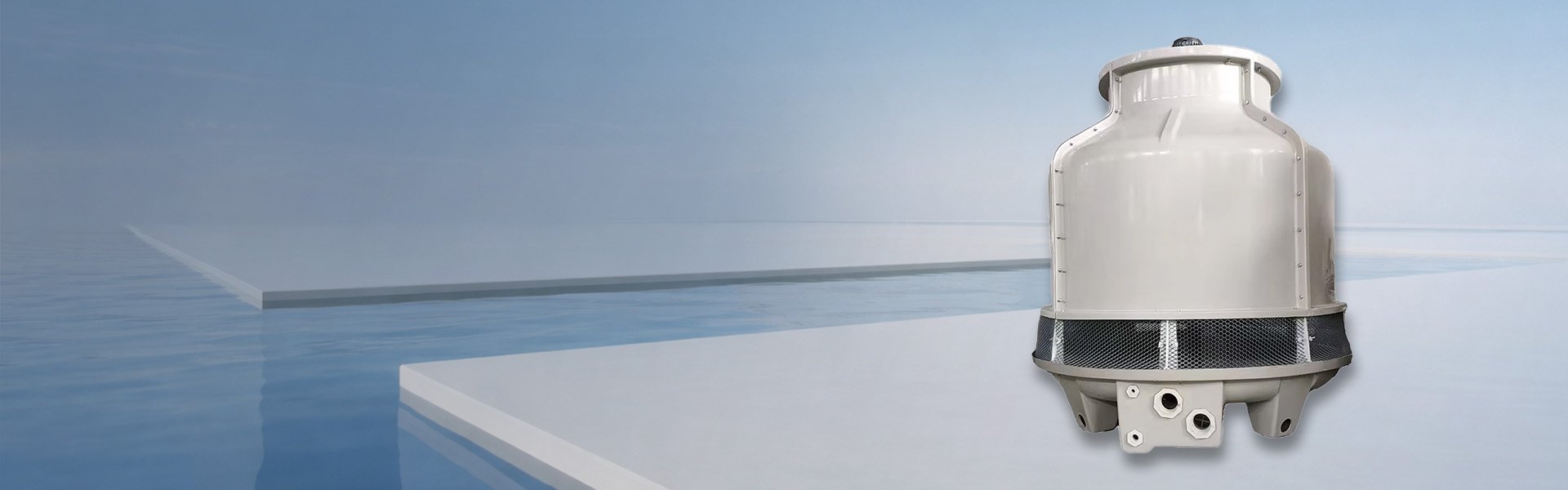
What is the Cooling Tower?
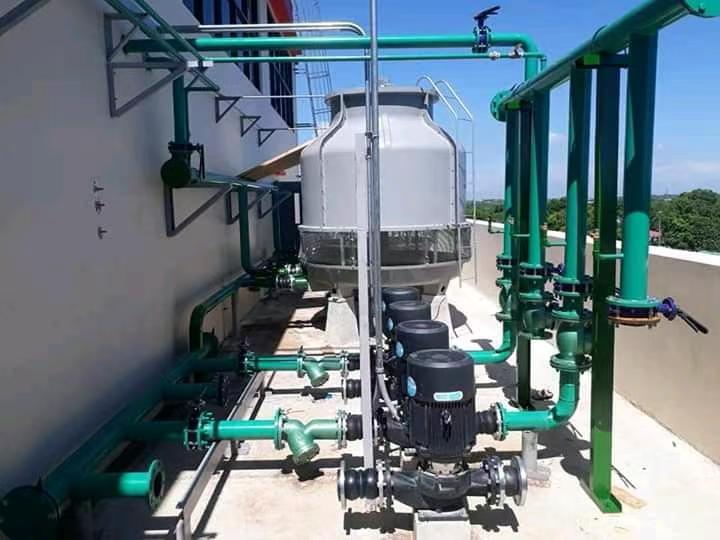
Cooling towers are employed in water-cooled chillers, circulating substantial volumes of low-temperature water to dissipate heat from the chiller. During operation, refrigerant vapour undergoes heat exchange with water to release thermal energy. The cooling tower facilitates the recondensation of refrigerant, enabling its reuse within the cycle and thereby ensuring stable cooling performance of the chiller.
Reliable Certification
Manufactured in line with certified global specifications, our cooling towers ensure compliant performance and effective heat removal for chiller assemblies.


See the Cooling Tower Chiller in Action
Watch how the cooling tower chiller delivers stable temperature control, fast cooling response, and reliable performance in real industrial working conditions.
How Cooling Towers Facilitate Heat Dissipation for Chillers
Heat Exchange
Within the chiller, the refrigerant absorbs heat and transforms into a vapour state, carrying this heat into the condenser. Here, the refrigerant exchanges heat with water from the cooling tower to dissipate the heat. The water, having absorbed this heat, is pumped through pipes into the cooling tower.
Air-Water contact
After being pumped into the cooling tower, the hot water enters the internal water distribution system. Ambient air enters the tower either naturally or through fan assistance and contact with hot water. The system incorporates nozzles and packing material. The nozzles spray the hot water onto the packing, dispersing it into fine droplets or a thin film. This significantly increases the contact surface area between water and air while simultaneously reducing the flow velocity, thereby achieving greater cooling efficiency.
Evaporation
Hot water droplets undergo heat exchange with the air, raising the air temperature. Some of the moisture evaporates in the heated air, rapidly absorbing surrounding heat, thereby cooling the remaining water.
Circulation
The re-cooled water is pumped back into the condenser for the next heat exchange cycle, enabling continuous operation and reuse. Throughout this cycle, the cooling tower provides sustained, stable heat dissipation for the chiller, ensuring its high-performance refrigeration capabilities.
Types of Cooling Tower
Naturally Ventilated Cooling Towers and Mechanically Ventilated Cooling Towers
Naturally ventilated cooling towers employ no mechanical devices, allowing hot water to exchange heat with naturally flowing air currents. To enhance cooling efficiency, mechanically ventilated cooling towers utilise fans or blowers to promote air circulation within the tower, thereby accelerating the cooling process. These fans may be mounted either at the top or at the base.
Counterflow Cooling Towers and Crossflow Cooling Towers
Based on the manner in which water and air come into contact, cooling towers can be categorised as counterflow cooling towers and crossflow cooling towers.
- Crossflow Cooling Tower: Within a crossflow cooling tower, water and air flow at right angles to one another. Air enters the tower laterally and flows horizontally through the fill, while hot water flows downward through the fill. Due to the gravitational flow of the hot water, this configuration requires no additional pressurisation. It is relatively low-cost but susceptible to contamination from external pollutants.
- Counterflow Cooling Tower: Within a counterflow cooling tower, water and air flow in opposite directions. Air enters the fill from below and rises upwards. Counterflow towers require pressurised nozzles to achieve higher cooling efficiency whilst preventing gravity from affecting airflow. Whilst offering a compact structure, they necessitate greater energy consumption.
Benefits of Using Cooling Towers
High Cooling Efficiency
Cooling towers utilise water to dissipate heat from chillers, offering superior thermal transfer efficiency compared to air-cooled chillers. This delivers enhanced cooling performance, making them an ideal solution for medium to high-load cooling applications. Furthermore, employing ChillerOne cooling towers ensures your chillers remain unaffected by ambient temperatures, delivering exceptional cooling capability even in confined spaces and high-temperature environments.
Stable Cooling Capacity
ChillerOne meets CE, CSA, and SASO testing standards to ensure high-quality cooling towers. It provides stable temperature control for your chillers during the cooling process, guaranteeing their smooth operation. Furthermore, its superior quality minimises damage and downtime, ensuring reliable continuous cooling. It can be utilised in various critical applications such as power generation and manufacturing.
Cost Effectiveness
Whilst employing cooling towers entails a higher price and requires water resources compared to air-cooled chillers without such systems, they deliver superior cooling efficiency and enhanced performance for your chiller. This proves cost-effective over extended operational periods. Furthermore, ChillerOne’s cooling towers utilise evaporative cooling principles to minimise energy consumption.
Wide Applicability
ChillerOne offers various cooling tower types, including crossflow and counterflow models, with capacities ranging from 50 to 1000 tonnes. Suitable for most chiller applications, these towers serve diverse industries such as industrial production, commercial buildings, data centres, and power generation.
Environmental Protection
On the one hand, ChillerOne cooling towers employ evaporative cooling technology that significantly reduces emissions while optimising energy efficiency. On the other hand, these towers are equipped with drift eliminators to prevent water vapour leakage, thereby enabling water recirculation and minimising wastage of this precious resource.
How to choose the Cooling Tower for a Water Chiller System?
- Heat Load: You must select an appropriate cooling tower capacity based on the heat load of the chiller (the heat released by the chiller). Consult the chiller’s manual to determine its cooling capacity, and its heat load is approximately 1.3 times the cooling capacity.
- Water Flow Velocity: You may also select an appropriate water flow velocity for the cooling tower based on the heat load to achieve optimal cooling cycle efficiency.
- Water Quality: If your project involves poor water quality, increased scaling is likely, which will diminish cooling performance. Consider procuring a larger capacity cooling tower and implementing regular water treatment. Consider procuring cooling towers with greater capacity and doing more frequent water treatment.
- Environment: Ambient temperature and humidity impact the operational efficiency of cooling towers. For high-temperature and humid environments, select a cooling tower with enhanced performance characteristics.
- Budget: Cooling towers involve various initial costs, labour costs, energy costs, and maintenance costs, all of which should be factored into the budget.
The nozzles in a cooling tower evenly disperse the hot water pumped into the tower, thereby increasing the surface area of contact between air and water and enhancing cooling efficiency.
Cooling Tower Maintenance
Maintenance of cooling towers is of paramount importance, particularly with regular water treatment. It is essential to periodically remove scale deposits from pipes, coils and other components to prevent corrosion and thermal insulation issues, which can adversely affect operational performance and service life. Professional maintenance personnel may be engaged for the upkeep of cooling towers.
Axial fans, centrifugal fans, and similar types can be employed in cooling towers to draw air into the system and enhance cooling efficiency.
High temperatures can adversely affect cooling tower performance. It is advisable to select a unit with greater cooling capacity. However, chillers utilising cooling towers are seldom significantly impacted by high ambient temperatures.
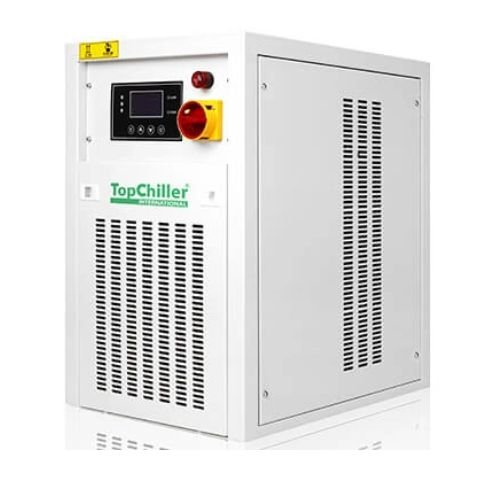
Air-cooled chillers dispense with cooling towers, instead dissipating heat directly through heat exchange with ambient air. However, they are more susceptible to ambient temperature fluctuations and exhibit lower cooling efficiency.
ChillerOne products are exported to over 60 countries worldwide, serving more than 40 industries across the globe. Please do not hesitate to contact us for the optimal solution tailored to your requirements.


 English
 Spanish
 Arabic
 Vietnamese

