

A low chiller efficiency can largely increase your operation and maintenance costs. Knowing how to calculate the chiller efficiency is necessary for chiller distributors or buyers. In this ultimate guide, we will explain the core formulas and practical techniques for chiller efficiency calculations.
What Is Chiller Efficiency
Chiller efficiency refers to the ability to convert the input energy into cooling output effectively. It represents the ratio of the heat removed from the space to the electrical or thermal energy consumed.
Typically, chiller efficiency is indicated by terms such as the coefficient of performance (COP) and energy efficiency ratio (EER), with higher values indicating better performance. It can also be expressed in kilowatts per ton, with lower values implying higher system efficiency.
High efficiency is crucial for your facility management as the chiller is usually the largest energy-consuming device in a building, and optimizing its performance can directly reduce your operating costs and environmental impact.
How to Calculate Chiller Efficiency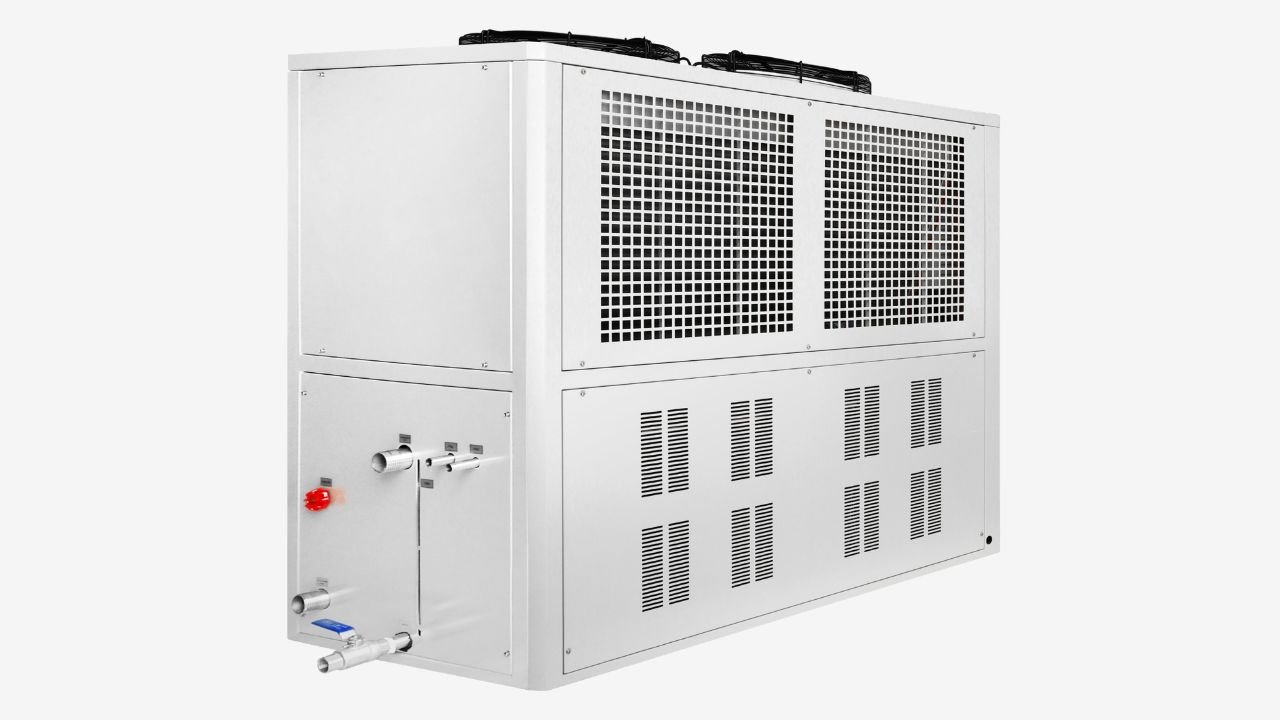
Learning the Basic Chiller Efficiency Formula
The calculation of efficiency is carried out based on different measurement indicators, which depend on your desired measurement unit as well as whether you are measuring the performance at a specific moment or over the entire typical season.
COP (Coefficient of Performance)
COP is the ratio between the useful energy provided by a system and the energy consumed by that system. It is a dimensionless ratio used to measure the efficiency of heating and cooling systems, such as chillers and heat pumps.
COP for chiller is highly sensitive to the temperature difference between the heat source and sink. As this difference increases, your chiller system must work harder, causing the COP of chiller to drop. So, a higher chiller COP always represents a lower energy consumption and reduced utility costs.
The Formula of COP
- COP = Cooling or Heating Output (kW) / Input Power (kW)
EER (Energy Efficiency Ratio)
Energy Efficiency Ratio (EER) is a standardized metric used to measure the cooling efficiency of air conditioning systems under specific high-load operating conditions. It represents the cooling capacity provided per unit of electricity consumed at a fixed time point.
EER of chiller is measured under constant outdoor temperatures (typically 95°F or 35°C) to reflect performance during the peak summer temperatures. The higher the EER value, the higher your cooling system efficiency, and the greater the cooling capacity per watt of electricity consumed.
Usually, the EER ratings for most modern devices range from 8.5 to 12. A rating of 12 or higher is generally considered to indicate very high energy efficiency.
The Formula of EER
- EER = Cooling Capacity (Btu/h) / Input Power (Watts)
Example: A chiller with a 12,000 BTU/h capacity that consumes 1,200 Watts has an EER of 10 (12,000 / 1,200 = 10).
IPLV (Integrated Part Load Value) and NPLV (Non-Standard Part Load Value)
IPLV and NPLV are performance indicators defined according to the AHRI 550/590 standards, used to describe the operating efficiency of your chiller units under partial load conditions.
Since most chillers operate at loads below 100% for the majority of the time, these weighted averages provide a more accurate reflection of the annual energy consumption compared to the full-load power values.
The Formula of IPLV and NPLV
Both metrics use a weighted average of performance at four specific load points: 100%(A), 75%(B), 50%(C), and 25%(D).
- For COP or EER (Higher is better): IPLV/NPLV= 0.01A+0.42B+0.45C+0.12D
- For kW/Ton (Lower is better): IPLV/NPLV=1 / (0.01/A+0.42/B+0.45/C+0.12/D)
Calculate Cooling Capacity
From the formulas above, you can discover that the data on cooling capacity is very critical. However, most engineers do not have the “Cooling Capacity” data available on-site. In this part, we introduce how to calculate the cooling capacity for you.
Metric Units (kW)
The calculation of cooling capacity differs slightly depending on whether you use imperial or metric units. In most international contexts, cooling capacity is expressed in kilowatts (kW).
The formula is:
- Cooling Capacity (KW) = ρ (kg/m³) × Cp (kJ/(kg·℃)) × Vs (m³/s)× ΔT (℃)
ρ = Fluid density, for example, fresh water is typically taken as 1000 kg/m³.
Cp = Specific heat capacity at constant pressure of the fluid, and for tap water, it is typically taken as 4.1868 kJ/(kg·℃).
Vs = Volume Flow Rate
ΔT = Temperature difference between the inlet and outlet water of the evaporator = T2 (inlet water) – T1 (outlet water)
Imperial Units (BTU/hr and Tons)
The imperial units are the most common method in North America. The formula is:
- Cooling Capacity (BTU/hr)=Flow Rate (GPM)×500×ΔT (℉)
GPM represents gallons per minute of the chilled water flow.
You can also use the chiller TR calculation formula, Tons = BTU/hr / 12,000, to convert to Tons of Refrigeration (TR).
Apply Safety Factor
When you complete the above calculation, we always recommend that you oversize the result by 20% to handle peak loads or future expansion.
Calculation Example
Here is an example for you to have a better understanding.
If your chiller has a flow rate of 100 GPM and a temperature drop of 10°F, then you can calculate as follows:
- Calculate BTU/hr: 100×500×10=500,000 BTU/hr
- Convert to Tons: 500,000 / 12,000=41.67 Tons
- Apply Safety Factor: 41.67×1.2=50Tons
Using kW per Calculation Method
IKW (Input Kilowatts per Ton of Refrigeration) is a unit used to measure the specific power consumption of a refrigeration machine. It is expressed as the electrical energy consumption in kilowatts (kW), which is used to generate one ton of cooling capacity (1 TR) of cooling capability.
Unlike COP or EER, the smaller the value of the IKW, the more energy-efficient your system is.
The Formula of IKW
- IKW = Total Input Power (KW) / Cooling Capacity (TR)
Example: If a chiller consumes 300 kW of electricity to produce 100 TR of cooling, its IKW is 3.0 (300/100=3.0).
Convert COP to EER
Both COP and EER can be used to measure efficiency. You can convert between them according to your preference.
Their relationship:
- COP ≈ EER × 0.293
- EER ≈ COP × 3.412
Interpret the Result
After figuring out the result, it’s important to judge if the chiller efficiency is good. Usually, the typical chiller COP range of an air-cooled chiller is 2.5 – 3.5, and of a water-cooled chiller is 4.0 – 6.5.
If the chiller efficiency is not appropriate, the reasons may be excessive condensation temperature, fouling of the plate-type heat exchanger, mismatch of load, aging of equipment, etc. It’s recommended for you to inspect or change the chiller.
Tips When Calculating Chiller Efficiency
- When calculating the energy efficiency ratio (COP), it’s necessary to ensure that both the cooling output and the power input use the same unit.
- Inaccurate temperature sensors can lead to an incorrect calculation result, so it’s better for you to check the key sensors before measuring.
- If you use a water-glycol mix as the fluid type, the specific heat and density change, and you need to adjust the “500” constant or Cp value.
- It’s better to use an inline flow meter to achieve more precise measurement.
- To obtain an accurate coefficient of performance (COP), it’s better to measure the total input power of the entire chiller, including the compressor, fan, and internal electronic equipment.
- Pay attention to the difference between the refrigerant temperature and the water temperature (approach temp). A 1°F increase in approach temperature can represent a 2% decrease in chiller efficiency.
FAQ
Why is it Necessary to Calculate Chiller Efficiency?
Chiller systems are typically the largest energy consumers in a building, so even minor improvements in energy efficiency can bring significant financial savings. Besides, accurate efficiency data is essential for regulatory compliance with energy codes and for optimizing chiller sequencing to ensure the plant operates at its most cost-effective part-load levels.
What are the Factors that Affect Chiller Efficiency?
Chiller efficiency is primarily decided by the pressure and temperature difference the compressor must overcome between the evaporator and the condenser. So, a proper reduction of the water temperature of the condenser or an increase in the supply temperature of the chilled water can reduce energy consumption.
Pipe scaling, improper refrigerant charging, and the presence of non-condensable substances can force the screw compressor or scroll compressor to work harder and lower chiller efficiency.
How to Improve Chiller Efficiency?
To enhance the efficiency of the chiller unit, the first step is to optimize the operating parameters, such as increasing the supply temperature of the chilled water and reducing the water temperature entering the condenser. Regular preventive maintenance can prevent thermal resistance and help improve chiller efficiency.
Besides, applying variable frequency drives (VSDs) enables the compressor to more accurately match the actual cooling load, thereby significantly improving the IPLV.
Which Type of Water Chiller has the Highest Efficiency?
The water-cooled centrifugal chiller is always considered the most efficient type of chiller on the market, especially when equipped with magnetic-bearing technology. This is because these centrifugal chillers use the excellent heat transfer properties of water and the aerodynamic efficiency of centrifugal compressors, achieving a power output of 0.45 to 0.55 kilowatts per ton at full load.
Is a Higher COP Always Better?
A higher COP always indicates better instantaneous chiller energy efficiency, but the IPLV can better show the actual energy consumption. Besides, the high energy efficiency ratio must also be balanced with the initial capital cost, maintenance requirements, and the specific climate of the installation location. Therefore, overall consideration is still necessary.
How Often Should Efficiency be Tested?
The automated Building Management System (BMS) can monitor the chiller efficiency continuously, but we still recommend that you conduct a comprehensive manual validation quarterly.
For critical industrial processes (medical industry chiller, chemical industry chiller, industry laser chiller, injection molding chiller, etc.) or large commercial chillers ( screw chiller, explosion-proof chiller, etc.), it’s necessary to conduct a deep inspection audit during the peak cooling period.
Final Thoughts
Understanding how to calculate chiller efficiency is not just a technical exercise. It is the foundation of energy optimization and long-term operating cost control. As an experienced industrial chiller manufacturer, Chillerone chillers are designed to be high-efficiency and help lower your operating costs. If you are interested, just contact us.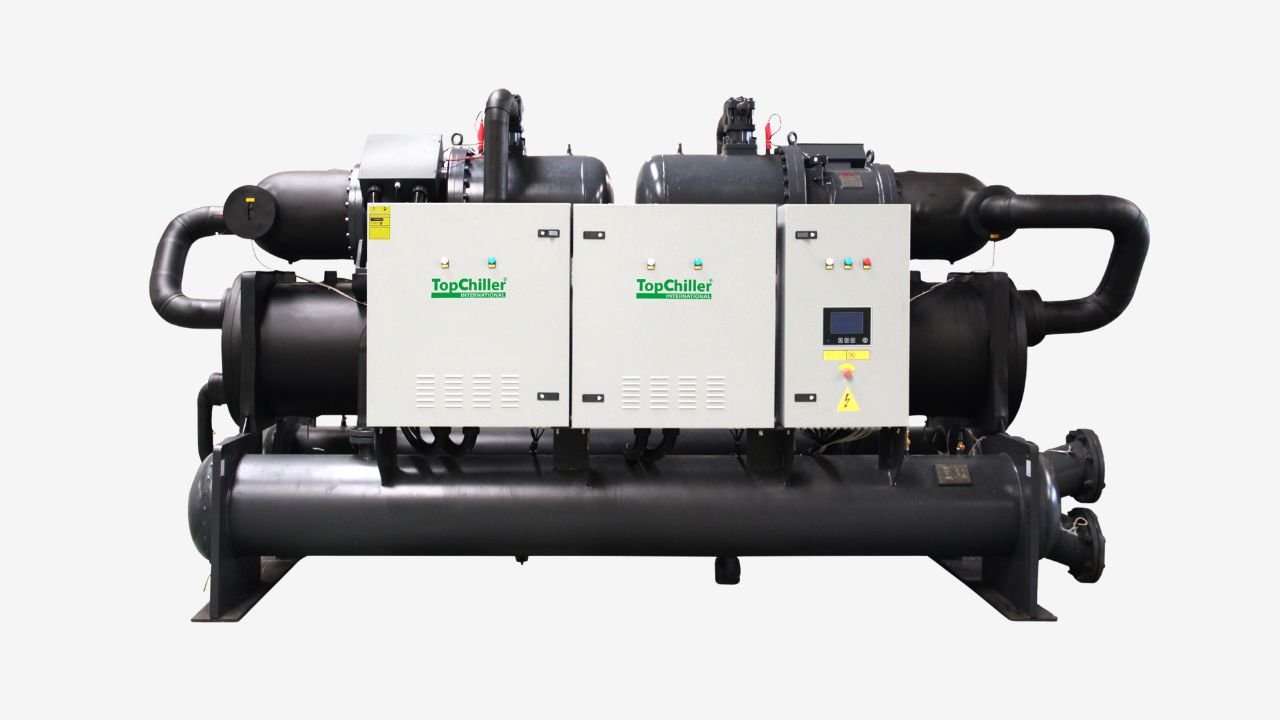


 English
 Spanish
 Arabic
 Vietnamese

