


International Brands We Collaborate With


Features of Ice Skating Rink Chiller
- The capture of waste heat generated during the cooling process and its reuse for other facility needs.
- Efficient motors, pumps, and variable frequency drives (VFDs) for compressors contribute to reducing energy consumption and operational costs.
- Control panels based on microprocessors offer precise temperature management.
- Allow remote monitoring via the internet or smartphones and provide diagnostic alerts.
- Built-in redundancy options prevent the entire system from shutting down in the event of component failure.
Chillerone—Provide Precision Cooling Solutions for Your Ice Skating Rink
Every Chillerone ice rink chiller is dedicated to providing the highest quality cooling service. From the core compressor to the precise control system, every component is sourced from top-tier suppliers and undergoes rigorous testing to ensure stable performance and quiet operation even under continuous high-intensity operation and extreme temperature changes. We focus on creating a smooth and mirror-like ice surface with uniform hardness. Contact us, and create your ideal ice rink!
Types of Ice Skating Rink Chillers By Heat Rejection Methods

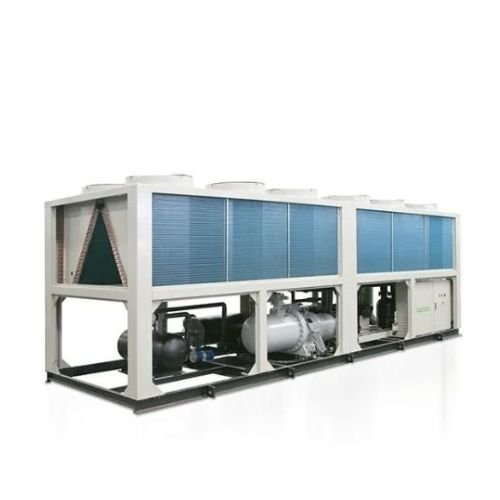
Air-cooled ice rink chillers are installed outdoors and use large fans to blow the surrounding air over the condenser coils to dissipate heat. They do not need a separate cooling tower or water supply system, but not as energy-efficient as water-cooled systems.
They are best suited for seasonal or temporary ice rinks, facilities with suitable climate conditions, or areas with limited water resources.

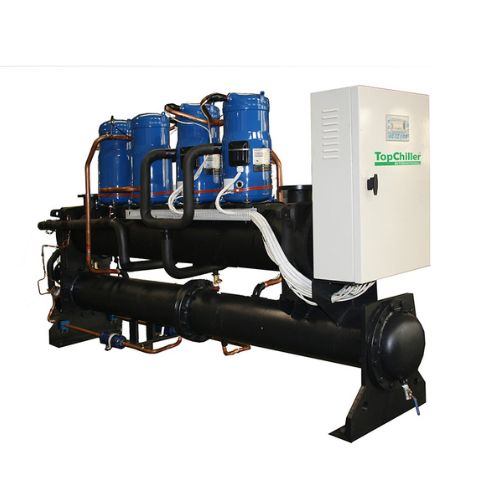
The water-cooled ice rink chiller transfers heat to an auxiliary water circulation system. Then, the water in this system is pumped to an external cooling tower, where the heat is released through evaporation. It is more energy-efficient and durable, but requires more space for the cooling tower and water pumps, and it needs regular water treatment and maintenance, suitable for large permanent ice rinks, facilities in hot climates, or locations that prioritize long-term energy efficiency.
Types of Ice Skating Rink Chillers By Refrigeration System Types

The indirect ice rink refrigeration system is the most common and safest cooling method in modern skating rinks. The main refrigerant cools the auxiliary liquid (a mixture of salt water or ethylene glycol) through a heat exchanger. Then the cooled auxiliary liquid circulates through pipes embedded in the skating rink floor.

For direct ice rink refrigeration systems, the main refrigerant is directly transported through a network of pipes beneath the ice surface. This method is very energy-efficient, but there is a risk of large-scale refrigerant leakage, which depends on the type of refrigerant used. For safety reasons, direct systems using ammonia are rarely used indoors.
Types of Ice Skating Rink Chillers By Applications

Portable and temporary ice rink chillers are usually used for seasonal outdoor skating rinks or event-mounted or trailer-type equipment, which offers installation flexibility. With the portable ice rink chiller, your ice rink can be easily dismantled and stored without the need to lay concrete or build a permanent foundation.

A permanent or commercial arena ice rink chiller is a large-capacity, custom-designed system that is integrated into the infrastructure of the facility, typically using three-phase power and advanced control systems.
Reliable Certification
ISO and CE certified, our ice skating rink chiller conforms to international standards to sustain constant low temperature and maintain smooth ice surface for rink operation.


Ice Skating Rink Chillers Uses
Ice rink chillers are widely applied in numerous scenarios that require maintaining a constant, mechanical ice surface, covering a wide range of situations, from professional sports venues to small temporary family ice rinks.

The professional sports venue is one of the most common applications of ice rink chillers. They can maintain the high-quality ice surface required for competitive sports, such as ice skating, figure skating, curling, speed skating, etc.

Local entertainment centers and community centers use permanent ice skating rink chiller systems for public skating, teaching activities, and local league competitions.

Many mobile, trailer-mounted ice rink chillers are used to create seasonal outdoor skating rinks in town centers, amusement parks, hotels, or markets, usually attracting crowds during winter holidays.

Some home enthusiasts who want a reliable, frozen surface in their backyard use small, residential-level ice rink chillers to avoid the uncertainty of natural freezing.

Many non-sport-related occasions, such as ice bars, ice sculpture exhibition halls, ice-themed amusement parks, etc, place greater emphasis on the refrigeration system’s ability to maintain a stable low-temperature environment and to adapt to the complex structures of ice sculptures.

The concepts of large-scale low-temperature environment control and waste heat recovery in ice rink chiller system technology have been adopted for use in industrial fields such as data center cooling and food processing freezing.

The heat sources collected from the ice rink chillers can be utilized in the climate control and dehumidification systems of the ice rink to prevent fog formation and maintain optimal air quality.

The heat is typically circulated beneath the cooling plates through an independent piping system to prevent the ground from freezing and expanding (thawing), which could damage the foundation of the ice rink.

The waste heat can also be used to melt the snow and ice collected from the reinstallation equipment.
See the Ice Skating Rink Chiller in Action
Watch how the ice skating rink chiller delivers stable temperature control, fast cooling response, and reliable performance in real industrial working conditions.
Why Do Ice Skating Rinks Need Chillers?
In ice skating rinks, a chiller is necessary to maintain the existence of ice for a long time. It provides a smooth and safe skating surface and achieves efficient and controllable ice-making and maintenance operations.
Under the ice skates, the ice actually melts instantly into a very thin layer of water (pressure melting), which provides lubrication and makes skating possible. However, this also means that the ice surface is constantly deteriorating and changing. Without continuous cooling, the ice will quickly soften and melt, becoming uneven and rough. Therefore, the stable temperature control of ice rink chillers is vital.
Modern outdoor artificial ice rinks also require chillers to maintain the ice surface; otherwise, direct sunlight and temperature fluctuations would quickly damage the ice layer.
Ice Skating Rink Chillers Operating Principle
The core of the ice rink chiller operating principle is an ongoing reverse circulation process that continuously pumps the ice surface and the heat beneath it into the external environment through compression, condensation, expansion and evaporation.
Depending on the different circulation methods of the refrigerant within the ice plate layer, modern ice rinks mainly adopt two types of cooling systems: the secondary ice rink chiller system and the direct ice rink chiller system. In the secondary ice rink chiller system, the refrigerant first cools the coolant (usually an ethylene glycol solution), and then the ethylene glycol solution is pumped into the ice plate layer pipeline for heat absorption through circulation. In the direct ice rink chiller system, the refrigerant evaporates directly in the ice plate layer pipeline to absorb heat.
Ice Skating Rink Chillers Advantages
Consistent Ice Quality
Advanced control systems and precise temperature regulation of ice rink chillers ensure the optimal surface temperature required for different activities. With an ice rink chiller, the skating rink maintains a stable ice surface regardless of the external weather conditions, ensuring a long-term operation.
Enhanced Durability
The permanent system embedded in the concrete slabs of the Chillerone ice rink chiller is very durable. With proper maintenance, it can be used for decades, protecting the structural integrity of the facility.
Minimize Downtime
Chillerone ice rink chillers can have redundant components (such as multiple compressors or dual circuits) to prevent the complete failure of the entire system and minimize downtime in case of problems.
Easy Controlling
With advanced control technology, Chillerone ice rink chillers allow for remote login access, custom programming for application control, onboard or remote touchscreen options, and centralized control of multiple devices.
Reduced Operating Costs
Chillerone ice rink chillers use natural refrigerants such as carbon dioxide and are equipped with variable frequency drives (VFDs), which can significantly reduce energy consumption and operating expenses compared to older systems.
Heat Recovery
A major advantage of Chillerone’s modern ice rink chiller systems is their ability to recover waste heat from the cooling process and reuse it for other facility needs, such as heating the building’s drinking water, heating the audience area, or melting snow on the ice surface repair machine, thereby further reducing energy costs.
Water Resource Conservation
Advanced systems of Chillerone ice rink chillers using closed cooling and heat recovery technologies can reduce water bills by reusing water and minimize evaporation losses in air cooling systems.
Environmental Friendliness
Our ice rink chillers use natural refrigerants such as ammonia and carbon dioxide, whose ozone depletion potential (ODP) is zero and global warming potential (GWP) is extremely low. This helps facilities comply with environmental regulations and reduce their carbon footprint.
Compliance Management
The investment in modern and environmentally friendly cooling technology helps the facility maintain operational stability in the future when synthetic refrigerants that contribute to high greenhouse gas emissions are gradually phased out.
How to Determine the Required Cooling Capacity of the Ice Skating Rink Chiller?
Usually, the 4-ton ice rink chiller is one of the smallest specifications available on the market, suitable for ice rinks with an area of no more than 800 square feet. The 10-ton specification is more commonly applied, which can meet the cooling requirements for ice rinks with an area of up to 1800 square feet. 10-ton ice rink chillers require 100 amps. For larger skating rinks, you can operate multiple chillers, but a second power supply system might be necessary.
The cooling capacity (size) of the ice rink chiller depends on multiple factors, including:
- Your skating rink size: Larger skating rinks require a correspondingly larger capacity.
- Climate and location: The temperature, humidity, wind speed, and solar radiation of the surrounding air all influence the cooling capacity of ice rink chillers. In hot, sunny, or humid conditions, the capacity of the chillers must be significantly increased to counteract the increase in heat.
- Thermal insulation: For indoor skating rinks, the quality of the building’s insulation, ceiling height, and ventilation system design have a significant impact on the heat transfer from the surrounding environment to the ice surface.
- Activities: The body heat generated by audiences and active skaters will bring a large amount of heat load.
- Lighting: The elevated lighting system also generates heat.
- Safety factor: A safety margin based on the calculated load must be added to ensure reliability even during peak loads or unexpected weather conditions.
The specific cooling capacity needs a careful calculation. The fastest way is to consult our professional teams and get an accurate and full recommendation.
How to Choose a Reliable Ice Skating Rink Chillers Supplier?
When choosing an ice skating rink chiller supplier, the first step is to determine your budget, rink type and key standards, including specific requirements regarding the temperature difference of the ice surface, uniformity of hardness, energy consumption level, and heat recovery, etc. Then, examine the technology and experience of the supplier through communication with the supplier or by browsing its website and customer evaluations. It’s important to verify the necessary certifications and regulations of its products. If possible, it’s recommended to conduct on-site inspections before making the terminal decision.
Why Choose Chillerone?
With 20 years of specialization in cooling technology, Chillerone has built a global network of trust, providing outstanding technical support to clients in over 75 countries and regions.
Our advantages:
- Specialized experience: Different from conventional commercial refrigeration. Chillerone specializes in the unique refrigeration requirements of ice rinks and has a deep understanding of the unique needs of different types of ice rinks and different sizes.
- Customization: We can provide one-stop solutions for ice rinks of all sizes. Our ice rink chillers range from 4-ton small-sized machines to 10-ton commonly used main models and even larger-scale professional equipment. The cooling capacity and function can be customized according to your needs.
- Energy efficiency ratio: We can achieve a higher energy efficiency ratio and help you maximize operational efficiency and profits by means of efficient compressors, variable-frequency drives, and optimized heat exchange designs.
- After-sales service: We provide a local service team with rapid response capabilities for localization services and offer 24/7, year-round support service. If you have any problems, we will respond within 2 hours and arrive at the scene within 6 hours!
- Extended Warranty: We provide a 12-month free warranty, and it can be extended to 5 years according to your needs.
- Green investment: Our ice rink chiller uses environmentally friendly refrigerants, which aligns with the global trend of reducing carbon emissions and can help you enhance your green brand image.
- Full Support: We offer a localized technical service network ranging from installation and commissioning to operation training to rapid response to ensure your production is continuous and worry-free.
- Compliance: All of our chillers have professional certifications, reliability certifications, and test reports, ensuring the safety and quality of your equipment.
The ideal temperature of an ice hockey or figure skating rink is usually between -5°C and -3°C (22°F to 26°F). The specific temperature can be adjusted according to the usage.
The ice rink chiller can work 24 hours per day continuously. A high-quality chiller can keep working for several months, and some chillers can even operate throughout the year, but you need to have a professional inspection and maintenance every six months.
Yes. Modern industrial ice rink chillers can operate efficiently in various climatic conditions, even in hot weather. Some outdoor systems can even maintain an ice surface when the ambient temperature exceeds 27°C (80°F).
The energy consumption of ice rink chillers varies greatly, which is influenced by the size of the rink, the duration of use, and the local climate. On average,The daily energy consumption per 10 square feet could range from 1 to 2 kilowatt-hours. There are modern ice rink chillers with heat recovery that can significantly reduce energy consumption. If you have such requirements, feel free to consult us and get a customized design.
The main differences lie in the cooling capacity requirements, the environment condition, and the installation methods. Outdoor chillers are more robust and require more electricity to combat external conditions.
The price of ice rink chillers is determined by lots of factors, including the capacity, chiller type, refrigerant type, and other additional functions such as advanced digital controls, and heat recovery systems. You can contact us and get a quick quotation.
Except for the initial purchasing cost of the ice rink chiller, there are also many other costs of operation, including electricity charges, water charges (for the water cooling system), regular maintenance, refrigerant replenishment, component replacement, etc.
No. Ordinary air conditioning equipment is designed to cool the air to a moderate temperature, which is usually around 7°C – 13°C. The cooling unit for an ice rink must cool a liquid to a temperature close to the freezing point, which requires specialized low-temperature components.


 English
 Spanish
 Arabic
 Vietnamese

