


International Brands We Collaborate With


Low Temperature Chiller
- Temperature control from 5℃ to -85℃
- SS PHE or shell and tube evaporator
- Glycol mixture of salt marine suitable
- Glycol coolant flow up to 450LPM
- Energy efficiency scroll or screw compressor
- Full safety protection devices
- 18 months warranty time
Your Reliable Low Temperature Chiller Manufacturer and Supplier in China
ChillerOne low temperature chillers are specially designed cooling systems that can achieve ultra-low freezing point with a temperature range of 0°C to -85°C. These are lower temperatures than the standard chillers.
We recommend these low temperature chillers for applications that require sub-zero cooling, like lyophilization, flash-freezing, condensing gases, cryogenics, breweries, cider mills, wineries, etc. Even at these temperatures, our chillers will still maintain a temperature stability of ±0.5℃ to ±2℃.
At ChillerOne, we only manufacture industrial-grade low temperature chillers or glycol chillers. You can choose either water or air condensing options, depending on the cooling load capacity.
These low temperature chillers come in many design options, with our top-selling model being the cascaded refrigeration circuit. They offer rapid chilling and are popular for their stability.
Additionally, ChillerOne uses advanced insulation to ensure external parts remain frost-free, to prevent unplanned, costly downtime. This is a safety precaution, alongside other integrated alarm and sensor systems.
So far, these chillers have been commissioned in many industries in the Philippines, Mexico, Nigeria, Brazil, and Saudi Arabia, among other countries. Be part of our growing global clients now – Get free chiller sizing analysis and a quote.
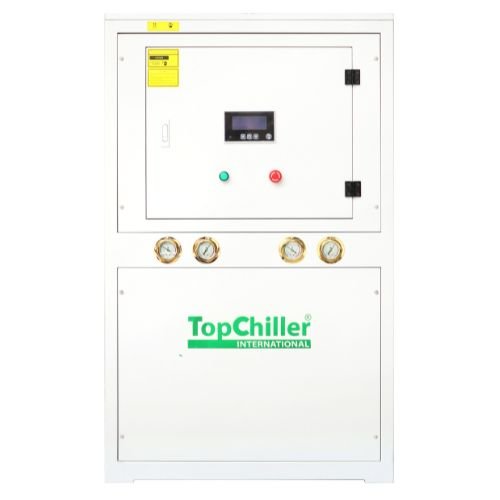
Chillerone’s low-temp glycol unit keeps temperatures stable for applications that require colder and consistent cooling.

This ULT model reaches very cold temperatures, making it ideal for scientific, industrial, or precision environments.

Designed for extreme performance, our cryogenic chiller delivers deep cooling for advanced or highly sensitive operations.

A space-saving design that provides reliable low-temperature cooling without taking up much room.
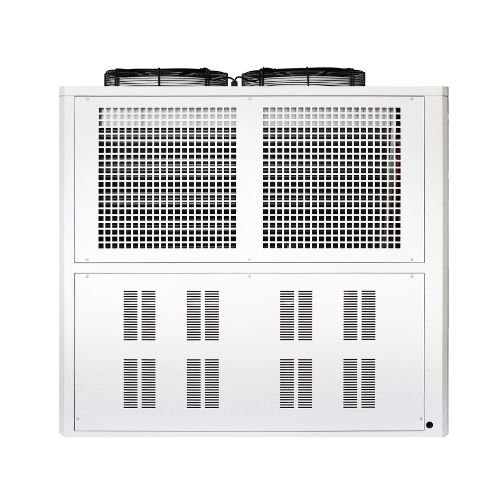
An air-cooled solution built to reach lower temperatures while avoiding the need for a water line.

Our three-phase brine chiller offers strong cooling power for larger systems that need steady low temperatures.

Equipped with a screw compressor for high efficiency and energy-saving operation even in deep cooling ranges.

This unit circulates chilled fluid continuously to keep systems stable, making it ideal for long operational cycles.
Reliable Certification


Applications of Low Temperature Chillers

Various precision electronic components in medical equipment(such as MRI, laser therapy, etc.) are very sensitive to temperature and are easily affected by temperature fluctuations. Low-temperature chiller can provide the best working temperature for this medical equipment and improve the precision and performance of the equipment. In addition, you can install the installation of low-temperature chiller in the hospital to reduce the ambient temperature, inhibit the growth and spread of bacteria, and create a sterile and clean environment for surgery.

Low-temperature chillers provide ideal temperature control for pharmaceutical preparation, thus ensuring the stability of the manufacturing process and the conformity of the drug product. They also maintain stable temperature control, allowing you to install them in drug and biological sample storage rooms to ensure the freshness and reliability of your drugs and biological samples.

The various chemical reactions of experiments have very strict temperature requirements, and low temperature chillers can provide excellent temperature control accuracy for low-temperature experiments. This makes it ideal for laboratory cooling solutions. It operates stably, thus ensuring that experiments run smoothly. It also provides cooling for various instruments in the lab during experiments, ensuring consistency and repeatability.

Whether processing or storing food and beverages, low and stable temperatures are required. Low temperature chillers ensure the quality and safety of food and beverages by providing not only rapid cooling during processing, but also a constant and stable low temperature environment during storage.

Various plastic moulding processes, such as injection moulding and blow moulding, require heating the plastic for processing. The use of a low temperature chiller can effectively control the optimum working temperature, thereby reducing plastic defects. In addition, recirculation chillers can be used to cool finished products, helping them to solidify and cool quickly, thereby increasing productivity.
- Data Sheet
- Video
- Main Parts
- Successful Application Examples
| Low Temperature Chiller Technical Specifications | ||||||||||||
| Model Items | TPWS- 40WSL | TPWS- 50WSL | TPWS- 60WSL | TPWS- 70WSL | TPWS- 80WSL | TPWS- 90WSL | TPWS- 100WSL | TPWS- 120WSL | ||||
| Cooling Capacity | Temp | -10℃ | KW | 72 | 93.8 | 102 | 124 | 136 | 161 | 186 | 222 | |
| -20℃ | 48 | 63 | 69 | 84 | 92 | 108 | 125 | 149 | ||||
| -30℃ | 29.5 | 41.3 | 49 | 60 | 66 | 78 | 90 | 107 | ||||
| Input power | KW | 30 | 38 | 42 | 51 | 56 | 63 | 73 | 88 | |||
| Max Curent | A | 91 | 121 | 128 | 153 | 171 | 193 | 220 | 268 | |||
| Power Source | 3PH~380V/415V/480V~50HZ/60HZ(3PH~200V/220V 50HZ/60HZ) | |||||||||||
| Refrigerant | Type | R22/R404A | ||||||||||
| Charge | kg | 28 | 36 | 43 | 50 | 58 | 65 | 72 | 86 | |||
| Control | Thermostatic expansion valve | |||||||||||
| Compressor | Type | Semi-hermetic screw | ||||||||||
| Power | KW | 30 | 38 | 42 | 51 | 56 | 63 | 73 | 88 | |||
| Start Mode | Y-△ | |||||||||||
| Capacity Control | % | 0-25-50-75-100 | ||||||||||
| Evaporator | Type | Temp | Shell and tube (SS plate heat exchanger) | |||||||||
| Chilled water | -10℃ | m³/h | 12.4 | 16.1 | 17.5 | 21.3 | 23.4 | 27.7 | 32 | 38.2 | ||
| -20℃ | 8.3 | 10.8 | 11.9 | 14.4 | 15.8 | 18.6 | 21.5 | 25.6 | ||||
| -30℃ | 5.1 | 7.1 | 8.4 | 10.3 | 11.3 | 13.4 | 15.5 | 18.4 | ||||
| Water pressure | KPa | 32 | 35 | 38 | 42 | 42 | 45 | 40 | 43 | |||
| Pipe connection | Inch | 3″ | 3″ | 3″ | 3″ | 4″ | 4″ | 4″ | 5″ | |||
| Condenser | Type | Shell and tube | ||||||||||
| cooling water | m³/h | 25 | 32.3 | 35.5 | 43.3 | 47.5 | 60 | 65 | 77 | |||
| Water pressure | KPa | 42 | 42 | 45 | 43 | 43 | 45 | 48 | 46 | |||
| Pipe connection | Inch | 3″ | 3″ | 3″ | 3″ | 4″ | 4″ | 4″ | 5″ | |||
| Safety protection devices | Inner thermostat for compressor motor,unit overload relay.high and low pressure switch,freeze protection thermostat,reverse phase protection relay,discharge gas thermostat,flow switch | |||||||||||
| Dimension | Length | mm | 2500 | 2550 | 2600 | 2750 | 2800 | 2800 | 2900 | 3000 | ||
| Width | mm | 780 | 780 | 780 | 780 | 950 | 950 | 950 | 1200 | |||
| Height | mm | 1650 | 1650 | 1650 | 1650 | 1800 | 1950 | 1950 | 1580 | |||
| Net weight | kg | 920 | 1100 | 1250 | 1600 | 1850 | 1900 | 2100 | 2550 | |||
| Running weight | kg | 1050 | 1260 | 1430 | 1850 | 2150 | 2200 | 2400 | 2750 | |||
| Note: The above specifications are according to the following design conditions: Chilled water inlet/outlet temperature difference 3℃/8℃. | ||||||||||||

Low-temperature Cooling for Swiss Pharmaceutical Reactors

A pharmaceutical factory in Switzerland needed a -30℃ cooling medium for its API reactors. Chillerone provided a 75 kW (approximately 21 tons) low-temperature chiller to serve two 1500 L reactors. This process chiller reduced the batch waiting time from 55 minutes to 20 minutes, increased the annual production capacity by approximately 32%, and reduced the number of low-temperature interruptions from nine times to two times. The customer recognized the stability of the low temperature.
Semiconductor Testing Equipment in Singapore

A semiconductor testing equipment in Singapore required -25℃ with minimal temperature fluctuations. Chillerone provided a 30 kW (approximately 8.5 tons) ultra-low-temperature chiller with temperature control of ±0.8℃. This low-temperature chiller reduced test interruptions from 17 times to 3 times, increased the first-pass rate from 96.4% to 99.1%, and extended the calibration cycle from six months to nine months. The customer considered the accuracy to be satisfactory.
British Frozen Food Production Line

An IQF vegetable line in the UK needed an ethylene glycol circulation at -18℃. Chillerone provided a 180 kW (approximately 51 tons) low-temperature chiller to serve an 8-ton/hour production line. The cooling recovery time was reduced from 42 minutes to 25 minutes, the production capacity was increased to 10 tons/hour, and the annual production capacity was increased by approximately 18%, with the completion rate of peak orders rising from 91% to 98%. The customer was satisfied.
Polish Chemical Reaction Vessel

A fine chemical reaction vessel in Poland needed to be rapidly cooled to -20℃. Chillerone, as a low-temperature chiller manufacturer, provided a 50 kW (approximately 14 tons) low-temperature chiller with a circulation rate of 40 L/min. The cooling time for the reaction vessel was reduced from 75 minutes to 42 minutes; the batch cycle was shortened, the annual production capacity increased by approximately 11%, and the quality deviation was reduced from twelve times to three times. The customer approved.


See the Low Temperature Chiller in Action
Watch how the low temperature chiller delivers stable temperature control, fast cooling response, and reliable performance in real industrial working conditions.
What is the Low Temperature Chiller?
Low temperature chillers are cooling devices that enable lower temperature control than traditional chillers. They can cool liquids to temperatures below 5°C and as low as -40°C, and even lower with some ultra-low temperature chillers. Thanks to the stability of operation at low temperatures, they play an important role in low-temperature production and storage, and you can use them for a variety of applications such as food production and storage, cooling metal processing, pharmaceuticals and more.
How Does a Low Temperature Chiller Work?
Heat Absorption
When you start running a low-temperature chiller, the pump delivers chilled water to the heat source. The chilled water exchanges heat with the heat source, absorbing heat to cool the source and carrying it to the evaporator of the cooler. Low-temperature chillers typically use a glycol and water mixture or brine, which has a higher heat transfer efficiency and is freeze-proof, as the chilled water to ensure stable operation in cold conditions.
Evaporation
The low-temperature chillers in the evaporator rapidly absorb heat from the cooling water, lowering the temperature. The re-cooled cooling water is returned to the heat source and the next heat exchange is repeated. The cycle continues in this way, achieving stable, continuous cooling for your process. And the refrigerant absorbs heat in the evaporator, converting from liquid to gas to begin the refrigeration cycle.
Compression
The low-temperature chillers’ compressor provides the power needed to compress the refrigerant throughout the cycle. The refrigerant is converted into a vapour, which is at high temperature and low pressure. The compressor draws in the low-pressure refrigerant and sends it to the condenser after further heating and pressurisation. Here you can choose between process coolers with different compressors such as screw, centrifugal and scroll.
Condensation
The refrigerant vapour entering the condenser is cooled by heat dissipation and recondenses to a liquid after releasing heat. The fan of the air-cooled low-temperature chiller blows ambient air to the condenser, and the refrigerant transfers heat to the ambient air for heat dissipation. And the water-cooled low-temperature chiller is equipped with a cooling tower, where the refrigerant exchanges heat with the water in the cooling tower.
Expansion
Refrigerant that is recondensed into a liquid state is in a high-pressure state and it is difficult to absorb heat again. The expansion valve can further transform the refrigerant into a low temperature and low pressure state, so that it can effectively absorb heat again and quickly transform into a gaseous state. The refrigerant enters the evaporator again for heat exchange. In addition, the expansion valve automatically adjusts the refrigerant flow according to the current refrigeration demand to minimise unnecessary losses.
Advantages of Low Temperature Chillers
Continuous Operation
Low temperature chillers are made of rugged materials to withstand severe cold and a variety of industrial environments. Low temperature chillers often use a mixture of glycol and water as the heat transfer fluid, which has a lower freezing point than water, saving the cooler from damage caused by freezing in low-temperature environments, ensuring stable operation and extending service life
Tight Temperature Control
The Low temperature chiller’s various intelligent sensors ensure accurate temperature control and reduce temperature fluctuations to ensure the normal functioning of your project. Its fault monitoring, automatic protection and remote monitoring functions allow you to monitor the cooling process at any time, further improving operational reliability.
Efficient Cooling
Low-temperature chillers break the temperature control range that traditional chillers can achieve, enabling a wider temperature range for cooling. In addition, low temperature chillers are more efficient in cooling, reducing cooling time with the same energy consumption, thus increasing your productivity.
High Energy Efficiency
Low temperature chillers provide better cooling capacity and efficiency for the same energy consumption. Low energy costs make it a cost-effective choice for large and long-term projects. You can also choose a chiller with a low temperature variable speed drive to minimise unnecessary energy loss and further reduce energy costs.
Water is easy to freeze in low low-temperature environment, which leads to the chiller not running or even being damaged. Water is more likely to cause internal rust, affecting the service life of the equipment. You should use a mixture of glycol and water or salt water.
Ideally, install your low-temperature chiller in an area with sufficient space and good ventilation to prevent overheating during operation. This is especially true for air-cooled cryogenic chillers, which offer the best cooling performance in well-ventilated environments.
Cryogenic chillers offer high energy efficiency to reduce energy loss. You can also choose environmentally friendly refrigerants for your equipment to reduce emissions.
You need to clean the condenser regularly for dirt and water treatment, check and lubricate the moving parts regularly and monitor the glycol concentration and refrigerant level in time.
This depends on the type of chiller. The cooling cycle of an air-cooled process chiller dissipates heat through heat exchange with the ambient air, so high ambient temperatures can lead to reduced cooling efficiency.
Chillerone offers a wide range of low temperature chillers in various types and temperature ranges for you to choose from, and can be a reliable partner for you. Contact us today for an efficient and reliable cryogenic cooling solution tailored to your needs!


 English
 Spanish
 Arabic
 Vietnamese

