


International Brands We Collaborate With


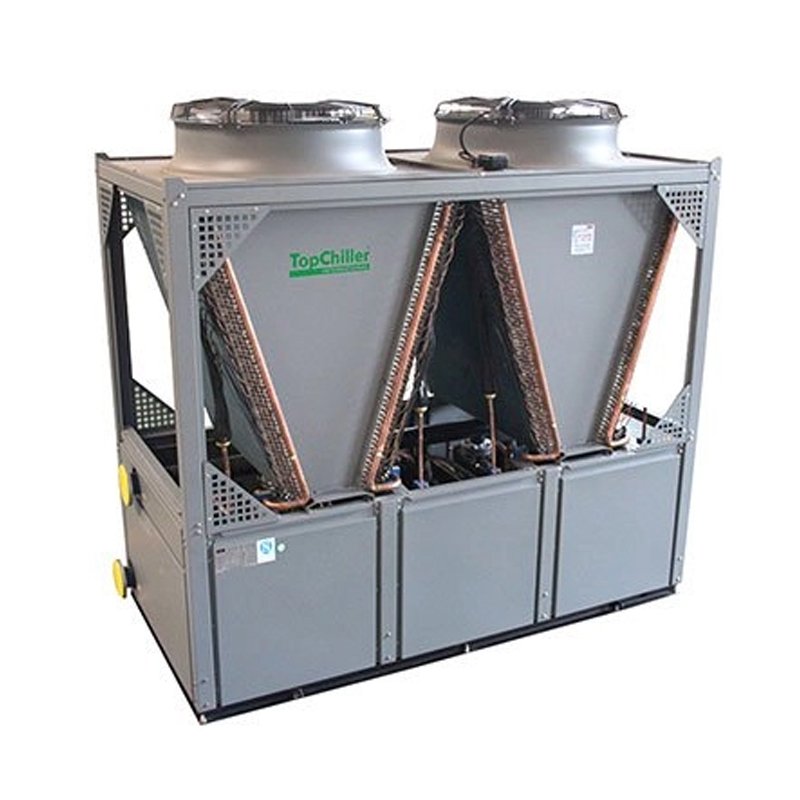


Your Best Modular Chiller Manufacturer and Supplier In China
- High-efficiency branded scroll compressor
- Danfoss expansion valve with R410a refrigerant
- Cooling&heating capacity 30KW to 860KW
- Air-cooled and water-cooled modular chiller
- Premium quality heat exchangers
- Easy operation and modern design
- Easy installation for outdoor location
- Up to 24 months warranty time
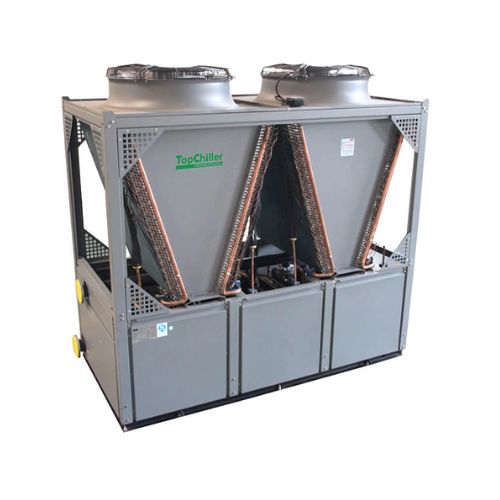
Featuring a fully-closed vortex compressor, motor fans, and R22 refrigerant, it delivers a cooling capacity of 68-408 kW.
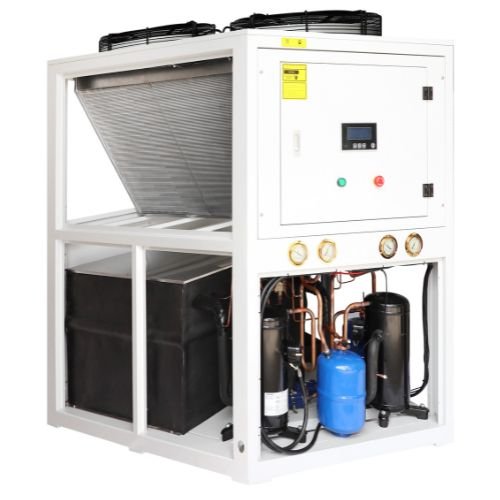
It features a 15HP compressor, built-in 2HP pump, and supports R22 or R407C refrigerants. Delivering a cooling capacity of 50.85kW, with a 178L evaporator water tank, and standard water flow of 8.74m3/h.
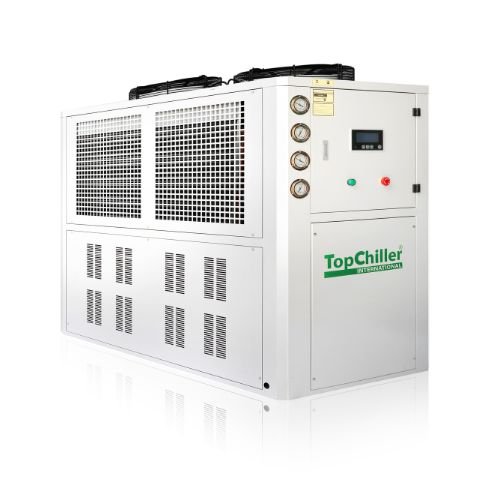
Built with a robust 7800x2270x2450 mm structure, this unit delivers a cooling capacity of 780kW. Operating on 380V, it offers a stable performance across a 15-58°C temperature range.
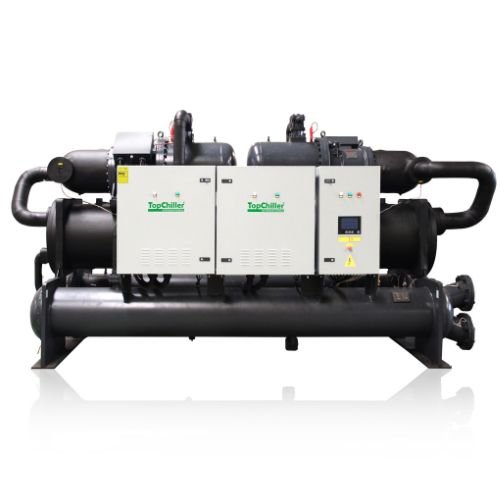
Equipped with PLC/LCD touch-screen controls, durable motors, and a compact 2635x740x1575 mm design. With a cooling capacity of 80-380 kW, fully-hermetic scroll compressors, and supports multiple refrigerants.

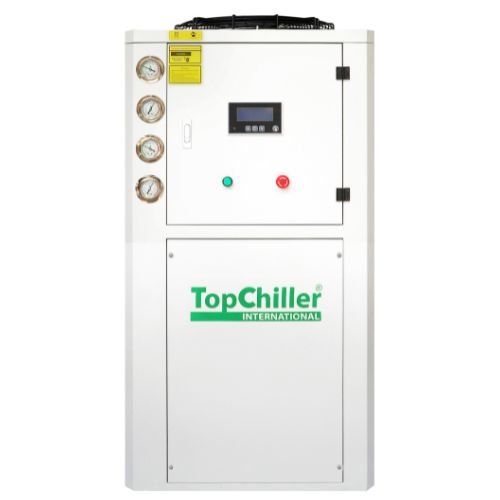
Delivers reliable cooling and heating with flexible temperature control and stable airflow. Built for easy installation and operation, with modern or traditional design options.
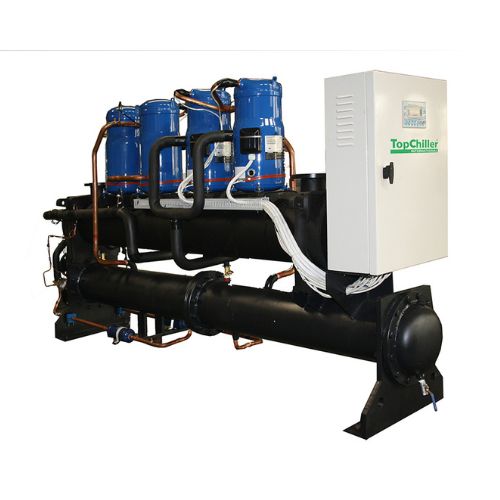
This unit comes with user-friendly controls, a compact footprint, R410A refrigerant. With an adjustable capacity, it delivers stable performance within a 7-45°C working range.
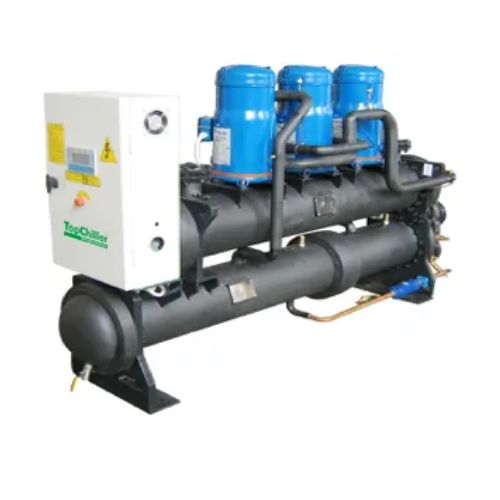
Offers reliable efficient cooling for commercial and industrial spaces. Designed with a compact footprint, this unit is eco-conscious, low-carbon and energy-saving, operating within a 7-45°C range.

It delivers stable performance with adjustable capacity up to 85°C, this unit includes core components like pump and engine.
Air-cooled Modular Chiller
The air-cooled modular chiller consists of several small air-cooled chiller units. Its refrigerant directly exchanges heat with ambient air to dissipate heat. Therefore, the air-cooled modular chiller needs to be equipped with a fan, which blows ambient air onto the exposed condenser tubes during operation, thus increasing the cooling efficiency. It does not perform well in high-temperature environments due to its high dependence on ambient air.


Water-cooled modular chiller
A water-cooled modular chiller consists of several small water-cooled chiller units. Its refrigerant exchanges heat with water to dissipate heat. Therefore, it requires you to have a cooling tower to supply the water and its condenser is sealed. Water-cooled modular chillers can achieve higher cooling efficiencies because water has a higher heat transfer efficiency than air and is not affected by ambient temperature. However, it has a higher initial cost due to the need for a water pump or cooling tower.
Reliable Certification


- Specification
- Video
- Spare Parts
- Successful Application Examples
| Model | 35×1 | 35×2 | 35×3 | 35×4 | 35×5 | 35×6 | 35×7 | 35×8 | |
| Cooling capacity * | kW | 35 | 70 | 105 | 140 | 175 | 210 | 245 | 280 |
| Heating capacity** | kW | 40 | 80 | 120 | 160 | 200 | 240 | 280 | 320 |
| Power supply | / | 380V/3Ph/50Hz | |||||||
| Compressor | |||||||||
| Qty/refrigerant circuit | Nr. | 1/1 | 2/2 | 3/3 | 4/4 | 5/5 | 6/6 | 7/7 | 8/8 |
| Cooling power input* | kW | 10.4×1 | 10.4×2 | 10.4×3 | 10.4×4 | 10.4×5 | 100×6 | 10.4×7 | 10.4×8 |
| Heating power input** | kW | 10.1×1 | 10.1×2 | 10.1×3 | 10.1×4 | 10.1×5 | 10.1×6 | 10.1×7 | 10.1×8 |
| Max. power input | kW | 19.96×1 | 19.96×2 | 19.96×3 | 19.96×4 | 19.96×5 | 19.96×6 | 19.96×7 | 19.96×8 |
| Max. input current | A x nº | 26×1 | 26×2 | 26×3 | 26×4 | 26×5 | 26×6 | 26×7 | 26×8 |
| Max. starting current **** | A | 71×1 | 71×2 | 71×3 | 71×4 | 71×5 | 71×6 | 71×7 | 71×8 |
| Energy adjustment | % | 0-50-100 (Single unit) | |||||||
| Axial fan | |||||||||
| Fan Qty | Nr. | 2 | 4 | 6 | 8 | 10 | 12 | 14 | 16 |
| Air flow | m3/h | 14600 | 29200 | 43800 | 58400 | 73000 | 87600 | 102200 | 116800 |
| Evaporator | |||||||||
| Type | Shell & tube heat exchanger | ||||||||
| Water flow rate | m3/h | 6 | 12 | 18 | 24 | 30 | 36 | 42 | 48 |
| Water side pressure drop*** | kPa | <<<- – – | 42 | – – ->>> | |||||
| Water connection size | DN | 40 | |||||||
| Dimensions | |||||||||
| Length | mm | 1600 (Single unit) | |||||||
| Width | mm | 800 (Single unit) | |||||||
| Height | mm | 1790 | |||||||
| 33 (Single unit) | |||||||||
| Net weight | kg | 410×1 | 410×2 | 410×3 | 410×4 | 410×5 | 410×6 | 410×7 | 410×8 |
| Noise level**** | dB(A) | 51 | 52 | 53 | 54 | 55 | 56 | 57 | 58 |
| * Ambient temperature 35ºC; evaporator water in/out 12/7 ºC; ** Ambient temperature DB 7 ºC, WB 6 ºC; condenser water in/out temperature 40/45 ºC; *** In the nominal water flow condition the pressure drop is between this range. **** Sound pressuremeasured at a distance of 1 m and a height of 1.5 m above the ground in a dear field. | |||||||||
| Model | 60×1 | 60×2 | 60×3 | 60×4 | 60×5 | 60×6 | 60×7 | 60×8 | |
| Cooling capacity * | kW | 65 | 130 | 195 | 260 | 325 | 390 | 455 | 520 |
| Heating capacity** | kW | 68 | 136 | 204 | 272 | 340 | 408 | 476 | 544 |
| Power supply | / | 380-460V/3PH /50-60Hz | |||||||
| Compressor | |||||||||
| Qty/refrigerant circuit | Nr. | 1/1 | 2/2 | 3/3 | 4/4 | 5/5 | 6/6 | 7/7 | 8/8 |
| Cooling power input* | kW | 10.4×2 | 10.4×4 | 10.4×6 | 10.4×8 | 10.4×10 | 100×12 | 10.4×14 | 10.4×16 |
| Heating power input** | kW | 10.1×2 | 10.1×4 | 10.1×6 | 10.1×8 | 10.1×10 | 10.1×12 | 10.1×14 | 10.1×16 |
| Max. power input | kW | 39.92×1 | 39.92×2 | 39.92×3 | 39.92×4 | 39.92×5 | 39.92×6 | 39.92×7 | 39.92×8 |
| Max. input current | A x nº | 52×1 | 52×2 | 52×3 | 52×4 | 52×5 | 52×6 | 52×7 | 52×8 |
| Max. starting current **** | A | 142×1 | 142×2 | 142×3 | 142×4 | 142×5 | 142×6 | 142×7 | 142×8 |
| Energy adjustment | % | 0-50-100 (Single unit) | |||||||
| Axial fan | |||||||||
| Fan Qty | Nr. | 2 | 4 | 6 | 8 | 10 | 12 | 14 | 16 |
| Air flow | m3/h | 29200 | 58400 | 87600 | 116800 | 146000 | 175200 | 204400 | 233600 |
| Evaporator | |||||||||
| Type | Tube in tube heat exchanger | ||||||||
| Water flow rate | m3/h | 11.2 | 22.4 | 33.6 | 44.8 | 56 | 67.2 | 78.4 | 89.6 |
| Water side pressure drop*** | kPa | <<<- – – | 46 | – – ->>> | |||||
| Water connection size | DN | 50 | |||||||
| Dimensions | |||||||||
| Length | mm | 2000 (Single unit) | |||||||
| Width | mm | 1060 (Single unit) | |||||||
| Height | mm | 1957 (Single unit) | |||||||
| Net weight | kg | 630×1 | 630×2 | 630×3 | 630×4 | 630×5 | 630×6 | 630×7 | 630×8 |
| Noise level**** | dB(A) | 71 | 72 | 73 | 74 | 75 | 76 | 77 | 78 |
| * Ambient temperature 35ºC; evaporator water in/out 12/7 ºC; ** Ambient temperature DB 7 ºC, WB 6 ºC; condenser water in/out temperature 40/45 ºC; *** In the nominal water flow condition the pressure drop is between this range. **** Sound pressure measured at a distance of 1 m and a height of 1.5 m above the ground in a dear field | |||||||||
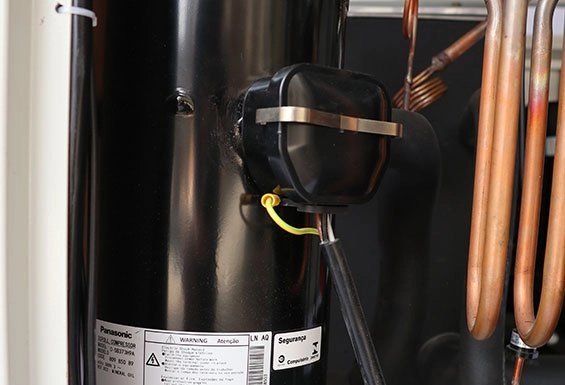
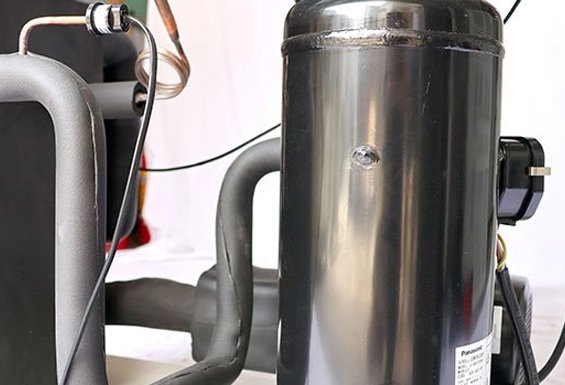
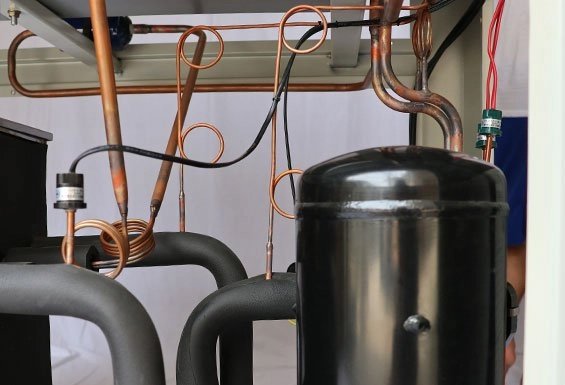
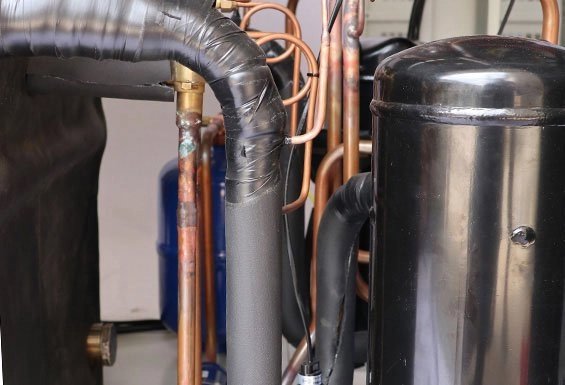
Renovation of the Old Equipment Room in an Australian Commercial Building

The original large air conditioning unit in a certain commercial building in Australia was old and needed replacement. However, the entrance of the equipment room was narrow, and the traditional complete unit could not be transported in. Chillerone provided a modular chiller system consisting of four 30-ton modular air-cooled chillers, with a total cooling capacity of 120 tons. Each module could be moved and positioned independently without the need to dismantle walls for hoisting. After the modular chiller system was put into use, the renovation cycle of the equipment room was shortened, and the customer highly approved of the renovation plan.
Phased Expansion of a Cold Storage Facility in Canada
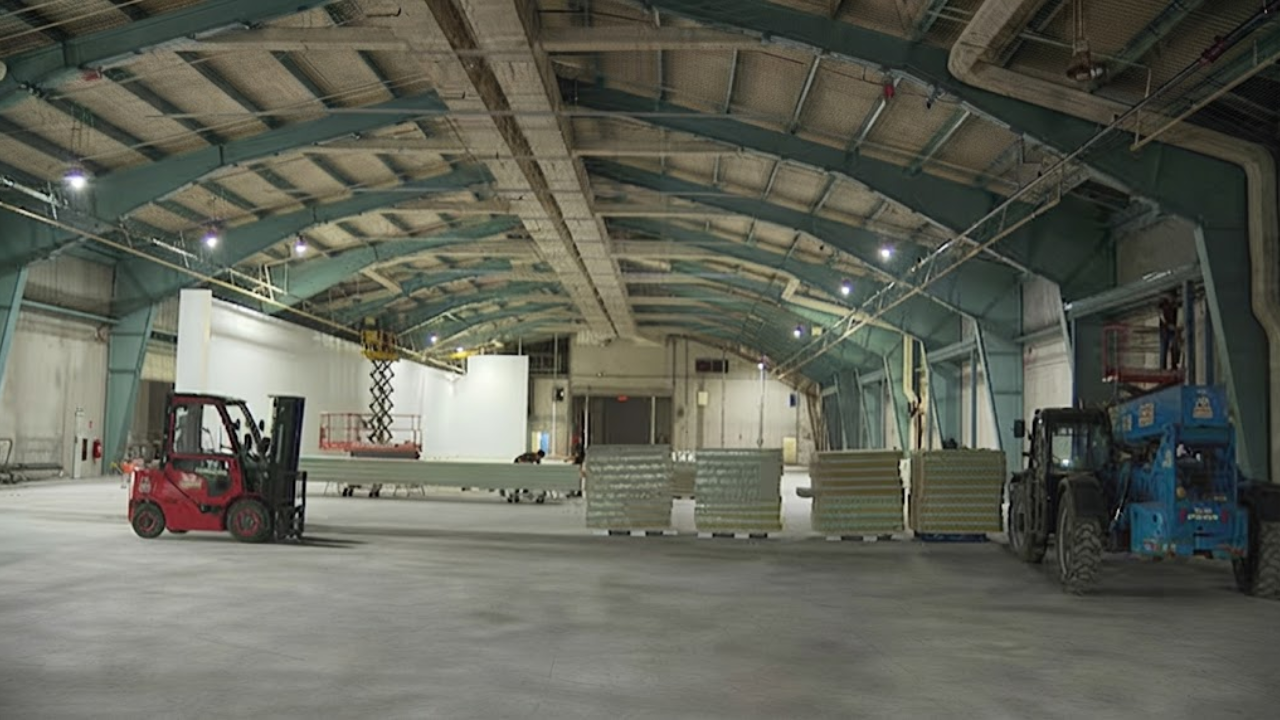
A cold storage facility in Canada was expanding in three phases, with its initial auxiliary cooling demand representing approximately one-third of the planned final capacity. Chillerone proposed a modular water-cooled chiller plant, beginning with three 30-ton modules. Additional modules could be installed as the facility’s auxiliary cooling demand increased, avoiding the need to replace the entire chiller plant. The system was designed for the facility’s specified chilled-water applications rather than as a replacement for the cold room’s dedicated refrigeration system.
Day and Night Load Variation of British Hotels

A hotel and mixed-use building in the UK has a high cooling load during the day and a significant drop at night. Chillerone provided a 150-ton modular scroll chiller system, consisting of five 30-ton water-cooled modular chillers. The control system automatically starts and stops the modules based on the actual load, with only 1-2 units running at night to avoid the inefficient operation of the entire machine. The client stated that this on-demand loading method significantly reduced operating costs.
German Data Center N+1 Redundancy

A certain data center in Germany requires continuous cooling 24 hours a day, and the maintenance of a single unit must not interrupt the cooling supply. Chillerone provided a 240-ton modular heat pump chiller system consisting of eight 30-ton air-cooled modules. The system was configured for N+1 redundancy, with a design cooling load not exceeding 210 tons. This arrangement allows the remaining seven modules to meet the design load when one module is taken offline for maintenance. The customer evaluated that this solution takes into account both reliability and scalability and has been incorporated into their standardized design.


See the Modular Chiller in Action
Watch how the modular chiller delivers stable temperature control, fast cooling response, and reliable performance in real industrial working conditions.
The modular chiller is a highly flexible and expandable cooling system. It consists of several small, independent chiller units, each with a compressor, evaporator, and condenser. Multiple chillers can work in tandem, and the combination gives the entire system greater capacity and cooling capability. You can also expand the system at any time to meet more powerful requirements.
How does the Modular Chiller Work?
How do Modular Chillers Make up a System?
- Runs Independently: Each chiller module of a modular chiller has a separate evaporator, compressor and condenser and operates with a refrigeration cycle. This modular design provides more stable cooling. This is because when part of the module fails, the other modules continue to provide continuous cooling.
- Centralised control: A central control system connects all modules in parallel, allowing them to communicate with each other. You can manage the entire system through the central control system to start, stop, and adjust to meet current application requirements.
How Modular Chillers Achieve Cooling?
- Evaporation: The evaporator holds the refrigerant. During operation, the refrigerant rapidly absorbs heat from the chilled water to cool the water. And the refrigerant quickly transforms from liquid to gas after absorbing heat.
- Compression: The compressor, the heart of the modular chiller, drives the refrigerant through the cooling cycle to achieve constant cooling. It pressurises the low-pressure refrigerant, which has been converted to a gaseous state, and helps transport it with heat to the condenser.
- Condensation: The refrigerant entering the condenser will undergo a heat exchange to transfer the heat and re-condense into a liquid state. Depending on the type of modular chiller, the heat exchange differs. The condenser of an air-cooled modular chiller is exposed to the ambient air, and the refrigerant will transfer heat to the air for heat dissipation. Water-cooled modular chillers, on the other hand, will exchange heat with the water in the cooling tower to achieve cooling.
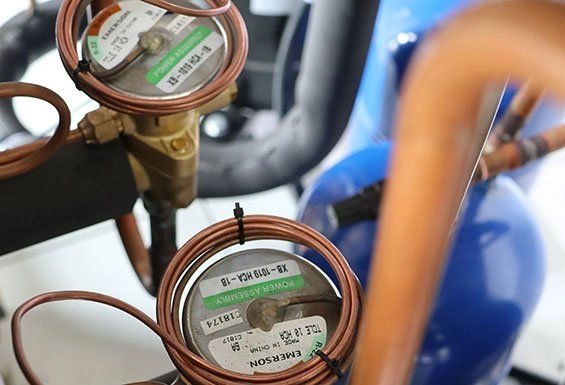
- Expansion: Refrigerant that has recondensed to liquid form is at high pressure. The expansion valve can transform the refrigerant from the condenser into a low-pressure state so that it can once again efficiently absorb the heat of the water and quickly transform into a gaseous state for the cooling cycle. According to your current cooling load, the expansion valve can automatically adjust the refrigerant flow, reduce unnecessary consumption.
Advantages of Modular Chillers
Scalability
Conventional chillers tend to have a fixed capacity and cooling capacity. Modular chillers allow you to pack even up to ten chillers together to achieve a capacity of up to 800 tonnes. And you can turn off or add modular chillers at any time to achieve your desired cooling capacity.
Operation Stability
Conventional chillers have only one system, and in the event of a breakdown, you will need to wait for repairs to be completed before you can continue to use them. With modular chillers, even if one module fails, the other modules are not disturbed and can continue to provide you with cooling. This effectively reduces waiting time. This not only improves production and operational efficiency in industrial and commercial applications, but also avoids the greater risk of downtime and injury in some data centres, medical and other critical applications.
High Cost-Effectiveness
Modular chillers allow you to expand new modules at any time without having to change existing chiller modules. This is important for growing projects because you can expand cooling capacity at any time in response to growing demand without incurring high initial, energy and maintenance costs.
Easy to Install and Maintain
The individual chiller modules are designed to be more compact, so you can install them in space-constrained applications, and installation is simpler than traditional large chiller installations. In the event of a malfunction, you can also troubleshoot and repair more easily.
Thanks to the independent power supply for each module, you don’t need to switch off other modules when servicing a single one, making it possible to reduce or even eliminate downtime.
Low Noise
The modular chiller is fitted with rubber isolation mounts for the compressor, making it quieter to operate. You can also choose to equip it with an acoustic enclosure for even lower noise levels. The modular air-cooled chiller’s fan is driven by an EC motor for even lower noise levels. If your project is particularly sensitive to sound, you can opt for a modular water-cooled chiller without a fan.
Less Space Required
Because the modular chiller consists of several small units and can be installed scattered throughout a building, it is smaller in structure compared to conventional chillers. This allows you to use it in space-constrained applications. It can also be more easily integrated into industrial HVAC systems, which saves even more space.
A modular chiller consists of several small chiller units, whereas a traditional chiller is one large unit. Conventional chillers usually have a fixed capacity and are more difficult to maintain. Modular chillers can be expanded to any capacity you need. It offers greater flexibility and better operational stability.
Modular chillers do save more energy than traditional chillers. You can combine multiple chillers into a system that meets your needs by calculating the exact capacity and cooling requirements needed based on your current needs. And when your modular chiller exceeds the needs of the retaining wall, you can shut down some modules to reduce unnecessary energy loss.
Modular chillers require regular cleaning, including visible stains and dust, water treatment, air-cooled modular chiller filters and condensate trays, and water-cooled modular chiller water lines. In addition, you should regularly check the modular chiller components for damage or corrosion as well as the refrigerant level and make timely repairs, replacements, and additions.
In order to ensure the best performance and service life of your modular chiller, it is best for you to choose the same brand of chiller for your expansion. As chillers from different manufacturers differ in structural design, control systems, or use different refrigerants. You may have compatibility problems during installation and use, which may affect the cooling efficiency of the chiller.
If your current cooling needs are fluctuating or will change significantly in the future, a modular chiller is a great fit. It doesn’t cost you too much in initial and maintenance costs, and you can simply expand when needed. Modular chillers are also ideal for high-reliability applications, where downtime is virtually eliminated. Even when one part fails, the other parts are kept cool. In addition, it is ideal for projects where space is at a premium.


 English
 Spanish
 Arabic
 Vietnamese

