

International Brands We Collaborate With


What is the Plate Type Heat Exchanger?
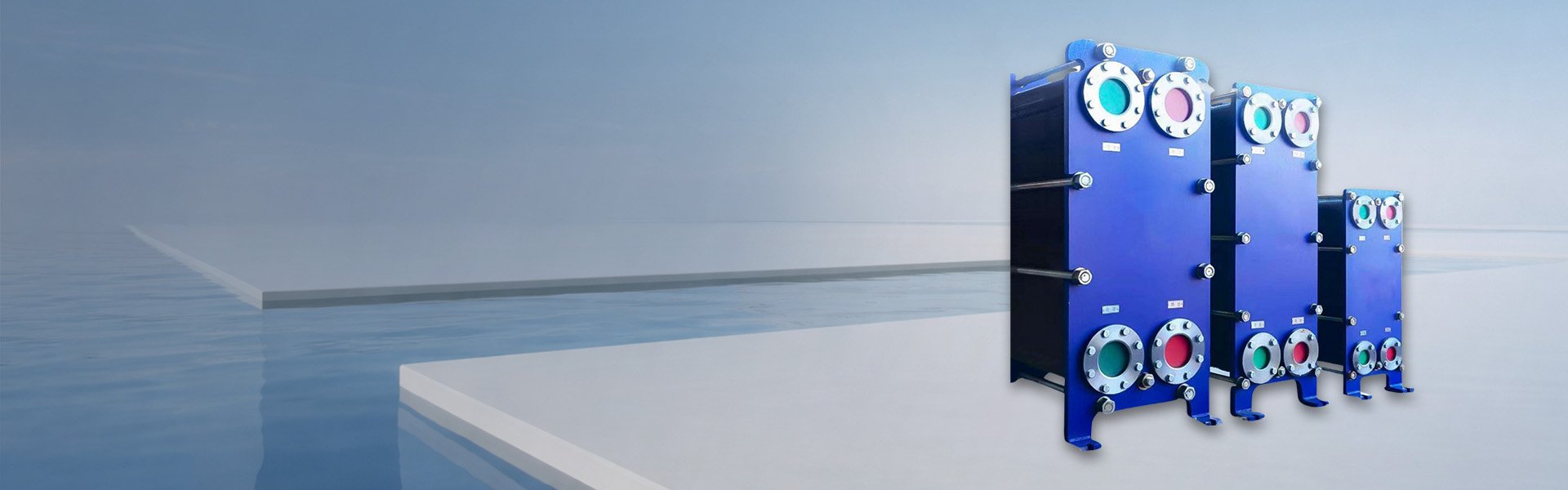
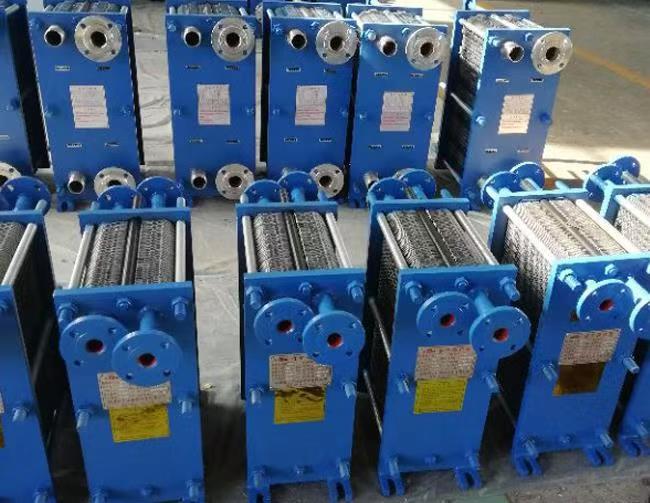
Plate type heat exchangers are employed in the evaporators and condensers of chillers, utilising corrugated metal plates to facilitate heat exchange between two fluids at differing temperatures. These heat exchangers deliver exceptional thermal efficiency, with their corrugated structure increasing the fluid contact area to further enhance heat transfer performance. They also prevent cross-contamination from mixing while ensuring efficient thermal exchange between the two fluids.
Reliable Certification


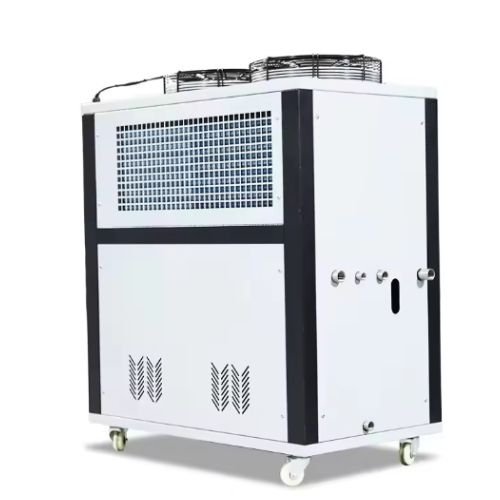
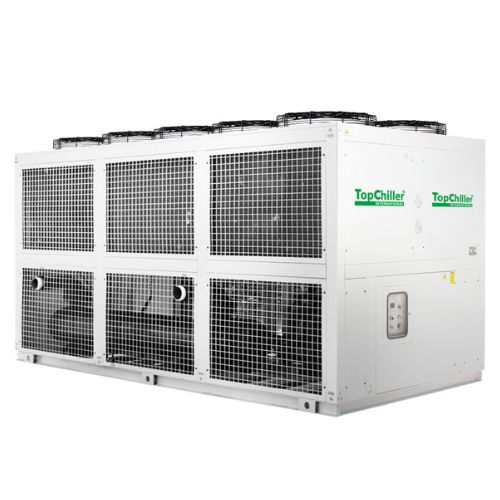
See the Plate Type Heat Exchanger Chiller in Action
Watch how the plate type heat exchanger chiller delivers stable temperature control, fast cooling response, and reliable performance in real industrial working conditions.
Types of the Plate Type Heat Exchanger
Gasketed Plate Type Heat Exchanger
To prevent leakage and mixing of two liquids, the plates in gasketed plate type heat exchangers are sealed with gaskets, achieving superior sealing performance and meeting higher hygiene standards. These gaskets are removable, facilitating easier maintenance during operation. You may also adjust the capacity of the gasketed plate type heat exchanger to suit current requirements by adding or removing plates.
Brazed Plate Type Heat Exchanger
Brazed plate type heat exchangers use metals such as nickel or copper to braze the plates together, forming a sealed structure. Their more compact design allows deployment in projects with limited space. This brazing process enhances the plate type heat exchanger’s robustness, thereby improving its durability during continuous operation.
Welded Plate Type Heat Exchanger
The plates of welded plate type heat exchangers are joined by direct welding, resulting in an exceptionally robust construction. This provides ideal heat transfer performance for applications involving high-temperature, high-pressure environments or corrosive fluids. Consequently, they are suitable for use in demanding industrial settings such as the petroleum and chemical industries.
Semi-Welded Plate Type Heat Exchanger
The semi-welded plate type heat exchanger employs a hybrid design combining welded and gasketed construction, with one side featuring welded channels and the other utilising gaskets. This configuration affords flexibility while delivering enhanced resistance to high pressures and superior durability.
How does the Plate Type Heat Exchanger Work?
- Corrugated Structure: Plate type heat exchangers comprise multiple parallel plates stacked to form two independent channels between them. This configuration regulates fluid flow velocity, enhancing heat transfer efficiency. The plates undergo specialised corrugation to increase thermal contact area and minimise heat loss.
- Convection: During operation, two distinct fluids enter at opposite ends—one contacting the high-temperature fluid, the other the low-temperature fluid. These fluids flow through the plate channels without mixing.
- Indirect Contact: The hot and cold fluids never come into direct contact. Heat transfer occurs through the plates, enabling efficient cooling.
How Plate Type Heat Exchangers are Applied in a Chiller Cycle
Plate type heat exchangers feature a compact design that integrates seamlessly into the evaporators and condensers of chillers. Their unique corrugated structure maximises heat transfer efficiency, enabling highly effective thermal exchange and ensuring outstanding performance for the chiller.
Evaporator
The plate type heat exchanger within the evaporator facilitates heat exchange between the cooling water and refrigerant. Its dual channels respectively accommodate the flow of cooling water and refrigerant; the heat-laden cooling water transfers its thermal energy to the refrigerant, thereby achieving cooling. The re-cooled water subsequently returns to the heat source to absorb further thermal energy, whilst the refrigerant, having absorbed heat, undergoes evaporation.
Condenser
The plate type heat exchanger within the condenser facilitates heat exchange between the refrigerant and external air or water. It assists in cooling the refrigerant and re-condensing it into a liquid state, enabling its return to the evaporator for reuse within the cycle.
Advantages of Using Plate Type Heat Exchangers in Water Chiller System
High Heat Transfer Efficiency
ChillerOne’s heat exchangers create a larger thermal contact area for the water and refrigerant within the chiller, maximising heat exchange efficiency. They also induce high fluid turbulence, thereby achieving a higher heat recovery rate.
Easy to Install and Maintain
Compared to shell-and-tube heat exchangers, plate type heat exchangers are lighter and more compact, thereby reducing the volume and weight of chillers. ChillerOne’s plate type heat exchangers employ a stacked plate design to minimise the risk of clogging and feature few moving parts, thus significantly reducing maintenance requirements.
Scalability
Gasketed plate type heat exchangers offer greater operational flexibility. Heat exchange capacity can be adjusted by adding or removing plates without requiring major modifications to existing chiller equipment. This allows adaptation to changing demands, reducing unnecessary operational costs and the need for additional equipment purchases.
Cost Effectiveness
Firstly, plate type heat exchangers feature lower initial capital expenditure. Secondly, their compact design ensures straightforward maintenance with minimal upkeep costs. With reduced likelihood of damage, downtime and repair expenses are minimised. Furthermore, maximised heat transfer efficiency curtails energy dissipation, thereby lowering operational energy costs.
Wide Applicability
ChillerOne’s plate type heat exchangers are constructed from 316L stainless steel, offering high strength and durability. They can be utilised across diverse applications including industrial and chemical processes. Furthermore, the design minimises fouling accumulation, and the food-grade material permits use in sectors demanding high hygiene standards, such as food and beverage production.
How to Choose Plate Type Heat Exchangers?
- Material Type: Consider the cooling water and refrigerant materials used in the chiller when making your selection. Should the materials be toxic or corrosive, opt for brazed or welded plate heat exchangers offering superior sealing performance. The material selection for the plate heat exchanger itself should likewise be determined accordingly.
- Operating Temperature: Select a plate heat exchanger that matches both the chiller’s operating temperature and the temperature of the fluid after heat absorption. This ensures both components maintain optimal operating temperatures during operation.
- Flow Rate: The flow rate a plate heat exchanger can handle is typically measured in GPM (gallons per minute). Consider your specific application requirements when determining this value.
The principal distinction lies in the method of sealing the plate connections. Gasketed plate heat exchangers employ removable gaskets, whereas brazed and welded plate heat exchangers utilise permanent sealing methods.
Plate heat exchangers boast a compact structure, straightforward maintenance, lower initial costs, and higher heat transfer efficiency. Shell-and-tube heat exchangers, however, are better suited to withstanding harsher conditions, such as high-velocity fluids, high pressures, and liquids containing impurities.
Maintenance primarily involves regular cleaning and monitoring for leaks. If you are using a gasketed plate heat exchanger, you need to replace the gaskets periodically.
Plate heat exchangers contain no hazardous substances and produce less fouling, maintaining superior hygiene standards. You must select safe cooling water and refrigerants for the chiller used in food cooling applications.
Generally speaking, a high-quality plate heat exchanger can achieve a service life of 10 years. However, this primarily depends on usage and maintenance conditions.
ChillerOne possesses over a decade of experience in manufacturing plate heat exchangers for chillers, with all products meeting CE, CSA, and SASO testing standards. Should you be seeking high-quality plate heat exchangers, please do not hesitate to contact us.


