

While there are many options of chiller types available for you to use on your next brew day, making the right choice is important. Your choice of chiller system affects the efficiency of your process, the overall energy use, and consequently, the quality of beer or fluid you make or brew.
Plate, immersion, and counterflow chillers could work for breweries, labs, and industrial plants, but they come in handy at different points. So which is vital for you?
Let’s see.
What Are Plate Chillers?

A plate chiller, from its name, uses plates; that is, it uses metals stacked into a device that looks like a plate to transfer heat between fluids. Plate chillers are sturdy and small, hence, they are a fast and reliable chilling system option for your beer production or other applications.
What Are Immersion Chillers?
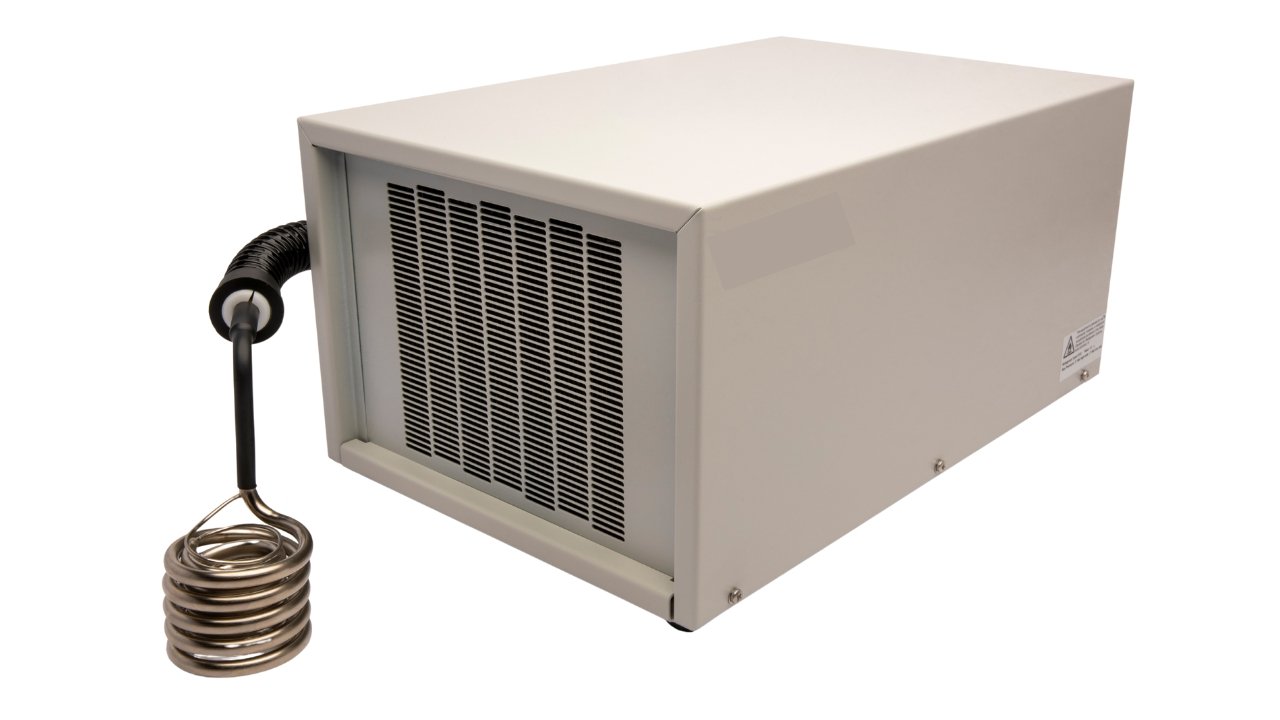
Immersion chillers are different from plate chillers in the way they cool the liquids. This type of chiller cools fluids directly by submerging a coiled tube, which is the chiller, into the liquid.
Immersion chillers, due to their method of cooling, are simple and portable too (well, maybe they don’t look so simple). But their size makes them ideal for small-scale chilling procedures, home brewing, or lab setups.
What Are Counterflow Chillers?

A counterflow chiller works by exchanging heat between fluids in a medium (usually its tube). This chiller type ‘flows’ or runs hot and cold fluids in opposite directions. As the fluids move in opposite directions, it maximizes heat exchange and heat transfer.
With counterflow chillers, you can chill a higher quantity of beer as they offer superior heat exchange strength. Counterflow chillers are quite common in high-demand industries where continuous cooling systems are vital for their procedures. But you can use them for your beer brewing process, too.
Comparing Plate vs Immersion vs Counterflow Chillers
| Criteria | Plate Chiller | Immersion Chiller | Counterflow Chiller |
| Thermal Efficiency | Thermal efficiency is high as the plate has a large surface area that permits counter-current flow | Moderate since efficiency depends on the surface area of the fluid in direct contact with the device | Thermal efficiency is the highest here as fluids move in opposite directions, maximizing heat exchange |
| Flow Rate | High. Plate chillers are designed for high and continuous flow | Flow rates are low. Immersion chillers work best for batch chilling | Flow rates may be either high or low flows as they can be adjusted using the devices |
| Footprint and Hold-Up | Compact as it is small and sturdy, hence fluid retention is minimal | Appears bulky at first, but it is simple to operate and use | Design is compact and very efficient design |
| Pressure Drop and Pumping | Moderate to high so it needs a stable pump | Really low pressure drop | Pressure drop is the highest because it has longer flow paths |
| Fouling and Ease of Cleaning | Highly prone to fouling due to its structure, so it needs CIP (Clean-In-Place) | Easier for you to manually clean | Only fairly resistant to fouling, so it is cleanable when you properly flush the device |
| Speed During Pumping and Time Consumption | Fairly fast | Slower, so it may take longer to cool | Fast |
| Heat Expansion | Moderate, as plate chillers can handle moderate temperature changes and switches | Expansion tolerance is limited | Excellently resistant to thermal stress |
| Cost | Medium to high initial cost depending on the size, manufacturer, and other parameters | The most affordable and portable | The most expensive initially but it lasts longer |
| Materials Used for Construction | Stainless steel, copper, or titanium are the most used | Copper or stainless steel is often used to make the immersion coils | Stainless steel or titanium is used due to their ability to withstand harsh conditions and retain durability. Copper is used but not often |
| Scalability | Highly scalable | Scalability is limited due to its size | Highly scalable, so it is the best fit for industrial systems |
| Applications | Breweries, chemical plants, HVAC heat recovery | Small-batch brewing, labs, portable cooling | Large-scale and continuous industrial processes |
So, Which Chiller Mechanism Should You Choose?
| Condition | Best Option to Consider |
| Highly efficient and large-scale continuous cooling | Counterflow Plate Chiller |
| Portable cooling device and small batch cooling | Immersion Chiller |
| Maximum thermal recovery per unit area | Plate Chiller |
| Easy to set up and clean | Immersion Chiller |
| Scalable for a longer time | Counterflow or Plate Chiller |
Conclusion
Though they are all cooling devices, the best cooling system for you has to fit your process size, precision, and of course, one you can afford. So understanding your process flow, load, and operating costs will ensure that you make a sustainable choice for your process.
FAQs
Are plate chillers always more efficient than immersion coils?
Most of the time, yes. Plate chillers are more thermally efficient because they have a larger surface area and they permit counter-current flow to an extent.
Which chilling type fouls least and is easiest to clean?
Immersion chillers are less prone to fouling, and when they do, they are the easiest to clean manually. Counterflow chillers need routine cleaning, but plate chillers get dirtier the most, so you need to clean them with chemicals or CIP.
Can I get a counterflow configuration with an immersion coil?
Not really. The ways both chillers work are different; immersion coils are unidirectional flow systems while counterflow chillers flow in at least two directions. From their construction, a hybrid of both may not be possible, but you could get an immersion chiller with a recirculating pump. That should go a long way.
Do immersion chillers need ice?
Yes, they do. Many immersion chillers use ice or chilled water as the cooling medium to get a faster heat transfer while cooling.
Which chiller type should I go for when I’m on a budget?
If you are on a budget, an immersion chiller is the most affordable option. It is even more preferred if you have a small-scale process.


 English
 Spanish
 Arabic
 Vietnamese

