

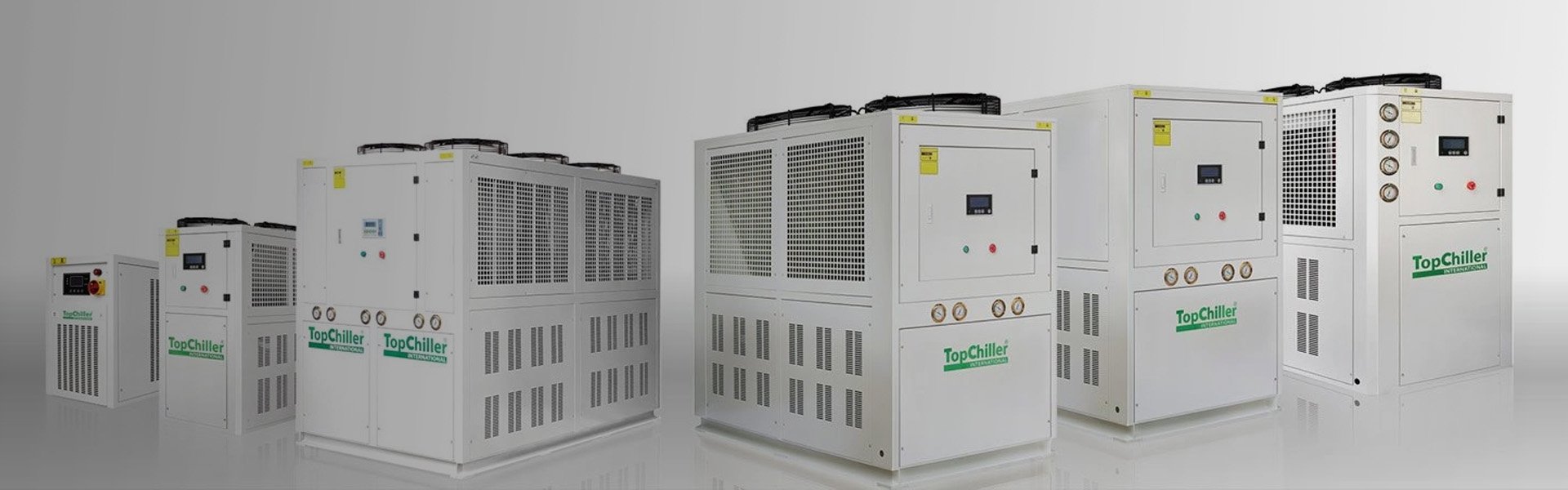
International Brands We Collaborate With


Custom Chiller for High Cooling Efficiency
- 2 to 60 Ton cooling capacity for different heat loads
- Accurately sized to avoid short cycling
- Guarantee stable working temperature (±0.5°C)
- Fully customized chillers
- Availability of chiller replacement parts

Our chiller provides quick, efficient cooling for water systems anywhere you need it.

Our chiller delivers powerful, stable cooling for industrial or large-scale water systems.

Chillerone’s compact chiller provides efficient cooling for smaller setups with easy plug-and-play use.

Chillerone’s portable chiller maintains ideal water temperature for healthy hydroponic plants.

Our chiller uses a reliable reciprocating compressor to keep water consistently cool on the go.
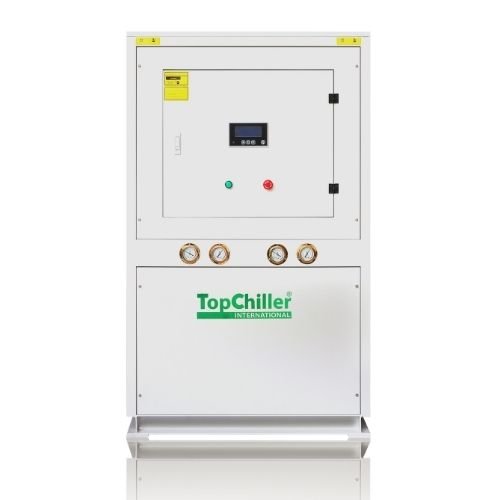
Chillerone’s heavy-duty chiller handles large volumes, keeping industrial systems cool on the go.
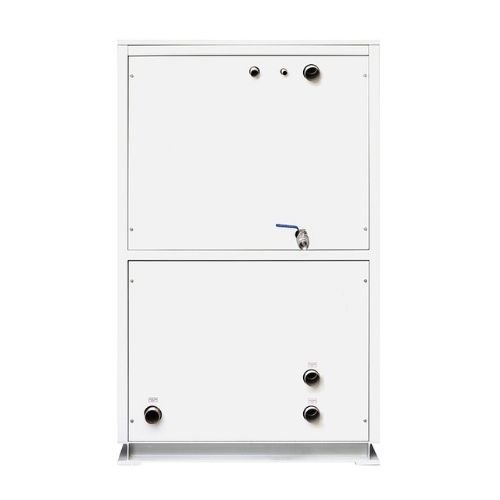
Chillerone’s scroll chiller provides quiet, energy-efficient cooling for portable or industrial applications
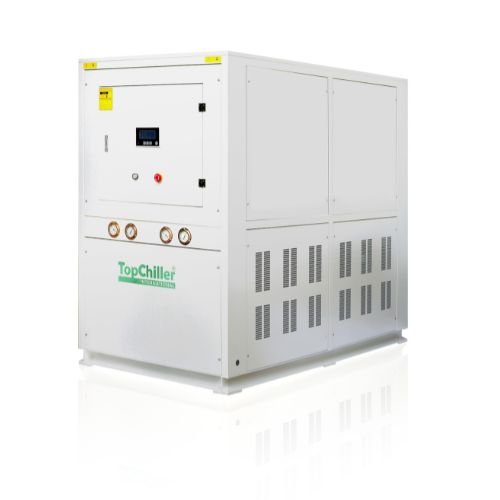
Chillerone’s chiller circulates water while keeping it cold, ideal for labs, or equipment cooling.
Reliable Certification


- Configuration
- Video
- Spare Parts
- Successful Application Examples
Portable Water Chiller Technical Specifications
| Items\Model | AC-0.5A | AC-1A | AC-1.5A | AC-2A | AC-2.5A | AC-3A | AC-4A | AC-5A | AC-6A | AC-8AD | AC-10AD | AC-12AD | AC-15AD | |
| Cooling capacity | Kcal/h 50HZ/60HZ | 1419 | 2451 | 3182 | 4833 | 5848 | 7181 | 9288 | 11988 | 14534 | 18576 | 23994 | 29068 | 38270 |
| 1703 | 2941 | 3784 | 5800 | 7018 | 8617 | 11146 | 14386 | 17441 | 22291 | 28793 | 34882 | 45924 | ||
| KW 50HZ/60HZ | 1.65 | 2.85 | 3.7 | 5.62 | 6.8 | 8.35 | 10.8 | 13.94 | 16.9 | 21.6 | 27.9 | 33.8 | 44.5 | |
| 1.98 | 3.42 | 4.4 | 6.74 | 8.2 | 10.02 | 12.96 | 16.73 | 20.28 | 25.92 | 33.48 | 40.56 | 53.4 | ||
| Input power | KW | 0.88 | 1.35 | 2 | 2.25 | 2.66 | 3.27 | 4.07 | 5.75 | 6.45 | 8.25 | 11.5 | 12.9 | 17.45 |
| Max Current | A | 5.4 | 8.2 | 12 | 13.6 | 6.6 | 8.2 | 10.1 | 13.8 | 15.5 | 20 | 27.9 | 31.3 | 42.4 |
| Power source | 1PH~220V/3PH~220V/380V 50HZ/60HZ | 3PH~380V/415V/480V~50HZ/60HZ(3PH~200V/220V 50HZ/60HZ) | ||||||||||||
| Refrigerant | Type | R22/R407C/134a/404A/410A | ||||||||||||
| Control | Capillary / thermostatic expansion valve | |||||||||||||
| Compressor | Type | Hermetic Rotary | Hermetic scroll ( piston ) | |||||||||||
| Power(KW) | 0.45 | 0.89 | 1.3 | 1.73 | 2.1 | 2.7 | 3.5 | 4.55 | 5.25 | 3.5×2 | 4.55×2 | 5.25×2 | 7×2 | |
| Condenser | Type | Efficient finned copper tube with aluminum+low noise external rotor fan | ||||||||||||
| Air flow (m3/h) | 750 | 1000 | 1500 | 2000 | 2500 | 3000 | 4000 | 5000 | 6000 | 8000 | 10000 | 12000 | 15000 | |
| Air blower(KW) | 0.06 | 0.09 | 0.15 | 0.15 | 0.19 | 0.14×2 | 0.14×2 | 0.19×2 | 0.19×2 | 0.25×2 | 0.45×2 | 0.45×2 | 0.6×2 | |
| Evaporator | Type | SS Tank coil / shell and tube type / Plate type heat exchanger | ||||||||||||
| Chilled water (m3/h) | 0.28 | 0.49 | 0.64 | 0.97 | 1.12 | 1.44 | 1.86 | 2.4 | 2.91 | 3.71 | 4.8 | 5.81 | 7.65 | |
| 0.34 | 0.59 | 0.76 | 1.16 | 1.4 | 1.72 | 2.23 | 2.88 | 3.49 | 4.46 | 5.76 | 7 | 9.18 | ||
| Water tank(L) | 10.6 | 18.3 | 27 | 27 | 50 | 50 | 60 | 60 | 110 | 120 | 200 | 200 | 270 | |
| Inlet/outlet pipe (inch) i | 1/2″ | 1/2″ | 1/2″ | 1/2″ | 1″ | 1″ | 1″ | 1″ | 1″ | 1-1/2″ | 2″ | 2″ | 2″ | |
| Water pump | Power (kw) | 0.37 | 0.37 | 0.37 | 0.37 | 0.37 | 0.37 | 0.37 | 0.75 | 0.75 | 0.75 | 1.5 | 1.5 | 2.2 |
| Max lift(m) | 22 | 22 | 22 | 22 | 22 | 22 | 22 | 30 | 30 | 25 | 25 | 25 | 28 | |
| Max flow (m3) | 5.4 | 5.4 | 5.4 | 5.4 | 5.4 | 5.4 | 5.4 | 8.1 | 8.1 | 8.1 | 13.5 | 13.5 | 25.2 | |
| Safety protection | Compressor inner protection, over current protection, high/low pressure protection, over temperature protection, flow rate protection, phase sequence/phase missing protection, low level coolant protection, anti freezing protection, exhaust overheat protection | |||||||||||||
| Dimension | L(mm) | 550 | 550 | 600 | 600 | 720 | 980 | 980 | 1150 | 1150 | 1350 | 1500 | 1500 | 1860 |
| W(mm) | 350 | 450 | 500 | 500 | 550 | 520 | 520 | 560 | 560 | 680 | 760 | 760 | 850 | |
| H(mm) | 695 | 845 | 985 | 985 | 1350 | 1170 | 1170 | 1215 | 1215 | 1530 | 1660 | 1660 | 1900 | |
| Net weight(KG) | 45 | 62 | 85 | 95 | 125 | 152 | 175 | 185 | 215 | 283 | 345 | 382 | 580 | |
| Note: The above specifications are according to the following design conditions: 1, 12℃/7℃.Chilled water inlet/outlet temperature 12℃/7℃. 2, 33℃/38℃.Cooling air inlet/outlet temperature 33℃/38℃. We reserve the right to modify the specification without further notice. | ||||||||||||||


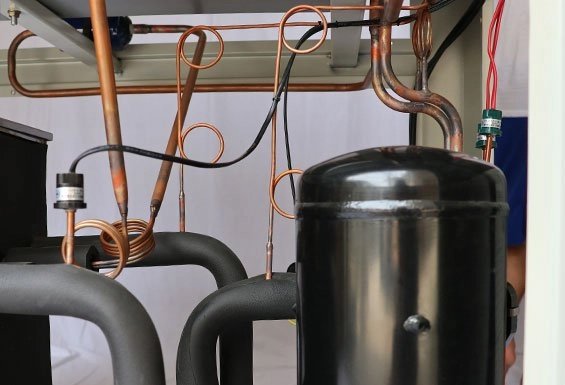
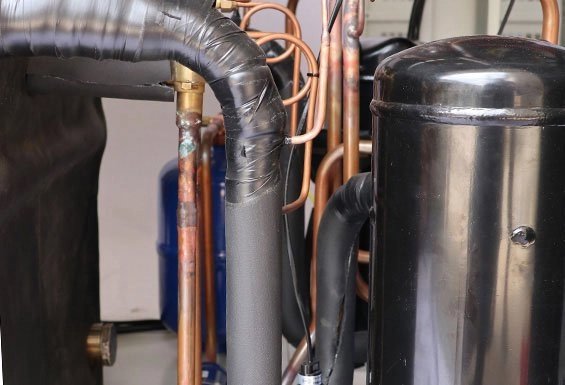
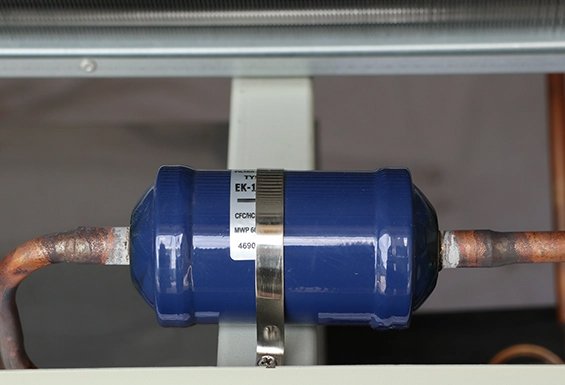
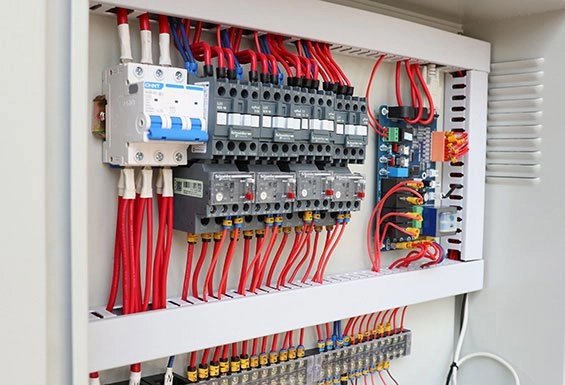
Italian CNC Machining
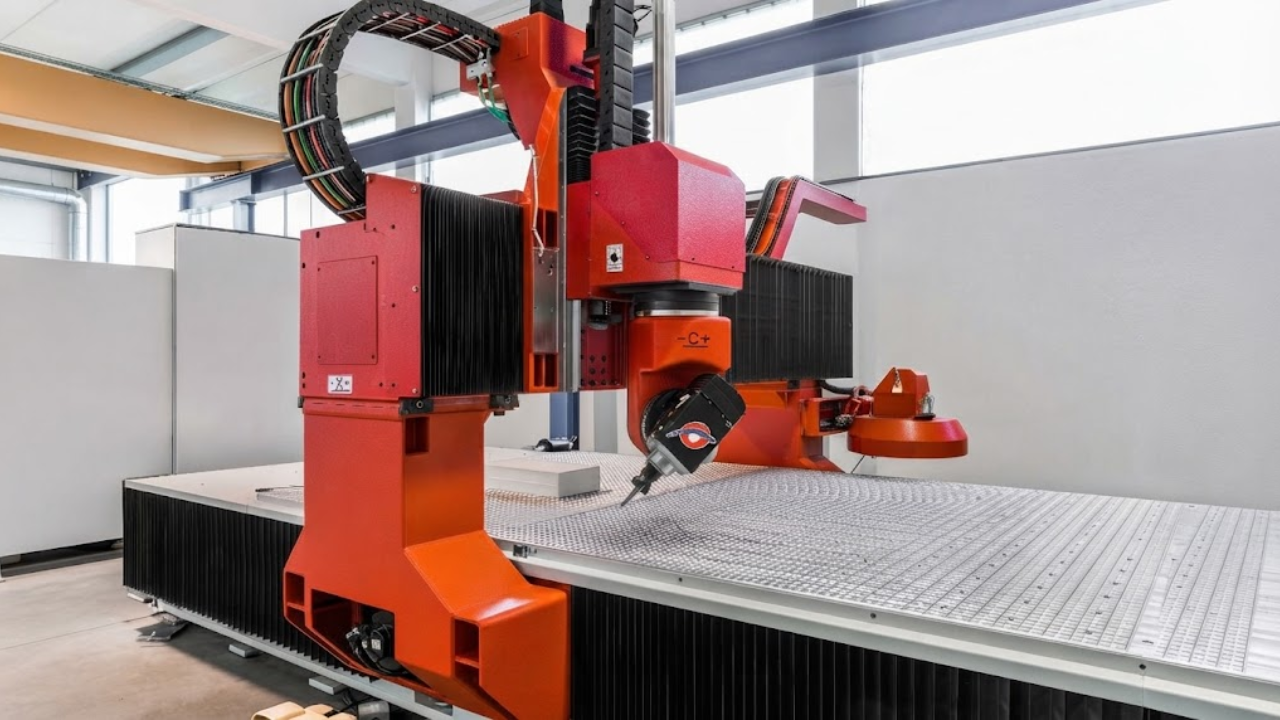
In an Italian precision processing scenario, a new CNC processing center was added, but the central cooling system had insufficient capacity. A 10-ton (35kW) portable water chiller was adopted as an independent portable water chiller unit, providing 18–22℃ cooling water. This industrial portable water chiller does not require modification of the existing piping and can be plugged in immediately, avoiding production downtime. The equipment operates continuously, maintaining a stable temperature and meeting the cooling requirements for multiple CNC machines to switch.
Polish Laser Processing
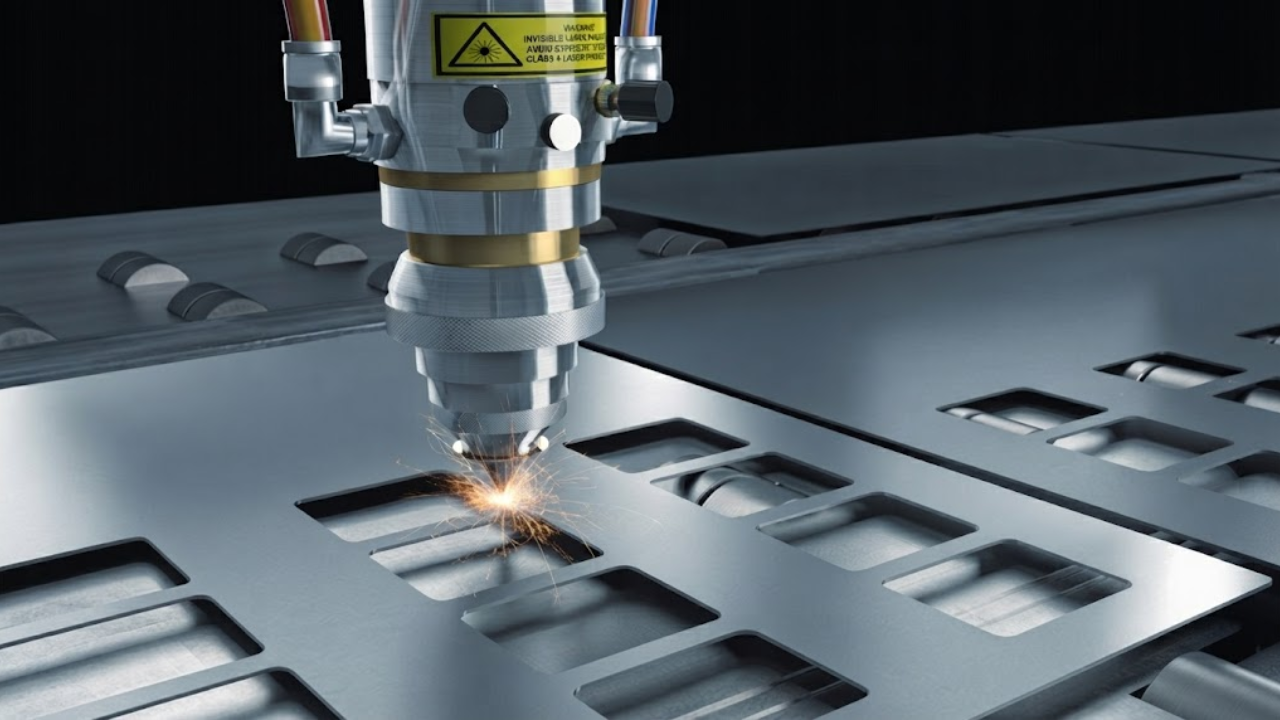
In a certain industrial laser processing line in Poland, the laser source is sensitive to temperature fluctuations. A 3-ton (10.5kW) portable water chiller system was configured, using PID control, with the water temperature stabilized at 20±1℃. As a small portable water chiller unit, they have a closed-loop system that effectively isolates the temperature changes in the workshop environment, ensuring stable laser output. Under continuous production, the water temperature fluctuations are significantly reduced, and the processing quality is consistent.
Spanish Food Processing
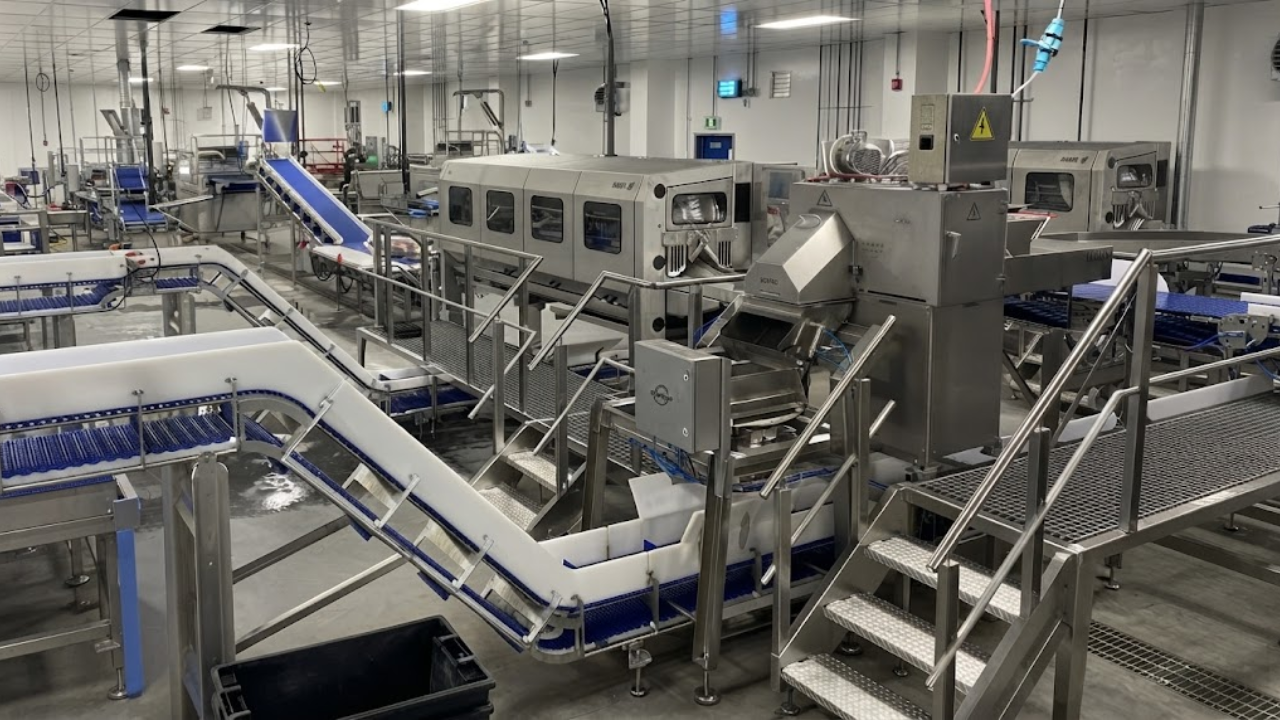
In a food processing equipment support project in Spain, an independent process cooling circuit was required. A 15-ton (52.7kW) portable industrial water chiller was adopted, providing 8–12℃ circulating water for the closed-loop portable water chiller system. This portable water chiller system is connected to the heat exchanger of the production line and does not come into direct contact with food, meeting hygiene and continuous operation requirements. The independent circuit avoids interference with the central cooling system.
Mexican Temporary Expansion of Injection Molding
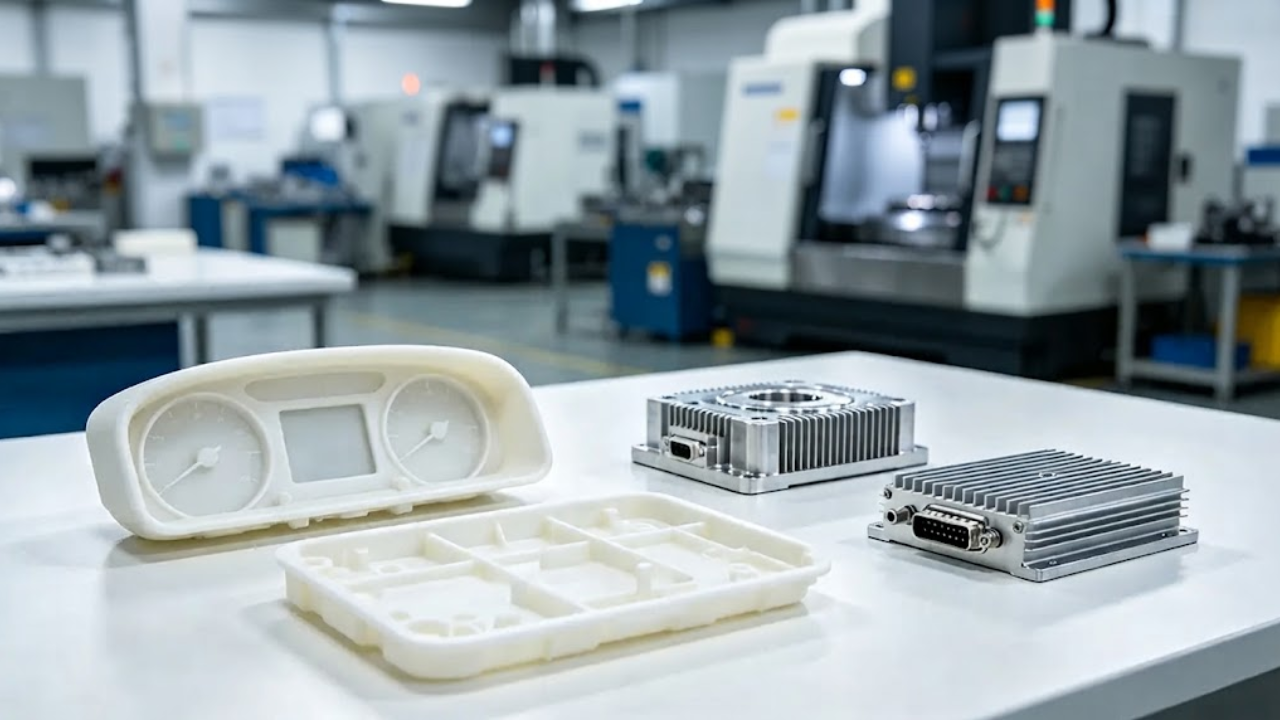
In a plastic processing scenario in Mexico, a temporary increase in injection molding machines resulted in insufficient central cooling capacity. A 25-ton (87.9kW) portable air-cooled water chiller was adopted, deployed in the form of a portable water chiller rental, providing 15–20℃ process cooling water. No expansion of the central system was required, and it was quickly installed, meeting the production requirements for temporary orders. After the project, the equipment can be removed, which is flexible and efficient.
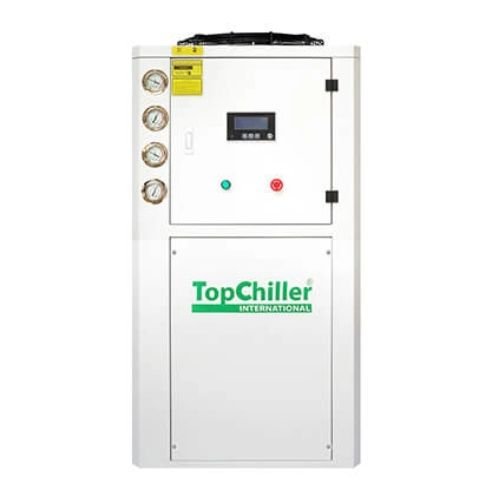
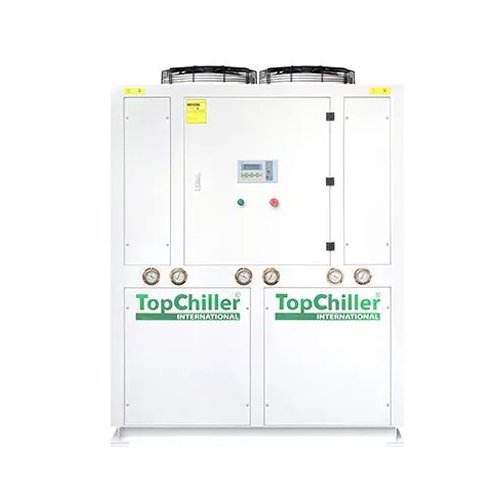


See the Portable Water Chiller in Action
Watch how the portable water chiller delivers stable temperature control, fast cooling response, and reliable performance in real industrial working conditions.
What is a portable water chiller
The greatest advantage of portable water chillers is their small size and ease of movement. Unlike traditional water chillers, portable water chillers have all the necessary components, including the refrigeration circuit, water storage tank, water pump, electrical equipment, etc., installed in one area. From the outside, it looks like a large TV box that can be moved at any time and is super easy to install. However, the cooling capacity is slightly weaker, usually ranging from 1 to 40 cold tons.
Types of portable water chillers
Mobile portable water chiller
The standard flow portable chiller is equipped with an integrated water tank and operates in a closed cycle. Only this kind of chiller can be called a portable chiller in the traditional sense. It integrates the water tank and the unit into one. The chilled water pumped out is pressurized and directly returned to the unit for continued use, with an internal circulation. The entire system is within a geometric space.
Based on the differences in condensers or heat dissipation methods, we further classify standard flow portable water chillers into air-cooled portable water chillers and water-cooled portable water chillers.
Air-cooled portable water chiller
The air-cooled portable water chiller is equipped with a small fan at the back. When in operation, it blows away the heat of the condenser without the need to connect water pipes. The air-cooled portable chiller is the most convenient for you to move.
However, its heat dissipation capacity is not very high. Especially in summer when the outdoor temperature is high, the heat dissipation efficiency will be reduced, and the humming sound of the fan will also be more obvious. If the laboratory needs to install a chiller temporarily or in scenarios where there is a lot of movement, choosing an air-cooled type would be a great option.
Water-cooled portable water chiller
The water-cooled portable water chiller has an additional inlet and outlet water pipe, and the heat is carried away by circulating water. The advantage of water-cooled portable chillers lies in their high heat dissipation efficiency, and there is no need to worry about their heat dissipation capacity even in high-temperature environments.
However, you need to find a water source in advance and connect the water pipes. After use, you also need to drain the remaining water to prevent scaling. Moreover, it is not as convenient to move as an air-cooled portable chiller, and the pipes also need to be disassembled. If your industry is a large factory with its own cooling water system, the requirement for cooling capacity is also relatively high. That water-cooled portable type is undoubtedly your better choice.
Semi-fixed portable water chiller
- The counter-flow model does not come with a water tank and is equipped with an open circulation cooling system. In this case, it needs to be connected to an external water tank. Let the water flow naturally into the pump body by gravity. The water first passes through the unit for cooling, then passes through the filter, and finally returns to the process equipment or an external water tank.
- Compared with the standard flow portable chiller, the installation and transportation of this type have become more difficult. Because when you are moving it, you also need to consider lifting the external water tank. After moving it, you still need to assemble it. Frequent disassembly can also lead to pipeline wear. Therefore, counter-flow portable water chillers are more inclined to semi-fixed water chillers.
- So if you are going to choose this counter-flow portable chiller, it is necessary to prepare an external water storage container in advance. If it is a place like a laboratory, which already has a water tank, buying this counter-flow type can also increase the heat exchange efficiency. The original pipelines do not need major modifications either.
Portable split-type chiller with remote condensing function
- The main unit and water tank of the split-type portable chiller with a remote condenser are compactly integrated. The condenser, however, is located alone in another place. This design is for heat dissipation: the condenser needs to dissipate a large amount of heat and be placed far away from the main unit. The main cabin can accommodate smaller fans and circuits, making the entire machine lighter to move.
- When you push it, the silent wheel is very smooth, unlike the traditional chiller, which requires disassembling pipes. When you arrive at the destination, connect the water pipe and plug it in. As long as ventilation is ensured on the condenser side, cold water can be supplied to the reaction vessel, laser, or medical equipment on the main unit side.
- The split type is relatively less convenient to move. However, its advantage is low noise. If the condenser is installed far away, the noise beside the main unit will be very low.
- This split type is slightly more expensive than the ordinary all-in-one machine. After all, it has an additional set of remote connections and an independent heat dissipation design. But for scenarios where you need a flexible layout and space is precious, this money is well spent.
The advantages of portable water chillers
Light in weight
Compared with ordinary large water chillers, this small portable water chiller is not very heavy. If you need to buy a chiller on a daily basis and use it in different places, a small water chiller will be easier to move.
Small footprint
All components of the integrated chiller are located within a geometric space. Even other semi-fixed types take up less space than ordinary water chillers. If the area of your factory building is not too large, its small size is one of its advantages. The saved space can be used to place other machinery, making efficient use of the space.
Easy to install
There is no need to build cooling towers, fixed pipelines, etc. The portable chiller system can be used at any time by simply plugging it in. Your installation time will be greatly reduced.
Widely used
Portable water chillers for ice baths, industrial portable water chillers, portable water chillers for sports cooling, portable laboratory water chillers, etc., are all very common in our daily lives. Portable water chillers can be perfectly applied from household to industrial use, and their application fields are very wide.
Adapt to small loads
For manufacturers with small loads and less demand for cooling capacity, portable water chillers can be considered. This small chiller won’t be wasted when in use.
The application scope of portable water chillers
Low-load process
When you conduct a small-scale laboratory test, the reactor needs to be cooled down quickly after being heated. Or when the workshop is in a rush, the molds of small injection molding machines need to be locally cooled. This type of work is not very demanding, but it requires stability.
Portable water chillers have a small water volume and precise temperature control, and can maintain a constant temperature and flow rate for process fluids
Flexible adaptation of special processes
Do you have any additional requirements for process fluids? For instance, medical equipment should be cooled in a sterile environment, or testing instruments should be kept away from vibrations. The portable chiller is small in size and can be moved to a well-ventilated corner. The split model can also place the condenser at a distance. It can also meet special requirements, unlike large machines, which are troublesome to modify.
Emergency response for testing and temporary scenarios
If you are conducting new product tests, you need to temporarily set up a cooling circuit. In field operations, there is no fixed cold source for the equipment to generate heat. At this point, just move a portable chiller, plug it in, and connect the pipes to use it. After the test, put it away and use it at another venue next time. It saves time and cost.
ChillerOne is a Chinese chiller manufacturer with twenty years of manufacturing experience. Our portable water chillers can be applied in all industrial fields and are specifically designed to provide cooling for various high-temperature equipment.
For energy conservation considerations, ChillerOne’s portable water chillers can operate independently or be stopped. We offer comprehensive protection devices for portable water chillers.
If you are interested in purchasing a portable chiller, ChillerOne is more than willing to be your partner. We will provide you with additional technical consultation for free.
A portable water chiller for showering takes up very little space and is equipped with silent wheels at the bottom. It can be placed in a corner on a regular basis without taking up much space. A micro compressor is hidden on the side. Plug in and press the temperature adjustment button, and cold water will come out immediately. It’s more convenient than a large bucket of ice water.
For industrial portable water chillers, you can focus on load-bearing and load capacity. Choose those with thick casings, strong motor power, and the ability to continuously cool down production line equipment. The requirements for portable water chillers in the laboratory may be more precise. You can consider those with low noise, light body and stable connection to precision instruments.


 English
 Spanish
 Arabic
 Vietnamese

