

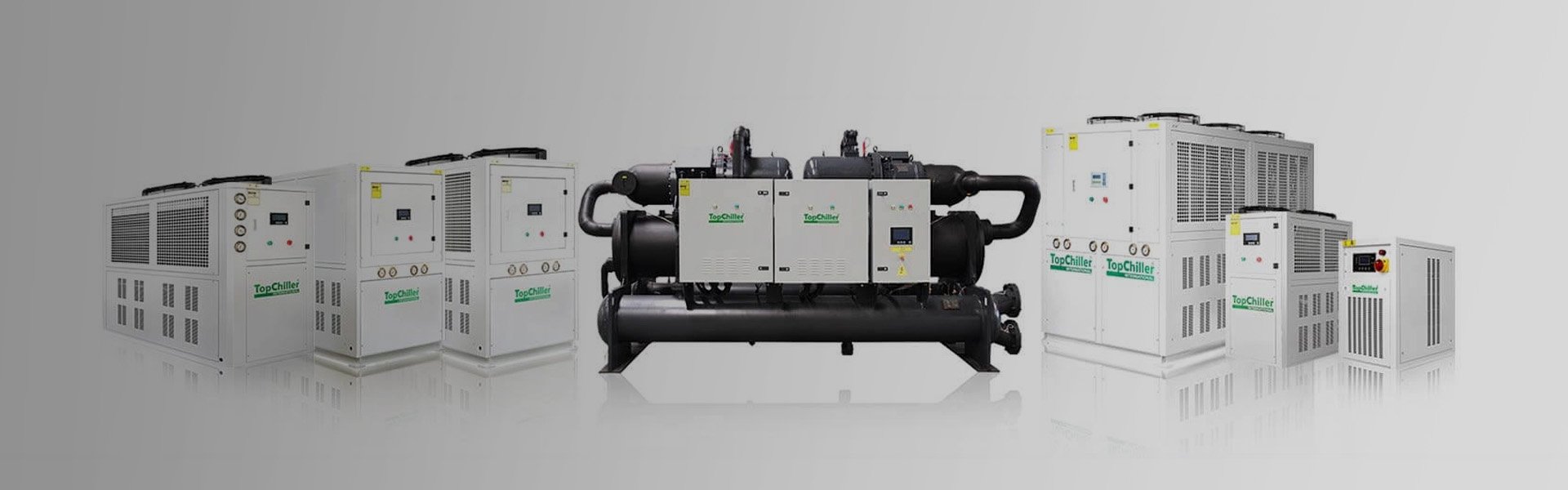
International Brands We Collaborate With


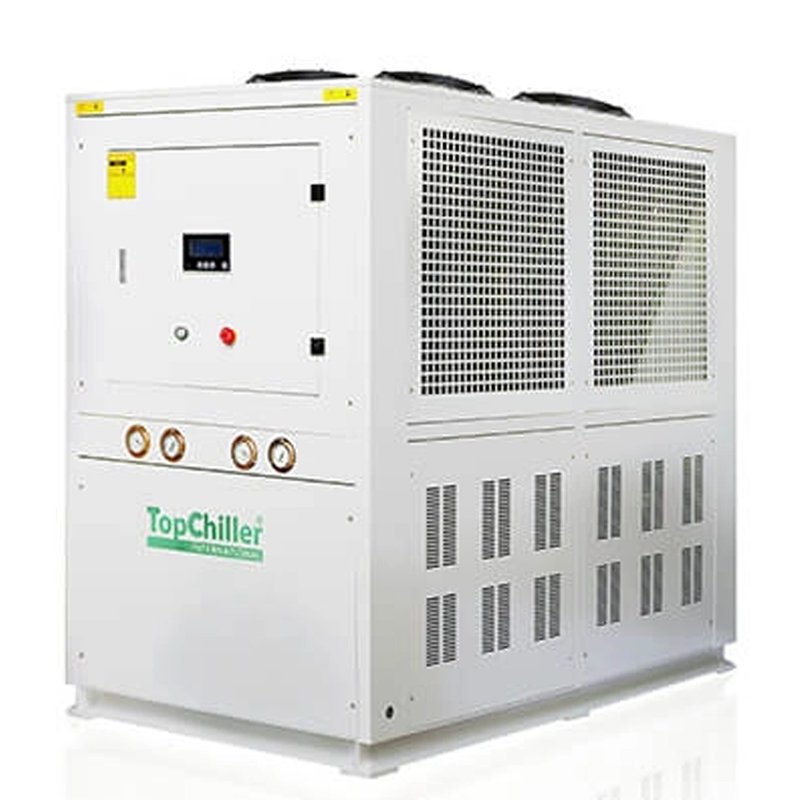
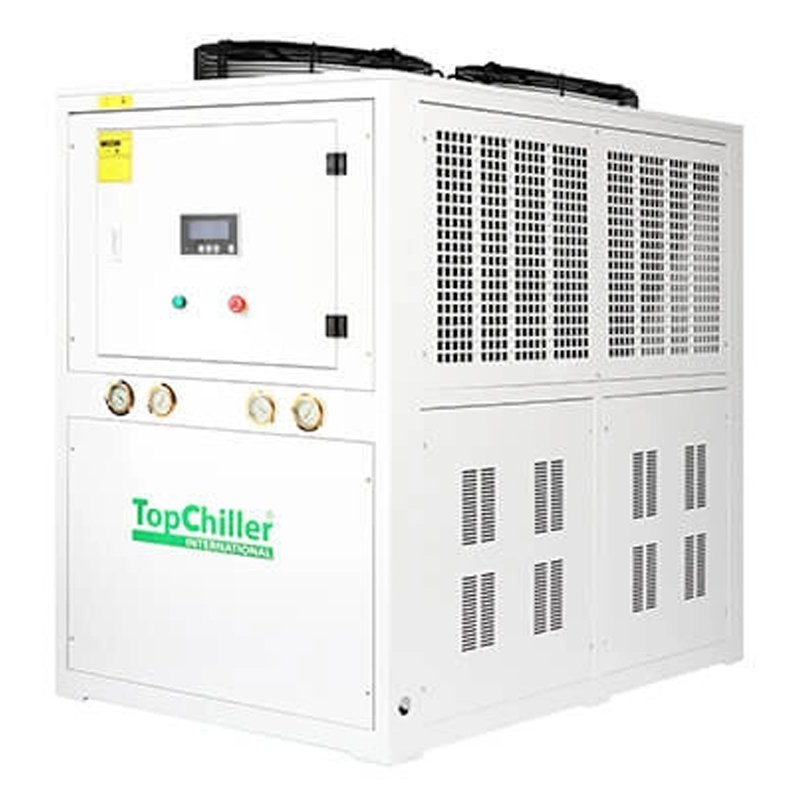
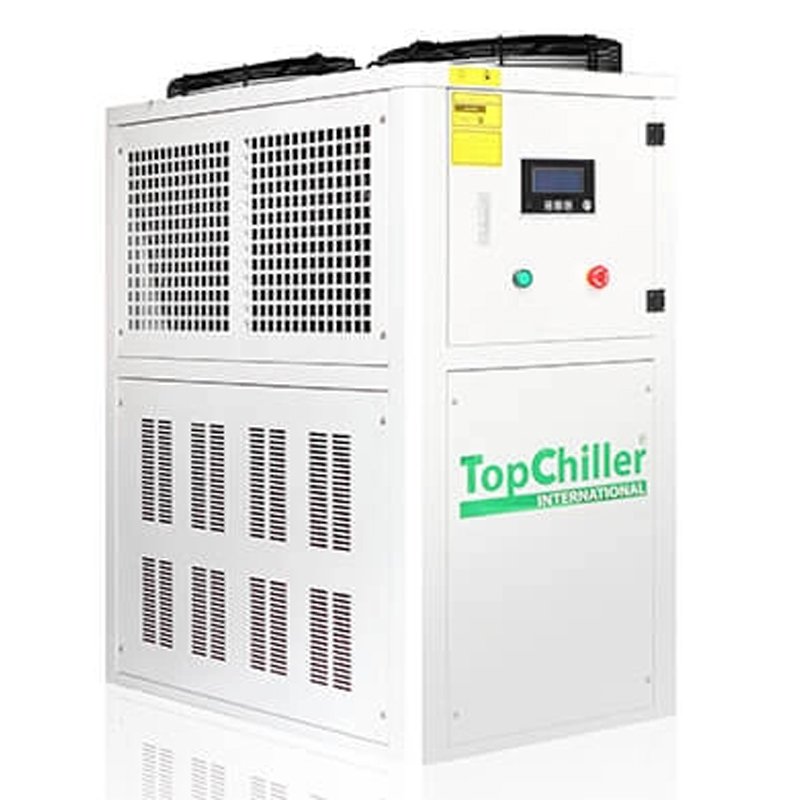
Whatever Type of Process Chiller, ChillerOne Can Fulfill Process Chiller Solution for You.
- Over 20 years process chiller manufacturing experience: ChillerOne specialized in process chiller manufacturing over 20 years
- 24 months warranty time: ChillerOne make sure all process chillers covered 24 months warranty time
- Famous brand spare parts: Each process chiller from ChillerOne uses world first-class refrigeration spare parts
- Technical support& Training service: ChillerOne provides full installation&commission service of your process chiller
- 8 Hours troubleshooting: ChillerOne promise to respond and solve any process chiller error within 8 hours
- Free process chiller design: ChillerOne give process chiller design and solution free of charge to all clients
Your Reliable Process Chiller Manufacturer and Supplier in China
ChillerOne process chillers are our series of cooling systems engineered to match load capacities in different industrial systems. Among our top-selling industrial process chillers are welding chillers, plastic chillers, MRI chillers, and semiconductor chillers.
At ChillerOne, we specialize in customizing industrial-grade chillers according to your specific cooling needs. Whether you want self-contained systems with water or a mixture of water and glycol for sub-zero cooling, ChillerOne is your trusted manufacturer in China.
In every process chiller design, we prioritize high efficiency, low power consumption, and safety. With a cooling temperature ranging from -25℃ to 35℃, you can use these systems for most industrial processes.
For reliability and predictability, these chillers can maintain temperature stability within ±0.5℃ to 2℃. Additionally, we strive to ensure these chillers maintain high efficiency in both full-load and part-load conditions.
More importantly, our air-cooled chillers can achieve a coefficient of performance (COP) of up to 3.8, while the water-cooled chillers can achieve 7.0. It will depend on whether you want your systems to absorb heat from industrial machinery or processes, then reject it to ambient air or a cooling tower.
Upgrade your process chillers today with ChillerOne cooling systems – Get free chiller sizing analysis and a quote.

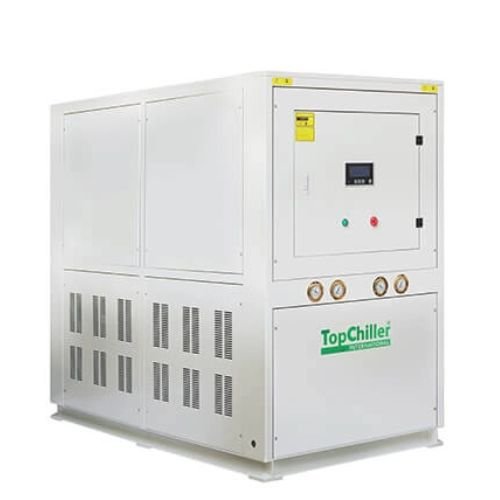
Easy to operate and eco-friendly water cooled process chiller with 2~42℃ or 36~108°F working temperature.

Automatic and fully hermetic scroll compressor with water tank and coil evaporator type and 76 liter water tank capacity.
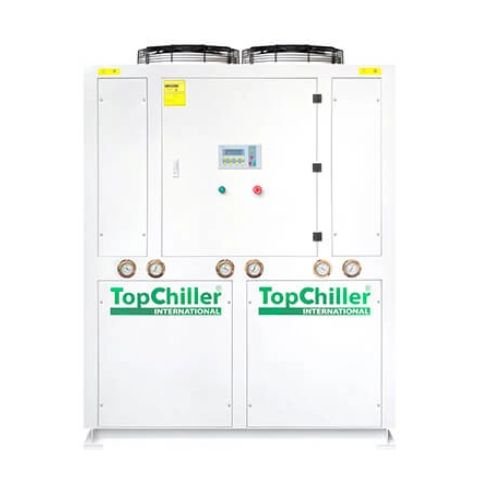
380V eco-friendly air cooled process chiller with twin-screw compressor type and a shell and coil evaporator.
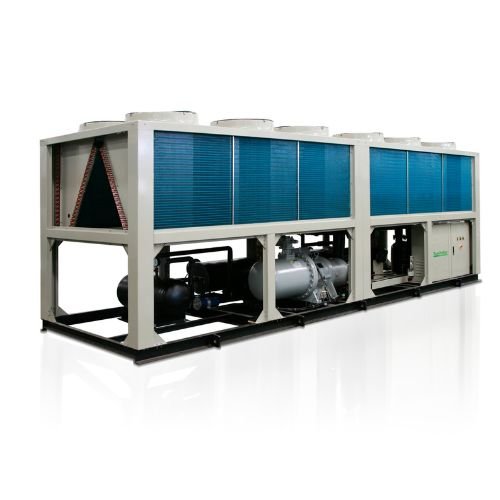
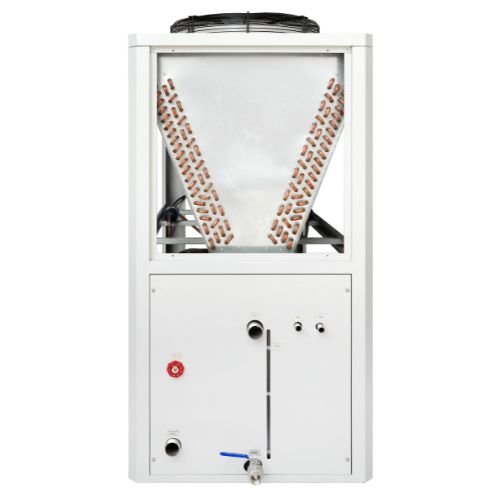
High-accuracy, automatic, and easy to install air cooled process chiller with Copper pipe inserting aluminum fins condenser and a copper tube shell evaporator.
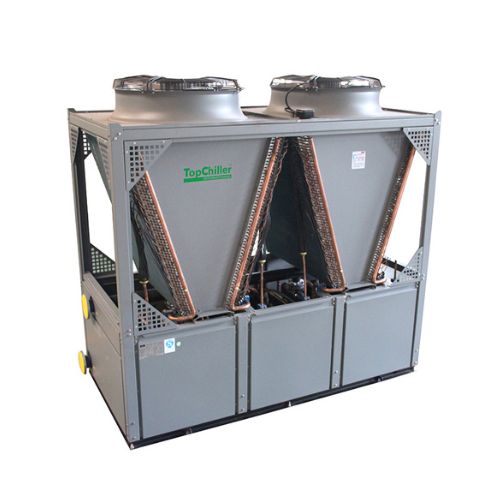
Long service life air cooled screw process chiller with semi-hermetic screw compressor and a tube and shell evaporator.

A fully hermetic scroll type compressor industrial water process chiller with 5~35℃ working temperature.

7 to 50 ℃ working temperature commercial water cooled process chiller with semi-sealed screw compressor type.

Air cooled screw process chiller for industrial use with shell and tube evaporator and an inner screw copper tube aluminum plate fins condenser.
Types of Process Chillers with Different Condensers
Process chillers can be classified as air-cooled chillers and water-cooled chillers depending on the method of heat dissipation of the refrigerant. They are both vapour compression chillers and also have an evaporator, a screw compressor, a condenser, and an expansion valve.
- Air-Cooled Process Chiller: An air-cooled process chiller dissipates heat through the ambient air. It needs to be equipped with a fan, which blows the ambient air towards the exposed condenser tube during operation, so that the refrigerant vapour reaching the condenser tube exchanges heat with the ambient air more efficiently, thus achieving the purpose of heat dissipation. It is compact, easy to install and maintain, and is ideal for water-scarce projects. However, it is more dependent on the external environment and therefore performs poorly at higher ambient temperatures.
- Water-Cooled Process Chiller: The refrigerant in a water-cooled process chiller transfers heat to water for heat dissipation. Therefore, it needs to be equipped with a cooling tower to store the water. This makes it a larger structure and more complex to install and maintain. However, due to the higher heat transfer efficiency of water, water-cooled screw chillers are more efficient at cooling and are not affected by ambient air. And, since it does not require a fan, it operates more quietly.


Types of Process Chillers With Different Compressors
Compressors are used in chillers to compress the refrigerant vapour and drive it into the condenser to be re-condensed into a liquid for repeated recycling. Depending on the compressor, they can be mainly classified as screw process chillers, scroll process chillers, and centrifugal process chillers.
- Scroll Process Chillers: The scroll chiller utilises a scroll compressor. It is compact, highly efficient and has an excellent low noise level. In addition, it has low initial cost, energy cost and maintenance cost compared to other compressors. This makes it an ideal cooling solution for small projects and low cooling requirements, such as residential and commercial.
- Screw Process Chillers: Screw chillers use a screw compressor to compress the refrigerant gas. Instead of impellers, screw compressors use two rotors that mesh with each other and the impellers rotate at high speeds during operation. As a result, screw chillers offer excellent efficiency, smooth and continuous operation, and low noise levels. Screw compressors are used in various projects such as industrial manufacturing, chemical, pharmaceutical, etc.
- Centrifugal Process Chillers: Centrifugal chillers are refrigeration units that use centrifugal compressors in the refrigerant cooling cycle. The centrifugal compressor is the heart of a vapour compression refrigeration system, driving the refrigerant cycle and ensuring constant and stable cooling. Due to the high efficiency and capacity of centrifugal compressors, centrifugal chillers can be used to cool medium to large commercial and industrial projects.
Reliable Certification
Our certified process chillers deliver consistent production quality. Built for critical applications, they offer precise temperature stability to prevent overheating in reactors, lasers and high-speed machinery, keeping your processes within strict tolerances.


- Data Sheet
- Video
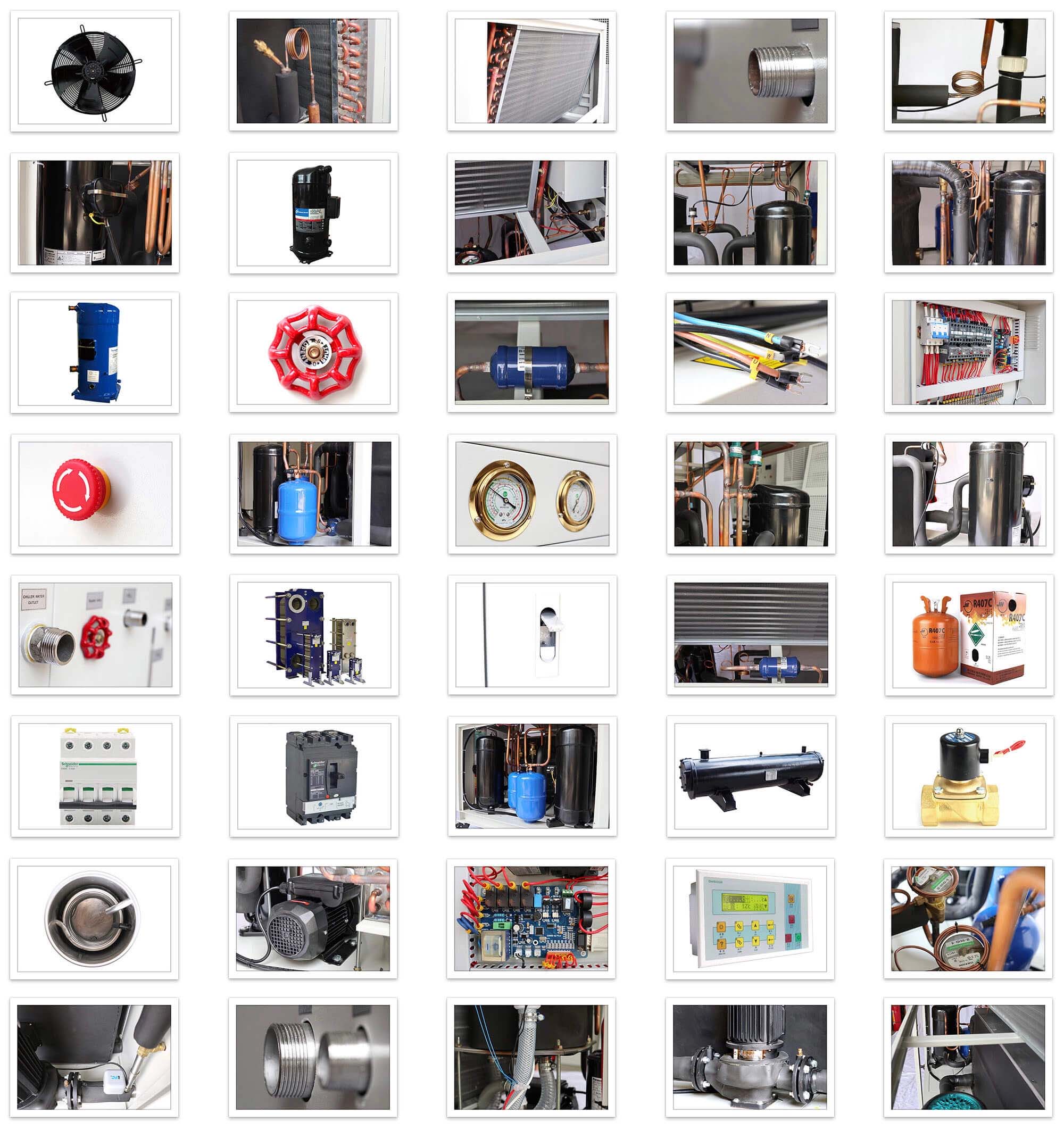
- Main Parts
| Process Chiller Technical Specifications | |||||||||||||||
| Items Model | AC-0.5A | AC-1A | AC-1.5A | AC-2A | AC-2.5A | AC-3A | AC-4A | AC-5A | AC-6A | AC-8AD | AC-10AD | AC-12AD | AC-15AD | ||
| Cooling capacity | Kcal/h 50HZ/60HZ | 1419 | 2451 | 3182 | 4833 | 5848 | 7181 | 9288 | 11988 | 14534 | 18576 | 23994 | 29068 | 38270 | |
| 1703 | 2941 | 3784 | 5800 | 7018 | 8617 | 11146 | 14386 | 17441 | 22291 | 28793 | 34882 | 45924 | |||
| KW 50HZ/60HZ | 1.65 | 2.85 | 3.7 | 5.62 | 6.8 | 8.35 | 10.8 | 13.94 | 16.9 | 21.6 | 27.9 | 33.8 | 44.5 | ||
| 1.98 | 3.42 | 4.4 | 6.74 | 8.2 | 10.02 | 12.96 | 16.73 | 20.28 | 25.92 | 33.48 | 40.56 | 53.4 | |||
| Input power | KW | 0.88 | 1.35 | 2 | 2.25 | 2.66 | 3.27 | 4.07 | 5.75 | 6.45 | 8.25 | 11.5 | 12.9 | 17.45 | |
| Max Current | A | 5.4 | 8.2 | 12 | 13.6 | 6.6 | 8.2 | 10.1 | 13.8 | 15.5 | 20 | 27.9 | 31.3 | 42.4 | |
| Power source | 1PH220V/3PH220V/380V 50HZ/60HZ | 3PH~380V/415V/480V~50HZ/60HZ(3PH~200V/220V 50HZ/60HZ) | |||||||||||||
| Refrigerant | Type | R22/R407C/134a/404A/410A | |||||||||||||
| Control | Capillary/thermostatic expansion valve | ||||||||||||||
| Compressor | Type | Hermetic Rotary | Hermetic scroll(piston) | ||||||||||||
| Power(KW) | 0.45 | 0.89 | 1.3 | 1.73 | 2.1 | 2.7 | 3.5 | 4.55 | 5.25 | 3.5×2 | 4.55×2 | 5.25×2 | 7×2 | ||
| Condenser | Type | Efficient finned copper tube with aluminum+low noise external rotor fan | |||||||||||||
| Air flow(m3/h) | 750 | 1000 | 1500 | 2000 | 2500 | 3000 | 4000 | 5000 | 6000 | 8000 | 10000 | 12000 | 15000 | ||
| Air blower(KW) | 0.06 | 0.09 | 0.15 | 0.15 | 0.19 | 0.14×2 | 0.14×2 | 0.19×2 | 0.19×2 | 0.25×2 | 0.45×2 | 0.45×2 | 0.6×2 | ||
| Evaporator | Type | SS Tank coil/shell and tube type/Plate type heat exchanger | |||||||||||||
| Chilled water (m3/h) | 0.28 | 0.49 | 0.64 | 0.97 | 1.12 | 1.44 | 1.86 | 2.4 | 2.91 | 3.71 | 4.8 | 5.81 | 7.65 | ||
| 0.34 | 0.59 | 0.76 | 1.16 | 1.4 | 1.72 | 2.23 | 2.88 | 3.49 | 4.46 | 5.76 | 7 | 9.18 | |||
| Watertank(L) | 10.6 | 18.3 | 27 | 27 | 50 | 50 | 60 | 60 | 110 | 120 | 200 | 200 | 270 | ||
| Inlet/outlet pipe (inch)i | 1/2″ | 1/2″ | 1/2″ | 1/2″ | 1″ | 1″ | 1″ | 1″ | 1″ | 1-1/2″ | 2″ | 2″ | 2″ | ||
| Water pump | Power (kw) | 0.37 | 0.37 | 0.37 | 0.37 | 0.37 | 0.37 | 0.37 | 0.75 | 0.75 | 0.75 | 1.5 | 1.5 | 2.2 | |
| Max lift(m) | 22 | 22 | 22 | 22 | 22 | 22 | 22 | 30 | 30 | 25 | 25 | 25 | 28 | ||
| Max flow(m³) | 5.4 | 5.4 | 5.4 | 5.4 | 5.4 | 5.4 | 5.4 | 8.1 | 8.1 | 8.1 | 13.5 | 13.5 | 25.2 | ||
| Safety protection | Compressor inner protection,over current protection,high/low pressure protection,overtemperature protection,flow rate protection,phase sequence/phase missing protection,low level coolant protection,anti freezing protection,exhaust overheat protection | ||||||||||||||
| Dimension | L(mm) | 550 | 550 | 600 | 600 | 720 | 980 | 980 | 1150 | 1150 | 1350 | 1500 | 1500 | 1860 | |
| W(mm) | 350 | 450 | 500 | 500 | 550 | 520 | 520 | 560 | 560 | 680 | 760 | 760 | 850 | ||
| H(mm) | 695 | 845 | 985 | 985 | 1350 | 1170 | 1170 | 1215 | 1215 | 1530 | 1660 | 1660 | 1900 | ||
| Net weight(KG) | 45 | 62 | 85 | 95 | 125 | 152 | 175 | 185 | 215 | 283 | 345 | 382 | 580 | ||
| Note: The above specifications are according to the following design conditions: 1,12℃/7℃.Chilled water inlet/outlet temperature 12℃/7℃. 2,33℃/38℃.Cooling air inlet/outlet temperature 33℃/38℃. We reserve the right to modify the specification without further notice. | |||||||||||||||


See the Process Chiller in Action
Watch how the process chiller delivers stable temperature control, fast cooling response, and reliable performance in real industrial working conditions.
What is the Process Chiller?
A process chiller is a cooling device commonly used in industrial production. It achieves efficient cooling through heat exchange between circulating cooling water (or a mixture of glycol and water) and a heat source, thereby reducing the temperature of the process. Thanks to the excellent cooling efficiency and precise temperature control of the process chiller, it is possible to maintain temperature stability in your production process, ensuring optimal performance of the equipment and quality of your product.
Function of the Process Chiller
Precise Temperature Control
Processes such as industrial, pharmaceutical and food require tight temperature control to ensure optimum process temperatures to minimise temperature fluctuations and ensure smooth processing. Process chillers provide excellent cooling efficiency and temperature control accuracy to reduce scrap, minimise costly losses, and increase your productivity.
Reducing Equipment Temperatures
Process manufacturing or chemical preparation generates a lot of heat, which not only affects the improvement of product quality but also has an impact on the processing equipment. Equipment that overheats can reduce performance, self-protect, or even shut down or be damaged. You can use process chillers to prevent overheating, maintain optimum performance, and improve the accuracy of your equipment. This improves production quality and extends equipment life.
Accelerated Cooling for Solidification
Surface treatments, plastic thermoforming, and other processes can be quickly cooled after forming using a process chiller, thereby reducing waiting cycles and increasing productivity. Additionally, rapid cooling and solidification can significantly reduce defects, thereby improving production quality.
Reducing Space Temperatures
Process chillers can achieve efficiencies and temperature control that are difficult to achieve with traditional air conditioning systems. Therefore, it is wise to use it for space cooling. It can control optimal product retention temperatures and improve the reliability of your products. Additionally, it provides a comfortable ambient temperature for your employees during the process, which keeps workers safe and increases their productivity.
How Process Chillers Enable Cooling?
Water Circulation
When you run a process chiller in your process, the pump delivers chilled water or a mixture of glycol and water coolant immediately to the heat source. The chilled water exchanges heat with the heat source, absorbing heat to cool the source and carrying it to the evaporator of the chiller. Compared to chilled water, the glycol and water mixture exhibits a higher heat transfer efficiency, preventing icing and resulting in more stable chiller operation.
Evaporation
The refrigerant in the evaporator rapidly absorbs heat from the cooling water, lowering its temperature. The re-cooled chilled water is then returned to the heat source for the next heat exchange, and this cycle achieves stable and continuous cooling for your process. The refrigerant absorbs heat in the evaporator and transforms from liquid to gas to start the refrigeration cycle.
Compression
The compressor of a process chiller provides the power needed to compress the refrigerant through the entire cycle. The refrigerant is converted into a vapour and is at a high temperature and low pressure. The compressor draws in the low-pressure refrigerant and sends it to the condenser after further heating and pressurisation. Here you can choose from process chillers with different compressors such as screw, centrifugal and scroll.
Condensation
The refrigerant vapour entering the condenser is cooled by heat dissipation and recondenses to a liquid after releasing heat. Depending on the type of circulating cooler, the heat is dissipated to different objects.
- Air-cooled circulating coolers: The fan of an air-cooled circulating cooler blows ambient air towards the condenser, where the refrigerant transfers heat to the ambient air for dissipation.
- Water-cooled circulating cooler: The water-cooled circulating cooler is equipped with a cooling tower, where the refrigerant exchanges heat with the water in the cooling tower for cooling purposes.
Expansion
Refrigerant that has been recondensed into a liquid state is in a high-pressure state, making it difficult to absorb heat again. The expansion valve can further transform the refrigerant into a low temperature and low pressure state, so that it can effectively absorb heat again and quickly transform into a gaseous state. The refrigerant enters the evaporator again for heat exchange. In addition, the expansion valve automatically adjusts the refrigerant flow according to the current refrigeration demand to minimise unnecessary losses.
Applications of Process Chillers
Pharmaceutical Industry
Process coolers provide ideal temperature control for pharmaceutical preparation, thus ensuring the stability of the manufacturing process and the conformity of your medicines. They also maintain stable temperature control, allowing you to install them in pharmaceutical storage rooms to ensure freshness and reliability.
Machine Tool Processing
The moving parts of a machine tool, such as cutting tools, generate a lot of heat during machining, which leads to an increase in temperature. Temperature fluctuations not only affect the accuracy of the machine tool, but also lead to defects (e.g. thermal deformation) in the machined parts. With a process cooler, you can provide continuous cooling of the machine tool during the machining process, thereby improving production quality and extending the service life of the machine.
Plastic Moulding
Various plastic moulding processes, such as injection moulding and blow moulding, require heating of the plastic to be processed. The use of process coolers effectively controls the optimum working temperature, thus reducing plastic defects. In addition, recirculation coolers can be used to cool finished products, helping them to solidify and cool quickly, thereby increasing productivity.
Printing
You can also equip your printing equipment with a process cooler. It absorbs heat from the printing rollers and cools the paper at the same time, improving print quality and productivity.
Laser Cutting and Welding
High-power equipment in industrial manufacturing, such as laser cutting and welding equipment, generates a lot of heat during operation. To prevent equipment downtime and damage, process coolers enable continuous and stable cooling to ensure stable equipment operation.
Food Processing
Whether processing or storing food and beverages, low and stable temperatures are required. Process coolers not only provide rapid cooling during processing but also provide a constant and stable low-temperature environment during storage, thus ensuring the quality and safety of food and beverages.
This depends on the type of chiller. The cooling cycle of an air-cooled process chiller dissipates heat through heat exchange with the ambient air, so high ambient temperatures can lead to reduced cooling efficiency. A water-cooled process chiller is a better choice for high ambient temperature environment.
You can hire a maintenance professional for larger projects. Firstly, you should clean the process chiller regularly, including external visible stains, filters and water treatment. Secondly, check the fluid levels regularly and replenish them in time to ensure optimal performance with regular lubrication. Additionally, regular troubleshooting and repairs are required to extend the service life.
You can choose a process chiller that is energy efficient. Regular maintenance can also improve its energy efficiency. You can also consider equipping your process chiller with a variable frequency drive to automatically control it according to the cooling demand and reduce unnecessary energy consumption.
For safety reasons, if you want to use the process chiller in the presence of flammable gases, combustible dust and other environments, you must choose a high-quality explosion-proof process chiller that meets the standards. You should also be equipped with safety protection devices to ensure the safety of the production process and workers.


 English
 Spanish
 Arabic
 Vietnamese

