

A chiller is an indispensable key component for cooling, which can significantly cool the surrounding environment or equipment.
This article will provide you with a detailed introduction to the refrigeration cycle process of the chiller. By understanding the specific refrigeration process of the chiller, it can help you better choose the chiller unit that suits your project, which can not only assist in improving your production efficiency but also significantly reduce your long-term investment costs.
What is a Refrigeration Cycle?
The refrigeration cycle of ChillerOne water chillers achieves the continuous and directional transfer of heat from low-temperature spaces to high-temperature environments through the heat absorption, heat transfer and state changes of the refrigerant.
During the evaporation stage, the liquid refrigerant absorbs the energy of the low-temperature heat source and vaporizes. Subsequently, it is compressed into high-temperature and high-pressure gas. Then, in the condensation stage, it releases the heat it carries to the high-temperature environment and returns to a liquid state. Eventually, through throttling regulation, it regains the ability to absorb heat, forming a continuous energy transport cycle.
The Specific Steps of the Refrigeration Cycle of the Chiller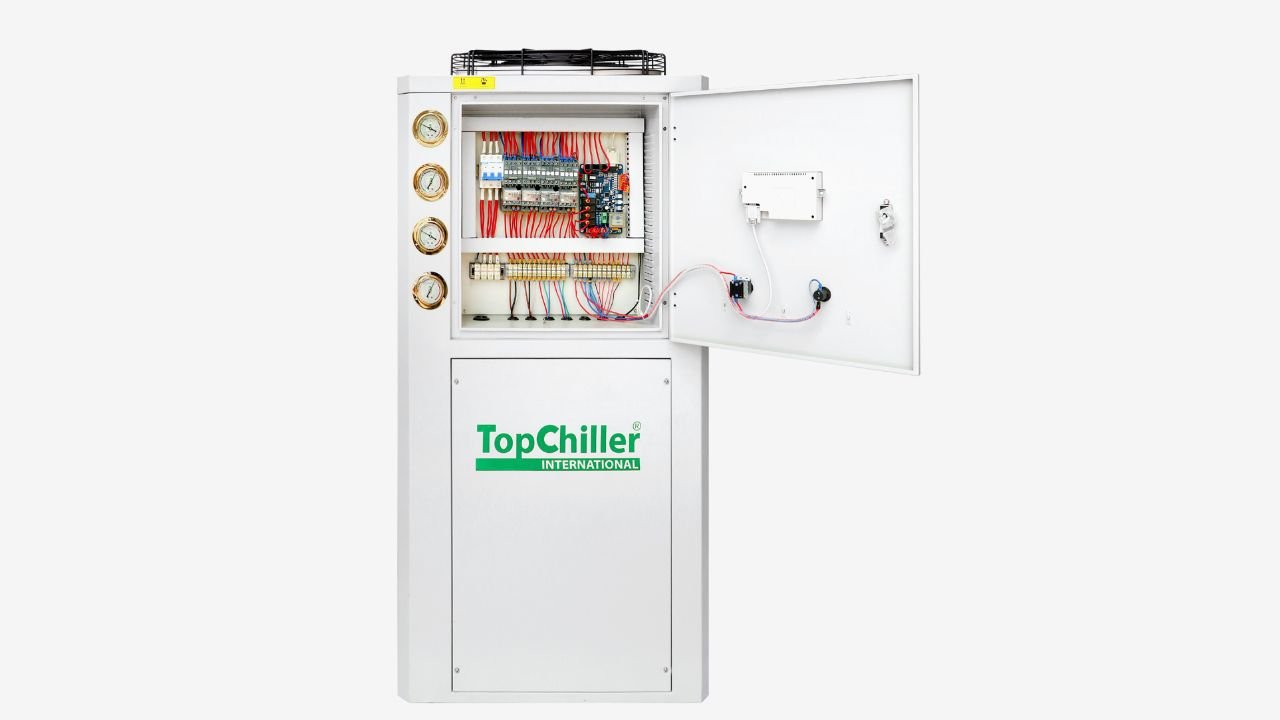
Evaporation
- Generating Component:Evaporator
- Specific Process:The low-temperature and low-pressure liquid refrigerant flows into the evaporator pipeline and undergoes heat exchange with the water flowing through the shell layer. The refrigerant absorbs the heat of water and gradually changes from liquid to gas. This process continuously takes away the heat of the water, causing its temperature to steadily drop to the set value, while the refrigerant completes its transformation from liquid to gas.
Compression
- Generating Component:Compressor
- Specific Process:The compressor sucks in the low-temperature and low-pressure gaseous refrigerant generated by the evaporator and compresses it to accelerate the increase in the pressure and temperature of the refrigerant. After leaving the compressor, the refrigerant is transformed into high-temperature and high-pressure hot steam. Because its heat is already far higher than the ambient temperature, it can subsequently release heat into the ambient air.
Condensation
- Generating Component:Condenser
- Specific Process:Inside the condenser, the high-temperature and high-pressure gaseous refrigerant gradually releases the heat it contains through forced heat exchange with air or water. Under the condition of maintaining relatively constant pressure and temperature, the refrigerant condenses from gaseous to liquid state and releases a large amount of latent heat.
Throttling
- Generating Component:Expansion valve
- Specific Process:When the high-pressure liquid refrigerant from the condenser flows through the expansion valve, the narrow flow cross-sectional area causes the pressure and temperature of the refrigerant to drop, eventually forming a low-temperature and low-pressure gas-liquid two-phase mixture, creating the necessary thermal conditions for efficient heat absorption in the subsequent evaporator.
What are the Differences in the Refrigeration Cycles between Air Cooled Chillers and Water Cooled Chillers?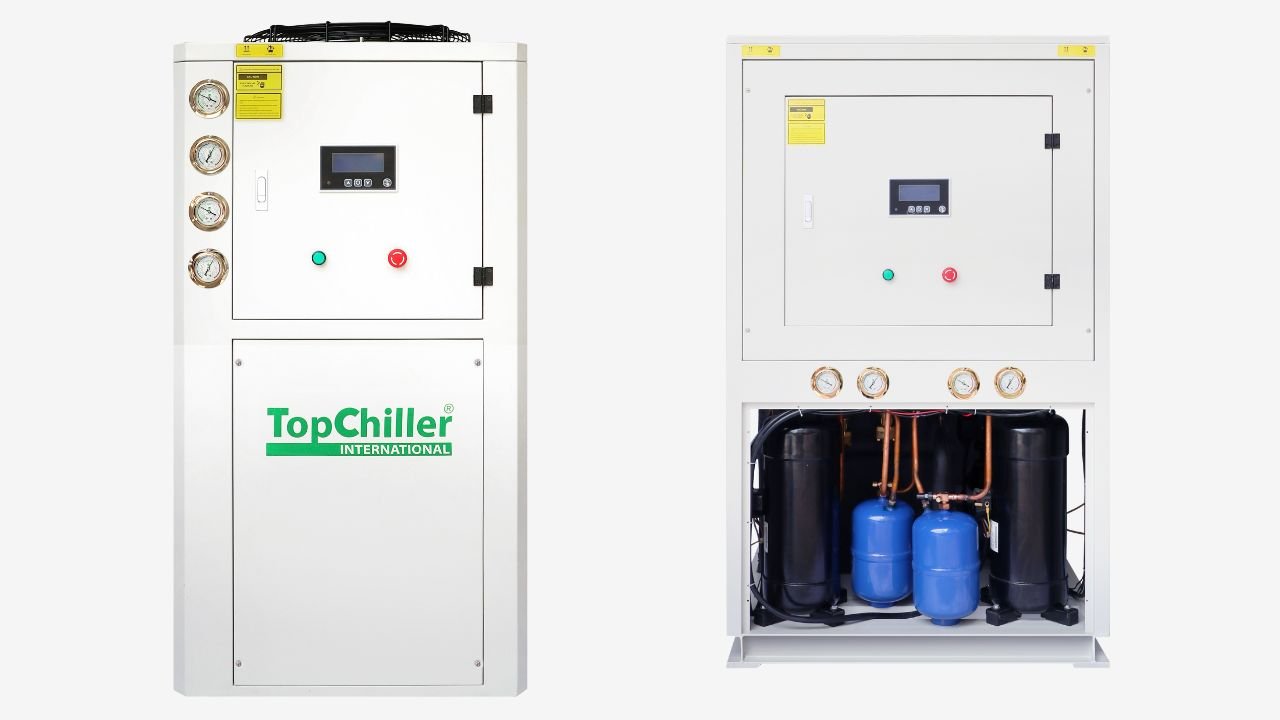
Different Cooling Media
The condensation process of an air cooled chiller relies entirely on air. The fan removes the heat of the high-temperature refrigerant in the condenser to the ambient air by driving the surrounding air.
On the other hand, water cooled chillers use water for heat dissipation. The high-temperature refrigerant first transfers heat to the circulating cooling water in the condenser. The cooling water that has absorbed heat is then pumped to the cooling tower to eventually release the heat into the air.
Different System Compositions
The air-cooled system is highly integrated and has a simple structure. Its built-in condensing fan forms a relatively simple independent cycle.
Water-cooled systems are more complex. They involve internal refrigerant circulation and external cooling water circulation, and you also need to configure additional cooling towers, cooling water pumps and connecting pipelines.
Different Energy Efficiencies and Environmental Adaptability
Air cooled chillers have relatively low energy efficiency and are sensitive to ambient temperature. Due to the small specific heat capacity of air, high temperatures in summer will lead to a decrease in its condensation efficiency and an increase in the power consumption of the compressor.
Water cooled chillers have higher energy efficiency and operate more stably. Because water has an extremely high heat transfer efficiency, it can maintain the condensation temperature and is less affected by fluctuations in external temperature.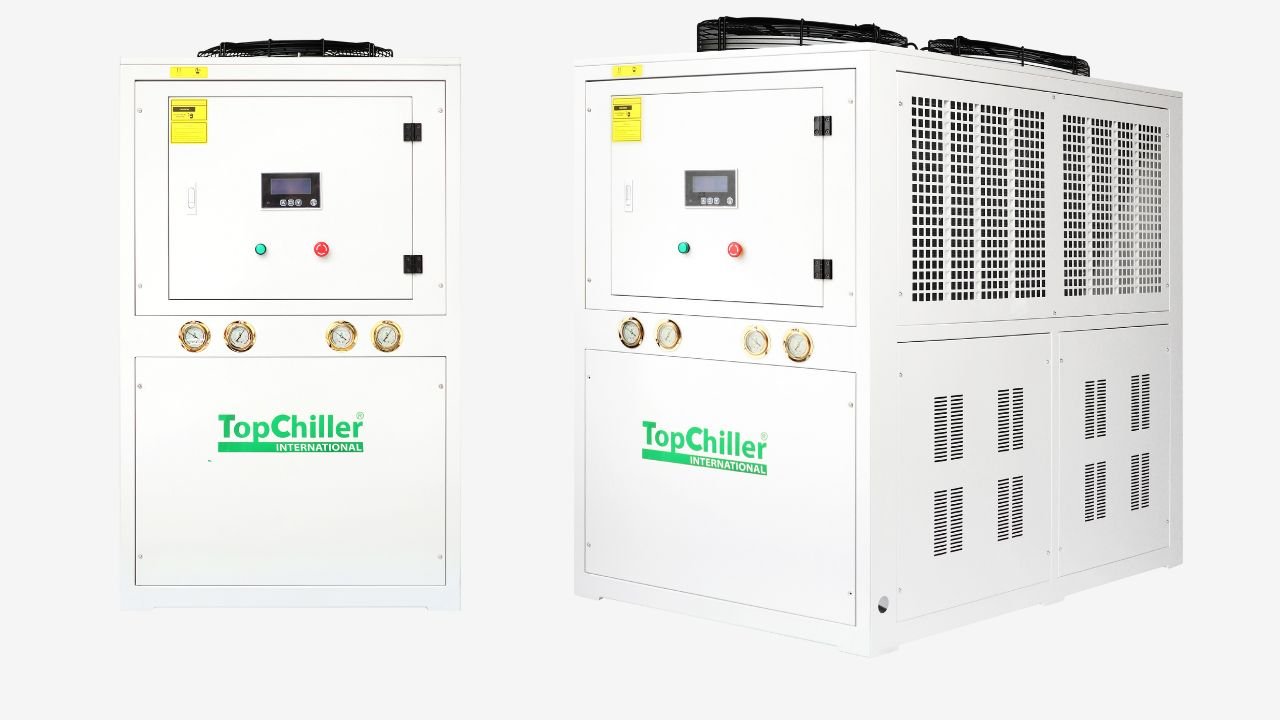
FAQ
What Factors Mainly Affect the Cooling Efficiency of a Chiller?
The cooling efficiency of our chiller is mainly affected by the condensing temperature. Generally, the lower the condensing temperature, the smaller the power consumption of the compressor and the relatively higher its efficiency. Therefore, water-cooled types are usually more energy-efficient than air-cooled ones, and keeping the condenser or cooling tower clean is crucial for maintaining cooling efficiency.
How does the Evaporation Temperature in the Refrigeration Cycle Affect the Performance of Your Chiller?
An increase in evaporation temperature can reduce the power consumption of the compressor. However, the evaporation temperature must always be lower than the outlet water temperature to ensure effective heat exchange. If it is too high, it will reduce the cooling capacity, while if it is too low, it may cause the evaporator to freeze and get damaged.
How to Determine Whether There is an Abnormality in the System through the Parameters of the Refrigeration Cycle?
If the condensing pressure keeps rising, the evaporation pressure is too low, the compressor overheats or the temperature difference increases, etc., all these can be early warnings of system problems, and you need to pay attention to all of them.
What are the Differences between the Refrigeration Cycle of a Variable-Frequency Chiller and that of a Traditional Fixed-Frequency Chiller?
The inverter can adjust the speed of the compressor to match the load changes of your equipment in real time, keeping the evaporation temperature and condensation temperature relatively stable. This avoids the temperature fluctuations and energy loss caused by the frequent start and stop of the fixed-frequency inverter, which can significantly save energy for your refrigeration cycle.
Final Thoughts
By understanding the specific refrigeration cycle processes among the key components of the chiller, you can not only enhance production efficiency and save costs, but also significantly improve the competitiveness of your products.
As a well-known domestic manufacturer and supplier of water chillers, ChillerOne designs various types of water chillers and can customize different process water chillers according to your specific needs. If you have any further questions about the chiller, please feel free to contact us at any time.


 English
 Spanish
 Arabic
 Vietnamese

