

Chiller failures may lead to unexpected downtime and costly disruptions. For chiller distributors or procurement, understanding how to troubleshoot common chiller problems helps when evaluating repair, maintenance, or replacement options. This article introduces common chiller troubleshooting methods in detail for you.
Common Causes of Chiller Problems
Generally, the causes of chiller problems can be divided into three categories: maintenance negligence, improper operation, and incorrect system size settings. Here are the most common reasons that lead to cooling failures for you.
Heat Transfer Degradation (Fouling / Scaling)
Heat transfer degradation is caused by fouling or scaling. Here, fouling is regarded as the main cause of reduced efficiency of your chiller, especially in water-cooled chillers. That refers to minerals, sediments, and biological growth that accumulate on the inner walls of the heat exchanger tubes.
Refrigerant and Lubrication Imbalances
The refrigerant and lubrication imbalances will directly undermine the thermodynamic principles of your cooling cycle.
- Refrigerant leakage: Cracks due to vibration, worn gaskets, or loose connections can all lead to refrigerant leakage.
- Excessive refrigerant charging: Excessive refrigerant will reduce the effective heat exchange area in the condenser.
- Lubrication issues: Insufficient lubrication or oil trapped in the evaporator will cause increased friction, louder metal noises, and compressor jamming.
Electrical and Control System Failures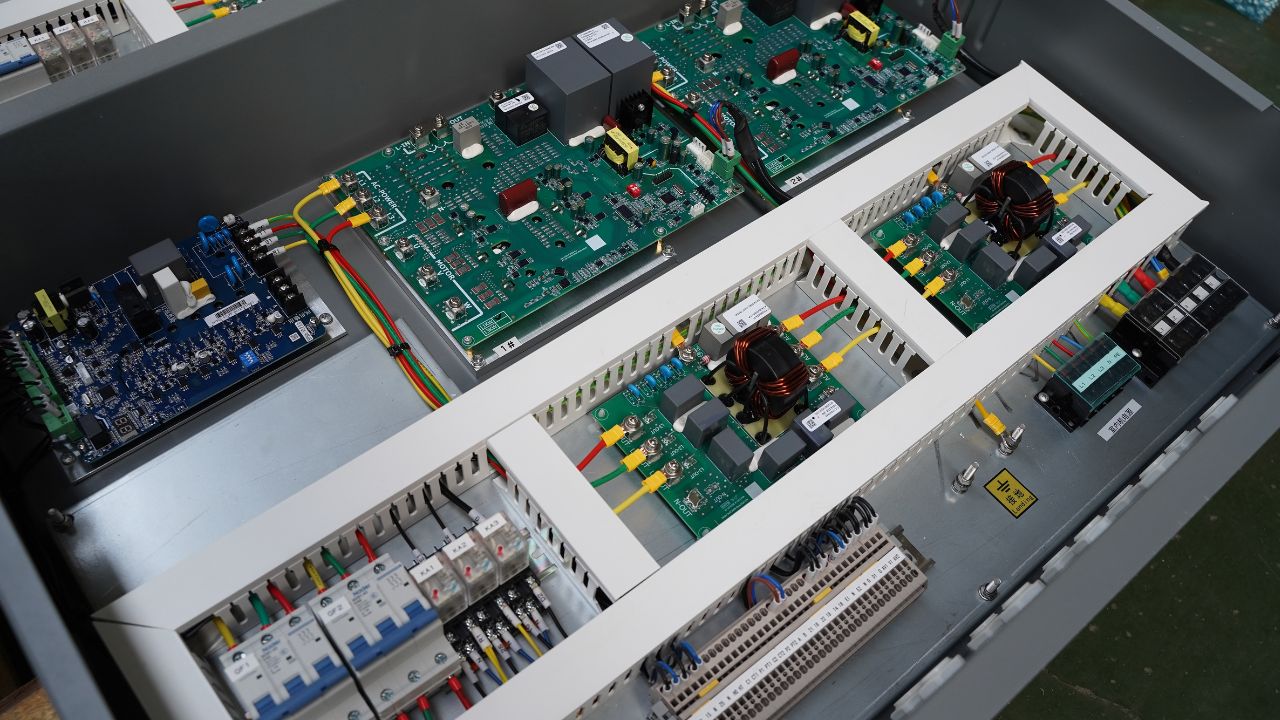
Electrical faults are the main cause of sudden shutdowns. This includes voltage imbalance, fluctuations, or phase sequence errors, loose connections, and aging sensors.
Insufficient power quality can cause local winding overheating and motor burnout, loose connections will cause intermittent faults or blowing fuses, and improperly calibrated temperature and pressure sensors often lead to false alarms or prevent the system from starting.
Poor Water Chemistry and Flow
Untreated water containing high oxygen or high mineral content can cause corrosion of your metal pipes, leading to leaks and catastrophic failures.
Blockage of filters, presence of air in the system, or pump failure can reduce the circulation volume of the coolant, typically triggering “low flow” or “freezing” alarms.
Improper System Sizing
Choosing the right chiller size is very important. If your chiller is undersized, it may fail to reach the set temperature, resulting in premature wear of mechanical components. If your chiller is oversized, it may cause frequent starts/stops, imposing excessive thermal stress on the motor windings and shortening the lifespan of your scroll compressor or screw compressor.
Troubleshooting Most Common Chiller Problems
Insufficient Cooling
“Insufficient cooling” refers to a chiller not cooling properly. The chiller is operating, but it is unable to reduce or maintain the temperature of the process fluid to or below the set temperature value. This means the system’s cooling capacity is lower than the heat load it generates.
Troubleshooting Step
- Check the Heat Load
If the compressor is running at 100% load/amperage and the temperature is still rising, your process load has likely increased beyond the chiller’s BTU rating.
- Inspect for Fouling
Check if there is fouling in the condenser coils or tubes. You can power-wash or vacuum the coils (for air-cooled chillers), or mechanically brush the tubes or perform a chemical descale (for water-cooled chillers).
- Verify Refrigerant Levels
You can look at the sight glass when your chiller is running. If there are constant bubbles, it may indicate a refrigerant leak.
- Check Fluid Flow
You can check fluid flow by inspecting the temperature difference between the inlet and outlet. A high temperature difference indicates low flow. Inspect the Y-strainer for clogs and check if the water pump is delivering the correct GPM (gallons per minute).
- Check the Expansion Valve (TXV/EEV)
The suction line should be cold and sweating. You can touch it to feel it. If it is warm or frost is forming only at the valve outlet, the valve is likely faulty.
- Confirm Ambient Temperature Limits
Check if the chiller is located in a confined space or is experiencing extreme summer heat. Your chillers cannot reject heat in high ambient air.
Chiller Not Starting
After you issue the start-up command, if there is no response from the compressor unit or the main components, this is usually caused by a power failure, a safety interlock being triggered, or a control logic error.
Troubleshooting Step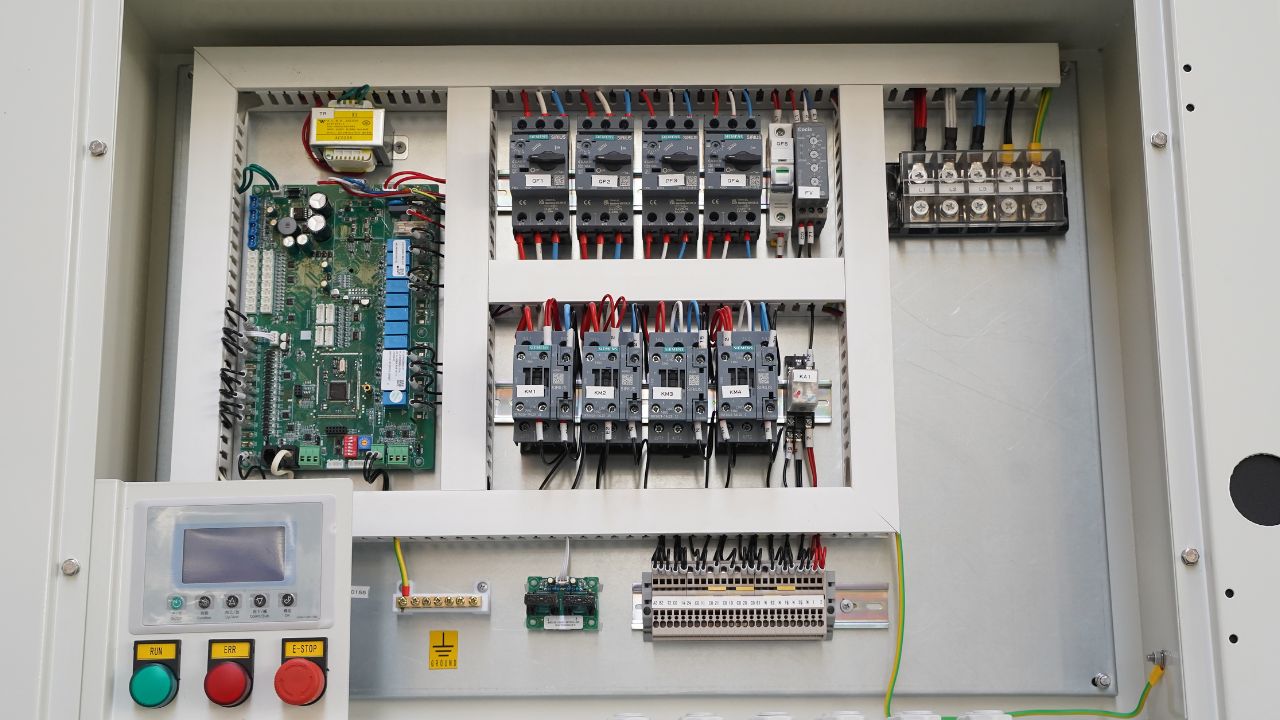
- Check the Power Supply
Check whether the power distribution cabinet has tripped or the Emergency Stop button has been pressed. Besides, phase loss and a three-phase voltage imbalance exceeding 2% will trigger the protection devices of your chiller.
- Safety Interlocks (Self-Checks)
Before starting the compressor, your chiller will conduct a “self-check.” If the following conditions appear, your chiller will refuse to start:
- The pump is not turned on, or there is insufficient flow due to air or filter blockage.
- The unit was previously shut down due to pressure issues.
- Reverse phase sequence.
- Adjust Control Logic and Settings
You can check the set water temperature. If the current water temperature is already lower than the set temperature, the chiller will remain off.
If the machine is turned on immediately after being turned off, it will have a 3-5 minute restart delay.
If the water temperature sensor is damaged and reports an extremely low temperature to the computer, the system will prohibit startup.
- Check Component Failure
You can check the small glass fuse on the control board. If the control transformer is faulty, the control panel may be unable to output signals to the starter.
If you hear a “click” but the motor doesn’t turn, it could be that the contactor contacts are worn out or the coil has burned out.
Water and Coolant Flow Issues
The chiller water flow alarm usually occurs when the liquid circulation in the evaporator or condenser of the refrigeration machine is insufficient or irregular. Insufficient flow directly leads to chiller cooling capacity reduced and may lead to severe equipment damage, such as the water inside the evaporator freezing and causing the pipes to rupture.
Troubleshooting Step
- Inspect and Clean Filters
- Verify Pump Operation
Ensure the pump is powered on and spinning in the correct direction. Grinding or vibration may indicate cavitation or mechanical failure.
- Bleed Trapped Air
Eliminate airlocks by bleeding air from high points in the piping or through the differential flow switch connections
- Check Valve Positions
Confirm that all bypass and shut-off valves in the process loop are fully open.
- Test Fluid Levels
- Flush the System
Use a garden hose to push water through the system to clear potential internal blockages.
- Inspect the Impeller
If you still can not solve the problem, try to remove the pump housing to check for a clogged or damaged impeller.
High/Low Pressure Alarms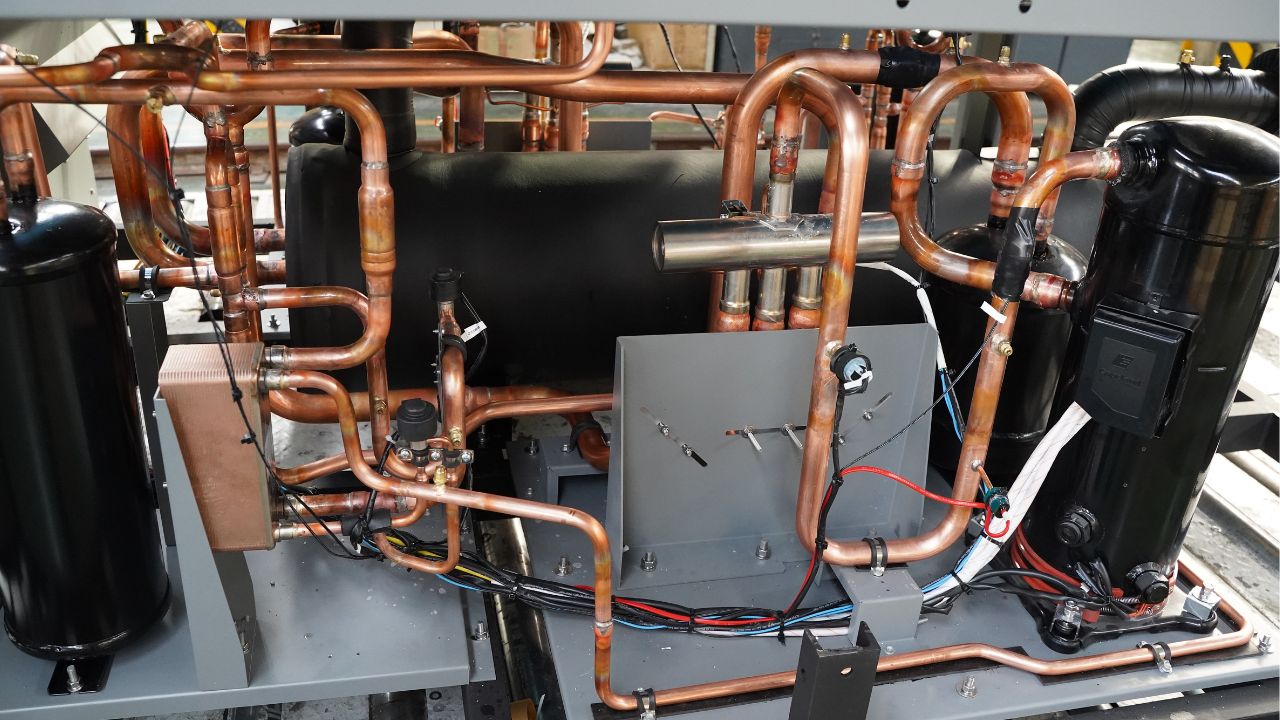
When the refrigerant pressure moves outside of its engineered operating range, it will trigger safety shutdowns.
Troubleshooting Step
Chiller High-Pressure Alarm
- Clean the condenser
You can use high-pressure water for rinsing or use a vacuum cleaner to clean the heat sinks of the condenser (for air-cooled systems), or use a mechanical brush to clean the pipes (for water-cooled systems).
- Check the operation of the fan/pump
- Check the ventilation
- Reset the switch
Many high-pressure switches require a manual physical reset before the refrigeration unit restarts.
Chiller Low-Pressure Alarm
- Check for leaks
You can check for oil stains at the copper joints and valves.
- Check the water flow
If the water flow is insufficient, you need to clean the Y-type filter and ensure that the process pump is operating at full capacity.
- Observe the sight glass
If continuous bubbles or foam are seen during your chiller operation, it is likely that the refrigerant charging quantity is insufficient.
- Check the filter dryer
Touch the pipes before and after the filter dryer. If there is a significant temperature difference, it indicates that the filter is clogged and needs to be replaced.
Unusual Noise and Vibration
Unusual noise and vibration in your chiller is a physical warning signal indicating mechanical failures, loose components, or unstable hydraulic systems. The noise often indicates a gradually worsening wear condition.
Troubleshooting Step
- Isolate the Source
You can shut down a single component (if the controller permits). If the noise stops after the fan is turned off, the problem is likely caused by bent blades or worn fan bearings.
- Check for Mechanical Looseness
Check and tighten all installation bolts, panel screws, and motor brackets, and check the alignment of the pump and motor coupling.
- Inspect the Compressor
If you hear a “click” sound inside the compressor, it might be that it is attempting to compress liquid. You can check the subcooling setting. If the expansion valve (TXV) is opened too wide, the liquid refrigerant may enter the compressor and damage the piston or rotor blades.
- Check for Air in the Water Loop
The sharp “sizzling” or “gurgling” sounds heard in the pipeline are usually caused by air. You need to confirm that the pump does not exhibit cavitation.
- Evaluate Lubrication
You can check the compressor oil sight glass. Low oil level or deteriorated oil quality can cause friction sounds and harsh mechanical noises.
- Verify Fan and Blade Integrity
You can check if there is any “wobbling” phenomenon in the fan assembly. If the blades are bent, it will cause the load to become unbalanced, thereby causing the entire cooling frame to vibrate.
Chiller Evaporator Freezing
If the evaporator of your chiller is freezing, the temperature of the refrigerant will be lower than the freezing point of the liquid (water or ethylene glycol) inside the heat exchanger. This causes ice to form on the inner surface. These ice layers act as insulation, hindering the flow of the liquid, and the most dangerous aspect is that they may expand and cause the copper tubes to rupture, thereby leading to a catastrophic mixture of water and refrigerant.
Troubleshooting Step
- Immediately Stop the Compressor
- Check Water Flow and Filtration
- Verify Refrigerant Pressures
You can connect a pressure gauge to check the suction side. If the pressure corresponds to a saturated temperature below the freezing point, it is likely that the refrigerant is leaking. Besides, if the TXV (Expansion Valve) is stuck closed, it will cause the evaporator to be short of liquid and lead to local freezing at the inlet.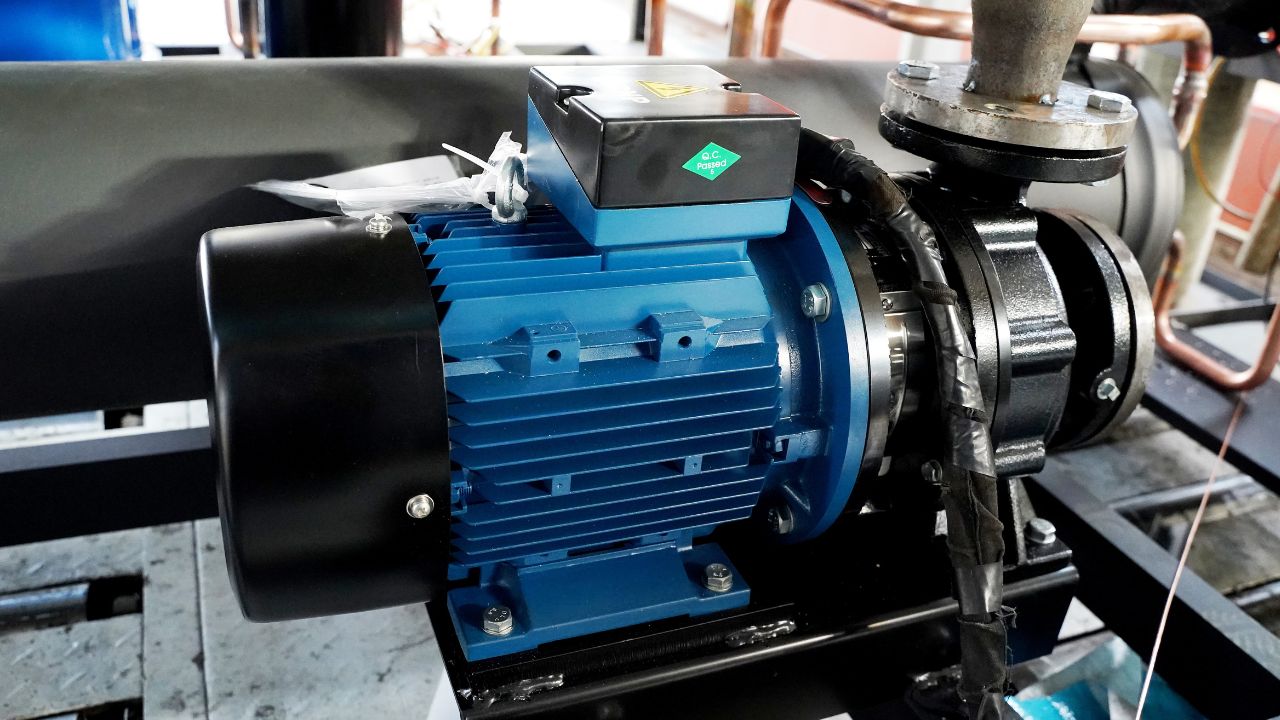
- Inspect Safety Controls
Include the flow switch and the low-pressure switch.
- Check Fluid Chemistry
If your chiller is set to operate in “low-temperature” mode (below 45°F/7°C), please use a refractometer to confirm the glycol concentration.
- Look for Short Cycling
If the water-cooling unit is too large for the load, it may cause the temperature to drop too rapidly, resulting in the sensors not having enough time to respond and thus causing the instant freezing phenomenon.
Leaks
There are two kinds of chiller leaks: refrigerant leaks (gas/oil) and water/fluid leaks (coolant). Both of them can lead to a decrease in system efficiency, cause environmental harm, and potentially trigger mechanical failures.
Troubleshooting Step
For Refrigerant Leaks
- Visual Inspection for Oil
To look for greasy or oily spots, you can inspect the copper joints, valves, or the compressor base.
- Soap Bubble Test
You can apply a special leak detection solution to the suspected leakage joint. The appearance of soap bubbles indicates a leak.
- Use an Electronic Leak Detector
- Ultrasonic Testing
- Pressure Testing
You can recover the refrigerant and fill the system with dry nitrogen to observe if the pressure remains stable within 24 hours.
For Water/Fluid Leaks
- Check the Pump Shaft
- Inspect Evaporator Shell
- Verify Water Chemistry
Excessive oxygen content or acidity can cause the pipes to deteriorate rapidly
- Check Condensation
You need to ensure that all cold water pipes are properly insulated with closed-cell foam.
Preventive Maintenance to Avoid Chiller Problems
Regular inspections and maintenance help to detect potential chiller problems early, extend the equipment’s lifespan, and reduce the high downtime losses in industrial operations. Here are some key chiller maintenance measures.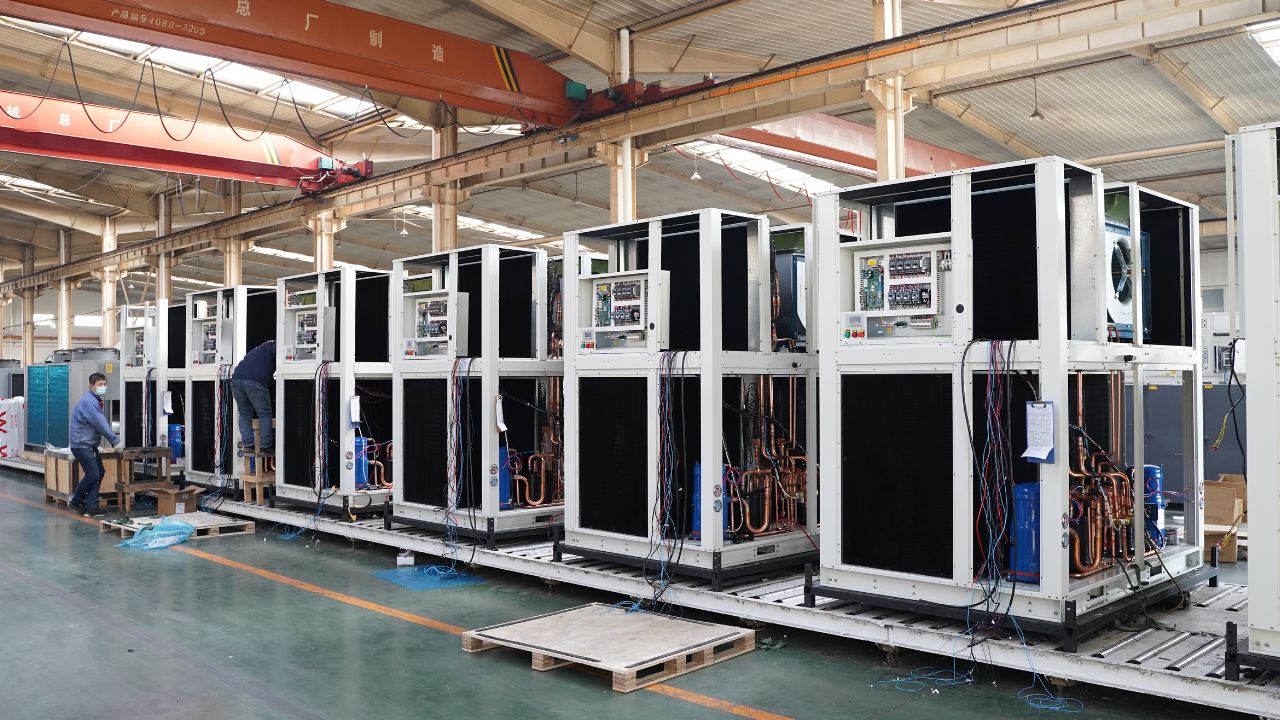
Routine inspection
Routine inspection of your chiller helps you discover problems in time. This always includes the refrigerant levels, water flow, water pumps, pipelines, filters and strainers, electrical connections, control panels, sensors, and safety devices.
Condenser and Evaporator Cleaning
Regular cleaning of the condenser tubes and the evaporator surfaces helps maintain good heat exchange performance. For water-cooled systems, monitoring water quality and preventing scale formation is also a key factor for maintaining stable operation.
System monitoring
Continuous monitoring of key operating parameters enables the maintenance team to detect abnormal situations as early as possible. This includes the monitoring of the inlet and outlet pressure and temp, compressor current, and system load status.
FAQ
How Do Industrial Chillers Work?
The working principle of your chiller is a refrigerant cycle. It absorbs heat from the returning warm process water and turns into a gas. Then it goes into the compressor, which increases its pressure and temperature before pushing it into a condenser and rejecting the heat. The refrigerant turns into a high-pressure liquid, and an expansion valve reduces the refrigerant’s pressure, cooling it significantly before it re-enters the evaporator to repeat the cycle.
How Do I Know if My Compressor Oil Needs Changing?
You can check the oil sight glass. If the oil is dark, turbid, or has “foam,” it indicates carbon deposits, water contamination, or mechanical wear.
Besides, you need to detect the presence of hydrofluoric acid or hydrochloric acid annually. If the oil has a “burnt” smell, or if the oil analysis shows a large amount of metal particles or water, the oil and filter/dryer must be replaced.
Why Does My Chiller Struggle More in the Afternoon?
Usually, the working efficiency of your chiller may be lower in the afternoon because the temperature is higher. When the outside air temperature rises, the cooling capacity of the air-cooled chiller will decrease. If the condenser is dirty or the equipment is placed close to other exhaust outlets, it will trip due to high-pressure issues during hot periods.
To solve this problem, you can improve ventilation conditions or install a spray system on the condenser coils.
When to Repair or Replace a Chiller?
Usually, we recommend that you change the chiller if the repair cost exceeds 50% of the price of a new unit or if the chiller has exceeded 50% of its expected lifespan. Besides, if the chiller uses phased-out refrigerants like R-22, changing to a modern model can get a return on investment (ROI) within just a few years.
How to Choose a Suitable Chiller?
Choosing a suitable chiller requires you to take lots of factors into consideration.
- You need to have a precise calculation of your heat load to determine the chiller size.
- Choose from the air-cooled or water-cooled type.
- Decide chiller refrigerant types.
- Consider extra configurations, such as integrated safety protections.
How to Choose a Reliable Industrial Chiller Supplier?
When choosing a chiller supplier, you need to consider its initial costs, technical expertise, service infrastructure, and product certifications.
A reputable manufacturer can offer customization options and complete after-sales support. It’s also important to confirm that its products have industry-standard certifications like ISO 9001 or CE.
Final Thoughts
As you know, proper maintenance and timely diagnosis can resolve many issues, but the reliability of the chiller itself also plays a critical role. Choosing a well-designed industrial chiller can significantly reduce operational problems and improve system efficiency. Chillerone has over 20 years of experience in manufacturing high-quality industrial water chillers. If you want to change to a better chiller, never hesitate to contact us.


 English
 Spanish
 Arabic
 Vietnamese

