


International Brands We Collaborate With


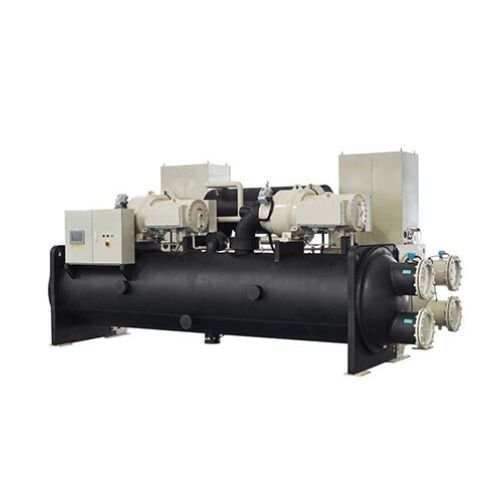
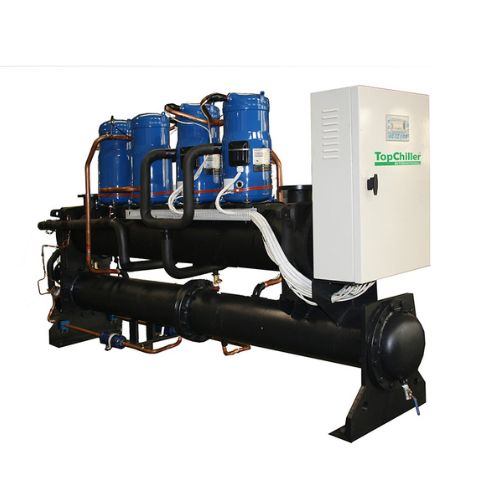
Features of ChillerOne Wastewater Treatment Chiller
- Controls water between 20°C and 35°C to maximize the organic degradation efficiency of active bacteria.
- Engineered to neutralize extreme heat from sodium hypochlorite generators, preventing chemical degradation.
- Fully compliant with CE standards, guaranteeing maximum operational safety in high-pressure situations.
- The highly energy-efficient design can reduce electricity expenses and operating costs, bringing you double benefits to your facility.
- ChillerOne provides professional consulting and technical services to guarantee stability in high-load wastewater plants.
ChillerOne — your reliable wastewater treatment chiller supplier
During the wastewater treatment process, controlling temperature is the key link. Professional wastewater treatment chillers can regulate the process water temperature, creating a steady and active environment for the key microbial communities. At the same time, they can improve the pollutant removal rate, lower operating energy consumption, and guarantee that the effluent quality consistently meets environmental protection requirements.
ChillerOne is a professional supplier of wastewater treatment chillers, providing reliable cooling solutions for various industrial wastewater treatment situations. If you have questions or concerns, please feel free to contact us at any time.
The Types of Chillers Applied in Wastewater Treatment

Air-cooled chillers directly utilize ambient air for heat dissipation. For you, it is that no additional cooling water system (like a cooling tower) is required; this design can make installation simple, save space, and lower daily maintenance costs. Its condenser usually adopts an efficient fin-tube design, guaranteeing stable and reliable operation. You should note that to guarantee adequate airflow for heat dissipation, it is best to install it in a well-ventilated outdoor area. If your factory has limited space or access to water is inconvenient, you can choose the air-cooled type.

Water-cooled units dissipate heat through the circulation of water from an external cooling tower. They provide superior cooling performance compared to air-cooled chillers and usually operate more quietly with a longer service life. The main equipment is the condenser, which usually adopts a shell-and-tube structure with externally finned copper tubes. This design greatly increases the heat exchange area and speeds up heat transfer. However, choosing this option requires a complete cooling tower and water circulation system; thus, the initial investment and installation space requirements are higher.

This is a highly integrated closed-loop system. The coolant is cooled within the unit and then pumped through sealed pipes to the process equipment to absorb heat, before returning to the unit for re-cooling. This design provides high safety and cleanliness, greatly preventing coolant contamination or evaporation loss, and lowering operating costs. It usually comes with an accurate temperature control system that enables automatic and precise temperature control, and is convenient to install and manage.

This is a special heat-driven cooling solution that does not directly use electricity but instead utilizes waste heat as the driving energy to generate cold water. Its core advantage is its ability to “transform waste into treasure”, converting the waste heat produced during the process into cooling capacity and greatly lowering electricity consumption. Compared with traditional electric cooling machines, the initial investment for using absorption coolers is higher, but the remarkable savings in electricity costs usually recover the additional investment within 2 to 3 years.
Reliable Certification


Common Application in the Wastewater Treatment

The high-temperature wastewater produced during food processing and cleaning contains a large amount of organic matter. The chiller adjusts the temperature of the wastewater to an appropriate range, creating favorable conditions for the subsequent biological treatment system and meeting environmental protection discharge standards.

Chemical reactions often bring the discharge of high-temperature wastewater, which is complex in composition and has a high heat load. The cooling machine controls the temperature of the wastewater, which helps the subsequent physical and chemical treatment and biochemical degradation processes operate stably, avoiding adverse effects of high temperatures on the treatment system.

The wastewater discharged by these industries is usually highly colored, has a large amount of organic matter, and has a drastic temperature variation. The cooling machine helps stabilize the water temperature, providing a stable operating environment for the biological treatment unit, enabling more thorough removal of pollutants and lowering the spread of unpleasant odors caused by high temperatures.

Cooling wastewater processes like die-casting, electroplating, and injection molding have high temperatures. The cooling machine cools this wastewater, recovers heat energy, promotes water resource recycling, and supports the continuous and stable operation of the main production equipment.
See the Wastewater Treatment Chiller in Action
Watch how the wastewater treatment chiller delivers stable temperature control, fast cooling response, and reliable performance in real industrial working conditions.
Why does Wastewater Treatment Need Chillers?
The wastewater treatment chiller is a refrigeration device especially designed for wastewater treatment. It can precisely control the water temperature, guaranteeing that your treatment facilities can operate smoothly and meet environmental discharge standards.
In most wastewater treatment plants, the secondary treatment stage employs bacteria to resolve organic substances. These microorganisms are most active within a temperature range of approximately 20°C to 35°C. Low temperatures greatly lower their efficiency, but high temperatures may directly kill the bacteria, causing the entire treatment process to fail.
At this point, the cooling system becomes extremely important. It can regulate the water temperature within a range where the bacteria can operate flexibly. Additionally, certain stages in the treatment process produce a remarkable amount of heat. Take the equipment that electrolyzes salt water to produce sodium hypochlorite as an example. The solution has a very high temperature and must be cooled before being precisely added to the treatment process.
Working principle:
- Compression: The refrigerant gas is compressed, causing its temperature to rise.
- Condensation: High-temperature and high-pressure gas passes through the condenser, releasing heat and condensing into liquid.
- Swelling: After passing through the expansion valve, the pressure of the liquid refrigerant drops sharply, thereby achieving rapid cooling and causing partial evaporation.
- Evaporation: The low-temperature refrigerant absorbs the heat from the flowing wastewater in the evaporator, completely evaporating into gas. Then it is sucked in by the compressor and starts the next cycle.
Main Components of Wastewater Treatment Chillers
Compressor Engine
The compressor is responsible for driving the circulation of refrigerant. After the pressure changes occur, it enables the refrigerant to flow continuously and undergo phase transitions, and the heat transfer process begins.
Evaporator
Located between the compressor and the expansion valve, the evaporator is a key heat exchange component. It can absorb heat from the process wastewater, lessening the water temperature. Common types of evaporators include coil type, shell and tube type, and corrosion-resistant 304 stainless steel plate type. You can choose according to the actual water quality and working conditions.
Condenser
In air-cooled designs, the condenser usually adopts a high-efficiency cross-fin structure and inner-threaded copper tubes, balancing heat exchange efficiency and operating steadily. It cools down and solidifies the high-temperature, high-pressure refrigerant vapor from the compressor into a liquid state, discharging the heat to the outside air.
Water pump
The water pump is in charge of driving the circulation of chilled water in the closed loop of the system. By increasing the water pressure flow rate, the chilled water can be rapidly delivered to the wastewater treatment area.
Controller Panel
This water-cooled device is equipped with an accurate digital temperature controller, which supports RS485 communication interface. Remote monitoring and operation are very convenient. This controller is designed simply, with a low failure rate, and is easy to install and regulate daily. Such a design enables you to easily monitor the operation status of the system.
Advantages of Chillers for Wastewater Treatment
Stable Process Efficiency
In your wastewater treatment system, the activities of microorganisms will trigger some biochemical reactions, with temperature being a key factor. High water temperature will kill beneficial bacteria and damage the biofilm, while low water temperature will inhibit their metabolism, leading to an extended treatment cycle and unqualified effluent. As an accurate temperature control device, the chiller can keep the water temperature in the optimal range, which is the foundation for ensuring that the treatment effect meets the standards.
Energy Saving and Consumption Reduction
By pre-treating high-temperature influent water, the cooling machine can greatly lower the energy consumption of the following processes, like aeration, which would otherwise increase to counteract the thermal load. Additionally, a well-designed, high-efficiency unit itself consumes less energy. It can also greatly lower your treatment cost per ton of water and optimize the energy consumption structure of the facility as a whole.
Compliance with Emission Safety Regulations
If the high-temperature wastewater is directly discharged into the environment without any control, it will damage the ecosystem. However, the cooling machine can precisely control the temperature, guaranteeing that the wastewater complies with green environmental protection regulations. The appropriate low temperature can inhibit the growth of detrimental microorganisms, lower the cost of disinfection, and guarantee the ecological safety of the discharged substances from multiple aspects.
Intelligent Control
Modern cooling machines are equipped with intelligent control systems that support fully automatic operation and remote monitoring. You do not need to invest a large amount of manpower for repeated adjustments; the system can automatically regulate according to real-time water temperature. This highly reliable and low-maintenance design lowers the reliance on on-site experience, allowing your process management to be more convenient and worry-free.
Sure. The efficient chiller optimizes process temperature and recovers heat energy, lowering the energy consumption of subsequent processing units. Long-term operation helps to lower the water treatment cost.
The maintenance requirements vary by type. Modern units are usually equipped with intelligent control systems, supporting automatic operation and remote monitoring. Daily maintenance is simple and can lower the burden of manual operations.
If the size of the cooler exceeds the normal range, it will affect the efficiency of the system and the activity of microorganisms. It is suggested to use professional calculation tools, taking into account factors such as heat load and environmental temperature, to match the most suitable model for the facility you are handling.
High temperatures inhibit the activity of treatment bacteria, may damage the filtration system, and reduce the biological flocculation effect, affecting the stability of the effluent quality.


 English
 Spanish
 Arabic
 Vietnamese

