

International Brands We Collaborate With


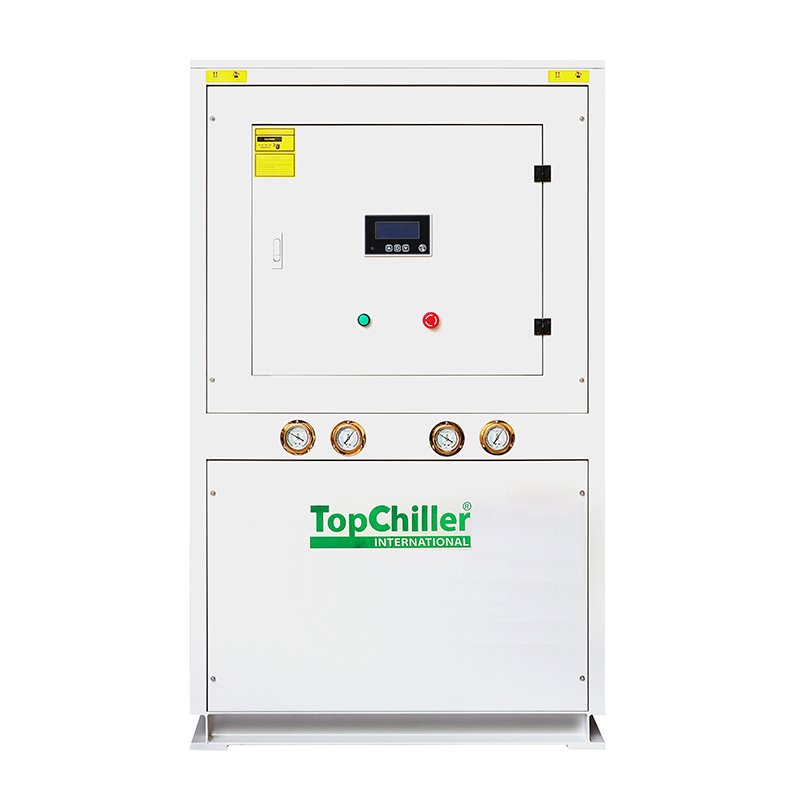
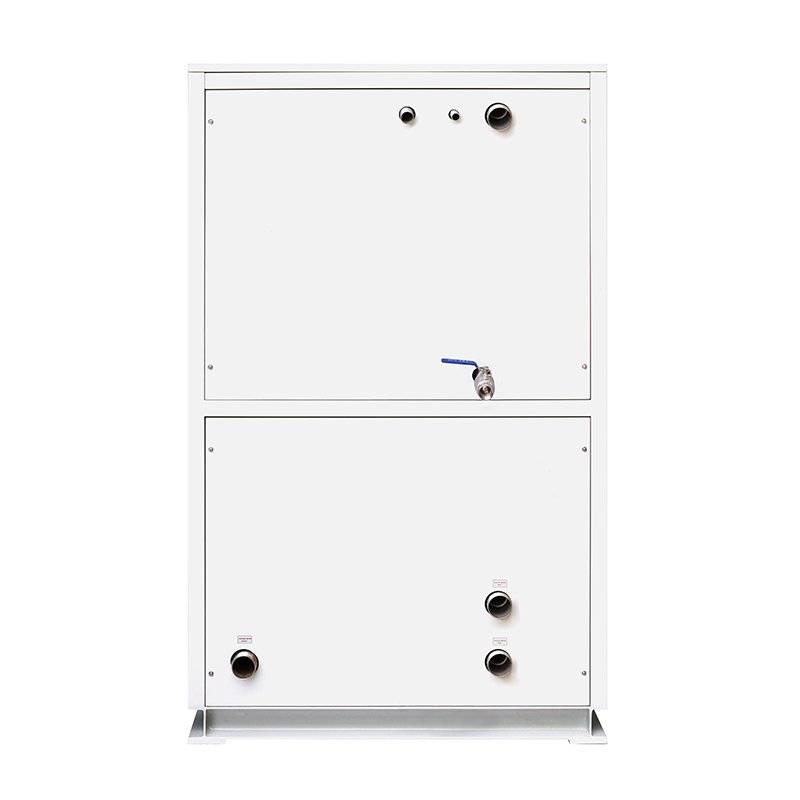
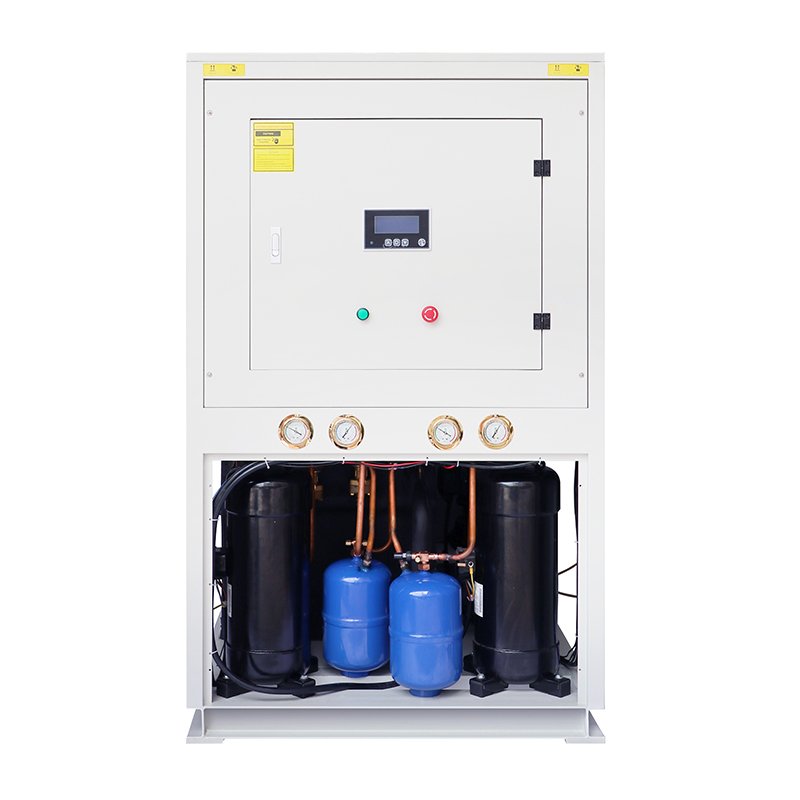
Why Choose ChillerOne Water Chiller
- Drastically reduces operational costs
- Cooling capacity: 9.5kW to 236kW
- Temperature control range: 5℃ to 30℃
- Eco-friendly refrigerants: R-1234ze(E)/R-1233zd(E)/R-513A
Your Trusted Water Cooled Water Chiller Manufacturer and Supplier in China
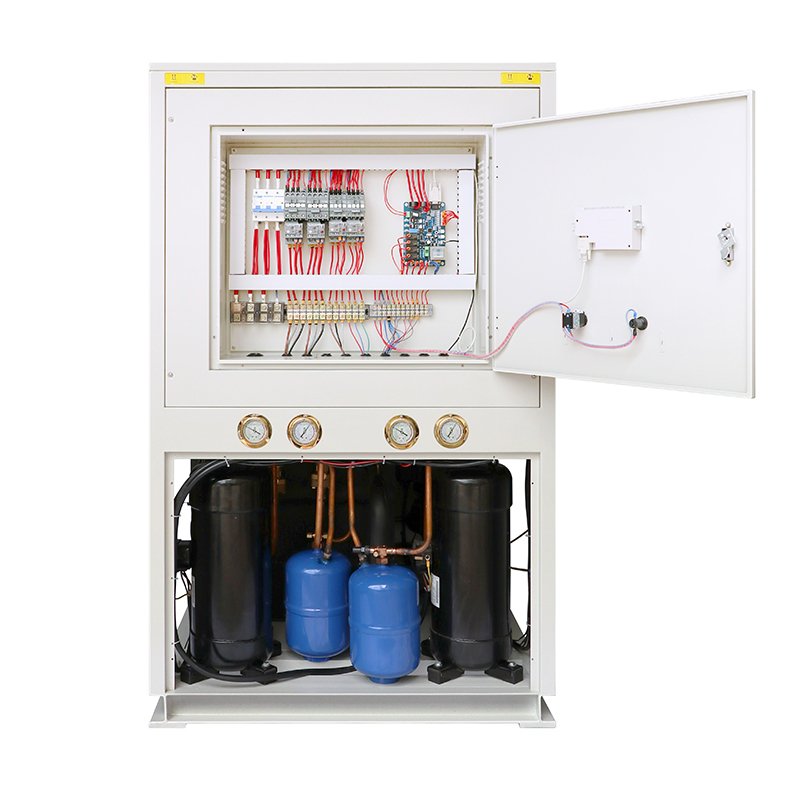
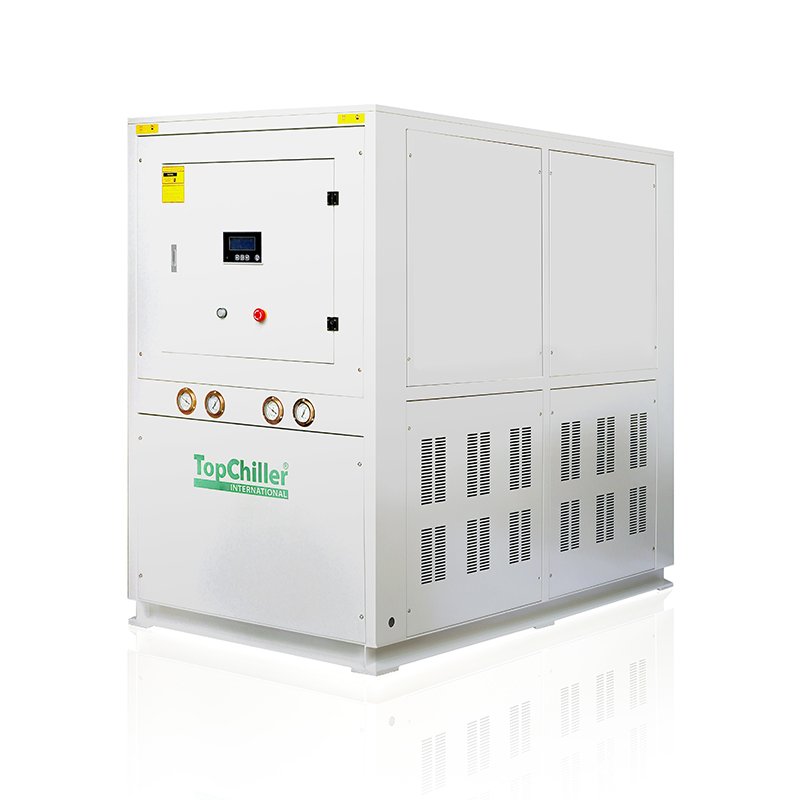
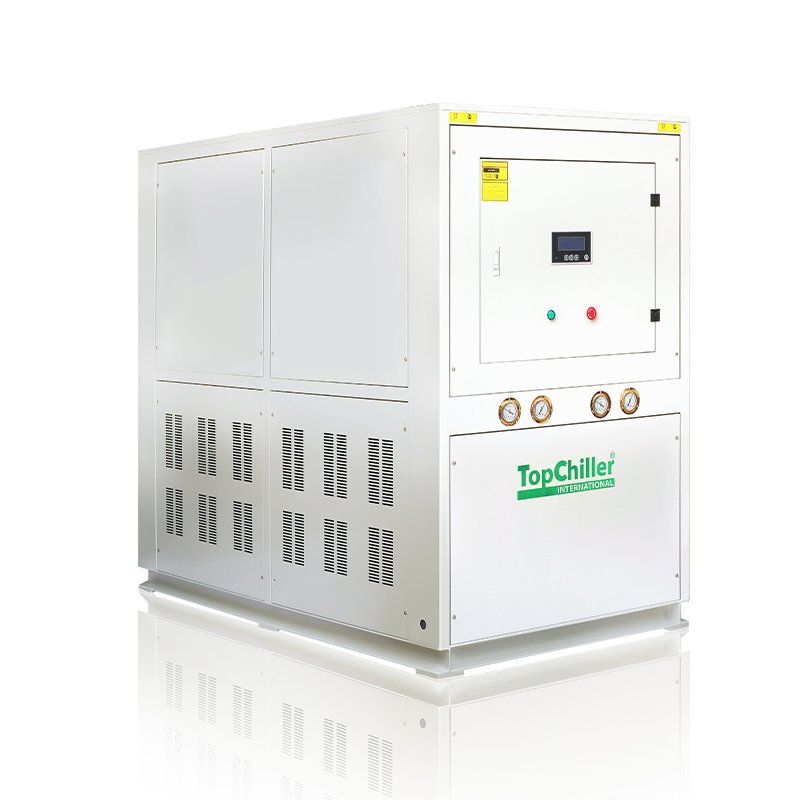
Whether you operate large data centers, medical research facilities, or industrial processes, ChillerOne water cooled water chillers guarantee stable and optimal cooling. They can handle high cooling requirements in large-scale, high-density, and continuous processes.
Our water cooled water chillers use a water-based, two-stage heat rejection process. The refrigerant absorbs heat and transfers it to the water stream from the cooling tower for maximum cooling. This ensures the refrigerant maintains optimal cooling temperature.
By integrating cooling towers, ChillerOne water cooled water chillers leverage the high specific heat capacity of water (4,184 J/kg·K). This maximizes heat transfer while also ensuring low energy consumption.
Additionally, our water to water chillers come with 3 to 4 independent refrigerant circuits for safety and ensure 100% operational uptime. This is alongside the stainless steel buffer tank and piping system for durability, with no corroded parts.
With over 20 years of experience in the industry, ChillerOne offers many custom water chiller solutions. You can choose our built-in water tank for an open-loop system or shell and tube heat exchangers for a closed-loop system. In every design, our engineers will help you choose a system that matches your cooling requirements.
Partner with ChillerOne today for custom-made water to water chillers – Get our chiller catalogue now.
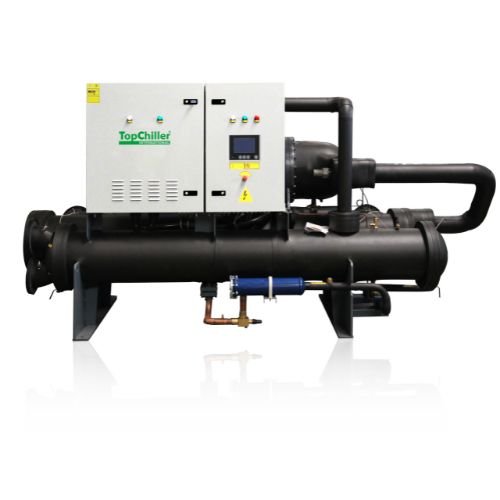
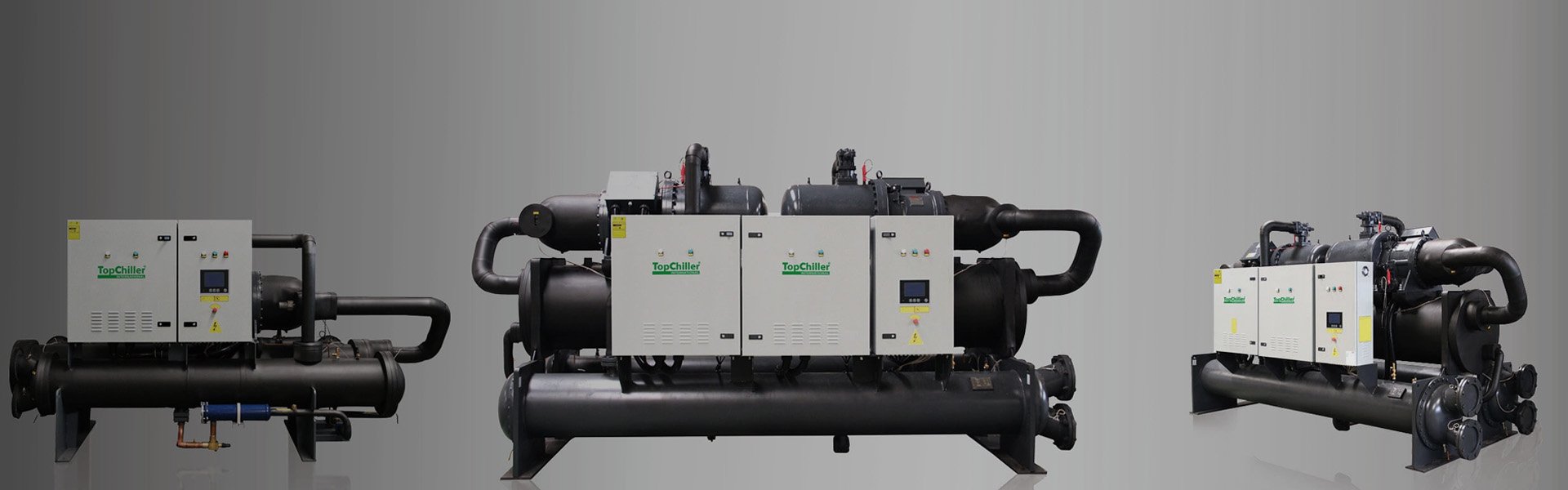
Chillerone’s flooded screw chiller delivers stable and efficient cooling for heavy-duty industrial environments.
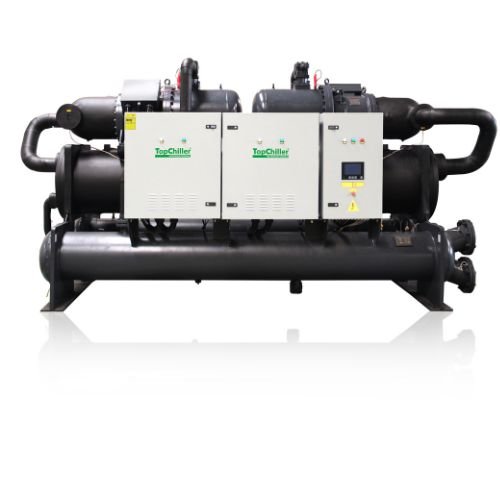
Our screw chiller offers strong performance and reliable operation for continuous cooling needs.
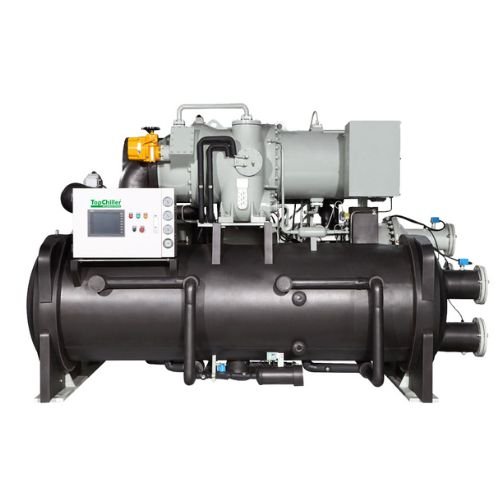
Chillerone’s magnetic bearing chiller runs quietly, energy-efficient, and requires less maintenance due to friction-free design.
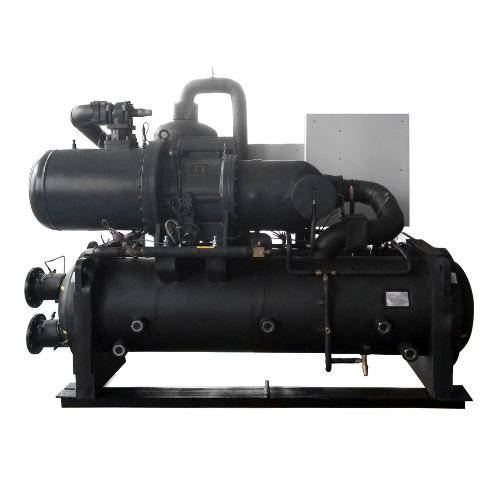
This unit provides dependable cooling performance with proven reciprocating compressor technology.
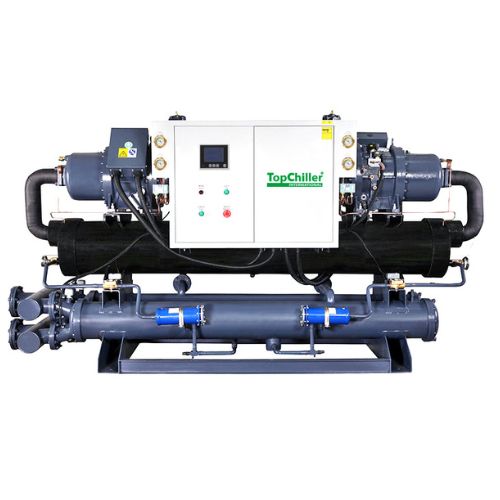
Our open-type scroll water chiller offers easy access for servicing and smooth cooling for commercial use.
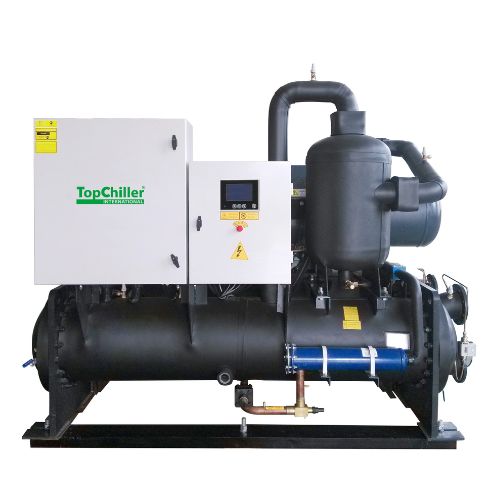
Designed with multiple compressor for redundancy, Chillerone’s chiller keeps operations running even if one unit stops.
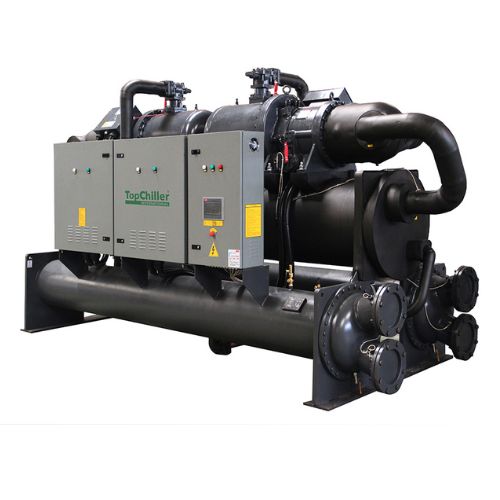
Built for demanding marine environments, this chiller resists corrosion and maintains stable onboard cooling.
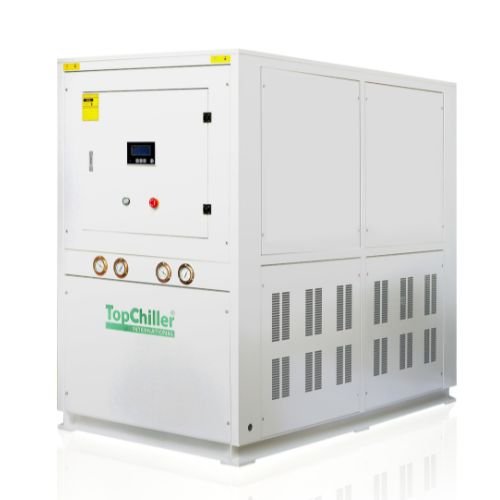
Chillerone’s low-temperature chiller is ideal for industries requiring precise and extra-cold refrigeration performance.
Reliable Certification


- Configuration
- Video
- Spare Parts
- Successful Application Examples
| Model | 180 | 220 | 260 | 310 | 340 | 360 | 380 | 480 | 560 | 600 | 710 | 800 | 900 | 940 | 960 | 1120 | 1180 | 1240 | 1360 | 1470 | 1660 | 1700 | 1840 | 1900 | 2210 | 2420 | 2550 | 2780 | 3020 | 3350 | 3500 | 3680 | 3800 | 4120 | |
| Cooling capacity * | kW | 180 | 220 | 260 | 310 | 340 | 360 | 380 | 480 | 560 | 600 | 710 | 800 | 900 | 940 | 960 | 1120 | 1180 | 1240 | 1360 | 1470 | 1660 | 1700 | 1840 | 1900 | 2210 | 2420 | 2550 | 2780 | 3020 | 3350 | 3500 | 3680 | 3800 | 4120 |
| Input power* | kW | 36 | 44 | 52 | 62 | 68 | 72 | 76 | 96 | 112 | 120 | 143 | 161 | 181 | 189 | 193 | 225 | 237 | 249 | 273 | 295 | 333 | 341 | 369 | 382 | 444 | 486 | 512 | 558 | 606 | 673 | 703 | 739 | 763 | 827 |
| Power supply | 380-460V/3PH/50-60Hz | ||||||||||||||||||||||||||||||||||
| Compressor | |||||||||||||||||||||||||||||||||||
| Qty/refrigerant circuit | Nr. | 1/1 | 1/1 | 1/1 | 1/1 | 1/1 | 1/1 | 1/1 | 1/1 | 1/1 | 1/1 | 1/1 | 1/1 | 1/1 | 1/1 | 2/2 | 2/2 | 2/2 | 2/2 | 2/2 | 2/2 | 2/2 | 2/2 | 2/2 | 2/2 | 4/4 | 4/4 | 4/4 | 4/4 | 4/4 | 4/4 | 4/4 | 4/4 | 4/4 | 4/4 |
| Energy adjustment | step | —— 25%~100% —— | —— 12.5%~100% —– | —— 6.25%~100% —— | |||||||||||||||||||||||||||||||
| Max current for wiring | A | 87 | 108 | 119 | 165 | 175 | 185 | 208 | 217 | 246 | 258 | 335 | 356 | 378 | 416 | 2*217 | 2*246 | 2*246 | 2*258 | 2*315 | 2*335 | 2*356 | 2*378 | 2*407 | 2*416 | 4*246 | 4*258 | 4*315 | 4*335 | 4*335 | 4*356 | 4*378 | 4*407 | 4*416 | 4*416 |
| Refrigerant | |||||||||||||||||||||||||||||||||||
| Type | R407C/R22/R134a/R410a | ||||||||||||||||||||||||||||||||||
| Refrigerant charge | kg | 32 | 39 | 46 | 55 | 60 | 64 | 68 | 85 | 100 | 107 | 126 | 142 | 160 | 167 | 171 | 199 | 210 | 220 | 242 | 261 | 295 | 302 | 327 | 338 | 393 | 430 | 453 | 494 | 537 | 596 | 622 | 654 | 676 | 732 |
| Evaporator | |||||||||||||||||||||||||||||||||||
| Water flow rate in cooling* | m3/h | 31 | 38 | 45 | 53 | 58 | 62 | 65 | 83 | 96 | 103 | 122 | 138 | 155 | 162 | 165 | 193 | 203 | 213 | 234 | 253 | 285 | 292 | 316 | 327 | 380 | 416 | 439 | 478 | 519 | 576 | 602 | 633 | 653 | 709 |
| Water side pressure drop | kPa | 50 | 45 | 45 | 45 | 45 | 46 | 46 | 46 | 47 | 46 | 46 | 46 | 46 | 47 | 47 | 46 | 47 | 46 | 46 | 46 | 46 | 46 | 46 | 46 | 50 | 50 | 50 | 50 | 50 | 50 | 50 | 50 | 50 | 50 |
| Pipe size | mm | DN65 | DN80 | DN100 | DN100 | DN100 | DN100 | DN100 | DN125 | DN125 | DN125 | DN125 | DN125 | DN125 | DN150 | DN150 | DN150 | DN150 | DN150 | DN200 | DN200 | DN200 | DN200 | DN200 | DN200 | 2-DN150 | 2-DN150 | 2-DN200 | 2-DN200 | 2-DN200 | 2-DN200 | 2-DN200 | 2-DN200 | 2-DN200 | 2-DN200 |
| Condenser | |||||||||||||||||||||||||||||||||||
| Water side pressure drop | kPa | 50 | 45 | 45 | 45 | 45 | 45 | 46 | 46 | 46 | 47 | 47 | 46 | 46 | 46 | 46 | 46 | 46 | 47 | 46 | 46 | 48 | 47 | 48 | 48 | 52 | 52 | 52 | 52 | 52 | 52 | 52 | 52 | 52 | 52 |
| Pipe size | mm | DN80 | DN80 | DN100 | DN100 | DN100 | DN100 | DN100 | DN125 | DN125 | DN125 | DN125 | DN125 | DN125 | DN150 | 2-DN125 | 2-DN125 | 2-DN125 | 2-DN125 | 2-DN125 | 2-DN125 | 2-DN150 | 2-DN150 | 2-DN150 | 2-DN150 | 2-DN200 | 2-DN200 | 2-DN200 | 2-DN200 | 2-DN200 | 2-DN200 | 2-DN200 | 2-DN200 | 2-DN200 | 2-DN200 |
| Water flow rate in cooling* | m3/h | 37 | 45 | 54 | 64 | 70 | 74 | 78 | 99 | 116 | 124 | 147 | 165 | 186 | 194 | 198 | 231 | 244 | 256 | 281 | 304 | 343 | 351 | 380 | 392 | 456 | 500 | 527 | 574 | 624 | 692 | 723 | 760 | 785 | 851 |
| Dimensions | |||||||||||||||||||||||||||||||||||
| Length | mm | 2685 | 2720 | 2660 | 2880 | 2870 | 3170 | 3270 | 3170 | 3180 | 3180 | 3505 | 3505 | 3505 | 3520 | 4060 | 4505 | 4505 | 4505 | 4660 | 4660 | 4660 | 4660 | 4660 | 4660 | 4600 | 4650 | 4690 | 4600 | 4780 | 4800 | 4820 | 4830 | 4850 | 4850 |
| Width | mm | 1090 | 1115 | 1175 | 1125 | 1125 | 1125 | 1230 | 1200 | 1285 | 1285 | 1280 | 1315 | 1375 | 1380 | 1415 | 1415 | 1415 | 1415 | 1460 | 1460 | 1585 | 1585 | 1585 | 1585 | 2250 | 2270 | 2300 | 2450 | 2450 | 2450 | 2450 | 2500 | 2500 | 2500 |
| Height | mm | 1625 | 1555 | 1650 | 1645 | 1685 | 1685 | 1685 | 1685 | 1805 | 1805 | 1970 | 1990 | 1980 | 1980 | 1975 | 2000 | 2000 | 2000 | 2090 | 2090 | 2215 | 2215 | 2240 | 2240 | 2350 | 2380 | 2410 | 2460 | 2470 | 2500 | 2530 | 2550 | 2560 | 2560 |
| Net weight | kg | 1600 | 1800 | 1900 | 2000 | 2100 | 2200 | 2250 | 2400 | 3000 | 3100 | 3500 | 3800 | 4000 | 4100 | 4210 | 4400 | 4740 | 5600 | 6600 | 6800 | 7000 | 7400 | 8000 | 8400 | 8800 | 9000 | 9800 | 11600 | 12300 | 13000 | 13500 | 13700 | 13900 | 14300 |
| Sound pressure level *** | dB(A) | 68 | 69 | 69 | 70 | 70 | 72 | 73 | 73 | 73 | 73 | 74 | 74 | 74 | 73 | 74 | 74 | 74 | 74 | 74 | 74 | 74 | 74 | 75 | 76 | 76 | 76 | 77 | 77 | 78 | 78 | 78 | 79 | 79 | 79 |
| * Performance values refer to the following conditions: Condenser water inlet/outlet temperature: 30ºC/35ºC, evaporator water inlet/outlet temperature: 12ºC/7ºC. ** Desuperheater is optional. Condenser water inlet temperature: 40ºC, evaporator water outlet temperature: 12ºCºC *** Noise level measured in free field condition at distance of 1 meter. | |||||||||||||||||||||||||||||||||||


An Automotive Component Factory in Texas, USA
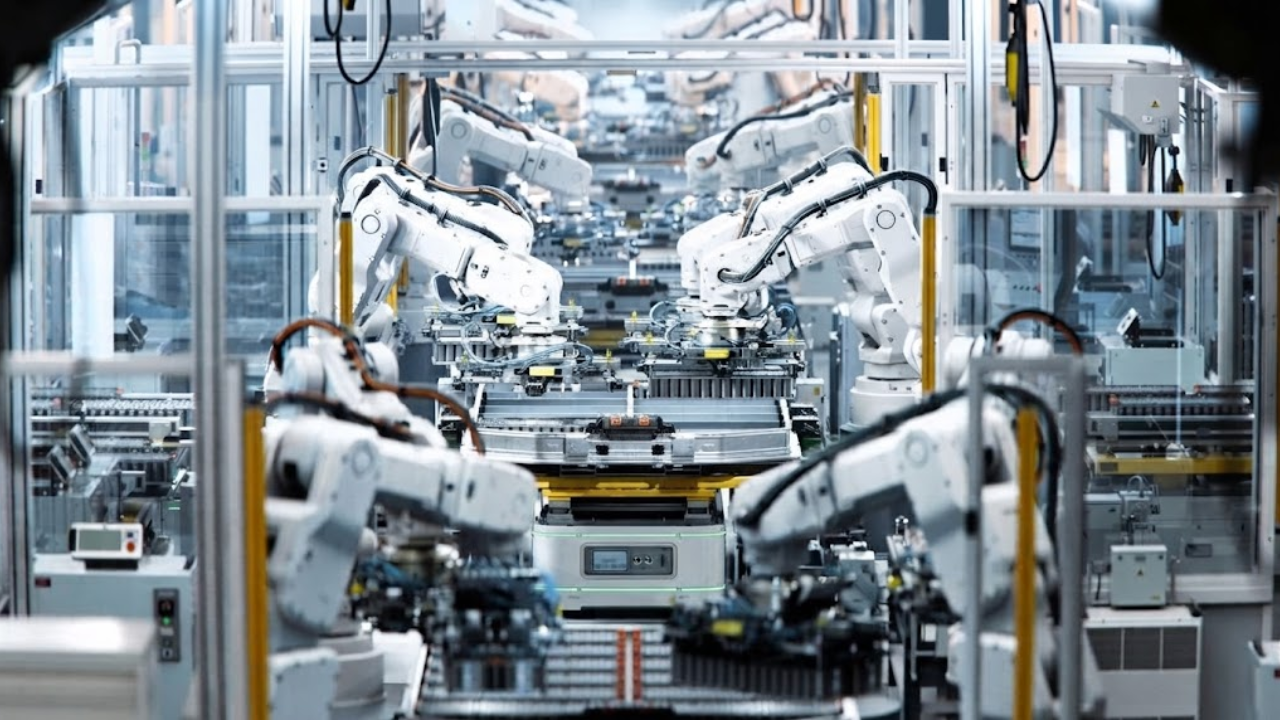
This automotive component factory in Texas upgraded the cooling system of the welding workshop. Chillerone provided two water-cooled chillers with a capacity of 150 tons, along with water-cooled condensers, to form an industrial water chiller system. This system was designed according to the water-cooled chiller diagram, providing 20 ± 1℃ chilled water for the welding robots. The equipment operated continuously for 18 months without any failures, and the energy consumption was reduced by approximately 18% compared to the original plan. The annual electricity cost savings were approximately $50,000. The customer highly praised the stability and energy-efficiency performance of this water-cooled chiller.
Dubai Business Complex in the United Arab Emirates
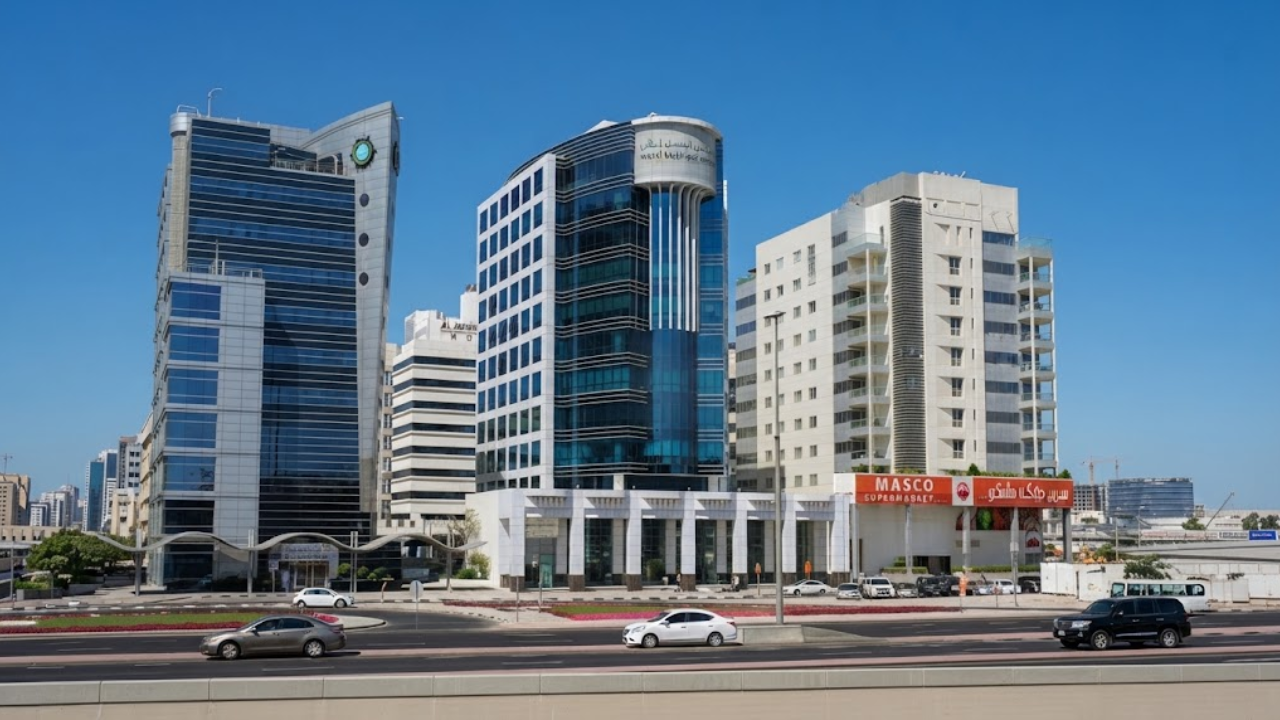
A large commercial complex in Dubai requires a cold source for its central air conditioning system. Chillerone has configured three 200-ton water-cooled chiller systems as the core unit of the commercial water chiller system, which is paired with cooling towers for operation. Through the optimized control logic explained for the water-cooled chiller, zone cooling is achieved. After one year of operation, the system’s energy efficiency improved by approximately 15%. Any reduction in cooling-tower water consumption should be verified against the project’s actual operating data. The client praised this solution for its ability to cope with high-temperature and high-humidity environments and its reliable operation.
German Bavaria Chemical Industrial Park
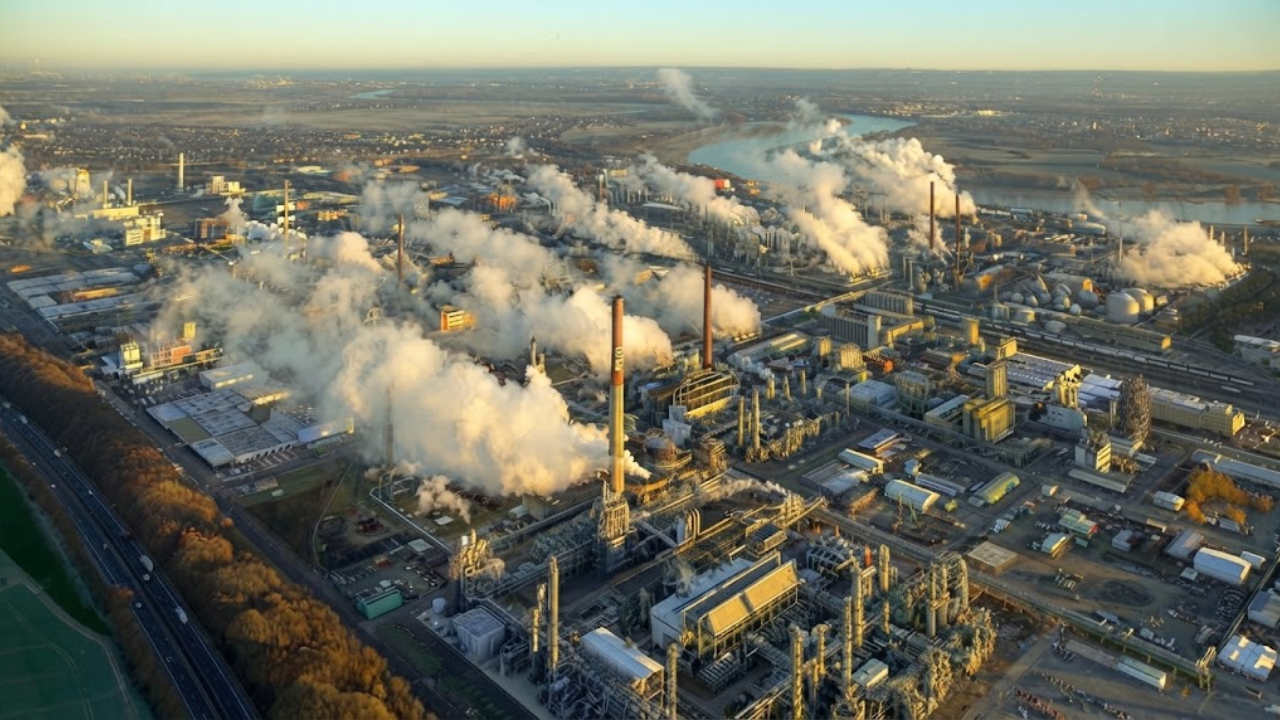
A certain chemical enterprise in Germany needs to provide precise cooling for reaction vessels. Chillerone offers one 80-ton water-cooled water chiller, which uses a water-cooled condenser and a cooling tower in a linked manner. This industrial water chiller system has a temperature control accuracy of ±0.5℃ and is equipped with a water treatment system to prevent scaling. It has been operating continuously for two years, maintaining stable heat exchange efficiency and low maintenance costs. The customer stated that this water-cooled chiller fully meets the strict requirements of the chemical process.
Singapore Data Center
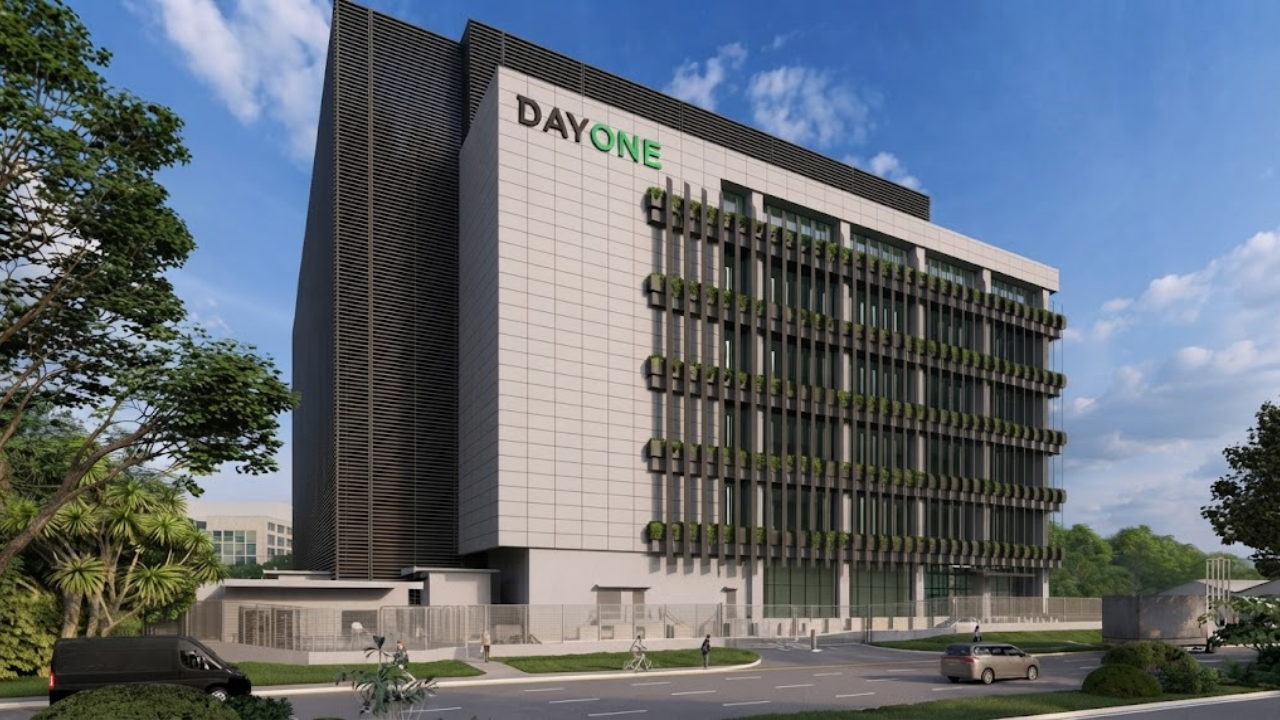
A certain data center in Singapore is facing the challenge of high heat-density cooling. Chillerone provides four 250-ton water-cooled water chillers, forming an industrial water chiller system, to provide 12±1℃ chilled water for the server room. The system design is based on the water-cooled chiller diagram, and strict water treatment is carried out to prevent scaling. It operates 24 hours a day throughout the year, reducing the PUE by 0.15 and saving approximately 100,000 Singapore dollars in electricity costs annually. The customer evaluated that this water-cooled chiller solution is efficient and reliable.


See the Water Cooled Water Chiller in Action
Watch how the water cooled water chiller delivers stable temperature control, fast cooling response, and reliable performance in real industrial working conditions.
What is the Water Cooled Water Chiller?
Water-cooled water chillers provide efficient cooling of fluids for medium to large projects. It has a cooling tower that transfers heat from the refrigerant vapour to the water, helping to recondense the cooling vapour and make it work in a cycle. It is not disturbed by ambient temperatures, so it is suitable for cooling tasks in a variety of environments while ensuring adequate water resources. You can use it in industrial manufacturing, commercial premises cooling, etc.
How a Water-Cooled Water Chiller Works?
Evaporation
When a water-cooled water chiller operates, the chilled water exchanges heat with the ambient air that needs to be cooled down for your cooling purposes. The heat-carrying chilled water enters the evaporator and transfers the heat to the refrigerant. The cooled chilled water continues to circulate for heat exchange and heat transfer to achieve continuous and efficient cooling. The refrigerant efficiently absorbs the heat from the water and transforms from liquid to gas.
Compression
The compressor of a water-cooled water chiller draws in low-pressure refrigerant vapour, pressurises it and sends it to the condenser. The compressor acts as a power source to drive the refrigerant in a continuous cycle, helping the water-cooled chiller to achieve a constant and stable cooling effect.
Condensation
The refrigerant vapour entering the condenser exchanges heat with the cooling water in the cooling tower of the water-cooled water chiller. The cooling water that absorbs heat is pumped to the cooling tower, while the refrigerant vapour that releases heat recondenses into a liquid.
Expansion
The recondensed refrigerant passes through the expansion valve and is converted to a low-temperature, low-pressure state where it can continue to absorb heat. The refrigerant re-enters the evaporator and is rapidly converted to vapour as it continues to absorb heat from the chilled water. With this cycle, the chiller achieves a constant and stable cooling effect. In addition, you can also automatically adjust the flow of refrigerant through the expansion valve to meet different needs.
Water Cooled Water Chiller vs. Air Cooled Water Chiller
Water-cooled water chillers transfer heat from cooling vapours to water, while air-cooled water chillers cool by transferring heat from cooling vapours to ambient air. Air-cooled water chillers do not need to be equipped with a cooling tower, but do need to be equipped with a fan to draw in ambient air.
Comparison of Cooling Efficiency
Water-cooled water chillers use water with a higher thermal conductivity for heat exchange and have a higher cooling efficiency, which makes them commonly used in medium to large projects. Air-cooled water chillers perform better in smaller projects. In addition, water-cooled water chillers are not affected by ambient air and perform well in higher temperature environments. However, air-cooled water chillers are affected by ambient air and have low cooling efficiency in higher temperature environments.
Cost Comparison
Water-cooled water chillers are usually more expensive than air-cooled chillers because they require additional cooling towers and water pipes. Air-cooled water chillers, on the other hand, are simpler and require less initial cost. But water-cooled water chillers are more energy efficient, which means lower energy costs. Therefore, the high performance and energy efficiency of water-cooled water chillers make them cost-effective in terms of long-term performance.
Comparison of Installation and Maintenance
Water-cooled water chillers require more complex installation and maintenance due to their more complicated structure. Also, it requires regular water treatment to prevent corrosion, performance degradation and even damage caused by scale. Therefore, it requires higher installation and maintenance costs. Air-cooled water chillers, on the other hand, are more compact and simpler to install and maintain.
How to Choose between a Water Cooled and an Air Cooled Water Chiller?
- Project Size: If you are looking for a satisfactory cooling solution for medium to large projects such as airports, shopping malls, and large-scale processing plants, water-cooled water chillers can better meet the cooling needs. Air-cooled water chillers are more suitable for smaller projects or projects with space limitations.
- Conditional resources: If your project is located in an area of high ambient temperature, a water-cooled rather than an air-cooled water chiller has a higher working efficiency. If your project does not have sufficient water resources, then water air-cooled chillers will be more suitable.
- Noise: Air-cooled water chillers have fans that make more noise. Water-cooled water chillers do not require a fan and are quieter in operation. Thanks to this, you can use water-cooled water chillers for projects that require strict noise levels.
- Budget: Air-cooled water chillers have a lower initial cost, making them a cost-effective choice for small factories or temporary use. Water-cooled water chillers have higher initial and maintenance costs, but are more cost-effective for larger projects and long-term use. Water-cooled water chillers also have a longer service life.
Application of Water Cooled Water Chiller
Medical Industry
You can use water-cooled water chillers in hospitals to achieve better storage conditions for equipment and tools, as well as to maintain a cool operating theatre environment. In addition, the preparation of medical drugs also requires water-cooled chillers to achieve the ideal temperature range, which ensures stability of the preparation and conformity of your drugs.
Industrial Manufacturing
- Process Machining: A large amount of heat is generated during industrial manufacturing processes, such as machine tool machining and injection moulding. Excessive temperatures may affect the production quality of the finished product or affect the machining accuracy of the equipment. A water-cooled water chiller can effectively solve this problem. It can also accelerate the cooling of the finished product and shorten the cooling waiting time, thus improving production efficiency.
- Semiconductor: In the semiconductor industry, chip packaging requires strict temperature control, and the use of water-cooled water chillers can enhance chip stability. This can reduce the probability of product damage for you, thus reducing additional cost loss.
- Equipment cooling: High-power equipment in the industry (such as laser equipment) will generate heat during operation and affect performance. You can use water-cooled water chillers for rapid cooling and heat dissipation. By maintaining the right operating temperature, you can improve the performance and service life of your equipment.
Food Industry
Whether it is the processing or storage of food and beverages, low and stable temperatures are required. Water-cooled water chillers not only provide rapid cooling in processing but also provide a constant and stable low-temperature environment in storage, thus ensuring the quality and safety of food and beverages.
Commercial and Architectural
Water-cooled water chillers can be integrated into air-conditioning systems to provide efficient and consistent cooling to keep the air cool. You can use it in various locations such as shopping malls, airports, office buildings, schools, and more for a comfortable environment. In addition, it operates with a low noise level that does not affect customers and employees, thus improving work and operational efficiency.
Water-cooled chillers do not rely on ambient air for cooling, making them ideal for confined space cooling solutions.
Water-cooled chillers save energy, especially compared to air-cooled chillers. On the one hand, it does not require a fan, which reduces energy consumption. On the other hand, it improves energy efficiency by exchanging heat through water with higher thermal conductivity.
It is best to install your water-cooled chiller indoors to avoid the effects of harsh weather and damage to the chiller. However, you can place the chiller tower of a water-cooled chiller outdoors and make it well ventilated.


 English
 Spanish
 Arabic
 Vietnamese

