


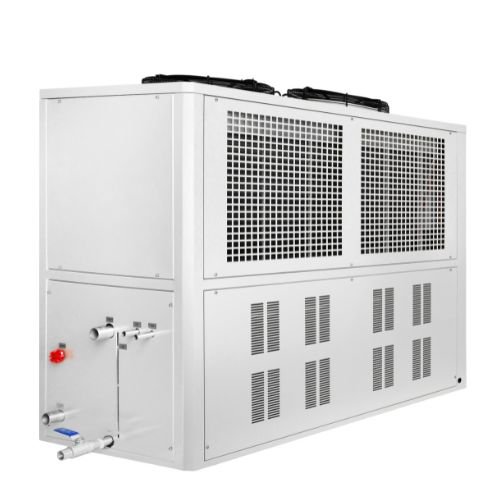

Features of ChillerOne Die Casting Chiller
- Satisfy the different materials’ cooling requirements such as aluminum alloy, zinc alloy and others under high pressure, high temperature and high cycle time conditions.
- Control the temperature accuracy at ±1℃ to reduce casting defects caused by temperature differences.
- Support 24-hour continuous operation and run stably under high-load production conditions, avoiding mold damage or production line downtime caused by cooling interruption.
- Increase the mold’s service life approximately 20% to 30% through stabilizing the waterway design and maintaining continuous cooling capacity.
ChillerOne Die Casting Chillers Professional Supplier
Die casting chillers can help you stabilize the mold temperature, shorten the molding cycle, reduce the defect rate, and significantly reduce energy consumption and maintenance costs during long-term operation. Whether it’s a centralized large-scale production line or flexible production with multiple varieties and small batches, ChillerOne provides you with a customized die casting chiller solution with precise temperature control. With a temperature control accuracy of ±1℃, it can easily meet the strict cooling requirements of various materials such as aluminum alloy, magnesium alloy and zinc alloy.
Chiller Types for Die Casting

Screw water chillers have a strong continuous cooling capacity, with a common cooling capacity range of 10kW to 100kW. They are suitable for medium and large-scale die-casting production lines or conditions where multiple die-casting machines operate in parallel.
Some models support frequency conversion regulation and can operate stably within the load range of 10% to 100%. When the production rhythm fluctuates, workstations switch or some equipment is shut down, the system can still maintain a stable water temperature while effectively reducing your energy consumption. Its structural form and control logic are more suitable for your continuous operation for 24 hours. And it performs particularly reliably in applications with high requirements for mold temperature consistency and cooling stability.

The scroll chiller has a relatively simple structure, with few moving parts, stable operation, and ii could deliver you high overall reliability. The average annual failure rate is usually controlled at ≤0.02 times.
Its initial investment cost and daily maintenance cost are relatively controllable. So it is more suitable for small and medium-sized die-casting equipment, single-machine cooling systems, or application scenarios that pay more attention to equipment stability and ease of maintenance. If your production line scales are limited and load variations are not significant, scroll chillers are a cost-effective choice. If your production line has limited capacity and minimal load fluctuations, the scroll chiller with energy-saving design and stable operational capability is your best choice for continuous industrial cooling requirements.

Centrifugal water chillers are suitable for large cooling capacity demands ranging from 500 kW to 2000 kW. It has a high energy efficiency ratio and is often used in large die-casting workshops or centralized cooling systems.
Under long-term full-load or high-load operation conditions, its operating cost per unit of cooling capacity is significantly lower than that of small and medium-sized units. It is suitable for you to apply in industrial projects with large production line scales, concentrated cooling loads, and high requirements for overall energy consumption control. This type of equipment usually requires a complete water system design and professional operation and maintenance, and is more suitable for planned or centralized cooling die-casting factories.
Advantages of ChillerOne Die Casting Chillers

The die casting chiller can control the cooling water’s temperature within ± 1°C, thus ensuring that your mold remains within the optimal working temperature range during die casting. Precise temperature control can improve your forming quality and reduce defects caused by temperature fluctuations.

The die casting chiller can stably maintain the cooling water temperature within the range of 5 to 25°C. Compared with traditional cooling methods, the cooler can increase production capacity by 25% and shorten the solidification time by 10% to 30%, thereby significantly improving overall production efficiency.

Through precise temperature control, the chiller can decrease the defect rate of castings, lowering it from 5% to 8% to 1% to 3%. This enhances product quality and also reduces production losses caused by rework of waste products at the time, further improving the overall benefits of the enterprise.

The chiller supports continuous operation for 24 hours. Its low failure rate can effectively prevent mold damage or production stagnation caused by cooling interruption. It has an efficient and stable production process. And particularly suitable for working conditions with high-load and high-intensity operation requirements.

Controlled cooling can significantly lower thermal stress in your molds, avoiding mold steel annealing, the microcracks’ formation or material adhesion due to high temperatures above 300°C. It helps you extend the mold’s lifespan by over 40%, effectively decrease equipment replacement costs, and keep operational stability for a long time. Thus, improve the production consistency, surface quality, and overall efficiency in die casting and molding applications.

Different metallic materials impose varying thermal control requirements on molds. Magnesium alloys require temperature control within the range of 80°C to 150°C to prevent reduced fluidity caused by excessive cooling. Zinc alloys necessitate rapid cooling between 20°C and 60°C to achieve high-cycle production.
Chillers can adjust water temperature and flow rate according to different material properties, meeting your multi-material die-casting production requirements.

The die casting chiller is suitable for high-pressure die-casting and low-pressure die-casting, and supports various processes such as gravity die-casting as well. By adjusting the cooling power and waterway layout like zonal cooling, the chiller can carry out thermal management according to different process requirements. This keeps your process stable and product consistent to meet the various die-casting processes’ precise demands. It can also reduce casting defects and enhance overall production efficiency.
شهادة موثوقة
International ISO and CE credentials guarantee that our chillers operate stably and meet all standard requirements for die casting cooling work.


Specific Applications for Die Casting Industry
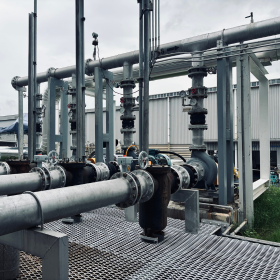
ال مبرد مركزي offers you unified and stable cooling services for many die casting production lines through a centralized cold water circulation system.
The system usually adopts PID compound control, which can realize precise temperature control within ±0.5℃ to meet the requirements for mold temperature stability in high-cycle production.
In addition to the main circuit providing cooling for the mold, a plate heat exchanger can also be configured through the auxiliary circuit to cool down the hydraulic system of the die-casting machine, stably controlling the oil temperature below 45°C. This prevents the viscosity from decreasing, the movement from slowing down, or the equipment from wearing out more rapidly due to excessively high oil temperature.
If there are large die-casting bases with numerous die-casting production lines, a central cooling solution can reduce the repetitive configuration of decentralized cooling equipment, typically lowering your overall energy consumption by about 30% while simplifying operation and maintenance management.
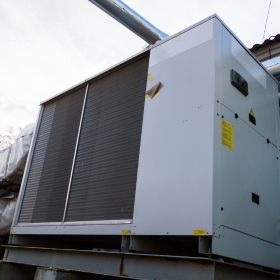
Industrial portable chiller equipment is flexible and adaptable. And it is often used for temporary cooling during small-batch trial production and equipment maintenance, as well as for supplementary cooling needs in remote workstations or special molds.
ال مبرد محمول can be quickly connected to the mold cooling pipeline without complex installation. Some models are equipped with explosion-proof design, which can meet your higher safety requirements for magnesium alloy die-casting and reduce the risk of combustion or oxidation caused by temperature control failure. When a sudden chiller failure occurs on the production line, you can quickly put the portable chiller into operation as an emergency cooling device to control the mold temperature within a safe range and help you reduce the production capacity loss caused by downtime.
If it is small-batch die casting applications such as zinc alloy small ornaments and small precision electronic structural components, the portable chiller’s water temperature is your good choice. This can be flexibly adjusted to 20 – 30 ℃, which ensures product consistency during the trial production stage or when switching between multiple varieties.
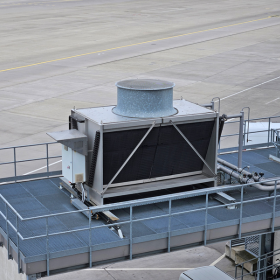
ال مبرد معياري adopts a modular design. It satisfies the multi-zone and multi-loop cooling requirements of complex molds, and also smoothly upgrades the cooling capacity by adding modules during the capacity expansion stage to avoid the replacement of the entire machine.
In terms of structural design, the modular chiller combines with copper tubes and independent cooling modules to reduce the corrosion risk caused by direct contact between the cooling medium and sensitive materials such as magnesium alloys. At the same time, it is compatible with the pre-buried pipeline layout of different models and molds.
Due to each module’s high universality, you can disassemble and maintain it separately without affecting the operation of the entire cooling system when a certain unit malfunctions. This effectively decreases your machines’ downtime risk, operation and maintenance costs.
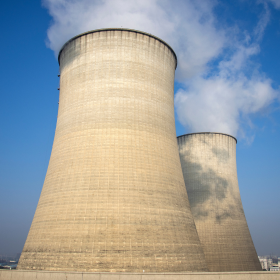
The evaporative cooling towers continuously cool the circulating cooling water based on the principle of heat absorption through water evaporation. They are suitable for high-load and high-flow cooling conditions, especially for die-casting factories operating at high ambient temperatures.
This equipment is usually paired with TEAO direct drive fan motors and takes a double-sealed and permanently lubricated bearing design. It requires low daily maintenance so that it is suitable for long-term continuous operation. In the production of large aluminum alloy castings such as automotive chassis parts and engine blocks, evaporative cooling towers can provide stable low-temperature circulating water for your مبرد and mold cooling systems. It can control the water temperature between 20 and 30°C.
The tower can efficiently remove the large amount of heat generated after the 660-680 ℃ aluminum alloy liquid is injected into the mold. If you need the high-rhythm and large-tonnage die-casting process, this machine offers you a reliable basic cooling guarantee.
See the Die Casting Chiller in Action
Watch how the die casting chiller delivers stable temperature control, fast cooling response, and reliable performance in real industrial working conditions.
Why does the Die Casting Industry Need Chillers?
In the die-casting process, the chiller core function is to precisely control the mold temperature and quickly remove the process heat. It is essentially to solve the thermal management problem of high-temperature molten metal during the forming process.
Cooling machines provide you with stable, controllable cooling conditions, effectively preventing common internal defects such as shrinkage cavities, porosity, and cracks. Through a continuous and stable water circulation system, the die-casting chiller can ensure uniform temperature distribution in all areas of the mold cavity, allowing the molten metal to solidify synchronously from the outside to the inside, thereby enhancing the dimensional consistency and surface quality of the castings.
In actual production, molds, injection systems and hydraulic oil all continuously generate a large amount of heat. Insufficient cooling capacity or severe fluctuations in the cooler can lead to unstable mold temperatures, increased batch-to-batch variation in castings, and even accelerated mold aging.
Die casting chillers typically use water or heat transfer oil as the cooling medium, and the cooling liquid is transported to the cooling channels inside the steel mold through a circulation system. During the die-casting process, high-temperature molten metal continuously transfers heat to the mold, and the coolant absorbs the excess heat in the channels, thereby achieving precise control of the mold temperature. The heated coolant will flow back to the chiller, releasing heat through the refrigeration system or heat exchanger, and then re-enter the mold cooling circuit at a stable set temperature.
Through this closed-loop circulation method, you can maintain a stable mold temperature throughout the die-casting cycle, effectively control the solidification speed, reduce defects, and enhance the production rhythm and overall energy efficiency at this time.
The die-casting chiller’s cooling capacity needs to be calculated in combination with the actual working conditions. You need to comprehensively calculate cooling capacity based on the tonnage of the die-casting machine, the type of alloy (like aluminum, magnesium, zinc), the production cycle, the mold structure, and the temperature difference between the inlet and outlet of the cooling water.
It is recommended to provide complete process parameters when selecting the model, and have professionals calculate the heat load to avoid fluctuations in mold temperature due to insufficient cooling capacity or unnecessary investment and operating costs due to over-configuration of equipment.
In most die-casting applications, the chiller’s outlet water temperature is usually set within the range of 15 to 25 degrees Celsius. This specific value depends on the mold design, alloy material and process requirements.
For high-speed and high-precision die-casting production lines, molds are more sensitive to temperature fluctuations. It is common to improve the water temperature control accuracy to within ±0.5℃ to reduce the impact of your batch fluctuations on the dimensions and surface quality of castings.
Under normal operating conditions, die-casting chillers do not require frequent maintenance.
The daily work mainly includes regularly checking the refrigerant pressure, water quality, filter cleaning condition and the operating status of the electrical system.
If you choose industrial-grade equipment with a reasonable structural design and a stable control system, the probability of unplanned downtime will be significantly reduced, and maintenance work will mainly focus on preventive inspections rather than fault handling.
Sure, and it is very common in medium and high-end die-casting projects.
The chiller offers you a stable and continuous cold source, while a mold temperature control unit is used to precisely control the temperature of a specific area of the mold.
The two operate in coordination, which helps you establish the thermal balance of the mold more accurately, and is particularly suitable for the production of castings with complex structures or high requirements for dimensional consistency.
In continuous operation die-casting production lines with significant load fluctuations, variable frequency water chillers have more advantages. It can automatically adjust the output according to the real-time load, reducing the mechanical and electrical shock caused by frequent starts and stops, while lowering energy consumption and improving the stability of the outlet water temperature.
If your operating conditions are in a stable full-load state for a long time, fixed-frequency chillers still have certain advantages in terms of initial investment and structural simplicity. So the specific choice should be based on your actual operating conditions.


 Arabic
 English
 Spanish
 Vietnamese

