

Marcas internacionales con las que colaboramos


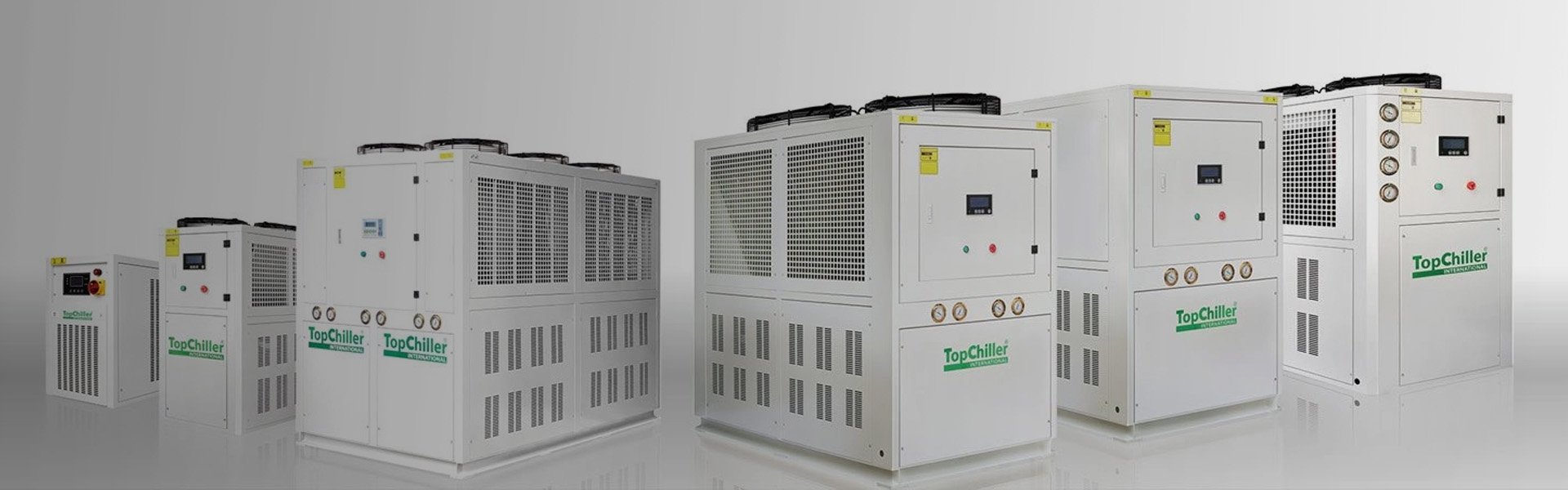
Why Choose ChillerOne Packaged Water Chiller
- Factory assembled, ready for installation
- Reduces installation costs by up to 40%
- Higher cooling capacity: 2 to 250 tons
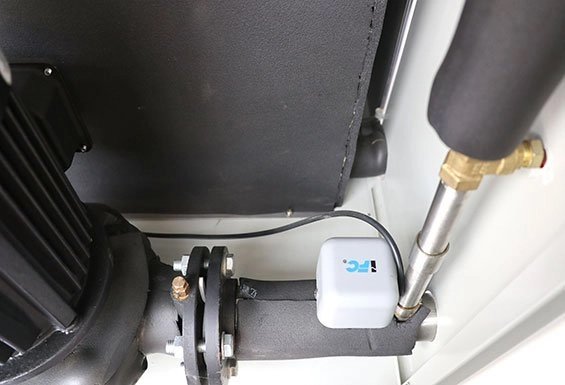
- Water flow switch and high-pressure controller for safety
Your Leading Packaged Water Chiller Manufacturer in China
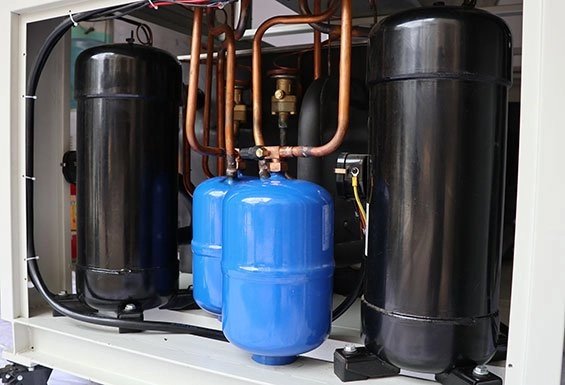
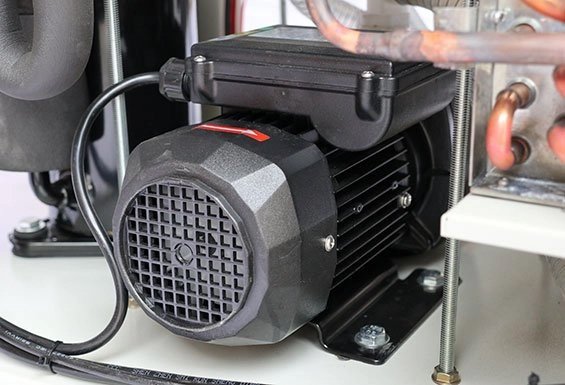
ChillerOne packaged water chiller is a self-contained unit that includes critical components such as evaporator, control systems, condenser, internal reservoir, pump system, and compressor in a single unit. We fully assemble and test these chillers before shipping to your site.
Our packaged water chillers can transfer heat 10 times more than packaged air chillers. It is for this reason that we recommend these units for large and continuous operation in most industrial applications.
We have integrated an anti-freeze thermostat to prevent refrigerants from freezing and guarantee stable performance. Additionally, these are low-noise water chillers that use a torre de refrigeración for heat rejection. The double pump design guarantees 99.9% up-time, which reduces costs due to system breakdown.
In case you want to expand your production process, our water chiller modular designs allow for scalability. You will simply add another chiller to increase the cooling capacity, instead of modifying the system completely. This reduces costs and guarantees continuous operations.
At ChillerOne, our engineers are ready to customize every packaged water-cooled chiller to match your system requirements – Get a free quote now.

It runs on a hermetic scroll compressor, uses high-efficiency copper tube evaporators, and supports multiple refrigerants. With a cooling capacity of 1.4-1.5 kW, a working range of 3°C to 30°C, and a compact 900x500x950 mm build.

With a strong 5PH compressor, 4.5 kW power, and a refrigeration capacity of 15kW, it delivers reliable chilled water at a flow rate of 70 L/min. Features a durable pipe coil evaporator, a 50-liter water tank, and uses R22 refrigerant.

You get a strong 13.95 kW system powered by a 3PH/380V/50HZ supply, a large 200 L tank, and efficient air volume output for fast heat removal. Built with key components such as condenser, evaporator, and vane pump, this unit delivers dependable temperature control within 5°C to 35°C range.

With a 120L evaporator tank, DN40 ports, and a 0.75 kW circulating pump, it delivers stable performance using refrigerants like R220, R404A, or R507. Built at 1580x750x1500 mm.

Built with a compact 160 kg structure with a 3.62 kW power system, reliable cooling tower support, and finely tuned temperature precision, it helps you keep your equipment running safely and efficiently.

Built for greenhouse and industrial cooling, giving you reliable 20,000 BTU performance with a ceiling-mount design that saves space and keeps installation simple. It operates on a 220/50Hz power source, uses R410A refrigerant, and runs with AC fan motors and a GMCC-type compressor.
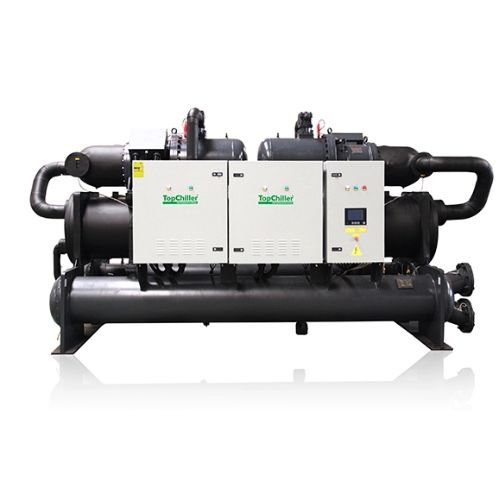
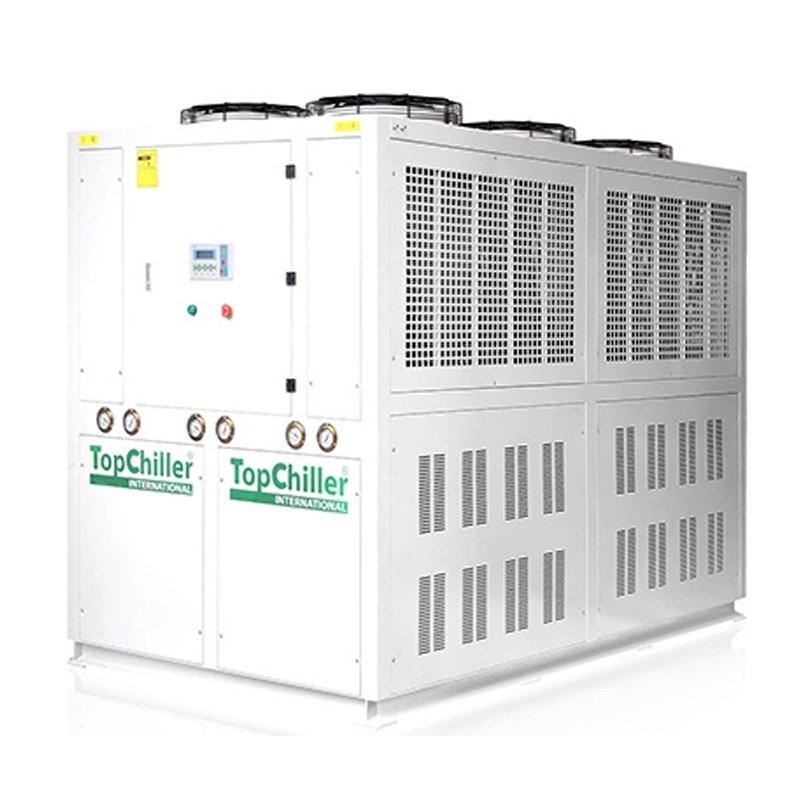
With a powerful 75 kW cooling capacity, a 22.25 kW system, and a high-quality compressor set-up, it delivers stable performance across a 5 to 35 working range. Built at 2360x850x1900 mm and weighing 580 kg, and features a spacious 220L tank.
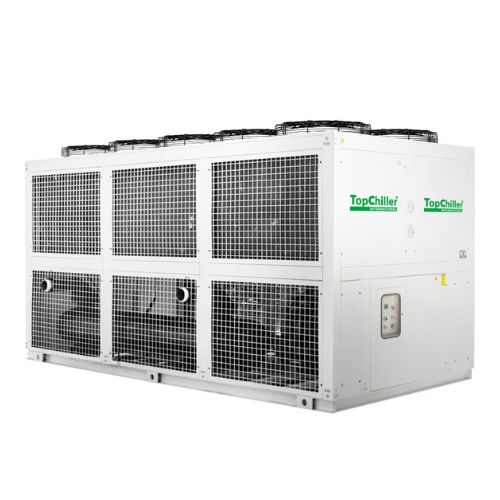
It runs on a 5.3 kW system with two fully enclosed scroll or piston compressors. Sized at 1250x640x1310 mm, with a 120L evaporator tank, DN40 inlet/outlet, and a 1.1 kW circulating pump, it provides strong and stable flow.
Certificación confiable


Application of Packaged Water Chillers
Packaged water chillers can be applied in many industries. Whether you are engaged in plastic molding, laser processing, or food and chemical production, it can help you maintain a stable process temperature and ensure safe and efficient operation of the equipment.

If you’re into injection molding or blow molding production, you must be aware of how much the mold temperature can affect product quality. The chiller can continuously cool the mold, which makes the surface of the product smoother and reduces problems like bubbles, shrinkage, or deformation. Meanwhile, it can also help shorten the molding cycle and improve production efficiency.

During laser cutting, marking, or welding processes, cooling systems are almost standard equipment. The packaged chiller can stably control the working temperature of lasers, optical components, or welding machines to avoid power attenuation or precision deviation caused by overheating.

In the food and beverage industry, the cooling process is just as important. Chillers can be used for temperature control in brewing, fermentation, filling, or packaging equipment, providing a clean and stable temperature production environment to maintain the ideal flavor and quality of your products.

Temperature control can make a difference in the outcome of chemical and pharmaceutical processes. The packaged chiller can accurately control the temperature of the reaction vessel, fermentation tank and condensation system, which helps you to stabilize the reaction rate, thereby improving the purity and yield of the product.
- Especificación
- Video
- Piezas de repuesto
- Ejemplos de aplicaciones exitosas
Packaged Water Chiller Technical Specifications
| Elementos\Modelo | CA-0,5 A | AC-1A | CA-1.5A | AC-2A | CA-2.5A | AC-3A | AC-4A | AC-5A | AC-6A | AC-8AD | AC-10AD | AC-12AD | AC-15AD | |
| Capacidad de refrigeración | kcal/h 50 Hz/60 Hz | 1419 | 2451 | 3182 | 4833 | 5848 | 7181 | 9288 | 11988 | 14534 | 18576 | 23994 | 29068 | 38270 |
| 1703 | 2941 | 3784 | 5800 | 7018 | 8617 | 11146 | 14386 | 17441 | 22291 | 28793 | 34882 | 45924 | ||
| KW 50 Hz/60 Hz | 1.65 | 2.85 | 3.7 | 5.62 | 6.8 | 8.35 | 10.8 | 13.94 | 16.9 | 21.6 | 27.9 | 33.8 | 44.5 | |
| 1.98 | 3.42 | 4.4 | 6.74 | 8.2 | 10.02 | 12.96 | 16.73 | 20.28 | 25.92 | 33.48 | 40.56 | 53.4 | ||
| Potencia de entrada | KW | 0.88 | 1.35 | 2 | 2.25 | 2.66 | 3.27 | 4.07 | 5.75 | 6.45 | 8.25 | 11.5 | 12.9 | 17.45 |
| Corriente máxima | A | 5.4 | 8.2 | 12 | 13.6 | 6.6 | 8.2 | 10.1 | 13.8 | 15.5 | 20 | 27.9 | 31.3 | 42.4 |
| Fuente de alimentación | 1PH~220V/3PH~220V/380V 50HZ/60HZ | 3PH~380V/415V/480V~50HZ/60HZ(3PH~200V/220V 50HZ/60HZ) | ||||||||||||
| Refrigerante | Tipo | R22/R407C/134a/404A/410A | ||||||||||||
| Control | Válvula de expansión capilar/termostática | |||||||||||||
| Compresor | Tipo | Rotor hermético | Enrollador hermético (pistón) | |||||||||||
| Potencia (kW) | 0.45 | 0.89 | 1.3 | 1.73 | 2.1 | 2.7 | 3.5 | 4.55 | 5.25 | 3.5×2 | 4.55×2 | 5.25×2 | 7×2 | |
| Condensador | Tipo | Tubo de cobre con aletas de alta eficiencia y ventilador de rotor externo de aluminio y bajo nivel de ruido. | ||||||||||||
| Caudal de aire (m³/h) | 750 | 1000 | 1500 | 2000 | 2500 | 3000 | 4000 | 5000 | 6000 | 8000 | 10000 | 12000 | 15000 | |
| Soplador de aire (KW) | 0.06 | 0.09 | 0.15 | 0.15 | 0.19 | 0.14×2 | 0.14×2 | 0.19×2 | 0.19×2 | 0.25×2 | 0.45×2 | 0.45×2 | 0.6×2 | |
| Evaporador | Tipo | Serpentín de tanque de acero inoxidable / tipo carcasa y tubo / intercambiador de calor de placas | ||||||||||||
| Agua fría (m³/h) | 0.28 | 0.49 | 0.64 | 0.97 | 1.12 | 1.44 | 1.86 | 2.4 | 2.91 | 3.71 | 4.8 | 5.81 | 7.65 | |
| 0.34 | 0.59 | 0.76 | 1.16 | 1.4 | 1.72 | 2.23 | 2.88 | 3.49 | 4.46 | 5.76 | 7 | 9.18 | ||
| depósito de agua (L) | 10.6 | 18.3 | 27 | 27 | 50 | 50 | 60 | 60 | 110 | 120 | 200 | 200 | 270 | |
| Tubo de entrada/salida (pulgada) i | 1/2″ | 1/2″ | 1/2″ | 1/2″ | 1″ | 1″ | 1″ | 1″ | 1″ | 1-1/2″ | 2″ | 2″ | 2″ | |
| Bomba de agua | Potencia (kW) | 0.37 | 0.37 | 0.37 | 0.37 | 0.37 | 0.37 | 0.37 | 0.75 | 0.75 | 0.75 | 1.5 | 1.5 | 2.2 |
| Elevación máxima (m) | 22 | 22 | 22 | 22 | 22 | 22 | 22 | 30 | 30 | 25 | 25 | 25 | 28 | |
| Caudal máximo (m3) | 5.4 | 5.4 | 5.4 | 5.4 | 5.4 | 5.4 | 5.4 | 8.1 | 8.1 | 8.1 | 13.5 | 13.5 | 25.2 | |
| Protección de seguridad | Protección interna del compresor, protección contra sobrecorriente, protección contra alta/baja presión, protección contra sobretemperatura, protección de caudal, protección contra secuencia de fases/falta de fase, protección contra bajo nivel de refrigerante, protección anticongelante, protección contra sobrecalentamiento del escape. | |||||||||||||
| Dimensión | L(mm) | 550 | 550 | 600 | 600 | 720 | 980 | 980 | 1150 | 1150 | 1350 | 1500 | 1500 | 1860 |
| Ancho (mm) | 350 | 450 | 500 | 500 | 550 | 520 | 520 | 560 | 560 | 680 | 760 | 760 | 850 | |
| Mmm) | 695 | 845 | 985 | 985 | 1350 | 1170 | 1170 | 1215 | 1215 | 1530 | 1660 | 1660 | 1900 | |
| Peso neto (KG) | 45 | 62 | 85 | 95 | 125 | 152 | 175 | 185 | 215 | 283 | 345 | 382 | 580 | |
| Nota: Las especificaciones anteriores se ajustan a las siguientes condiciones de diseño: 1, 12℃/7℃. Temperatura de entrada/salida de agua fría 12℃/7℃. 2, 33℃/38℃. Temperatura de entrada/salida del aire de refrigeración 33℃/38℃. Nos reservamos el derecho de modificar las especificaciones sin previo aviso. | ||||||||||||||
Packaged Water Chiller Technical Specifications
| Elementos\Modelo | AC-15AT | AC-20AD | AC-20AF | AC-25AD | AC-25AF | AC-30AD | AC-30AT | AC-40AD | AC-40AF | AC-50AD | AC-50AF | AC-60AD | |
| Capacidad de refrigeración | kcal/h 50 Hz/60 Hz | 36120 | 49966 | 47988 | 58480 | 58136 | 74734 | 74922 | 98040 | 99760 | 119024 | 116960 | 144996 |
| 43344 | 59959 | 57586 | 70176 | 69763 | 89681 | 89990 | 117648 | 119712 | 142829 | 140352 | 173995 | ||
| KW 50 Hz/60 Hz | 42 | 58.1 | 55.8 | 68 | 67.6 | 86.9 | 87.2 | 114 | 116 | 138.4 | 136 | 168.6 | |
| 50.4 | 69.72 | 66.96 | 81.6 | 81.12 | 104.28 | 104.64 | 136.8 | 139.2 | 166.08 | 163.2 | 202.3 | ||
| Potencia de entrada | KW | 17.1 | 21.73 | 22 | 25.4 | 24.8 | 33.39 | 33.1 | 44.91 | 43.3 | 57.3 | 54 | 65 |
| Corriente máxima | A | 43.2 | 52.7 | 53.3 | 63.7 | 61.3 | 81 | 80.2 | 109 | 106 | 135.5 | 128.5 | 135 |
| Fuente de alimentación | 3PH~380V/415V/480V~50HZ/60HZ(3PH~200V/220V 50HZ/60HZ) | ||||||||||||
| Refrigerante | Tipo | R22/R407C/134a/404A/410A | |||||||||||
| Control | Válvula de expansión capilar/termostática | ||||||||||||
| Compresor | Tipo | Enrollador hermético (pistón) | |||||||||||
| Potencia (kW) | 4.55×3 | 8.96×2 | 4.55×4 | 10.8×2 | 5.25×4 | 13.62×2 | 8.96×3 | 18.78×2 | 8.96×4 | 23.6×2 | 10.8×4 | 27.4×2 | |
| Condensador | Tipo | Tubo de cobre con aletas de alta eficiencia y ventilador de rotor externo de aluminio y bajo nivel de ruido. | |||||||||||
| Caudal de aire (m³/h) | 15000 | 20000 | 20000 | 25000 | 25000 | 30000 | 30000 | 40000 | 40000 | 50000 | 50000 | 60000 | |
| Soplador de aire (KW) | 0.6×2 | 0.78×2 | 0.78×2 | 0.78×2 | 0.78×2 | 0.42×6 | 0.42×6 | 0.6×6 | 0.6×6 | 0.78×6 | 0.78×6 | 0.78×6 | |
| Evaporador | Tipo | Serpentín de acero inoxidable / Intercambiador de calor de carcasa y tubos / Intercambiador de calor de placas | |||||||||||
| Agua fría (m³/h) | 7.22 | 10 | 9.6 | 11.69 | 11.62 | 14.94 | 15 | 19.6 | 19.95 | 23.8 | 23.4 | 29 | |
| 8.67 | 11.99 | 11.51 | 14.03 | 13.95 | 17.93 | 18 | 23.52 | 23.94 | 28.6 | 28.1 | 34.8 | ||
| depósito de agua (L) | 270 | 350 | 350 | 350 | 350 | 420 | 420 | 580 | 580 | 580 | 580 | 580 | |
| tubo de entrada/salida (pulgada) | 2″ | 2″ | 2″ | 2-1/2″ | 2-1/2″ | 2-1/2″ | 2-1/2″ | 3″ | 3″ | 3″ | 3″ | 3″ | |
| Bomba de agua | Potencia (kW) | 2.2 | 2.2 | 2.2 | 2.2 | 2.2 | 4 | 4 | 4 | 4 | 5.5 | 5.5 | 5.5 |
| Elevación máxima (m) | 28 | 28 | 28 | 28 | 28 | 30 | 30 | 30 | 30 | 32 | 32 | 32 | |
| Caudal máximo (m³) | 25.2 | 25.2 | 25.2 | 25.2 | 25.2 | 36 | 36 | 36 | 36 | 40 | 40 | 40 | |
| Dispositivos de seguridad | Protección interna del compresor, protección contra sobrecorriente, protección contra alta/baja presión, protección contra sobretemperatura, protección de caudal, protección contra secuencia de fases/falta de fase, protección contra bajo nivel de refrigerante, protección anticongelante, protección contra sobrecalentamiento del escape. | ||||||||||||
| Dimensión | L (mm) | 1860 | 2020 | 2020 | 2020 | 2020 | 2200 | 2200 | 2350 | 2350 | 2600 | 2600 | 2600 |
| Ancho (mm) | 850 | 950 | 950 | 950 | 950 | 1150 | 1150 | 1350 | 1350 | 1500 | 1500 | 1500 | |
| Mmm) | 1900 | 2000 | 2000 | 2000 | 2000 | 1980 | 1980 | 2000 | 2000 | 2100 | 2100 | 2100 | |
| Peso neto (KG) | 580 | 650 | 650 | 810 | 810 | 890 | 890 | 1112 | 1112 | 1320 | 1320 | 1320 | |
| Nota: Las especificaciones anteriores se ajustan a las siguientes condiciones de diseño: 1. Temperatura de entrada/salida del agua fría: 12℃/7℃. 2. Temperatura de entrada/salida del aire de refrigeración: 33℃/38℃. Nos reservamos el derecho de modificar las especificaciones sin previo aviso. | |||||||||||||
Cooling of Dye Solution in a Turkish Textile Dyeing Factory
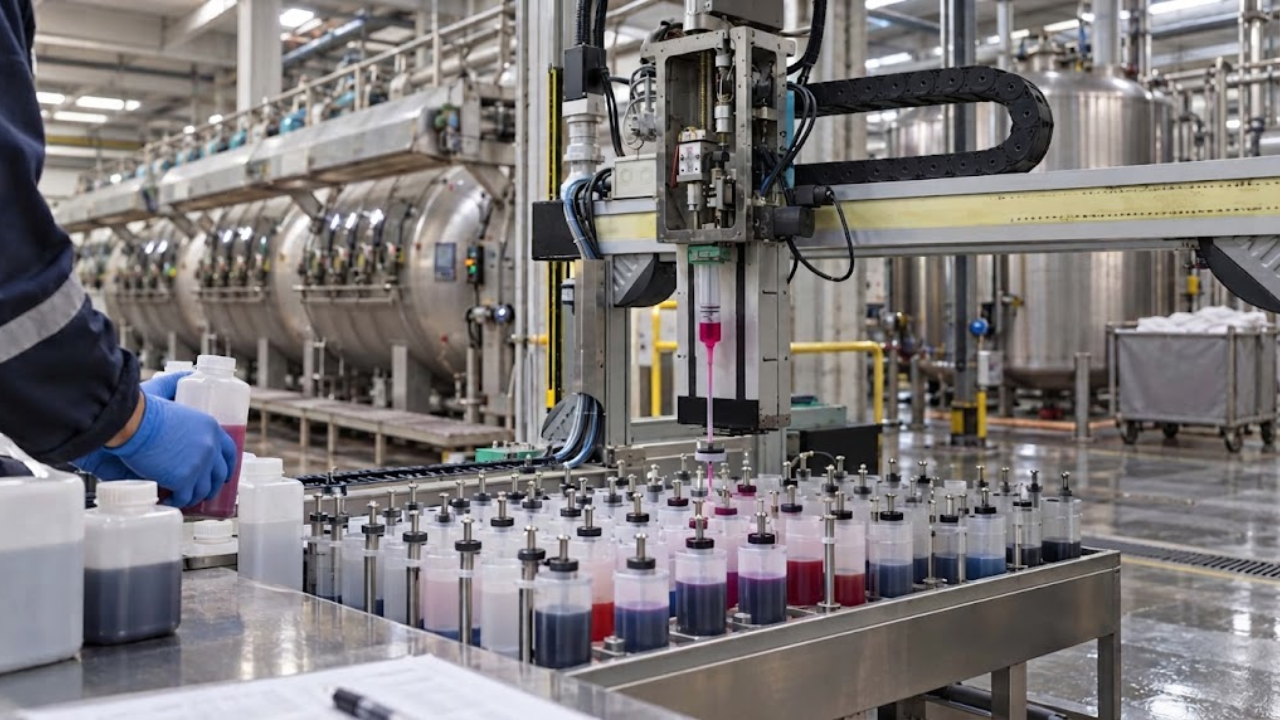
A certain textile factory in Turkey’s dyeing workshop needs to rapidly lower the temperature of the dye solution between batches to ensure color consistency. Chillerone provides a 12-ton packaged water chiller, which integrates a compressor, condenser, water tank, and water pump. It supplies 18℃ water for the dye vat heat exchanger and 23℃ return water, with a cooling capacity of 42.2 kW and a circulation flow of approximately 121 L/min. This packaged chiller operates continuously for 20 hours per day, effectively reducing the batch temperature difference, and the customer does not need to modify the original pipeline.
Continuous Cooling of Electrolyte Solution in Polish Electroplating Plant
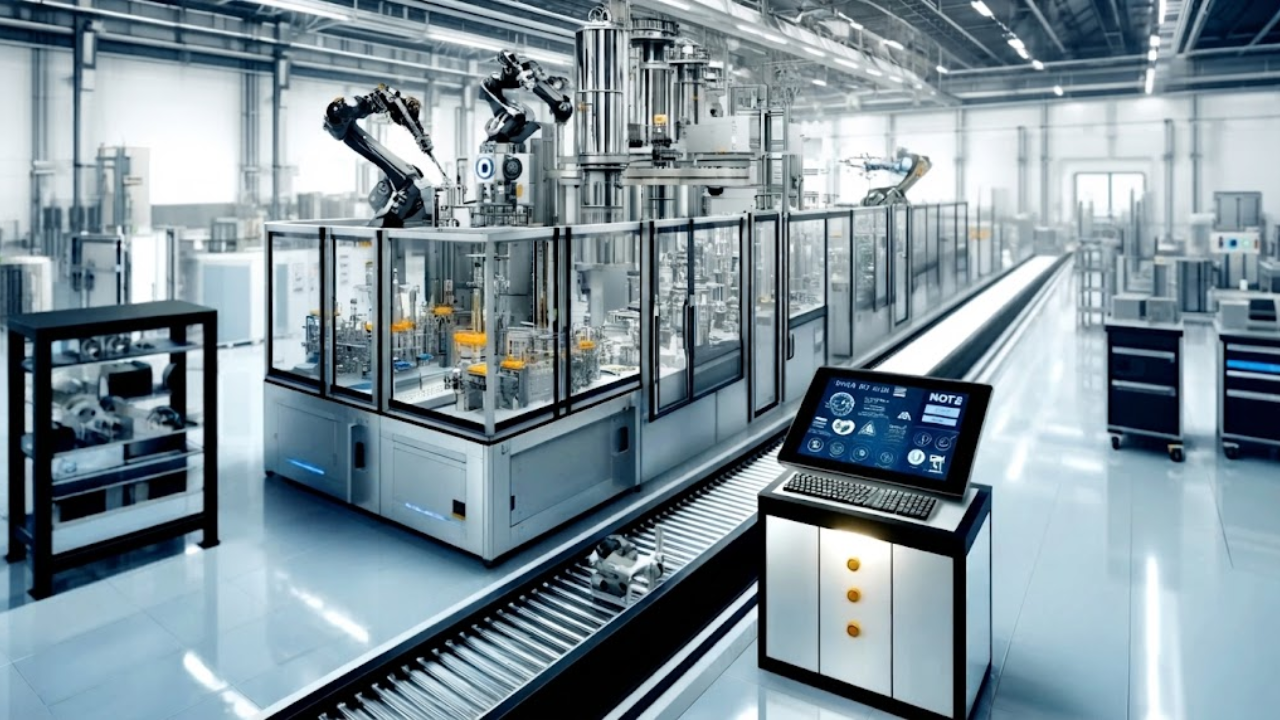
A certain metal electroplating plant in Poland continuously absorbs heat from the electroplating solution during continuous production. The temperature needs to be controlled within 24–28℃. Chillerone provides a 6-ton packaged water chiller, featuring a stainless steel waterway and anti-corrosion heat exchanger, to supply 20℃ chilled water and 24℃ return water to the solution. The cooling capacity is 21.1 kW, and it operates in three shifts continuously. The customer previously often asked about what chilled water is used for. This project proved that it is used to stabilize the solution temperature and ensure uniform coating.
Heat Load Control of Chemical Reaction Vessels in Saudi Arabia
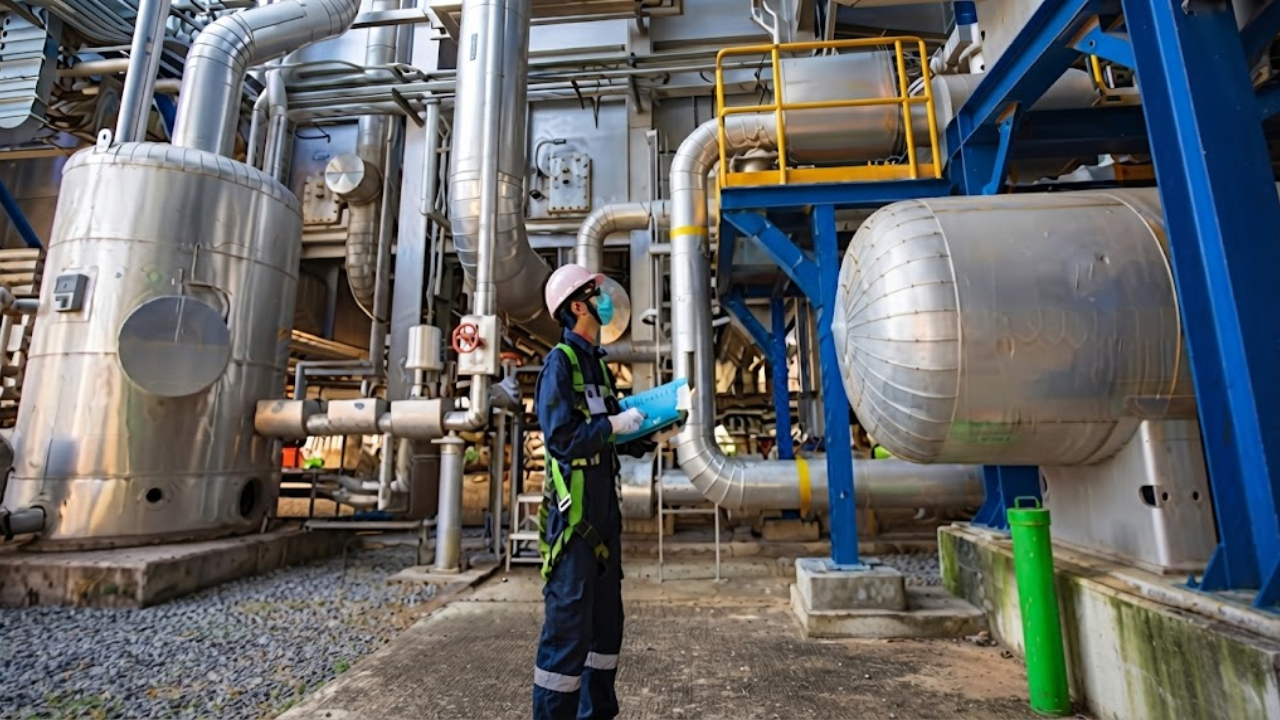
The reaction vessels in a certain chemical plant in Saudi Arabia have large heat release fluctuations and need to maintain the reaction temperature at 18–22℃, with the ambient temperature reaching 45℃ in summer. Chillerone provides a 40-ton packaged water-cooled chiller, equipped with a cooling tower, with a cooling capacity of 140.7 kW and a circulation flow of approximately 505 L/min. This unit operates continuously for 24 hours and effectively removes reaction heat. The customer often asks technical interview questions about water-cooled chillers during technical exchanges. This solution provides a practical answer.
Temperature Management of Printing Machines in the UK

A commercial printing factory in the UK has high-speed printing machines that generate a large amount of heat during long-format jobs, causing the temperatures of rollers and process fluids to fluctuate. Chillerone provided an 18-ton packaged chiller, which was used as a packaged water chiller to supply 16℃ water and 21℃ return water to the printing machines, with a cooling capacity of 63.3 kW and operating 22 hours per day. The independent closed-loop system ensures stable process water temperature and improves printing consistency. The customer has incorporated it into the standard configuration.


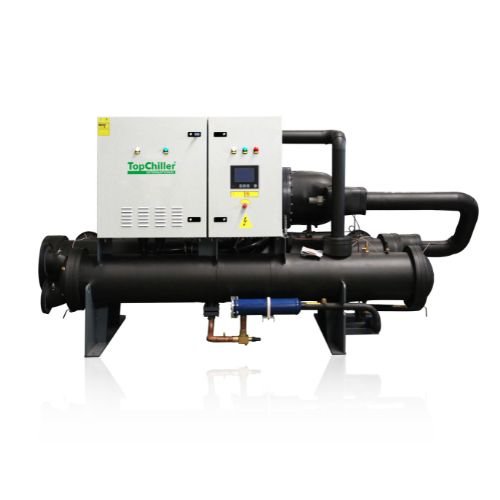

See the Packaged Water Chiller in Action
Watch how the packaged water chiller delivers stable temperature control, fast cooling response, and reliable performance in real industrial working conditions.
What is a Packaged Water Chiller?
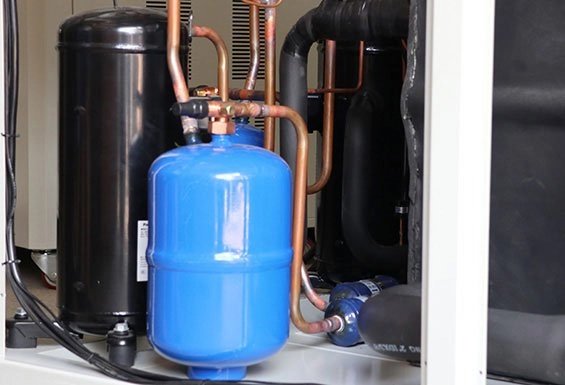
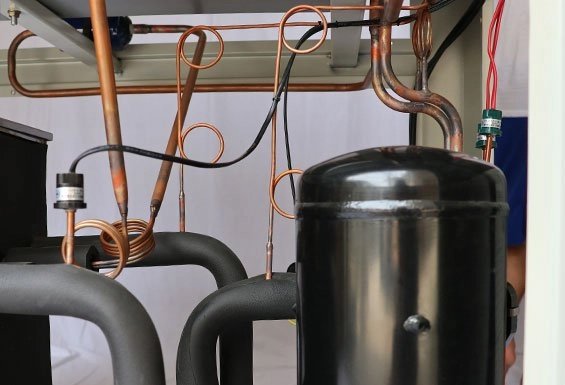
A packaged water chiller is essentially a refrigeration unit, a ‘plug and play’ type, which incorporates all components, including the compressor, condenser, water pump, water storage tank, and control system into a single unit or cabinet.
The various components are no longer something you have to coordinate. The complete system will work as is, right out of the factory, providing a constant supply of temperature-controlled cooling water for your process or equipment.
How does a Packaged Water Chiller Work?
Its principle is based on a vapor compression refrigeration cycle. That sounds very professional, but in fact, it can be simply understood as four constantly recurring steps.
Step 1: Evaporation – absorption of heat
The refrigerant enters the evaporator as a low-temperature, low-pressure liquid. While passing through the evaporator coil, it absorbs heat from process water. In other words, cooling starts from here.
Step 2: Compression – Raise temperature and pressure
Then, the gaseous refrigerant is drawn into the compressor. The compressor compresses it with the help of a motor into a high-temperature and high-pressure gas. This is the key to the whole refrigeration cycle.
Step 3: Condensation – Release the heat
Then, the high-temperature and high-pressure refrigerant enters the condenser. Depending on the type of chiller, it can dissipate heat through cooling water (water-cooled type). After the heat has been released to the outside, the refrigerant will condense into a medium-temperature and high-pressure liquid.
Step 4: Throttling – Re-prepare the refrigeration
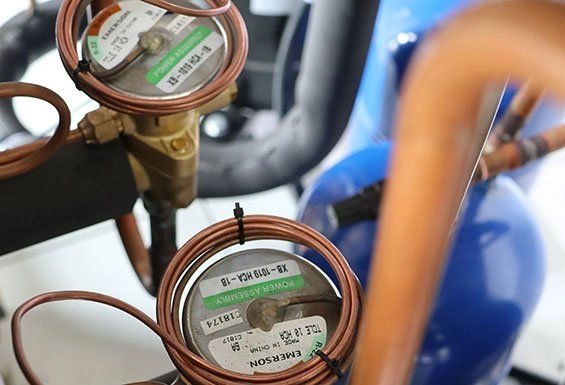
Finally, the liquid refrigerant passes through the expansion valve or capillary tube, and its pressure suddenly decreases and it becomes low-temperature and low-pressure liquid. It can then enter the evaporator to start a new round of heat absorption cycle.
Advantages of Packaged Water Chillers
Plug and Play
All internal pipe connections, refrigerant charging and functional tests of this equipment have been done before leaving our factory. When arriving at your site, it can be brought into operation almost immediately once we connect power supply and water circuit to it.
Highly Integrated
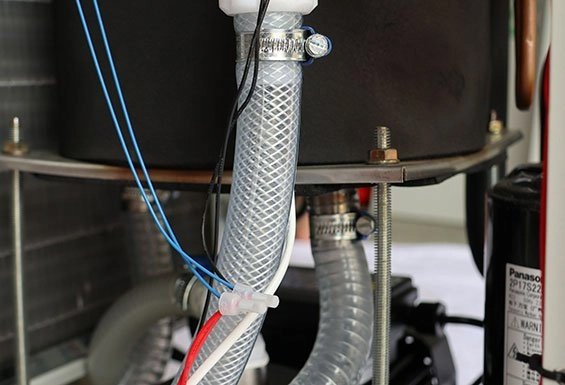
The compressor, condenser, evaporator, water pump, and water tank are all compactly installed in the same steel casing along with an electric control cabinet. A design such as this saves space but also reduces the possibility of installation errors.
Long-term Stable Operation
The average uptime of ChillerOne’s packaged water chillers in industrial environments can be up to 99.4%, which means you seldom have to worry about unexpected downtime.
Control preciso de la temperatura
The refrigeration system can achieve a temperature control accuracy of ±1° F. No matter how strict the temperature requirements of your process are, it can maintain firmly within the set range.
Corrosion-resistant and Durable
The body is made of galvanized and painted metal casing, which is strong, corrosion-resistant, and looks very professional. The evaporator section takes a fully insulated and corrosion-resistant stainless steel brazing plate structure, which can withstand complex working conditions for a long time.
Adapt to Various Temperature Changes
Whether you need near-freezing-point cooling water, face high reflux temperatures, or operate in high or low-temperature environments, it can maintain stable output and ensure the continuous high efficiency of the system.
Key Components of Packaged Water Chiller
High-Performance Compressor
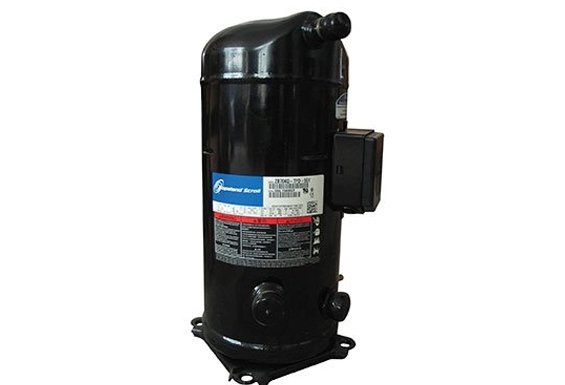
This whole machine adopts digital scroll or compresores de tornillo, with the advantages of stable output and high energy efficiency. According to different cooling capacity demands, the configurations are appropriately selected.
Each compressor supports variable capacity control to achieve soft start and stepped power regulation ranging from 25% to 100%, thus ensuring smoother start-up and lower energy consumption.
Sistema de control inteligente
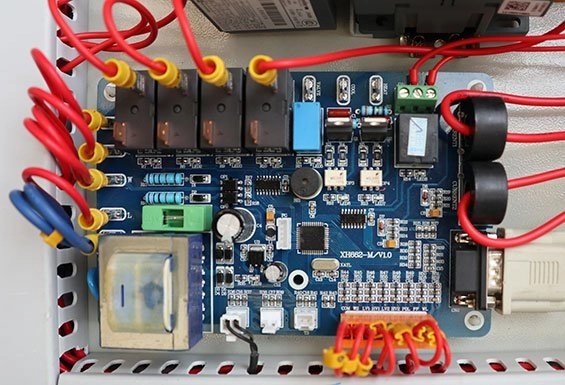
An open-source microprocessor control system, specially developed for the refrigeration and HVAC industries, is fitted on the equipment; this enables it to communicate well with either BMS or BAS. Whether it is on-site operation or remote monitoring, you can track the running status in real time.
High-efficiency Evaporator
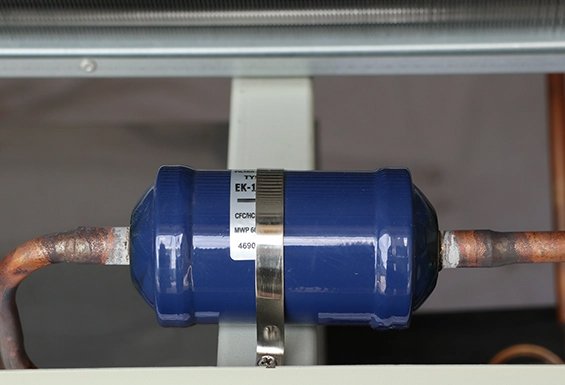
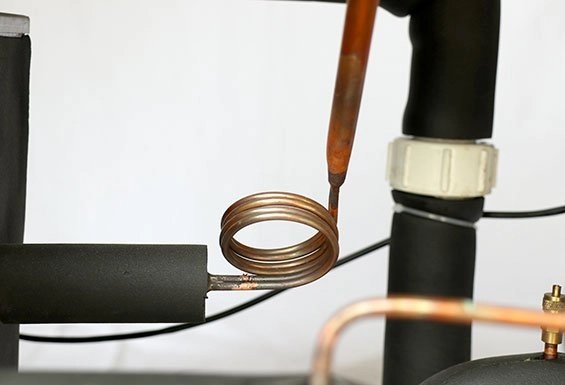
The evaporator is of a fully insulated, stainless steel brazed plate structure that is resistant to corrosion. It boasts high heat exchange efficiency, low scaling tendency, and long-time stability.
Compressor Protection System
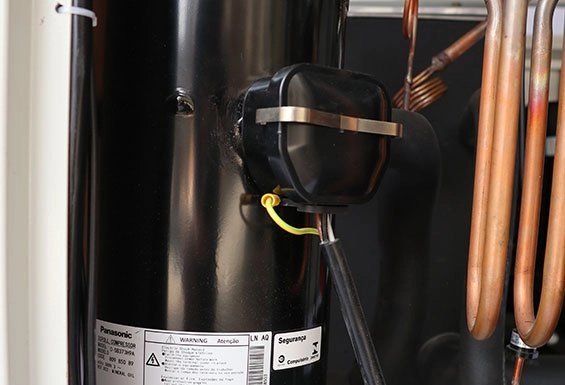
The chiller is fitted with a crankcase heater and an intake accumulator to prevent liquid hammer from causing damage to the compressor when the temperature is low or during shutdown. The phase monitor and electrical protection device can also perform automatic intervention in abnormal power supply conditions, further enhancing reliability.
Safety Anti-Freezing Design
Additionally, with an internal water flow switch and a hot gas bypass valve, it can act quickly in the case of pump failure or abnormal flow rate to prevent process fluid from freezing, ensuring system safety.
Condenser System
Optional high-efficiency shell-and-tube water-cooled condensers or rust-resistant, high-volume copper tube, and aluminum fin air-cooled condensers are available.
If your system needs to operate in high-salt or coastal environments, we can also provide dedicated Marine condensers made of anti-corrosion materials, which remain stable and reliable even after long-term operation.
Thermal Insulation and Structural Design
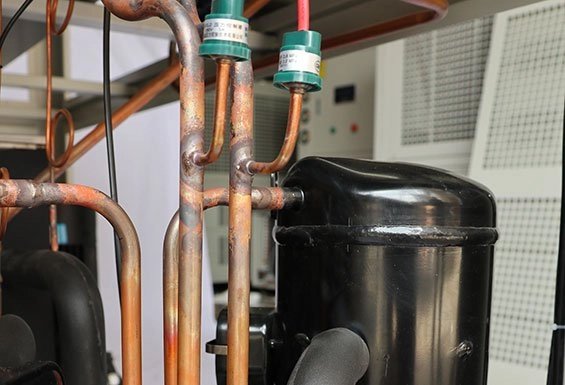
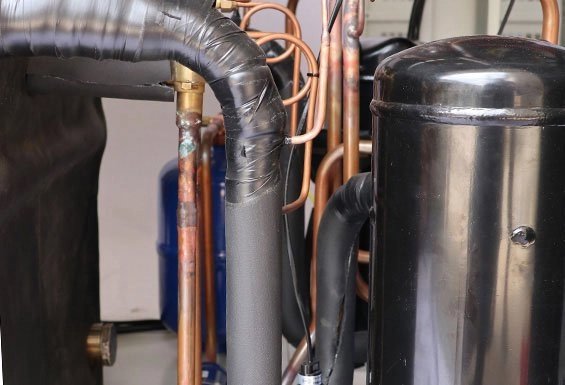
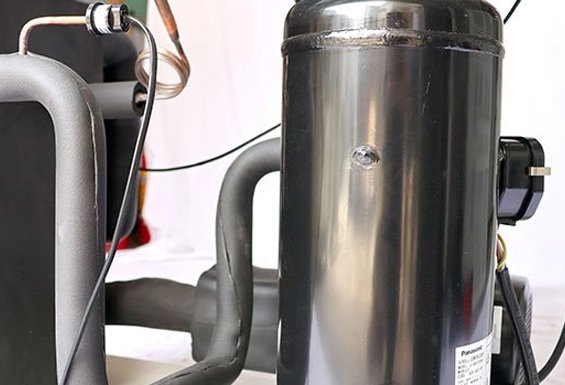
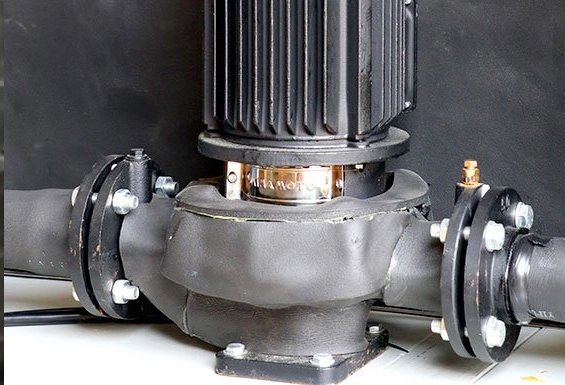
All the process pipes have been treated with insulation for maximum thermal efficiency. Meanwhile, Vibration isolators are mounted on the bottom of the compressor to effectively prevent operating noise and vibration from transferring.
Customization Options for Packaged Water Chillers
Each project has different working conditions, so ChillerOne offers various optional configurations to let you freely customize system performance according to on-site requirements.
Válvula de expansión electrónica (EEV)
You can also opt for an electronic expansion valve if you are pursuing higher energy efficiency and more stable temperature control performance. It accurately adjusts the flow rate of the refrigerant during every cycle of refrigeration to make the process more even and controllable.
Electrical System Upgrade
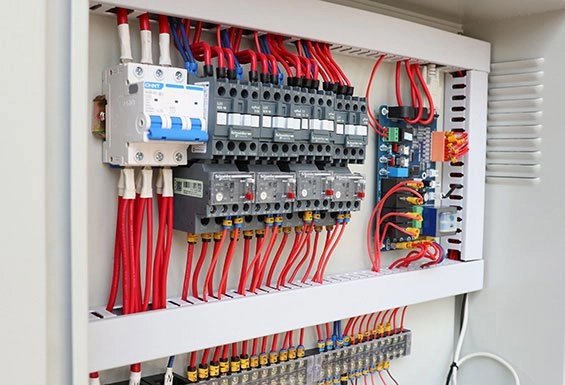
We can add in compressor fuses, circuit breakers, and circuit protection devices for you to ensure the equipment still operates safely in the event of electrical load fluctuations or short circuits.
Multiple Pump Configurations
According to the required flow and pressure, each pump can be made of stainless steel with different specifications, designed by standards with a sturdy structure, corrosion resistance, and adaptability to various water quality environments.
Upgrade of Fluid Pipeline
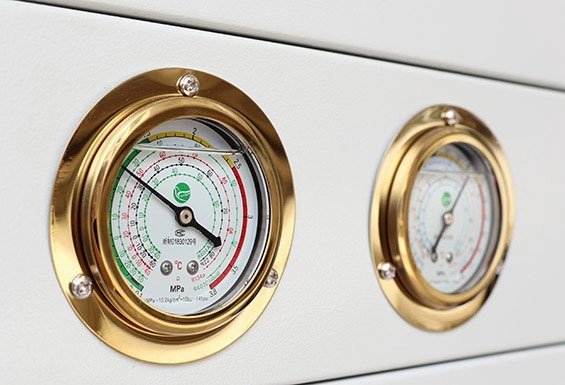
Optional flow meters, pressure gauges, and low-flow bypass valves provide for accurate monitoring of the operating status of the system, hence making it easier for you to control fluid circulation.
Condenser Water Pressure Regulating Valve
In the water-cooling systems, if there is a regulating valve optionally equipped for condenser water pressure control, it maintains the optimal operating pressure and heat exchange efficiency under different ambient temperatures or flow rates.
Classification of Packaged Water Chillers
When you go to select a packaged water chiller, you may find many kinds in the market. In fact, chillers can mainly be classified from two perspectives: the type of compressor and the circuit structure. Different configurations mean different installation methods, energy efficiency performances, and maintenance requirements.
By Compressor Type
A compressor can be thought of as the “heart” of a chiller, and different types will affect the overall performance and energy consumption.
- Piston compressors: The main drawback is that they are relatively noisy, vibrate a lot, and their overall energy efficiency is merely average. They are mainly used in small units or older ones.
- Compresor scroll: This is currently the most common configuration. If you are concerned about stability and energy-saving effect, the compresor scroll will be usually a good choice. It runs smoothly in operation with low noise, and can flexibly adjust the load in the range of 10% – 100%. It is applicable to small and medium-sized air-cooled and water-cooled units.
- Compresores de tornillo: They are more fitted for large-scale refrigeration tasks. It has a compact structure with high energy efficiency and long service life, thus highly suitable for industrial applications that require continuous operation.
By Circuit Structure
Single-loop Chiller
This model structure is relatively simple because it contains only one set of compressors, evaporators, condensers, and expansion valves. If your cooling requirements are relatively fixed, a single-loop machine is sufficient. But when operating at partial load, its efficiency will decline and frequent starts and stops may increase energy consumption or wear.
Dual-loop Chiller
If you want the equipment to keep running without shutting down, a dual-loop design will bring more advantages. It integrates two independent refrigeration systems in the same chassis, sharing the water tank, water pump, and electrical control system. Even if one of the circuits malfunctions, the other can still keep operating, and the cooling capacity is never interrupted. This is very popular in industries with very high requirements for continual production.
Key Parameters of Packaged Water Chiller
The most important thing you should pay attention to in choosing a packaged water chiller is its core performance parameters. There are figures such as the cooling capacity, temperature control accuracy, flow rate, head, and power. Although these figures may be simple, they directly determine the stability and energy efficiency performance of the equipment. The following table can help you quickly understand the main technical indicators and provide a reference for subsequent selection.
| Parameter Category | Parameter Description | Notas |
| Capacidad de refrigeración | Indicates the chiller’s refrigeration capability under rated operating conditions, serving as the core metric for model selection | Standard Models: Outlet Water Temperature 5°C ~ 35°C Low-Temperature Models: Minimum achievable temperatures of -5°C, -20°C, or -40°C |
| Precisión del control de temperatura | Reflects the stability of the chiller’s control over outlet water temperature. Higher accuracy results in smaller temperature variations | ±1°C (Standard Type) ±0.5°C (High-Precision Type) ±0.1°C (Ultra-High-Precision Type) |
| Caudal | The volume of water passing through the chiller per unit time, typically related to system load and heat exchange efficiency | Customized based on application requirements (Unit: L/min or m³/h) |
| Head | The maximum height a pump can overcome pipeline resistance and maintain system circulation | Typically ranges from 15 to 35 meters, configurable based on system pipeline length and elevation difference |
| Fuerza | Total power consumption encompassing the compressor, motor, water pump, and fan, reflecting the overall energy usage of the unit | Ranges from several kilowatts to hundreds of kilowatts, depending on the cooling capacity and model specifications |
How to Install a Packaged Water Chiller?
The installation of a packaged water chiller is not complex, but details determine performance. As long as you follow the steps below, it’s possible to get the device into a stable working state more quickly.
Step 1: Check the Installation Environment
First, confirm whether the on-site conditions are suitable before the formal installation.
Ensure that the space is large enough. The amount of maintenance space to leave around the unit is at least 0.8 to 1 meter to facilitate later inspection and cleaning.
The environment should be kept well-ventilated, dry, and dust-free; the ambient temperature should be between 5°C and 40°C.
Check the ground for evenness and solidity; it should support the weight of the whole machine during operation.
Step 2: Connect the Pipelines
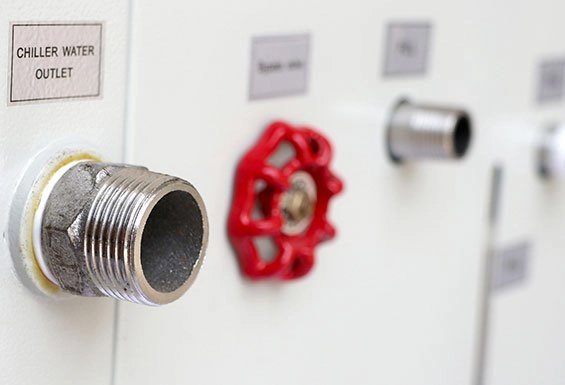
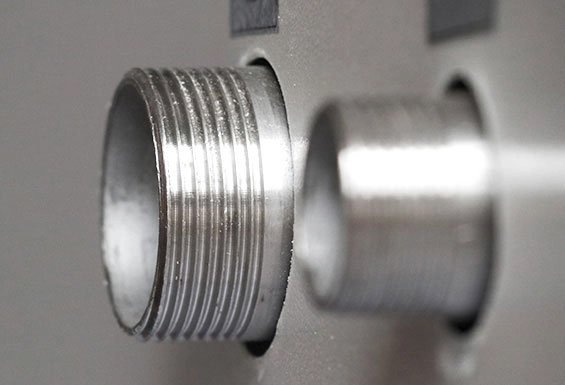
In accordance with the markings on the body of the machine, correctly connect the water inlet and outlet, and install isolation valves at each interface. All water piping must be properly insulated in order to minimize cold loss and prevent condensation.
Step 3: Electrical Wiring
Electrical connections should be done by a qualified electrician. Prior to use, please confirm that the voltage, frequency, and other parameters indicated on the nameplate conform to the power supply at the site, and the safety protection equipment is properly worn.
Step 4: Liquid Injection and Exhaust
Open the water tank or the water filling port, and add the circulating medium of the specified type. Then start the water pump and open the exhaust valve to completely expel the air in the system. When a steady flow of water is seen flowing out of the exhaust valve, close the valve.
Step 5: Startup and Debugging
Power can be applied to start after confirming that the electrical, pipeline, valve, and other connections are correct.
First, during the operation, you can pay attention to whether there is any abnormal noise or vibration of the equipment, and observe at the same time if the outlet water temperature and exhaust pipe temperature are within the normal range. If everything is normal, it indicates that the chiller has been in good working condition.
How to choose a Packaged Water Chiller?
Before buying a packaged water chiller, don’t hurry to look at the parameter table. First of all, you need to figure out what problem you want to solve. Different processes have different requirements for temperature, flow rate, and even the structure of the machine type. To lock in an appropriate model, you first need to go through the following steps.
Identify Your Cooling Needs
First, determine what kind of equipment you want to cool and the range in temperature it needs along with the water flow rate. As an example, plastic mold temperature control is usually in the 5°C to 25°C range; laser equipment and chemical reaction vessels need more precise or even lower temperature control. According to these data, you can refer to the key parameter table of the chiller to quickly filter out the model that meets the cooling capacity and accuracy requirements.
Choosing the Right Setup
Next, it depends on the configuration. According to the application environment of your site, determine whether to use an air-cooled or water-cooled structure. If there is a shortage of water in your area or the installation space is limited, air-cooled types are usually more convenient. However, if you are pursuing the goal of energy efficiency and long-term stable operation, then water-cooling type will suit you better.
Moreover, you can also customize the compressor brand, pump body material or control system according to your needs. ChillerOne offers a variety of configuration options. Whether you are concerned about corrosion resistance, temperature control accuracy or overall energy efficiency, you can find a match.
Professional Packaged Water Chiller Manufacturer in China
ChillerOne is a Professional Packaged Water Chiller Manufacturer in China. We pay close attention to ensuring that our operations supply the global customer base with efficient, reliable packaged water chiller solutions. Whether plastic molding, laser welding, or any other industrial application calls for close temperature control, we’re flexible regarding your equipment needs.
If you’re seeking a packaged water chiller truly tailored to your specific operating conditions, feel free to contact ChillerOne at any time. Our technical team offers 24/7 services from model selection and design to delivery and installation. We ensure every unit operates reliably on-site.


 Spanish
 English
 Arabic
 Vietnamese

