

International Brands We Collaborate With


Features of Brewery Glycol Chillers
- Apply food-grade propylene glycol mixed with water that contains corrosion inhibitors as a coolant.
- Precise temperature control with a range as small as ±1°.
- Digital controllers and microprocessors are used for setting and maintaining stable fermentation temperatures.
- Can rapidly drop the beer temperature close to the freezing point within several hours.
- High fluid flow ensures maximum heat transfer.
Types of Glycol Chillers by Cooling Method
Chillers can be divided into Air-Cooled Chillers and Water-Cooled Chillers according to different cooling methods. The brewery glycol chillers can also be categorized into these two main kinds.
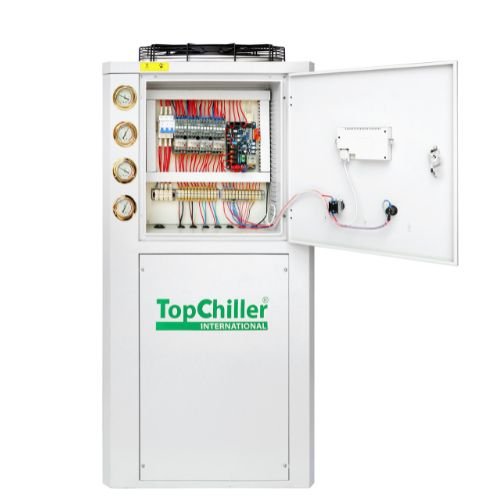
Air-cooled chillers are widely used in breweries because they utilize the surrounding air for heat dissipation, eliminating the need for complex cooling towers and saving space and water resources. They have simple structures, low maintenance costs, and easy installation. However, the efficiency of air-cooled chillers depends on their temperature. Air-cooled chiller operates best between 10 °C – 32 °C (50 °F and 90 °F), so they are not suitable for extremely hot environments.
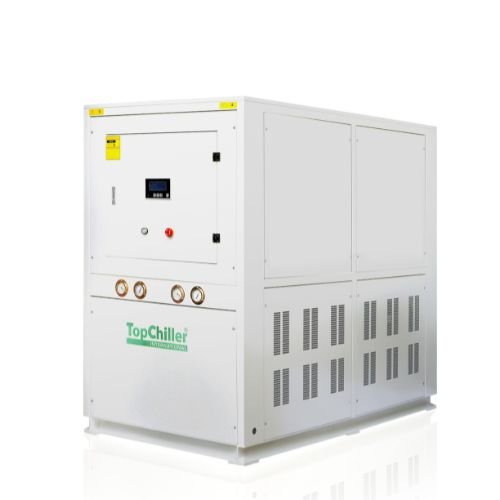
Water-cooled chillers are also welcomed in breweries. They handle heat through cooling towers and pumps. Compared to air-cooled chillers, water-cooled chillers have a longer service life and higher efficiency, especially in warmer climates, but the initial installation cost is higher.
Types of Glycol Chillers by Configuration and Scale
If categorized by configuration and scale, the following glycol chillers can also be applied in breweries.
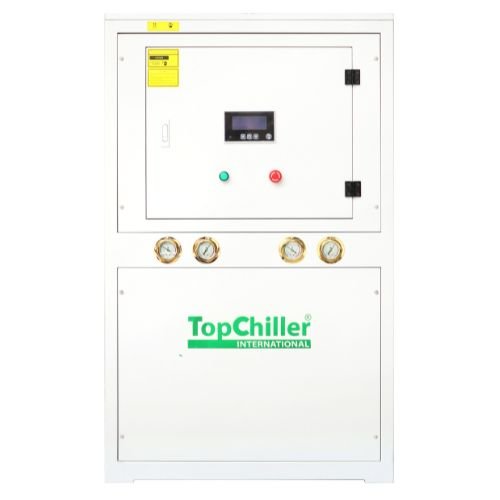
A single-stage glycol chiller is composed of a compressor, condenser, and evaporator. It can achieve simple and stable cooling effects with just one compressor, which is less complex and has a lower initial cost.
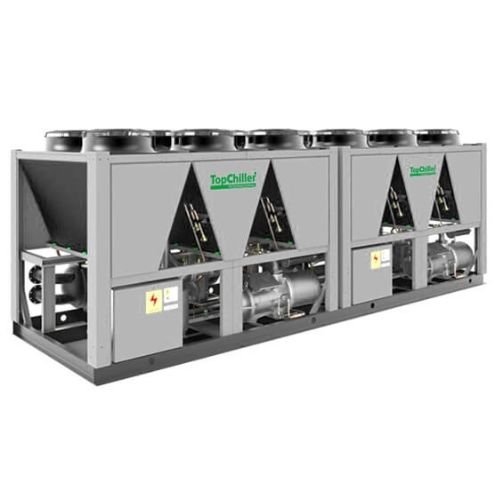
A multi-stage (also called modular/two-stage) glycol chiller uses multiple compressors or multiple stages, featuring higher energy efficiency, better temperature control capabilities, especially suitable for load variations or low-temperature conditions, scalability, and the ability to achieve redundancy by cooling in stages as needed. However, it is more complex and has a higher initial cost.

The modular glycol chiller designed for breweries can be flexibly expanded with additional cooling modules as the brewery’s scale increases. It typically consists of independent components like coolers, storage tanks, and pumps to enhance flexibility.
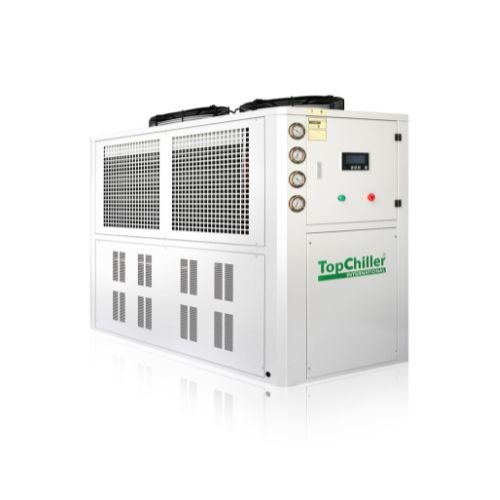
Packaged chillers for breweries integrate all the cooling equipment into a single chiller unit, including storage tanks and pumps. It can be installed outdoors, thus saving indoor space, but the heat is dissipated indoors and is directly discharged into the workshop, which can significantly increase the indoor temperature.

Split chillers for the brewery install the heat dissipation part outdoors, while keeping the refrigeration pump and the propylene glycol storage tank inside the brewing workshop. The condensation unit directly utilizes the ambient air for heat dissipation outdoors, resulting in higher efficiency.
Reliable Certification
Manufactured under international quality rules, these certified units ensure safe, pollution-free operation for long-term brewery production.


Brewery Glycol Chillers Uses
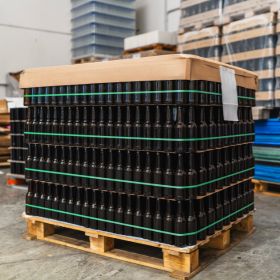
Brewery glycol chillers ensure that the beer remains chilled throughout the process long-distance transportation. The farthest distance can be up to 450 feet. Therefore, brewery glycol is essential in a long-distance transportation system (usually used in large bars, restaurants, and breweries).
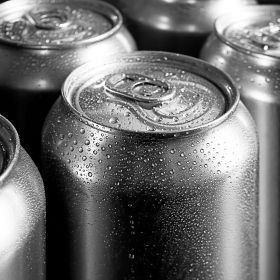
Brewery glycol chillers can cool beers rapidly and steadily from the fermentation temperature to a temperature close to the freezing point (usually 0 °C -4 °C) within several hours to one day. This process quickly terminates the fermentation, promotes the sedimentation of yeast and impurities, and stabilizes the flavor of the beer.
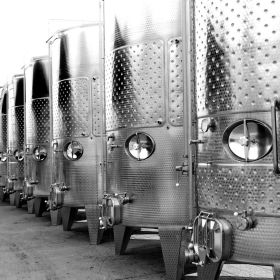
Brewery glycol chillers can work with cold liquor tanks. When electricity prices are low or cooling demands are low, a large amount of cold water is prepared and stored in advance for use during peak production periods, thereby significantly reducing energy consumption costs, enhancing the response speed of the cooling system and overall efficiency.
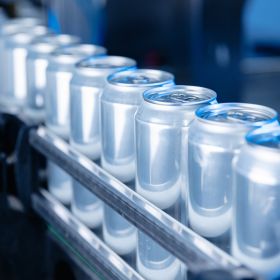
In the brite tanks and packing, brewery glycol chillers ensure the smooth operation and provide a continuous, stable and precise low-temperature environment.
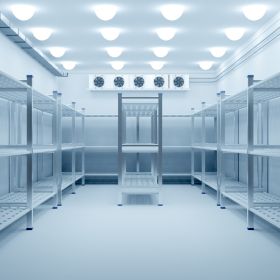
Brewery glycol chillers can provide a reliable, safe and centrally controllable cold source for cold storage, ensuring the stable quality of beer in the final stage before leaving the factory. They are the preferred solution for modern breweries in the construction of cold storage.
See the Brewery Glycol Chillers in Action
Watch how the brewery glycol chillers delivers stable temperature control, fast cooling response, and reliable performance in real industrial working conditions.
Why Do Breweries Need Glycol Chillers?
When brewing beer, the fermentation generates heat, which can lead to undesirable flavors (such as fusel oil or excessive ester substances). Brewery glycol chillers (also beer glycol chillers) can not only significantly reduce the temperature of the product in a short period of time, but also maintain a stable temperature during the fermentation process, ensuring the yeast works efficiently at a specific temperature, thus excellently storing the beer.
Brewery Glycol Chillers Operating Principles
Knowing how does a glycol chiller works helps you more clearly decide whether you need a beer glycol chiller or not. Berwery glycol chillers use a mixture of water and glycol as a coolant to lower the temperature. Usually, the glycol refers to propylene glycol here instead of toxic ethylene glycol. The whole working principle can be broken down into two separate but interconnected cycles: the refrigerant cycle and the glycol solution cycle.
- Refrigerant Cycle
The refrigerant cycle includes four main components: compressor, condenser, expansion valve, and evaporator. The gaseous refrigerant is compressed into a hot and high-pressure gas by the compressor, and condenses into a medium-temperature and high-pressure liquid by the condenser. Then the high-pressure liquid refrigerant flows through the expansion valve and turns into a misty mixture of low temperature and low pressure. The refrigerant evaporates into a gas, which requires absorbing a large amount of heat from the circulating glycol solution. Finally, the gas returns to the compressor and begins the next cycle.
- Glycol Solution Cycle
The glycol solution cycle includes four steps.
- The glycol solution exchanges heat with the refrigerant at low temperature, and the temperature is rapidly reduced (usually set at around -3°C to -7°C).
- The low-temperature glycol solution is transported through insulated main pipelines to all of the brewery, and is connected to the jacket inlet of each fermentation tank and conditioning tank.
- When the temperature of the beer in the tank is higher than the set value, the valve opens and the low-temperature glycol flows into the jacket of the tank. The heat from the beer is transferred through the tank wall to the colder propylene glycol solution, and the beer is cooled.
- Finally, the glycol solution that has absorbed heat and has a temperature that has risen (possibly up to 5°C or higher) flows back to the return liquid main pipe through the outlet of the jacket, and is pumped again to the evaporator for cooling.
Brewery Glycol Chillers Advantages
- Control fermentation temperature
Brewery glycol chillers can set and maintain the fermentation temperature, which can promote the healthy activity of yeast, and help craft the ideal flavor. Chillerone glycol chillers always maintain a premier temperature, whether for a Belgian Tripel that needs a higher fermentation temperature, or a Lager that slowly ferments at low temperatures.
- Stable quality
Good quality control is essential for maintaining customer satisfaction. Brewery glycol chillers eliminate temperature fluctuations, making it easy for you to replicate the brewing conditions and maintain a stable quality. This is also greatly helpful on a large production scale.
- Precise control
Chillerone brewery glycol chillers can adapt to a temperature range as small as ±1°, achieving a very precise control.
- Efficient heat transfer
The propylene glycol we used has excellent thermal conductivity, ensuring the chillers’ operating effectiveness.
- High energy efficiency
Brewery glycol chillers concentrate the scattered cooling demands to avoid equipment redundancy and recover the process waste heat to reduce the total energy consumption. Besides, chillerone glycol chillers optimize the system hardware and operation strategies to ensure that the equipment always operates within the efficient range and achieves the hierarchical utilization of energy.
- Resistance to frost
The freezing point of the glycol is lower than that of water (the freezing point of pure propylene glycol is -74.2°F). Therefore, this solution remains in a liquid state below zero, providing efficient and stable cooling capabilities.
- Bacteriostat
The glycol has a certain antibacterial effect and can inhibit the growth of microorganisms in pipelines and storage tanks.
- Corrosion protection
Chillerone applies food-grade propylene glycol for brewery glycol chillers, which contains corrosion inhibitors, protecting your equipment from rusting and wear, and extending the service life of the chiller.
- Environmental protection
The propylene glycol we applied is far less harmful to the environment than ethylene glycol, so it’s a more environmentally friendly option.
Tips for Using Brewery Glycol Chillers
- The temperature range and the glycol and water ratio should be proper, or the glycol in the system may freeze. Insufficient dosage of propylene glycol will reduce the anti-freezing performance, while excessive dosage will decrease the heat transfer efficiency. The typical ratio of propylene glycol to water is 60/40, but it may vary depending on the system specifications and local climate.
- Before using the glycol, please check whether it is of USP grade. Glycol provided by Chillerone surely conforms to United States Pharmacopeia (USP) grade, contains inhibitors, and has been recognized as safe by the United States Food and Drug Administration (FDA).
- Glycol is inflammable, so it’s important to follow the safety precautions. Our experienced team will provide a complete security manual for you to refer to.
- Glycol will degrade and the corrosion inhibitor will also lose its effectiveness, so it’s important to regularly inspect the glycol storage tank to ensure the correct liquid level and that the liquid is clean.
- Conduct a comprehensive inspection of the system once a year, which includes checking the operation of the pumps, pressure settings, flow rates, as well as the integrity of the hoses and connections.
How to Estimate a Suitable Brewery Glycol Chiller Cooling Capacity?
To calculate the cooling capacity you need, three figures are the key points:
- Total volume of beer: All fermentation tanks and fermentation tanks that require simultaneous cooling should be included.
- Temperature difference: The difference between the initial temperature before cooling and the final temperature after cooling.
- Cooling time: The total duration allowed for reducing the temperature of beer from its initial temperature to the target temperature.
Required cooling capacity (kW) = Beer volume (kg) × Beer specific heat capacity (approximately 4.0 kJ/kg·°C) × Temperature difference (ΔT) / Cooling time (hours) × 3600
Do not forget to multiply the above total by a safety factor of 1.3 to 1.5 as a safety margin.
Usually, a 5000 to 15,000 BTU (British Thermal Unit, which represents the cooling capacity) range is suitable for small and medium-sized breweries. Larger-scale breweries may need glycol chillers for more than 20,000 BTU.
If you are not sure about this, feel free to consult our chiller professionals!
How to Choose a Reliable Brewery Glycol Chiller Supplier?
When choosing a brewery glycol supplier, you can comprehensively consider its product quality, industry expertise and experience, and customer support.
Why Choose Chillerone?
Chillerone is a reliable partner that can stand your examination.
- Superior refrigerating fluid: We use superior propylene glycol (as we have proposed above), ensuring the quality and durability of the chillers.
- Precise and efficient: Chillerone uses high-efficiency compressors and optimizes heat exchange design, combined with intelligent control, significantly reducing energy consumption.
- Sturdy and durable: Our core components of glycol chillers are made with industrial-grade brands, ensuring continuous and stable operation.
- Flexible services: We provide complete pre-sale and post-sale services. Our price is competitive, and we can customize procurement schemes according to your production scale.
- Reliable custom supplier: We have cooperated with lots of companies and breweries. Our prompt response services have achieved many favorable receptions.
In most cases, glycol refers to ethylene glycol, but in a brewing system, the glycol refers especially to propylene glycol, and it must be food grade, because ethylene is toxic. Besides, the propylene glycol used usually contains corrosion inhibitors to improve the durability of the chiller.
The initial purchase price of a glycol beer chiller can range from $2,000 to $10,000, influenced by the size and complexity of the brewery glycol chiller. Except for the initial cost, there are also operating costs, which include electricity, water and maintenance expenses.
When selecting a brewery glycol chiller, you need to comprehensively consider its cooling capacity, type, durability and cost. The fastest way is to connect with us and get some professional advice!
To inspect and maintain brewery glycol chillers, you can
- Regularly monitor the cooling water to ensure it is sterile, the pH value is normal, and the content of chemicals is appropriate.
- Regularly clean the condenser and heat exchanger to prevent the formation of deposits.
- Check the flow and pressure monthly.
Usually, a brewery glycol chiller can last for 15 to 20 years, but its life span is influenced by the maintenance and operating conditions.
Theoretically, brewery glycol chillers should be placed in shaded areas, so it is better to place them indoors. However, some brewery glycol chillers are especially designed for outdoor use. If you have such requirements, contact us, and we will recommend ideal outdoor glycol beer chillers for you.
As an experienced manufacturer of chillers, Chillerone offers a complete temperature control solution. We specialize in designing and manufacturing high-performance and highly reliable brewery glycol chillers. Our fermentation chiller system features food-grade safety design and efficient energy-saving technology, ensuring that every bottle of beer can be properly matured under the ideal temperature curve from the intense primary fermentation stage to the precise cold storage phase. If you are still looking for a reliable partner, why not have a relaxed chat with us?


 English
 Spanish
 Arabic
 Vietnamese

