


International Brands We Collaborate With


Features of ChillerOne Chocolate Production Chillers
- ChillerOne chillers for chocolate production with cooling capacity up to 100 tons.
- The temperature control range is from -15°c to 15°c, suitable for many types of your chocolate production machines.
- We use high efficiency compressors from world famous brands.
- Our chillers are equipped with microprocessor based temperature controllers for precise cooling regulation.
- You can enjoy a 24 months warranty after purchase.
ChillerOne — Professional Chocolate Processing Chillers Supplier
ChillerOne ‘s chillers for chocolate production are crafted from food grade stainless steel. Equipped with a rotary compressor and air cooled/water cooled condenser, it delivers prompt and efficient cooling performance for you. They are ideal not only for chocolate processing but also for soap production, candy manufacturing, and other applications. You can enjoy 24 months’ warranty after the purchase. Contact us today for a quote.
Benefits of Using Chillers in Chocolate Production

The chillers in chocolate production can extend the lifespan of chocolate making equipment. By preventing high operating temperatures from causing component aging or wear, it significantly reduces thermal stress on machinery during production. This prolongs equipment longevity and saves you the cost of repairs or replacement parts.

The benefits of using chillers in chocolate production also include boosting your manufacturing efficiency. As mentioned earlier, they enhance molding success rates through consistent, stable cooling and timely temperature reduction, thereby minimizing waste and enabling faster, higher-quality chocolate production.

ChillerOne chillers are equipped with temperature displays and control panels, enabling real time monitoring of circulating water temperature with control accuracy of approximately ±0.5°C. The intuitive interface allows operators to easily set parameters and respond quickly to temperature fluctuations.

Chillers help your chocolate form stable Type V crystalline structures. This structure not only ensures superior flavor but is also important for long term chocolate storage. These crystals prevent white bloom from appearing during extended storage and inhibit the oxidation or migration of fats within the chocolate, thereby extending its shelf life.
Reliable Certification
With valid ISO and CE credentials, these chillers maintain consistent temperature and fully meet global requirements for food-grade chocolate manufacturing.


Types of Chillers For Chocolate Production
Actually, both water cooled and air cooled chillers of ChillerOne can achieve a cooling capacity range of 5 to 100 tons and a temperature control range of -15°C to 15°C. Their difference mainly lies in the type of cooling medium used.
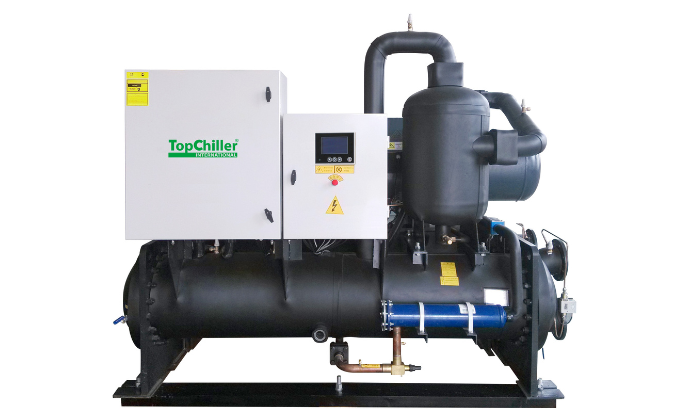
Water cooled chillers for chocolate production use water as a heat transfer medium to absorb heat from the refrigerant. During operation, the circulating water from the chocolate production line first undergoes heat exchange within the evaporator. The refrigerant then circulates to the condenser, where it comes into contact with cooling water to condense before returning to the evaporator.
Due to their operational mechanism, water cooled chillers require an additional cooling tower to lower the temperature of the cooling water. Therefore, sufficient space must be left for the cooling tower before installing the water cooled chiller. Water’s high thermal conductivity enables water cooled chillers to achieve more efficient cooling performance, making them suitable for your larger scale chocolate production lines.
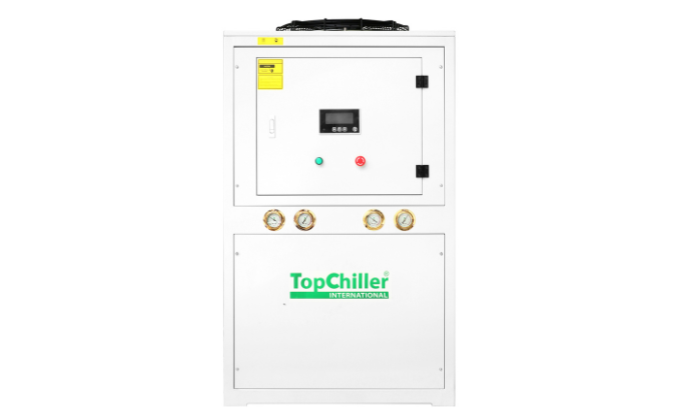
The heat transfer medium for air cooled chillers used in chocolate production is the air surrounding the machine. Its operating principle is similar to that of water cooled chillers, except that when the refrigerant gas reaches the condenser. the fan located within the condenser will assist the refrigerator in dissipating its heat into the surrounding air, then condensing into liquid.
Compared to water cooled chillers for chocolate production, air cooled chillers occupy less floor space since they do not require cooling tower installation. However, due to air’s lower thermal conductivity compared to water, air cooled chillers have limited cooling capacity. Therefore, if your budget or space is limited, or your production scale is smaller, air cooled chillers for chocolate production may be a more suitable choice.
See the Chocolate Production Chiller in Action
Watch how the chocolate production chiller delivers stable temperature control, fast cooling response, and reliable performance in real industrial working conditions.
Why Does The Chocolate Production Process Require a Chiller?
As you know, temperature is a key factor to the successful processing of chocolate. The right temperature promotes proper crystallization, ensuring chocolate achieves ideal fluidity, glossy appearance, and smooth texture. Most importantly, all of these characteristics bring chocolate’s rich, velvety mouthfeel.
In this process, the role of the cooling machine cannot be overlooked. It continuously regulates temperature throughout the production flow, providing stable and consistent heat dissipation for chocolate production equipment. Through heat exchange, it indirectly controls the chocolate’s temperature, preventing crystallization failures and other issues caused by excessive heat. This ensures chocolate production proceeds efficiently and smoothly.
Chiller Working Principle in Chocolate Production
In fact, chillers do not come into direct contact with the chocolate during production. Instead, they absorb and dissipate heat from the equipment through a continuous circulation of water or, thereby achieving cooling and precise temperature control.
Circulating Water Removes Heat From Chocolate Production Equipment
The first step in the operation of the entire cooling system during chocolate production involves circulating water to remove heat generated by equipment operation. This water undergoes heat exchange within the chiller to facilitate cooling and temperature reduction, thereby maintaining the equipment within a stable temperature range.
Chiller Cooling Cycles
Next, the chiller achieves cooling through the continuous circulation of refrigerant. First, the refrigerant indirectly contacts the circulating water within the evaporator for heat exchange, absorbing heat and vaporizing. Subsequently, it passes through the compressor, condenser, and heat transfer medium (water or air) to release heat, condensing back into a liquid and returning to the evaporator. This completes one cooling cycle after another.
Low Temperature Circulating Water Output
After cooling, the chilled circulating water is discharged from the chiller system and returns to the chocolate production line, continuously absorbing heat from the equipment.
Functions Of Chillers for Chocolate Production
Maintain Stable Temperatures of Chocolate Production Devices
Circulating water can efficiently dissipate the heat generated during chocolate production equipment operation, effectively preventing equipment overheating that could affect chocolate consistency and properties. It also prevents excessive temperatures from causing wear or other damage to the equipment.
Indirectly Control the Chocolate Temperature
Throughout the entire cooling process, although the cooler does not come into direct contact with the chocolate, it indirectly influences and regulates its temperature. Circulating water, heat exchangers, and jackets collectively serve as the medium for heat transfer. Then, it cooperates with the cooling tunnel and tempering machine to ensure the chocolate crystallizes smoothly into the desired state.
Consequently, chocolate undergoes no drastic temperature fluctuations during production. Instead, it maintains a stable or gradually changing temperature curve, thereby preventing abnormalities in processes such as tempering and molding.
Ensure Hygiene and Safety in Chocolate Production
Meanwhile, when the cooling system operates for the chocolate production line, the entire water circulation process remains fully enclosed. It does not come into contact with the external environment, thereby minimizing contamination from foreign particles or bacteria and ensuring a clean and hygienic production environment throughout the chocolate manufacturing process.
Provide Temperature Monitoring and Control Capabilities
Generally, chocolate chillers are equipped with temperature control panels that enable more precise real-time monitoring of temperatures during the chocolate production. This allows you to clearly track these values during specific production stages, and make faster determination of whether the temperatures are appropriate, rather than relying on experience or intuition.
The Role of Chillers in Different Stages of Chocolate Production
The chiller can cool the whole chocolate production process by absorbing heat from the direct circulating water used in each processing stage. It maintains precise temperature control throughout tempering, molding, demolding, coating, and other operations.
Chocolate Tempering
During the tempering stage of chocolate, the chiller plays a significant role. As we all know, tempering chocolate ensures it sets in a Type V crystalline structure. This crystallization is essential for achieving the chocolate’s signature smooth texture and flavor.
And the success of this process does rely heavily on the chiller’s precise temperature control, as temperature directly influences the liquid chocolate’s consistency, crystallization rate, and internal structure. Maintaining optimal temperatures enhances the final product’s quality and prevents frosting or melting during subsequent transportation.
Chocolate Cooling and Demolding
During the chocolate cooling phase, the chiller plays an even more critical role. By cooling the circulating water and delivering low temperature water, it rapidly dissipates heat from the chocolate molds. This allows the chocolate’s temperature to decrease slowly while maintaining stability and uniformity without altering its internal crystal structure. Finally, the chocolate is cooled and set, successfully completing this final crucial step in chocolate production.
Creating Chocolate Coatings
Chillers also work in chocolate coating processes, whether for molding or coating applications. Temperature directly impacts successful demolding and adhesion. By maintaining stable circulating water temperatures, chillers ensure chocolate sets at the optimal moment and in the ideal state, guaranteeing a smooth and flawless surface finish.
Tips to Choose the Right Chocolate Chillers for your Factory
Ensure The Selection Of Food Grade Materials
Although the chillers do not come into direct contact with the chocolate, it is still essential to use chillers constructed from food-grade materials to ensure the safety and hygiene of the entire process.
That is why ChillerOne uses food grade stainless steel in manufacturing its chillers. This ensures no heavy metals leach out or bacteria growth during the circulating water flow, guaranteeing the entire chocolate production process meets hygiene requirements.
Select a Chiller With the Appropriate Cooling Capacity
You also need to make decisions based on the specific type of chocolate you produce, as different varieties or thicknesses of chocolate actually have different requirements for the refrigeration capacity.
Refrigeration capacity is expressed through multiple parameters, such as the cooling capacity under specific operating conditions (typically measured in kW). Higher values indicate greater refrigeration capacity, meaning more heat can be removed per unit time. You can select an appropriate chiller based on your specific location and requirements.
Consider The Energy Consumption
Energy consumption is equally critical in selecting equipment. Chocolate production typically requires your chiller to operate continuously for extended periods. Therefore, you need to know the power consumption of your chosen chiller over the same cooling duration.
You can determine this value by reviewing the product specification sheet and consulting customer service. Select the most energy efficient model for your factory to save on long term operating costs.
Select a Chiller Compatible to Your Chocolate Production Line
Of course, the most important factor is that the chiller you select for chocolate production must be compatible with the entire production line. This means the chosen chiller must not only possess sufficient refrigeration capacity but also meet the specific cooling time requirements of different equipment within the chocolate production line, and most importantly, match your production pace.
This includes selecting a chiller of appropriate size based on the available space, choosing the right flow rate according to the processing speed of the tempering machine and cooling tunnel, and so on.
If your chocolate tempering process lacks a chiller to maintain consistent temperatures, excessive fluctuations will lead to poor tempering results and failed crystallization. Finally, your products may develop bloom, exhibit uneven texture, become unusable, or even require rework.
Yes. Chocolate with different recipes, including cocoa butter content, ingredients (whether nuts or other fillings), and sugar levels requires distinct tempering and molding times. This also impacts your decision when selecting a chiller.
If you need more information, contact ChillerOne ‘s online customer service immediately.
As an electrical appliance, chillers do need to consume energy. However, compared to the efficiency losses resulting from inadequate cooling, the production efficiency they bring will be more positive for the long term operation.
These chillers used in chocolate production are generally easy to maintain. Since their water circuits and circulation systems are sealed, routine checks involve only monitoring water quality and cleaning filters. As for the periodic maintenance, you may need to take inspections and professional maintenance for the entire chiller.


 English
 Spanish
 Arabic
 Vietnamese

