

In modern industrial ventilation systems, chillers and heat exchangers alter the temperature of the liquids you use during your production process. Both chilling systems have similar purposes— they chill, improve, and control the temperature of a liquid material.
Though alike, there are some evident differences in how they work, their energy demands, and other criteria. Hence, their applications differ slightly too.
What Does a Heat Exchanger Do and How Does it Work?
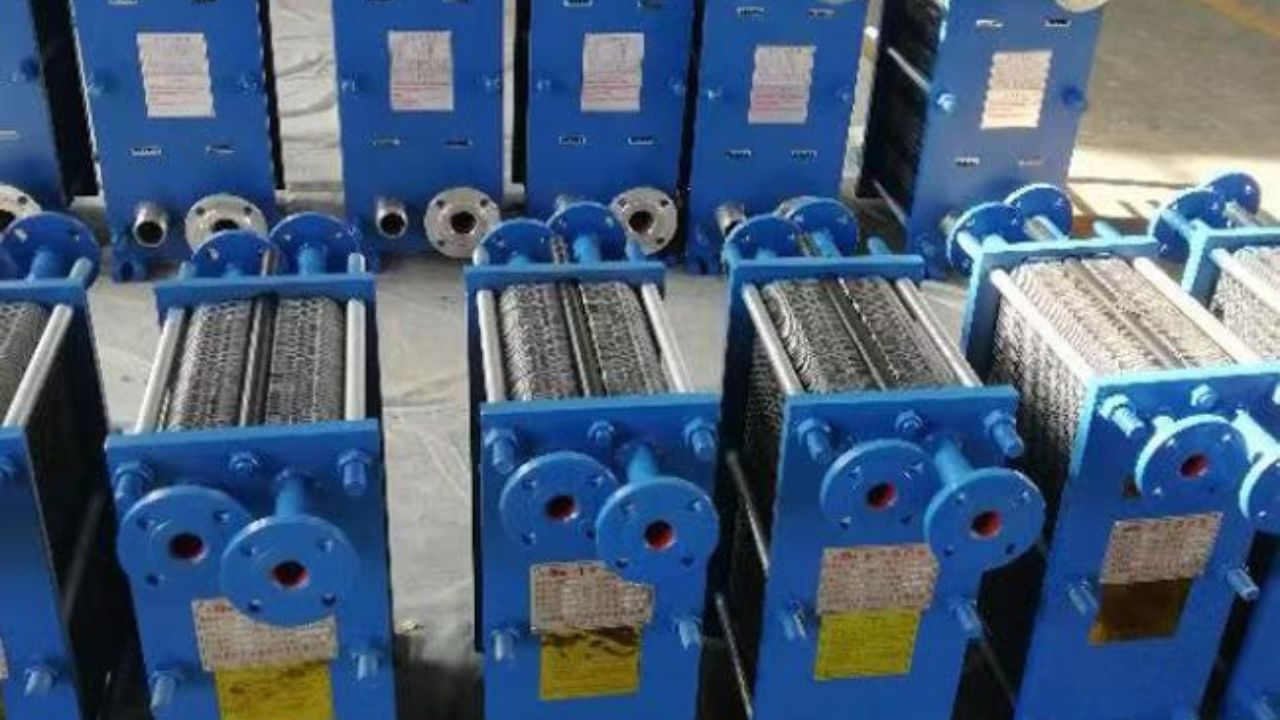
A heat exchanger is a chilling equipment that is specially designed to transfer heat between liquids. During the process of heat transfer, there is no mixing of the fluids. Although heat exchangers move heat between the liquids of different temperatures, they don’t make either of them cold.
These fluids, which are often only two, are separated by a solid medium or barrier for better heat transfer. Barriers such as plates, tubes, and coils are the most commonly used for the separation.
These media allow for easy passage of heat from the hot fluid to the colder one and vice versa through heat transfer methods like conduction and convection. Heat exchangers are available in various forms and configurations as methods of heat transfer differ.
The most commonly available ones you may find are the shell-and-tube heat exchangers, plate type heat exchangers, and air-cooled heat exchangers. For heat exchangers, the direction of flow during the heat transfer is either parallel, counterflow, or crossflow.
Pros
- High heat transfer efficiency
- Doesn’t need a refrigerant
- The cost of operation and maintenance is low
- You can recover the waste heat to improve efficiency
Limitations
- Heat exchangers cannot produce sub-ambient or chilled temperatures on their own
- Prone to fouling if fluids contain particulate matter
How Does a Chiller Work and What Does a Chiller Do?
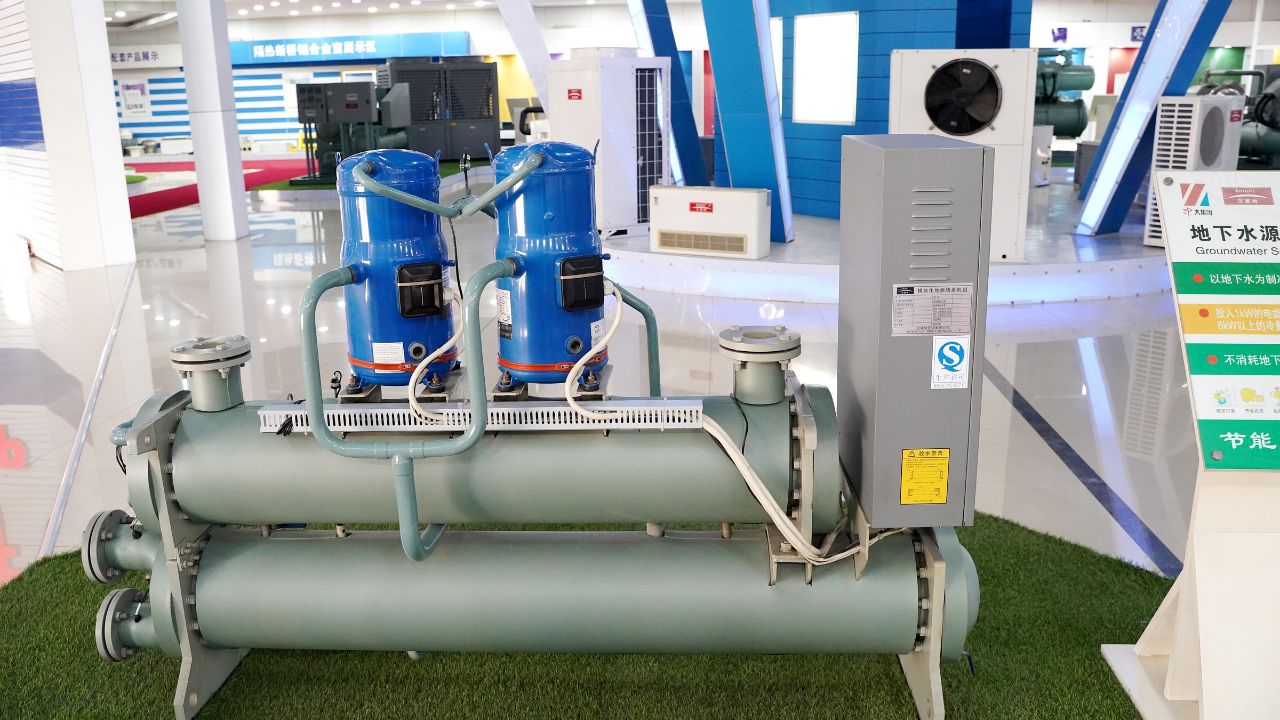
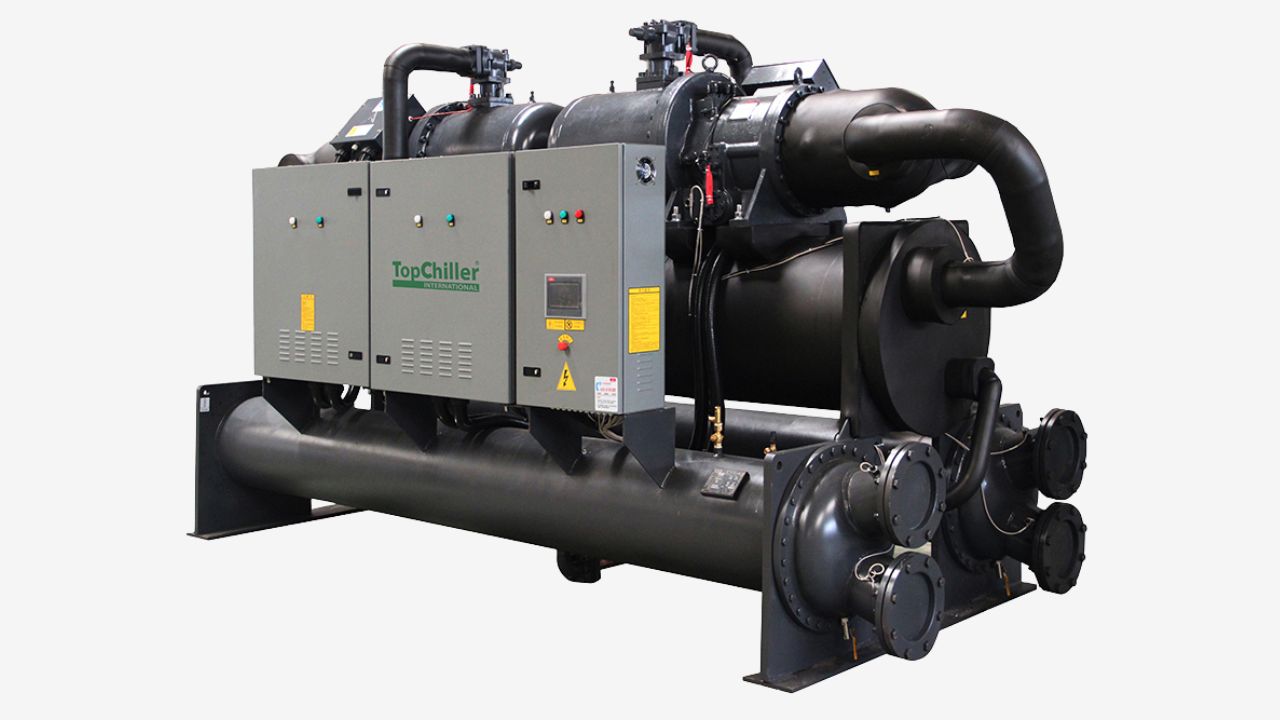
A chiller, on the other hand, is a mechanical cooling device. Since it is mechanical, it works differently; it removes heat from the liquids you want to chill using a refrigerant cycle.
The refrigerant absorbs heat from the liquid during its cooling process using its evaporator. After evaporation, the chiller releases all the absorbed heat to the environment through its condenser.
Like heat exchangers, chiller systems are of different types too. The most commonly available chiller types are the vapor compression chillers, absorption chillers, and the air-cooled or water-cooled type. These types are categorized depending on the heat rejection method.
Pros
- Provides accurate sub-ambient temperature control
- Best for continuous and high-load cooling
- It has simple and scalable designs available
- It is compatible with automated smart systems
Limitations
- More expensive to buy and maintain
- Needs periodic leak checks
- Consumes more energy
Comparing Heat Exchangers Vs. Chillers
| Criteria | Heat Exchanger | Chiller |
| Working Principle | Transfers heat between two fluids without the need for refrigeration | Actively removes heat from a fluid or process without the need for a refrigeration cycle |
| Temperature Capability | Very limited. It can only accommodate near-ambient ranges | More variable. It can accommodate sub-ambient and very low temperatures |
| Does it Use Any Refrigerant? | No | Uses refrigerants that may be simple absorption fluids |
| Primary Applications | Process heat recovery, HVAC coils, chemical processing | Cooling molds, data centers, food and beverage, and imaging |
| Energy Use | It is more passive. Energy use depends on the flow of energy and the change in temperature | Actively uses energy via mechanical power |
| Cooling Range | Narrower as it is often limited to ranges around the ambient temperature | Wider, and you can adjust them via control systems |
| Complexity | Simple device, and it only contains fewer moving parts | Complex as it also includes compressors and control circuits |
| Cost & Efficiency | It is often cheaper as the efficiency of the device depends on the change in ambient temperature | It is not as cheap as its efficiency depends on its various parts such as the load and compressor type |
When to Use a Heat Exchanger
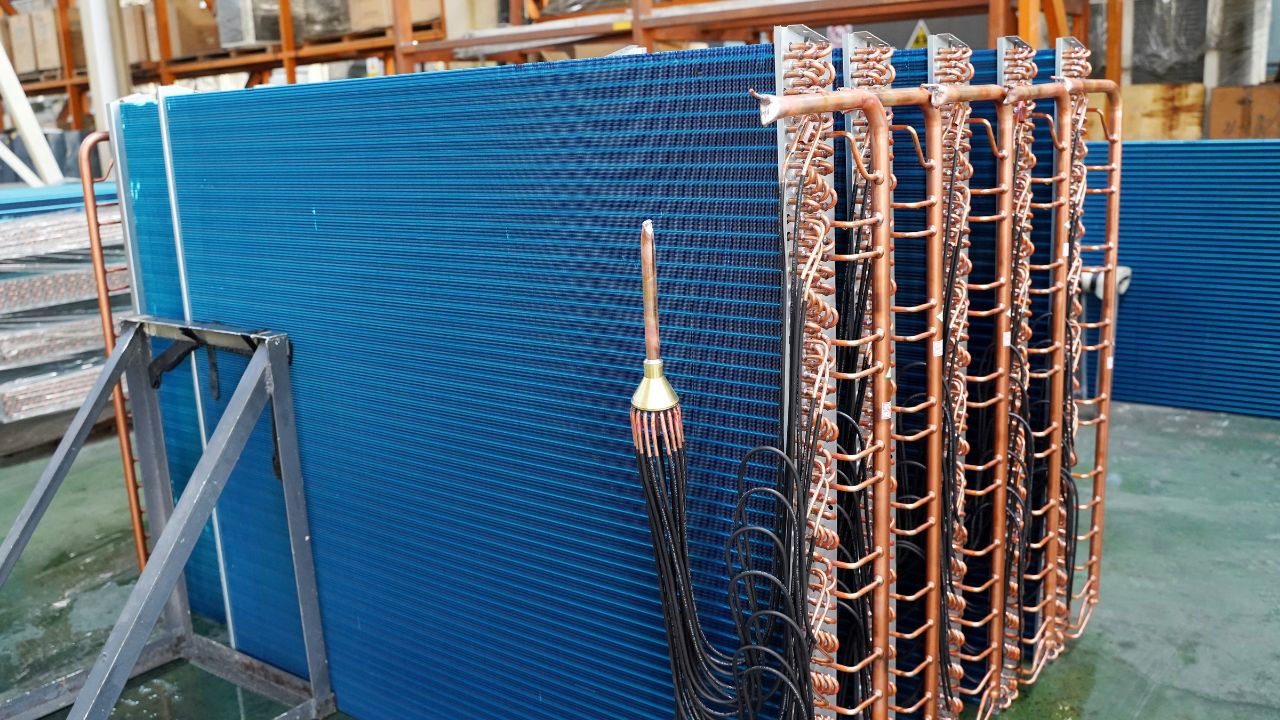
For those times when you primarily want to transfer or recover heat from fluids, heat exchangers should be your go-to. But, for you to fully maximize it, choose the heat exchanger as your preferred choice when:
- The temperature during the chilling procedure is close to ambient temperature
- You want a device that is better for recovering waste heat for energy efficiency
- The range close to ambient temperature is enough for your process
- A continuously operating system without so much temperature fluctuation is your target
Common applications of heat exchangers include power generation, cooling loops, chemical processing, distillation columns, preheating loop systems, and HVAC coils.
When to Use a Chiller
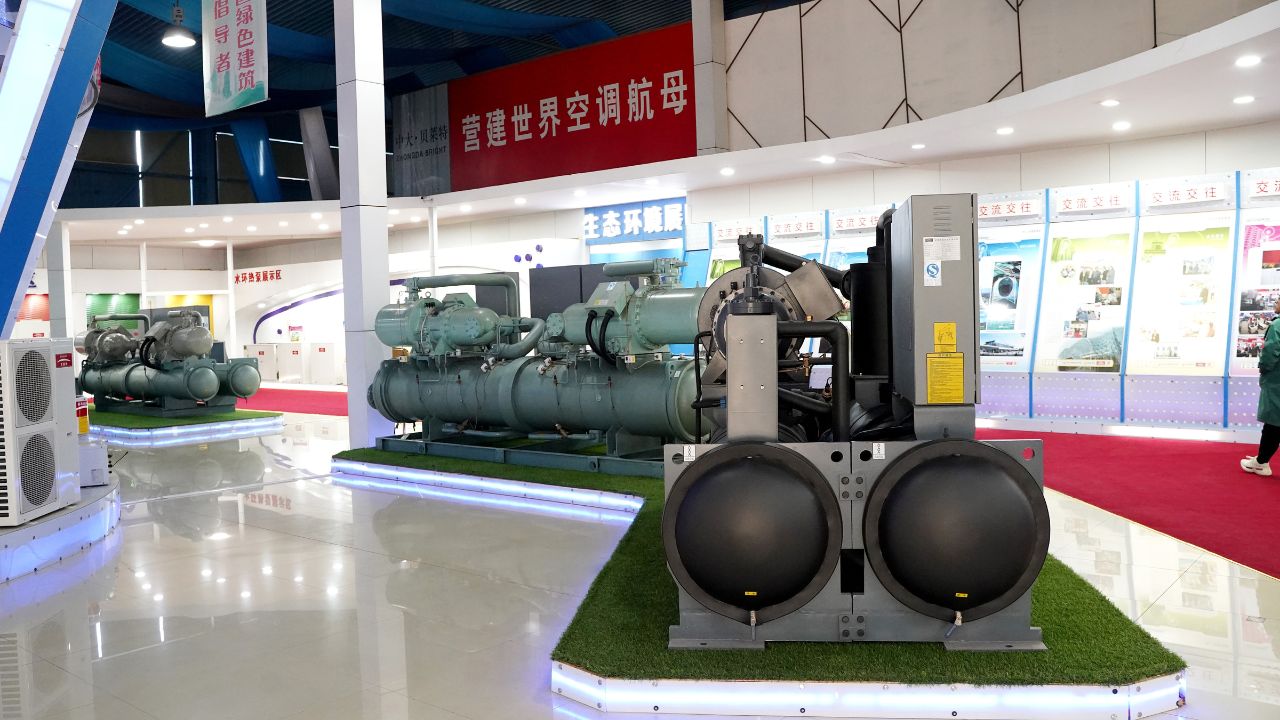
A chiller is a better option for sub-ambient or controlled cooling. You should use a chiller when:
- You need to maintain cooling below ambient temperature
- The stability of your process or the product quality depends on excellent temperature control
- You need a continuous and heavy-duty cooling
- The cooling load often changes, so you need to automate the process
Common applications of chillers include plastic injection molding, food and beverage processing, drug production, medical imaging, and HVAC systems especially for large buildings.
Criteria to Look Out for When Choosing Between a Heat Exchanger and a Chiller
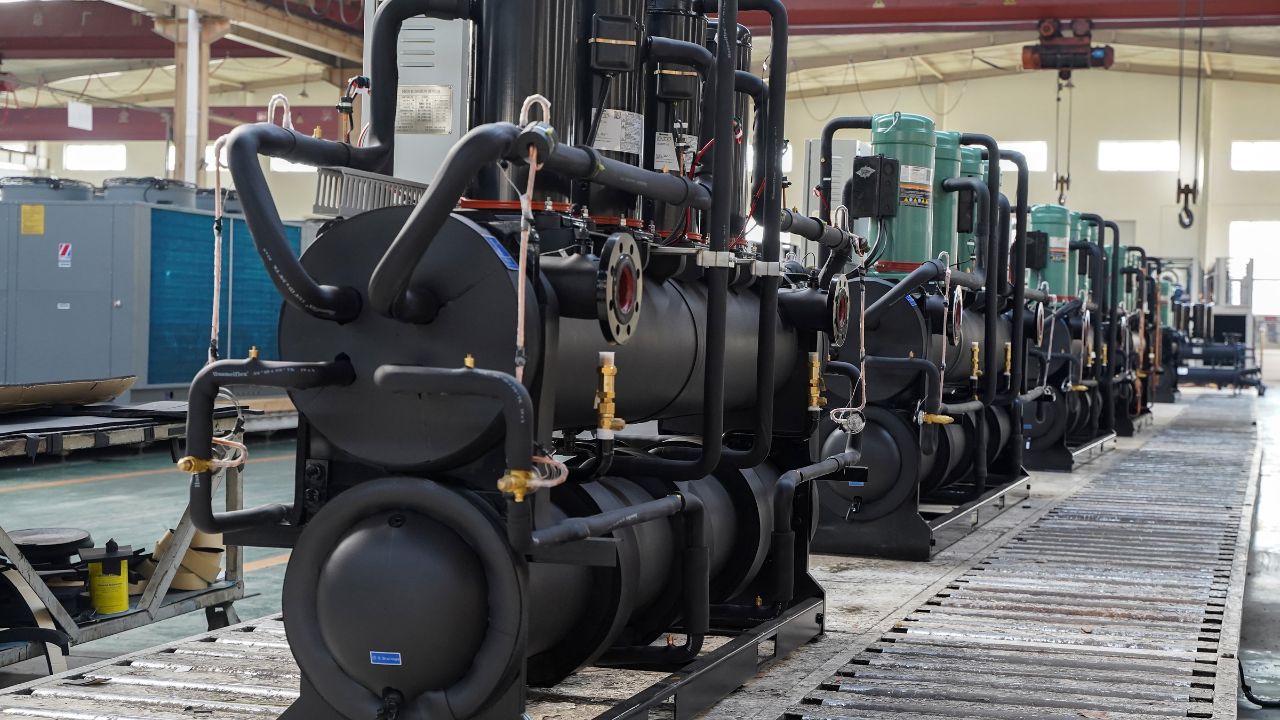
To effectively choose between the chilling processes:
- Assess and understand your specific cooling needs. If all you need to achieve is to transfer heat close to ambient temperature, a heat exchanger will serve. If you want to completely remove heat and make your materials cooler, go for a chiller.
- Identify the accuracy of the temperature range you’d prefer. If you need sub-ambient or more precise control of temperature ranges, choose a chiller.
- Consider all utilities that are available in your location. While heat exchangers rely on fewer utilities to be efficient, chillers need more electrical and sometimes water supply. Factoring these in before you begin is vital.
- Calculate and balance your needs, long-term costs, and gains. If your process does not need a heat exchanger and a chiller at the same time, you don’t have to get them both.
- Whether you settle for a chiller or a heat exchanger, make sure the devices comply with set regulatory standards.
Conclusion
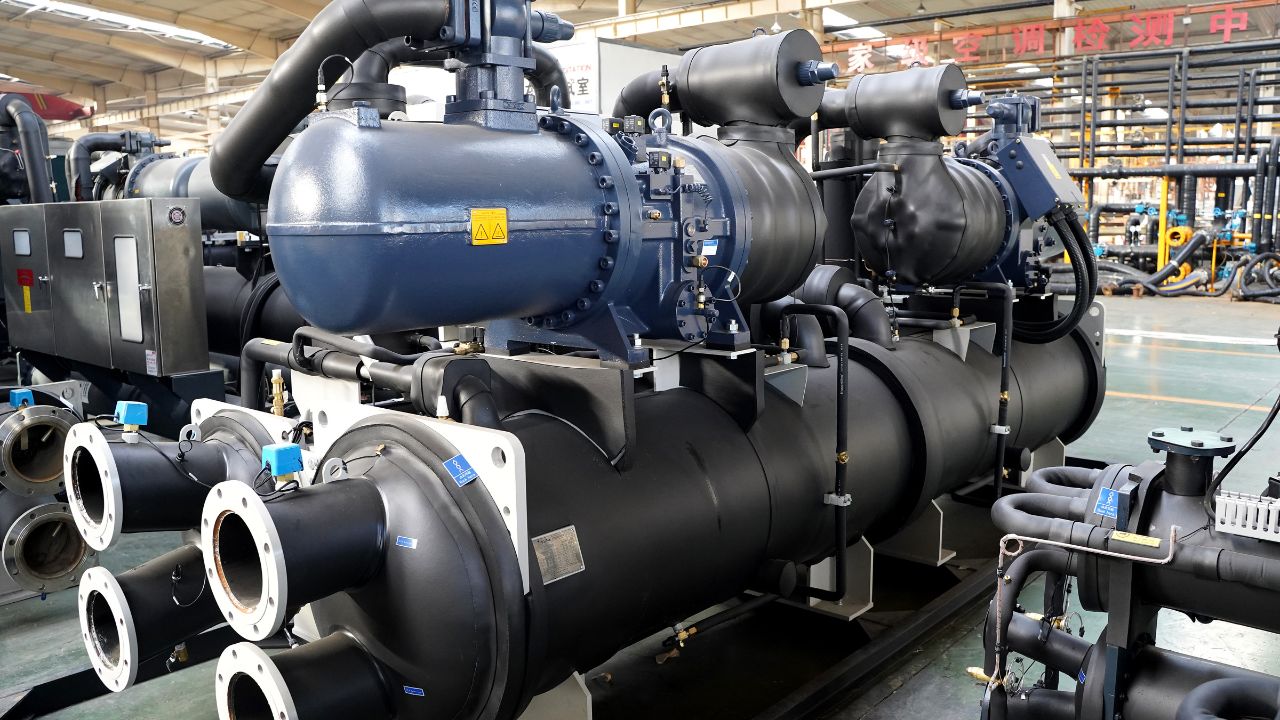
Both heat exchangers and chillers can maintain and transmit heat during most production processes. However, there are marked differences between them though they have similar roles. These differences make choosing one an important process you need to do, so, yes, choosing the right system for your procedure is a big deal.
FAQs
What majorly differentiates a heat exchanger from a chiller?
A heat exchanger ‘exchanges’ heat between fluids. In contrast, a chiller mechanically removes heat mainly by using refrigerants.
How much does a heat exchanger cost?
The cost of a heat exchanger varies since there are different types and unit sizes of heat exchangers. However, you can get a good exchanger for even less than $1000
Are heat exchangers also called condensers?
Not really. A condenser is a type of heat exchanger used in refrigeration and cooling systems to change heat from vapor refrigerant to air or water.
How often do I need to service my chiller?
The frequency of service you need for your chiller depends on how often you use the chillers. But to be safe, routine inspections every 3 months and annual servicing is a good time frequency you can work with.
What are absorption chillers?
Absorption chillers are a type of heat chillers that work somewhat like heat exchangers. They use heat energy (steam or hot water) instead of mechanical compressors to cool fluids.


 English
 Spanish
 Arabic
 Vietnamese

