

International Brands We Collaborate With


Features of ChillerOne Thermal Spray Chiller
- Compact design and robust enclosures offer excellent corrosion resistance
- Equipped with filtration modules, preventing blockages and lowering maintenance frequency
- Closed-loop sensor feedback system and variable frequency drive, saving your operational costs
- Precisely adjust the water temperature to match process needs, protecting guns and improving coating quality
- With a PLC control system, easy to monitor and manage the process
ChillerOne——Your Trusted Thermal Spray Chiller Supplier
Our high-performance thermal spray chillers provide efficient heat exchange and stable temperature control for your spray guns, power supplies, and other components. And it is ideal for long-term continuous operation. They protect your equipment, speed up your workflow, cut operating costs, and help your products go out of the factory on time.
Contact us for the latest offer.
Types of Chillers Used in Thermal Spray

The core component of the scroll chiller is the scroll compressor. This type of chiller with a compact structure can operate stably. And it is suitable for thermal spraying equipment with small to medium cooling capacity requirements, such as plasma spraying and HVOF spraying. Meanwhile, scroll chillers are quiet and efficient, and they don’t need much fuss to maintain. If you get a big order, you can link several scroll compressors together, and they can handle heavier loads without wasting energy.
However, the cooling capacity of a single unit is insufficient for large, centralized thermal spraying workshops.
If you prefer stable cooling and cost-effectiveness, then a scroll chiller is usually the first choice.

Centrifugal chillers utilize high-speed centrifugal compressors and perform exceptional cooling efficiency under full-load conditions. Therefore, they are often used in large-scale thermal spraying production lines. Also, it offers high single-unit cooling capacity, low long-term energy consumption, and can simultaneously cool multiple spray guns and high-power supplies. Suitable for heavy-duty conditions with continuous 24-hour production.
However, its initial cost is a lot. And it has stricter installation requirements, making it less flexible than modular units. If you are undertaking a large-scale thermal spraying project for large workpieces, selecting the centrifugal chiller is a good idea.

The portable chiller is small, highly integrated, and plug-and-play, so it is ideal for standalone or mobile spraying equipment. They’re great for mobile or standalone spray setups, quick on-site fixes, and jobs without complex installation procedures. Super convenient when you’re bouncing between worksites.
However, their cooling capacity is limited, and they don’t suited for high-load, long-term production. But if you need something flexible and budget-friendly, or just a backup to support your main system, the portable chiller is practical.

Air-cooled chillers are straightforward—no need for a cooling tower, just fans to get rid of the heat. They are fit for small to medium-sized thermal spraying workshops and decentralized production lines. Maintenance is simple, and you won’t lose too much time fixing them.
However, they are susceptible to outside temperature. When the temperature exceeds 38 °C and ventilation is poor, their cooling drops off. Also, they are a bit less efficient than water-cooled models.
In short, if your factory is short of water and mostly uses small to medium-power thermal spraying equipment, air-cooled chillers will get the job done.
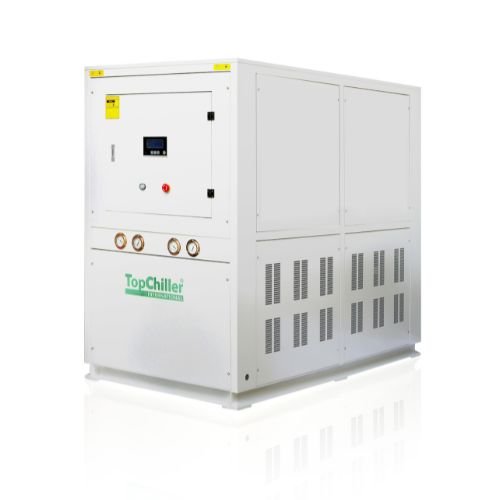
The water-cooled chiller removes heat through cooling water, offering high cooling efficiency and is often used in long-term, high-load spraying, such as large-scale thermal spraying production lines and multi-spray-gun centralized systems. Furthermore, it is less affected by ambient temperature, allowing you to control the spray gun temperature more precisely and improve coating quality.
However, you need to use it in combination with cooling towers, water tanks and water treatment systems, so the initial investment cost is relatively high, and the installation steps are complicated. Fortunately, in the long run, water-cooled chillers tend to offer comprehensive advantages.
Reliable Certification
Designed for thermal spray processes, our certified chillers conform to industrial norms, delivering consistent cooling to stabilize high-temperature spraying work.


Areas of Use of Chillers in Thermal Spray

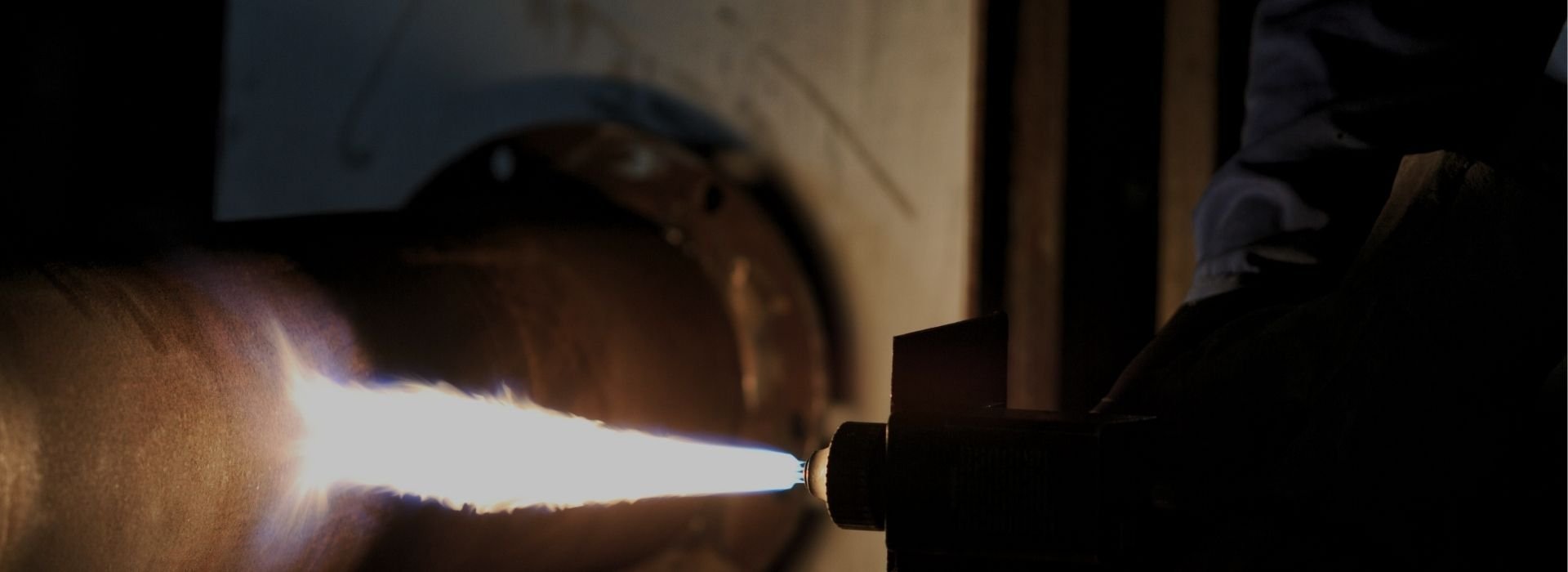
Think about engine blades or landing gear—these parts take a beating and need coatings that can handle heat and wear. Thermal spray does the job, but if things get too hot during the process, you’re asking for trouble. A thermal spray chiller keeps both the spray gun and the workpiece at the right temperature, so you don’t get hot spots or weak spots in the coating. So, you avoid a lot of rework and wasted parts, and your process stays solid and predictable.
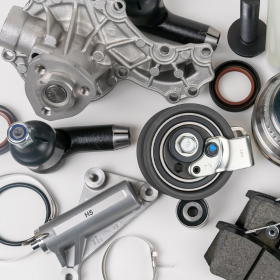
Thermal spraying comes in handy for pistons and turbochargers, especially when you need thermal barrier coatings. Poor cooling during the spraying process can easily cause coating cracking and reduced adhesion, also influencing engine life. Chillers give you tighter control over the process, so each workpiece looks and performs the same. It can help you keep quality, produce faster, lower costs per part, and keep your deliveries on schedule.

In the electronics industry, thermal spraying equipment can create coatings with high thermal conductivity, but electronic components are extremely susceptible to damage from high temperatures. Chillers protect these sensitive parts from overheating, so your coatings go on without a hitch. You end up saving more components, cutting scrap, and diminishing costly failures.

Valves, pipes, pump bodies—these all face tough conditions, and thermal spray gives them extra armor against wear and corrosion. The thermal spray chiller can operate stably under high-load conditions, preventing the spray gun from overheating and thus guaranteeing the density of the coating. Over time, you spend less on repairs and keep your operation running smoothly.
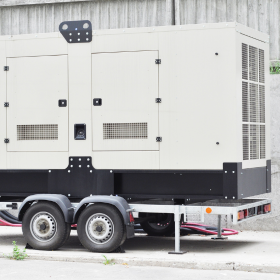
Thermal spraying can also be used to apply anti-corrosion and high-temperature resistant coatings to gas turbines, steam turbines, and auxiliary equipment. Because the objects are large and valuable, any temperature control malfunction can bring significant losses. Thermal spray chillers let spraying go smoothly, preventing substrate damage and developing coating reliability. So, it enhances your product competitiveness, guarantees on-time delivery, and wins customer trust.
See the Thermal Spray Chiller in Action
Watch how the thermal spray chiller delivers stable temperature control, fast cooling response, and reliable performance in real industrial working conditions.
Why Does the Thermal Spray Need Chillers
Thermal spraying equipment mainly relies on heating solid materials such as metals or ceramics, changing them into a plasma or molten state. That’s how you get those tough, high-performance coatings that keep your parts from wearing out or rusting. But honestly, none of that works right if you can’t keep the temperature in check.
If your thermal spraying equipment is constantly overheated, it can cause premature nozzle wear. Frequent replacements not just increase spare parts costs, also cause downtime for maintenance, impacting production capacity. More seriously, the heat fries your electrical parts or control systems, and then you’re looking at some serious production losses.
Conversely, if you cool things down too much, materials start to solidify inside the nozzle. That clogs everything up, messes your spray progress, and finally, coatings are patchy and uneven. Customers notice. Complaints roll in. You have to redo the whole job.
With a thermal spray chiller, you no longer need to worry about it. It puts spraying in control, giving your equipment steady, precise cooling. Your machines last longer, and the coatings come out uniform and dense every time.
Advantages of Chillers for Thermal Spray
Compact Structure and Excellent Corrosion Resistance
Our thermal spray chiller boasts a compact design, providing stable and efficient cooling within a minimal footprint. Components are constructed from stainless steel, offering excellent corrosion resistance and enabling operation in high-temperature, high-humidity, and dusty environments. An optional weatherproof enclosure allows for stable operation in semi-outdoor conditions.
Protect the Spray Gun and Electric Component
Chillers keep the cooling water at just the right temperature. They stop the nozzles from overheating and warping, and they prevent condensation that messes with the process. Simultaneously, your power modules and rectifiers also stay in their comfort zone, so you dodge those annoying alarms and random equipment failures. In the end, you avoid sudden downtime and keep your project on track.
Prolong Your Equipment Service Life
Thermal spray chillers can continuously remove the heat generated by the system, reducing thermal stress and mechanical fatigue, thereby diminishing the risks of seal aging, pipe leaks, and component damage. It also means less maintenance, fewer spare parts consumed, and a longer equipment life, effectively decreasing the total cost of ownership during a long-term operation.
Reliable and Quiet Operation
Thanks to a built-in filtration module, the chiller catches impurities and mineral deposits in the cooling water. It brings no clogged heat exchangers and steady, efficient cooling. If you want to go further, there’s an option for a deionized water system, which fights off corrosion and protects your pumps, valves, and piping. Moreover, under partial load conditions, our chiller can still keep the temperature steady and operate smoothly and quietly.
Improved Coating Quality
The thermal spraying chiller, controlled by a PLC system, can monitor and precisely adjust the water temperature in real time during the spraying process, keeping the process always at the optimal temperature. It helps stabilize particle speed and deposition, outputting a more uniform and dense coating. Thus, your product quality becomes more consistent, scrap rates decrease, and you’ll attract more repeat customers.
Energy Efficiency
The thermal spraying chiller is equipped with a closed-loop sensor feedback system and a variable frequency drive, which tweaks the compressor and pump according to how much cooling you actually need. You don’t get stuck over-cooling, but you never risk unstable temperatures either. All this adds up to noticeably lower power bills—up to 40% less than older systems.
Reduce Fire Risk and Protect Personnel Safety
Insufficient cooling can also affect surrounding equipment, increasing the risk of fire. Thermal spray chillers can lower system temperatures and enhance safety. Also, it reduces unplanned downtime caused by temperature alarms, preventing money losses. Therefore, installing a chiller is not just for equipment protection; it is a guarantee for the safety of your staff and the security of your factory assets.
Eco-Friendly and User-Friendly
Our chillers use environmentally friendly refrigerants, meeting the requirements of green production and sustainable development. Furthermore, the powerful microprocessor control system makes equipment operation intuitive and the operating status readily apparent. Plus, remote diagnostics and fault monitoring allow you to spot and fix issues fast, cutting down maintenance headaches.
Ideal cooling temperatures are typically between 10°C and 25°C; temperatures that are too low may cause condensation. The specific temperature depends on the process and materials. For example, in plasma spraying, the temperature can be appropriately lowered to 15–20°C to ensure that the anode and cathode of the spray gun are fully cooled.
If you’re running small or medium-sized spray stations and short of water, go with air-cooled chillers. They’re simple to set up and don’t cost much to get started. Very suitable for workshops with decent airflow.
For high-power, continuous production lines, water-cooled chillers are recommended, as they have higher cooling efficiency and can handle nonstop, heavy-duty work without breaking a sweat.
Yes, but the chiller’s cooling capacity and pump flow rate must meet the total heat load and flow rate requirements of all spray guns operating simultaneously. You will need to configure an independent circuit or flow control device for each spray gun to make uniform cooling. It’s best to contact us; we can provide customized, integrated solutions according to your project needs.
You should change the coolant every 6 to 12 months. The frequency of replacement depends on the water quality and the operating environment. If you use deionized water, the replacement interval can be extended appropriately. If the coolant is found to be cloudy, has significantly increased conductivity, or contains impurities or microorganisms, you should replace it immediately.
Generally, you need to consider the number and power of the spray guns, as well as the ambient temperature, and then calculate the cooling capacity you need based on the total heat load, with a 20% margin to handle peak operating conditions. It is recommended that you provide your spray gun model and technical parameters to the chiller supplier for size selection.


 English
 Spanish
 Arabic
 Vietnamese

