

One of the most practical and popular chiller systems in many industrial setups is the water chiller. This is attributed to the many benefits it offers to maintain optimal temperatures for various operations.
Today, we will explore the key benefits of water chillers.
What are Water Chillers?

A water chiller is a type of cooling machine or system designed to help remove heat from liquid, mostly water. Then, it later transfers this unwanted heat to a cooling tower.
Benefits of Water Chillers
1. Accurate Temperature Control
One of the benefits of using a water chiller is its ability to deliver accurate temperature control.
This accurate temperature helps to ensure high precision cooling, efficiency, prevent overheating and damage, stable operation in various loads, and helps to improve process control.
2. Energy Efficient
Water chillers are known to be energy efficient, especially when used for large-scale cooling compared to other chillers.
Unlike other air-cooled chillers, water chillers perform efficiently in both hot and humid climates, thus enabling reliable cooling.
3. Efficient Cooling
Efficient cooling is one of the reasons why you should invest in water chillers. This usually helps in maintaining productivity, energy saving, and equipment longevity.
Water chiller delivers efficient cooling by consistent temperature control.
This is where the water chiller maintains steady cooling performance without large fluctuation to ensure precise thermal regulation for sensitive processes like food processing
4. Compact Footprint
Water chillers are known to take up less space and still perform an excellent cooling performance.
Compact footprints add a lot of value, such as saving design.
That is, water chillers are designed to deliver high cooling capacity with a small and efficient layout.
The flexible installation option also allows for either indoor or outdoor installations. As a result, it enables them to adapt to different building layouts and space constraints.
5. Quiet Operation
Water chiller helps to minimize noise pollution since the cooling tower, and its compressor are normally located far away from the workspace.
6. Flexible Designs

One of the benefits of using water chillers is that they have a flexible design, encouraging consistent and efficient cooling.
This is because they can easily adapt to changing needs. That is, you can have modular designs that contain modular units, which can be either added or removed as a cooling agent.
It also gives room for any expansion without interfering with or changing the entire system.
7. Versatile for Different Industries
Water chillers can be adapted to many industrial applications.
Example includes:
Water chillers can be used in the manufacturing industry to help cool machinery, molds, and hydraulic systems in a manufacturing plant.
Secondly, it can also be used in the food and beverage industry to help provide temperature control for mixing, fermenting, and storage.
Lastly, it can also be used pharmaceutical and chemical industry to help ensure consistent conditions in reactors and prevent product degradation.
8. Better Equipment Protection
Water chillers are well known to provide better equipment protection.
This is normally achieved by preventing overheating, where it removes excess heat that can damage machines or interfere with various processes.
Additionally, water chillers help to extend or prolong equipment lifespan by keeping the machine at an optimal temperature. As a result, it reduces strains on compressor pumps and motors, thus allowing them to work efficiently and last longer.
9. Saving Water through Continuous Recirculation
Water chillers play a major role in conserving water and reusing it, as compared to other chillers.
This continuous reuse of water helps to lessen water consumption, making it ideal for use where water conservation is important. As a result, investing in water chillers is a long-term investment and helps you save money.
10. Environmentally Friendly
It plays a major role in reducing carbon footprint as compared to other types of older cooling technologies. This is because it uses advanced and modern refrigerants and a recycling system.
Furthermore, it is also a recyclable and reusable water system, giving room for the same water to circulate repeatedly, reducing water wastage.
Lastly, they reduce noise pollution since they have installed doors and have quieter cooling towers, contributing to a quieter environment.
Conclusion
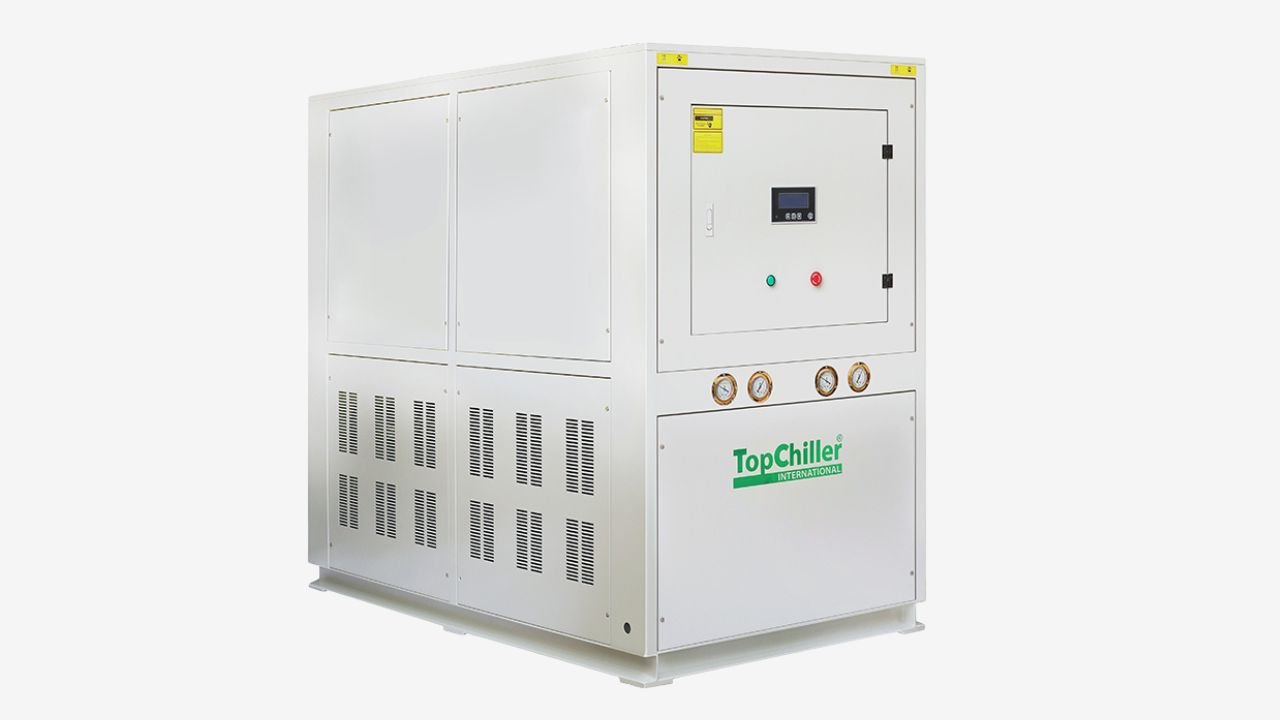
Investing in a water chiller is usually a long-term investment since it provides you with different types of benefits. These benefits include efficient cooling, long-lasting, better protection of the equipment, and a compact footprint, among others.
FAQs
What are the common types of water chillers?
There are different types of water chillers, such as cooled water chillers, absorption water chillers, screw chillers, centrifugal chillers, and scroll chillers.
What is the difference between a water chiller and air chiller?
| Chiller Variables to Compare | Water Chiller | Air Chiller |
| Cooling medium | · Water | · Ambient air |
| Heat transfer mechanism | · From refrigerant to water and finally to the cooling tower | · Heat from refrigerant is released directly to the surrounding air |
| Applications | · Suitable for large scale cooling systems | · Suitable for small-scale cooling systems |
| Efficiency in different climates | · Suitable for both humid and hot climates | · Not highly efficient in hot climates |
What are the limitations of water chillers?
Even as you invest in these systems, it is also important to note that water chillers have some limitations. Among the key disadvantages of water chillers include:
- Requires consistent water source – the system saves water but may also require water treatment to prevent biological growth, scaling or corrosion.
- High cost of maintenance – its water circuit requires frequent maintenance
- High initial costs – compared to air chillers, water chillers require high initial capital.


 English
 Spanish
 Arabic
 Vietnamese

